Brittany Spaniel vs Rottweiler: Which Suits Your Home?
Quick answer
Brittany or Rottweiler -- which is the better overall choice?
For most first-time owners the Brittany is the easier, friendlier, longer-lived choice; the Rottweiler suits an experienced owner who specifically wants its size and protective nature.
Brittany Spaniel or Rottweiler? On paper they differ most on good for first-time owners, and on the scales Rottweiler is the heavier at 80–135 lbs. Here is how the two compare on everything that shapes an ordinary week.
This is for someone already down to Brittany Spaniel and Rottweiler and deciding between them. For this pair the decision usually turns on good for first-time owners and good with other dogs, so those are covered first and in most detail. Anyone choosing from a flat has a clear answer here: Brittany Spaniel rates 3/5 against 2/5. There is no origin story here — only what changes about your week.
Quick verdict
Between Brittany Spaniel and Rottweiler, good for first-time owners is what separates them, and Brittany Spaniel is the lower-effort dog of the two to keep.
Choose brittany if...
Choose Brittany Spaniel if you are in a flat or a smaller home, this is your first dog and shedding is a problem in your house.
Choose rottweiler if...
Choose Rottweiler if you want a dog that is more watchful with visitors.
Head-to-head comparison
Feature
brittany
rottweiler
Winner
Size class
medium
large
Equal
Weight
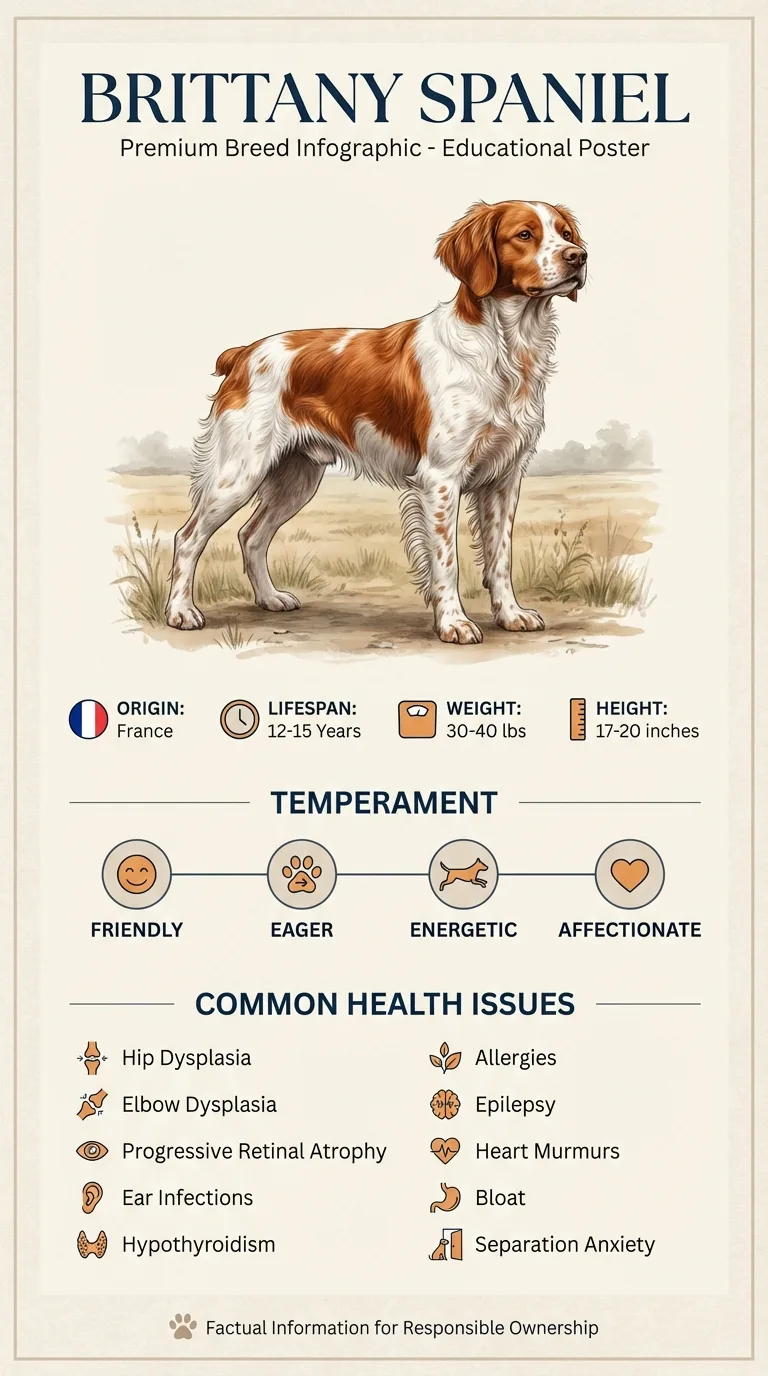
30–40 lbs
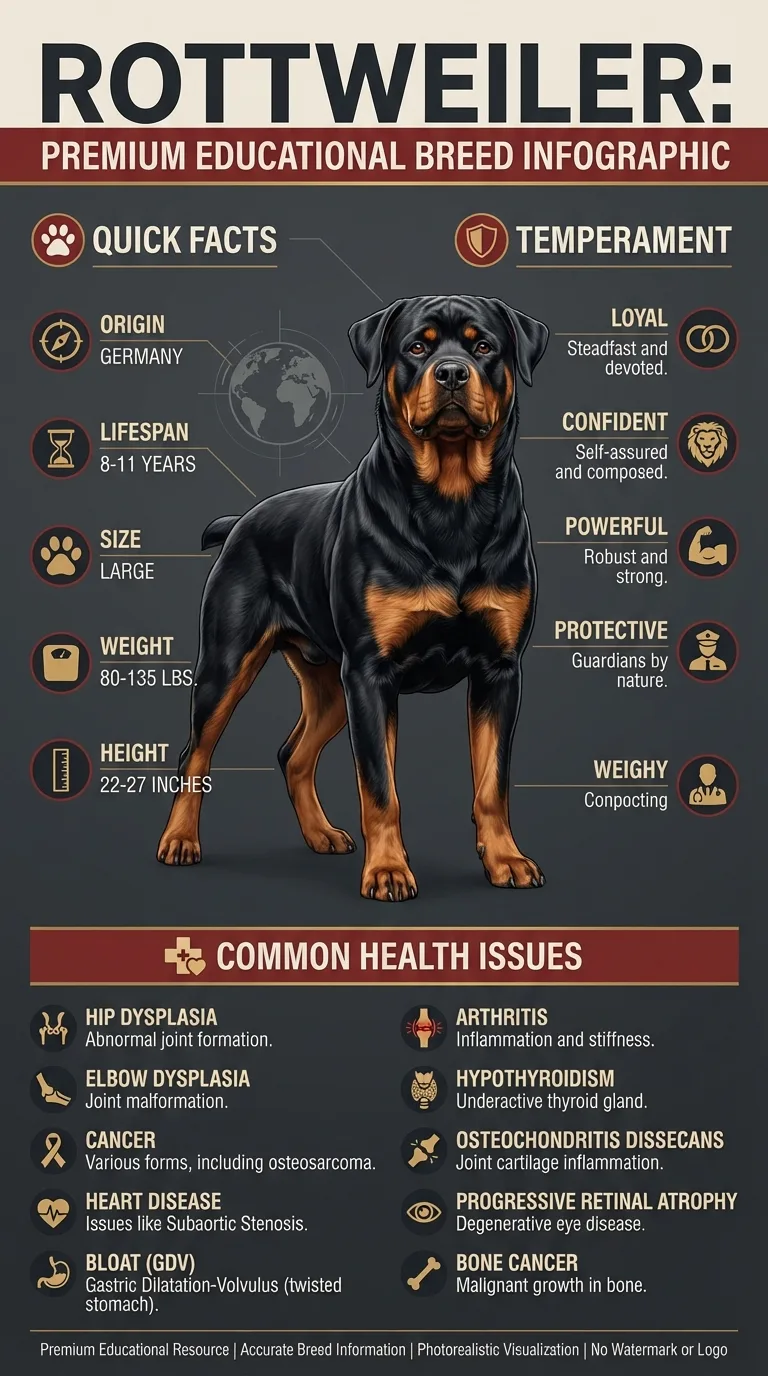
80–135 lbs
Equal
Height
17–20 in
22–27 in
Equal
Lifespan
12–15 years
8–11 years
brittany
Exercise need
High (4/5)
High (4/5)
Equal
Grooming need
Low (2/5)
Low (2/5)
Equal
Shedding
Moderate (3/5)
High (4/5)
brittany
Energy level
High (4/5)
High (4/5)
Equal
Barking
Low (2/5)
Moderate (3/5)
brittany
Apartment suitability
Moderate (3/5)
Low (2/5)
brittany
Good for first-time owners
High (4/5)
Low (2/5)
brittany
Tolerates being alone
Low (2/5)
Low (2/5)
Equal
Trainability
Very high (5/5)
High (4/5)
brittany
Good with kids
Very high (5/5)
High (4/5)
brittany
Good with other dogs
Very high (5/5)
Moderate (3/5)
brittany
Friendly to strangers
High (4/5)
Low (2/5)
brittany
Cost level
Moderate (3/5)
High (4/5)
brittany
Coat
Medium, wavy coat
Double coat, short
Equal
Origin
France
Germany
Equal
Typical monthly cost
$90–$180
$125–$250
Equal
Typical first-year cost
$1,300–$2,500
$2,000–$3,500
Equal
Deep dive
Size and build
The size gap here is the largest in this whole comparison set: 30-40 lbs for the Brittany against 80-135 lbs for the Rottweiler, more than triple at the high end. Height tells a smaller part of the story -- 17-20 inches versus 22-27 -- because most of that difference is raw mass and bone density, not just extra inches at the shoulder.
Energy and exercise
Exercise need and energy level both tie at high (4/5), which surprises people who assume a Rottweiler is a lower-key dog because of its size and calm reputation. It isn't -- a Rottweiler was bred to drive cattle and pull carts, and it needs a genuine job or workout to stay well-behaved, not just a yard to lounge in.
Grooming and shedding
Grooming need ties at low (2/5) for both breeds -- neither has demanding coat maintenance. Shedding tips slightly toward the Brittany being easier to live with, moderate (3/5) against the Rottweiler's high (4/5). A short double coat like the Rottweiler's sheds more than its length suggests, especially during seasonal blowouts.
Apartment living, noise and time alone
The Brittany rates moderate (3/5) for apartment living against the Rottweiler's low (2/5) -- size alone makes a 100+ lb dog a harder fit for compact spaces. Barking runs low (2/5) for the Brittany and moderate (3/5) for the Rottweiler, and both tolerate solo time poorly (2/5 each), so neither dog is built for long stretches alone in any size home.
Training and owner experience
The Brittany rates ahead here too: very high (5/5) trainability against the Rottweiler's high (4/5), and high (4/5) first-time-owner suitability against the Rottweiler's low (2/5). A Rottweiler's size and strength mean training mistakes carry heavier consequences, a large part of why this breed is routinely recommended for experienced owners rather than beginners.
Kids, other dogs and visitors
The Brittany rates ahead across every social measure: very high (5/5) with kids and other dogs against high (4/5) and moderate (3/5) for the Rottweiler respectively, and high (4/5) friendliness to strangers against the Rottweiler's low (2/5). None of this means a well-raised Rottweiler is unsociable, but its baseline scores run more reserved and protective than the Brittany's across the board.
Health and lifespan
The Rottweiler has the shortest lifespan in this entire comparison -- 8-11 years against the Brittany's 12-15, a gap of up to seven years. Five conditions overlap between the two ten-item lists: hip dysplasia, elbow dysplasia, progressive retinal atrophy, bloat, and hypothyroidism. The Rottweiler's list also separately includes cancer and bone cancer, reflecting a breed with a well-documented elevated cancer risk.
Cost to keep
Cost level rates moderate (3/5) for the Brittany against high (4/5) for the Rottweiler, and the dollar figures track: $90-$180 monthly for the Brittany versus $125-$250 for the Rottweiler, with first-year costs of $1,300-$2,500 against $2,000-$3,500. Larger dogs cost more to feed and medicate by default, and the Rottweiler's health list adds further reason to budget for veterinary care.
Brittany Spaniel vs Rottweiler at a glance
Brittany Spaniel weighs 30–40 lbs and lives 12–15 years; Rottweiler weighs 80–135 lbs and lives 8–11 years. The two diverge most on good for first-time owners, good with other dogs and friendly to strangers. They are level on tolerates being alone, energy level and exercise need, so those cannot decide it. Where the table declares a winner it means less work for the owner, nothing more; descriptive rows are left as ties on purpose. The value here is in the differences between the two columns; treat any single score as approximate.
Brittany Spaniel vs Rottweiler: Which Suits Your Home? - Brittany Spaniel vs Rottweiler at a glance
Frequently asked questions
How much bigger is a Rottweiler than a Brittany?
Substantially -- 80-135 lbs against the Brittany's 30-40 lbs, more than triple at the upper end. This is the largest size gap of any pairing in this comparison set.
Which breed lives longer?
The Brittany, by a wide margin -- 12-15 years against the Rottweiler's 8-11. Larger breeds generally have shorter lifespans, and the Rottweiler sits at the shorter end even among large breeds.
Is a Rottweiler good for a first-time owner?
Not really, based on the data -- it rates low (2/5) for first-time owners against the Brittany's high (4/5). Its size and strength mean handling mistakes have bigger consequences.
Which sheds more?
The Rottweiler, at high (4/5) against the Brittany's moderate (3/5), despite having a short coat.
What's the monthly cost for each?
$90-$180 for a Brittany against $125-$250 for a Rottweiler, with first-year totals of $1,300-$2,500 and $2,000-$3,500.
Do the breeds share health risks?
Yes, five conditions overlap: hip dysplasia, elbow dysplasia, progressive retinal atrophy, bloat, and hypothyroidism. The Rottweiler's list separately includes cancer and bone cancer, a distinct and serious risk not shared with the Brittany.
Which is friendlier to strangers?
The Brittany, rated high (4/5) against the Rottweiler's low (2/5). The Rottweiler's more reserved, protective nature toward strangers is a known breed trait, not a flaw.
Brittany or Rottweiler -- which is the better overall choice?
For most first-time owners the Brittany is the easier, friendlier, longer-lived choice; the Rottweiler suits an experienced owner who specifically wants its size and protective nature.
Costs
What's the monthly cost gap?
$90-$180 for a Brittany versus $125-$250 for a Rottweiler.
Living
Which needs more exercise?
Neither -- exercise need ties at high (4/5) for both.
Health
Which breed lives longer?
The Brittany, at 12-15 years versus 8-11 for the Rottweiler -- the biggest lifespan gap in this comparison set.
Related DogBreedCompass guides
Brittany Spaniel breed guide – Readers comparing the two usually want the full profile of Brittany Spaniel before deciding.
Rottweiler breed guide – The same for Rottweiler, so the comparison can be checked against the detail.
Brittany Spaniel vs Beagle – Beagle is the closest breed to Brittany Spaniel on the measured axes, so it is the natural next comparison.
Rottweiler vs Rottweiler Mix – Rottweiler Mix sits closest to Rottweiler, which makes it the alternative worth ruling out.
Brittany Spaniel vs Rottweiler Mix – Rottweiler Mix is the other breed Rottweiler is most often weighed against.
Rottweiler health problems – The health pages set out what each breed is actually screened for.
Health information here is general and is not veterinary advice. If your dog shows pain, sudden behaviour change, or worsening symptoms, consult a licensed veterinarian.
Some links on this site are affiliate links. We may earn a commission at no extra cost to you, and we only suggest products we believe are helpful for dog owners.
We research and check what we publish, but we do not warrant that any figure, date, price, or statement is accurate, complete, or current, and we accept no liability for any loss, cost, injury, or other harm arising from the use of this site. Use it as one reference among several. You remain responsible for your own decisions and for your dog's care - confirm anything that matters with a licensed veterinarian or another qualified professional before you act on it. Full disclaimer.