Behavior
How can I help my dog with separation anxiety?
Gradually increase alone time and reward calm behavior to help your dog adjust. Consider using calming aids like anxiety wraps or pheromone diffusers.

Quick answer
How can I help my dog with separation anxiety?
Gradually increase alone time and reward calm behavior to help your dog adjust. Consider using calming aids like anxiety wraps or pheromone diffusers.
German Wirehaired Pointer separation anxiety can be a challenging issue for many owners. It can lead to destructive behaviors and stress for both the dog and the owner.
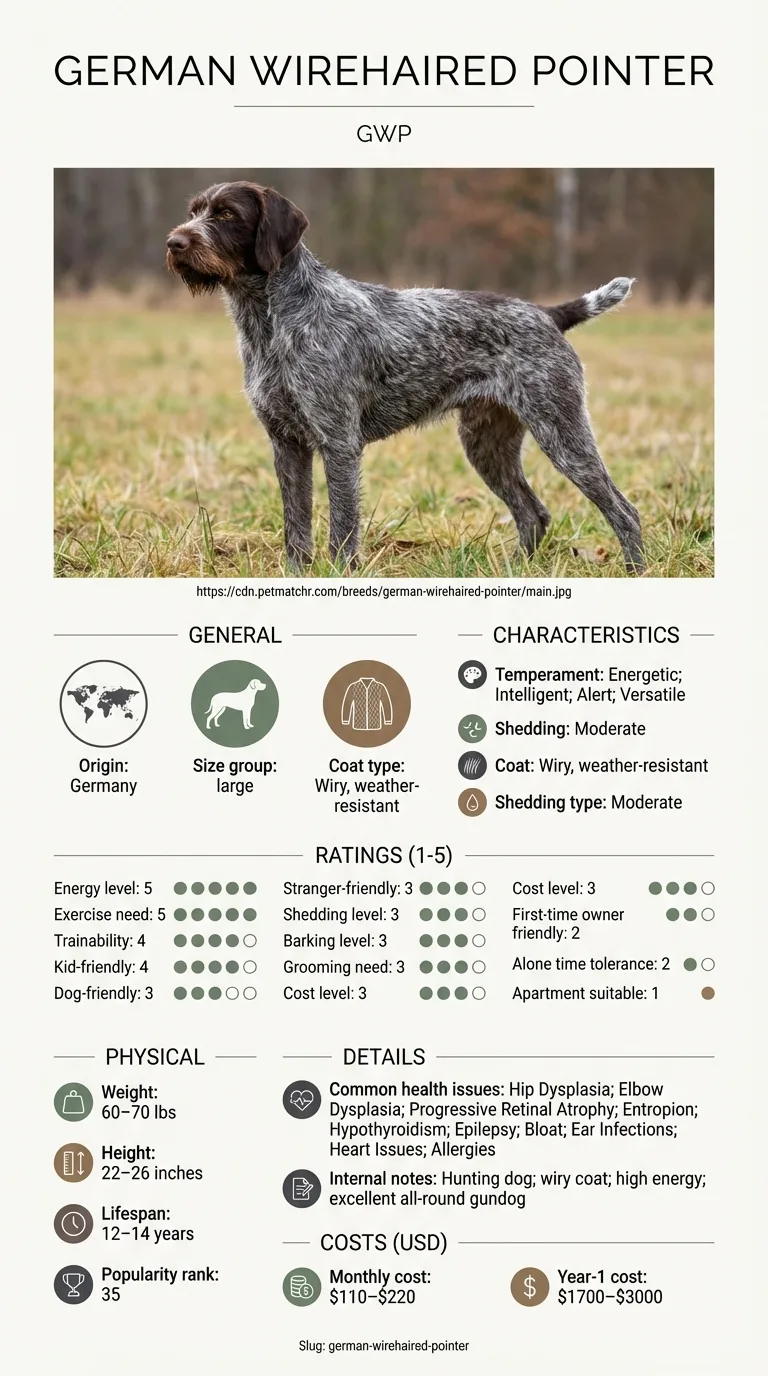
Typical owners struggling with this issue often include busy families, professionals who travel frequently for work, or anyone who must leave their dog alone for extended periods. These owners may notice their German Wirehaired Pointer barking, chewing, or urinating indoors when left alone.
This guide is not medical advice. If your dog shows pain, sudden behavior change, or worsening symptoms, consult a licensed veterinarian.
Some links may be affiliate links. We may earn a commission at no extra cost to you. We only suggest products we believe are helpful for dog owners.
We research and check what we publish, but we do not warrant that any figure, date, price, or statement is accurate, complete, or current, and we accept no liability for any loss, cost, injury, or other harm arising from the use of this site. Use it as one reference among several. You remain responsible for your own decisions and for your dog's care - confirm anything that matters with a licensed veterinarian or another qualified professional before you act on it. Full disclaimer.
German Wirehaired Pointer separation anxiety can show up as excessive barking, destructive behaviors, or even attempts to escape when left alone. This breed, known for its energetic and intelligent nature, thrives on companionship and can become distressed if isolated for too long. Daily life with a GWP suffering from separation anxiety can be challenging, leading to a stressed owner and an unhappy dog.
Separation anxiety is a notable concern for German Wirehaired Pointers. Given their strong attachment to their families, many owners report symptoms of anxiety, especially in younger dogs or those not accustomed to being alone.
German Wirehaired Pointers are social, energetic dogs that thrive on companionship. Their deep bond with their owners can make them particularly sensitive to being alone. This breed's high energy and intelligence also mean they can become bored or anxious without enough mental and physical stimulation.
Changes in routine, moving to a new home, or the absence of family members can trigger separation anxiety. Additionally, if your GWP was not properly socialized as a puppy, they may struggle more with being left alone. A lack of exercise can also increase anxiety levels, leading to destructive behaviors.
If your dog's separation anxiety persists despite your efforts, it may be time to consult a professional trainer. Look for someone experienced in positive reinforcement methods, as they can provide tailored strategies for your GWP's specific needs.
If your dog's anxiety leads to severe destructive behavior, excessive barking, or other health issues, contact your vet. They can rule out any underlying health problems and discuss potential medication options if necessary.
Start here: German Wirehaired Pointer Most Common Genetic Disorders: Guide
See all German Wirehaired Pointer health problems, which breeds are prone to separation anxiety, or the full German Wirehaired Pointer breed guide for temperament, exercise needs and ownership costs.
You may start to see improvements in 4 to 6 weeks with consistent training and support.
Success means your German Wirehaired Pointer can stay alone for a few hours without excessive barking, whining, or destructive behaviors.
Avoiding these common mistakes can help you better manage your German Wirehaired Pointer's separation anxiety. Here are some behaviors to watch out for.
Recognizing when your German Wirehaired Pointer's separation anxiety becomes an emergency is crucial. If your dog exhibits severe signs of distress, it's time to call your vet. Look for behaviors like excessive barking or howling, destructive chewing, or attempts to escape that lead to injury. These are red flags that your pup needs immediate help.
On the other hand, if your dog shows mild signs of anxiety, such as a bit of whining or pacing, you can monitor the situation. Create a plan that includes gradual desensitization techniques and provide distractions like toys or calming music. These strategies can help your GWP manage their feelings without immediate intervention.
It's important to consider your dog's overall health and behavior patterns. If your German Wirehaired Pointer seems unusually anxious or scared when you leave, it might be a sign of deeper issues. In these cases, consulting with a vet or a professional trainer can help clarify whether it's an emergency or if you can take a more measured approach.

Samantha, a busy nurse in Chicago, adopted a German Wirehaired Pointer named Max. She loved his energy but soon discovered he struggled with separation anxiety, often barking and destroying furniture when she left for work. After consulting a trainer, Samantha learned to use crate training and gradually increased Max's alone time. She also provided interactive toys to keep him engaged. Over time, Max became more comfortable, and Samantha could leave him for longer periods without worry.
Key takeaway: With patience and the right training techniques, even the most anxious German Wirehaired Pointer can learn to cope with being alone.
Signs of separation anxiety in a German Wirehaired Pointer can include excessive barking, destructive behavior, and attempts to escape when left alone. You may also notice your dog being overly clingy or showing signs of distress, like panting or pacing, before you leave.
To stop German Wirehaired Pointer separation anxiety, start by gradually increasing the time they spend alone. Use positive reinforcement when they stay calm during these periods. Training techniques like crate training can also help them feel secure.
Yes, training can be very effective for managing separation anxiety. Techniques such as desensitization and counter-conditioning can help. Consistency and patience are essential for success.
In some cases, medication can help manage severe separation anxiety. It's important to consult with a vet to discuss options and find the right treatment plan. Medication should be combined with behavior modification for the best results.
Creating a stable routine, providing plenty of exercise, and engaging in mental stimulation can help reduce anxiety. Interactive toys and regular playtime can also keep them occupied when you're away. Ensuring they have a safe space can enhance their comfort.
Yes, older German Wirehaired Pointers can develop separation anxiety, especially if they have recently experienced a change in their environment, such as a loss or a move. It's important to monitor their behavior and consult your vet if you notice significant changes.
Training a German Wirehaired Pointer with separation anxiety can vary widely, but it often takes several weeks to months of consistent effort. Using positive reinforcement and gradually increasing the time your dog spends alone can help ease their anxiety.
If your German Wirehaired Pointer has severe separation anxiety, it's best to consult with a professional trainer or a veterinarian. They can provide a tailored training plan and may recommend behavior modification techniques to alleviate your dog's distress.
Gradually increase alone time and reward calm behavior to help your dog adjust. Consider using calming aids like anxiety wraps or pheromone diffusers.
Create a consistent routine, use engaging toys, and provide plenty of exercise. These strategies can help reduce their anxiety when you're away.
Yes, if your dog shows severe signs of anxiety, a vet can provide advice on training and possible medications.
Behaviour changes often start with pain. The prep sheet for this page covers what to rule out, and what to ask.
You get: Vet visit prep sheet
No spam. One-click unsubscribe. See our privacy policy.
Preview page 1 before you decide.