Costs
French Bulldog cost in New Orleans
About $205–$390/month, $3,300–$5,850 for year one — near average, where routine street flooding after ordinary rain deserves real attention for this low-clearance breed.

See French Bulldog price across all cities →
Quick answer
French Bulldog cost in New Orleans
About $205–$390/month, $3,300–$5,850 for year one — near average, where routine street flooding after ordinary rain deserves real attention for this low-clearance breed.
A French Bulldog in New Orleans costs about $205–$390 a month, with the first year around $3,300–$5,850 — close to the national average, in a city where even routine street flooding, not just hurricane season, is worth real attention for this short-legged breed.
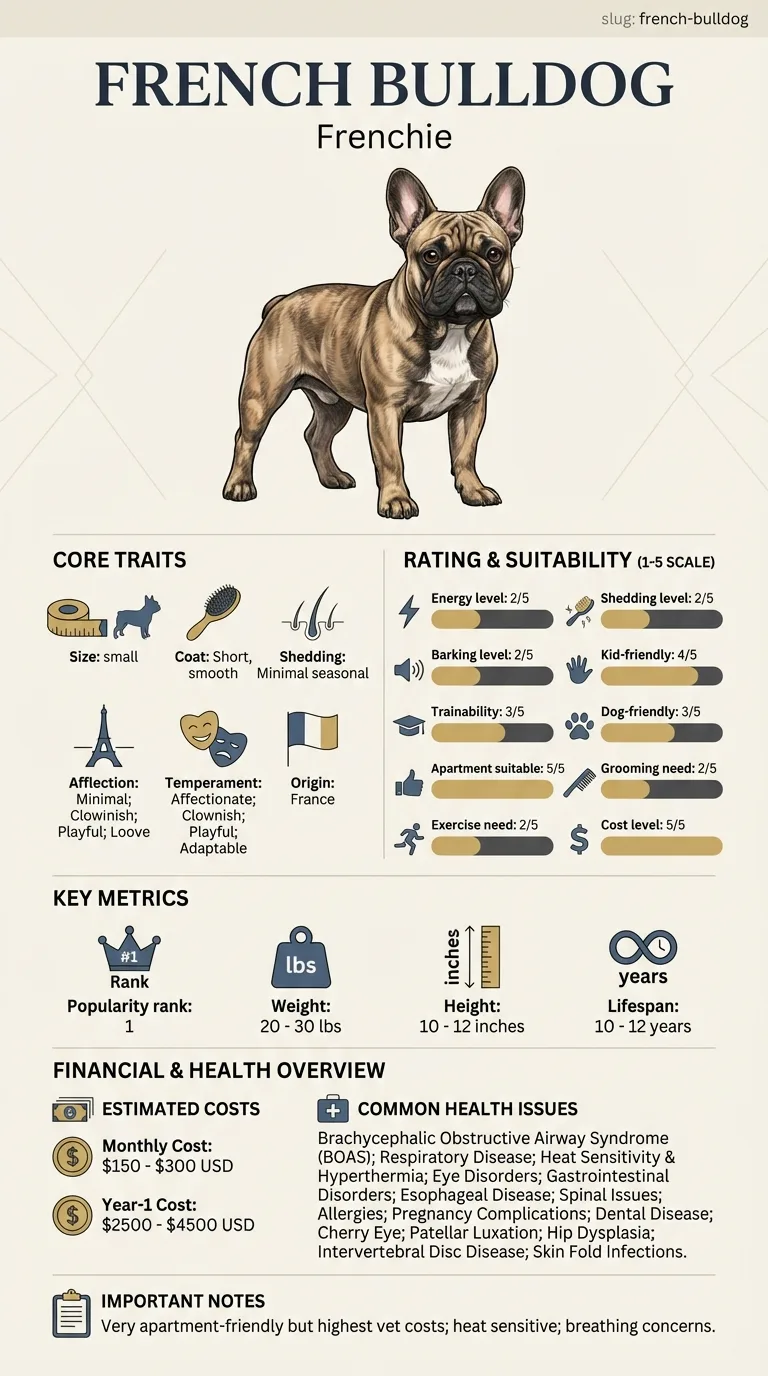
BOAS-related breathing difficulty is this breed's single most consequential health risk, sometimes requiring corrective airway surgery. Skin fold infections are the separate, chronic-management risk this breed's wrinkled structure makes more likely, worsened by frequent exposure to standing water.
These figures reflect New Orleans's near-national-average general pricing, with real skin fold and paw care priced in given how often routine street flooding exposes this low-clearance breed to standing water.
Estimate · source: estimation · confidence: medium · updated 2026-09-05 · not a quote
| Item | Cost range |
|---|---|
One-time setup (initial vet visit, spay/neuter, gear) Covers the first exam, vaccinations, spay/neuter if needed, and basic gear — priced at New Orleans's typical rates. | $440 - $745 |
| Item | Cost range |
|---|---|
Food Close to the national average for a small breed, consistent with New Orleans's general cost of living. | $40 - $64 |
Skin fold and paw care A genuinely elevated cost given how often routine street flooding exposes this breed's skin folds and paws to standing water here. | $13 - $26 |
Heartworm and flea/tick prevention A genuine twelve-month cost given New Orleans's year-round humidity. | $12 - $21 |
Each range starts from a national baseline for this breed's size class and is then adjusted for local cost of living and veterinary pricing. The baselines, and the source each one came from, are listed on our sources page (dataset 2026.09). Two inputs, the purchase price and the emergency reserve, have no published national figure we could verify, so we leave them to you rather than invent them.
These are planning estimates, not quotes. Your own numbers will move with the individual dog, your vet and your insurer. Build a budget with your own figures.
For a French Bulldog in New Orleans, insurance is worth taking seriously given this breed's extensive documented health risks, made more relevant here by how routinely this low-clearance breed is exposed to standing water.
This breed's real BOAS and skin fold statistics make insurance a near-necessity here — buy before a diagnosis, not after, since pre-existing conditions won't be covered.
Self-insuring is reasonable only for a household that's already earmarked real, substantial savings for this exact scenario.
New Orleans's near-average costs are straightforward; the real, routine habit here is managing this breed's frequent exposure to standing water after ordinary rain.
New Orleans's below-sea-level geography and aging drainage system mean street flooding after an ordinary, non-hurricane thunderstorm is a genuine, routine local reality, not a rare event reserved for named storms. For most dogs, a few inches of standing water on a sidewalk is a minor inconvenience. For this breed specifically, whose short legs put its belly and facial wrinkles far closer to that water than a taller dog, routine flooding means real, more frequent exposure to standing water that can carry bacteria and irritate this breed's documented skin fold sensitivity. Toweling off thoroughly after any wet walk, and rerouting around known low-lying blocks after rain, is a genuinely useful habit here beyond just hurricane preparedness.
Year-round humidity makes flea, tick and heartworm prevention a genuine twelve-month cost in New Orleans, and older housing stock without private yards keeps paid dog-walking a real, common line item in the city's denser neighborhoods.
New Orleans's general cost of living otherwise runs close to the national average, a genuinely typical profile for the region.
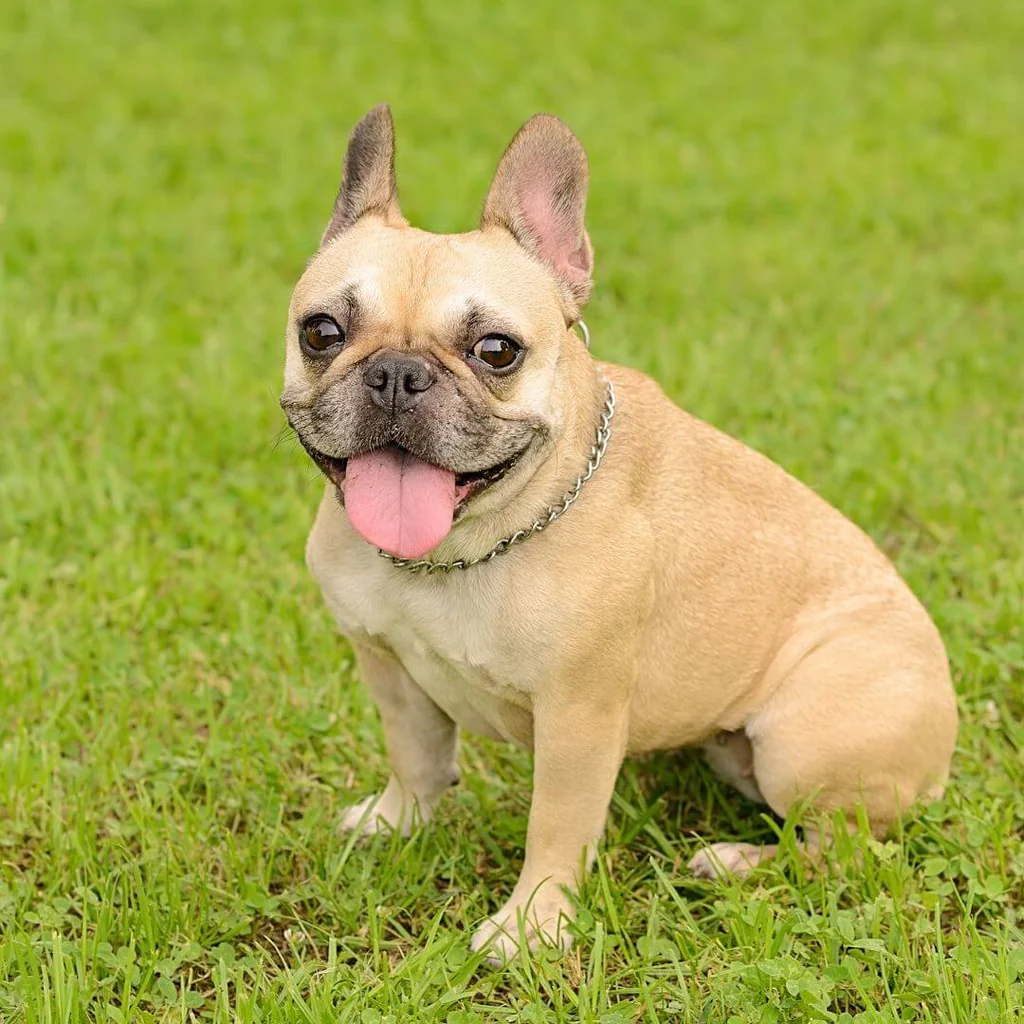
A New Orleans French Bulldog owner headed out for a routine evening walk after a heavy but otherwise unremarkable summer thunderstorm, only to find their usual route ankle-deep in standing water for most of a block. The dog waded through without complaint, but by the time they got home its belly, legs and facial folds were soaked, and the owner realized they'd never thought to dry those areas thoroughly after a normal rainy walk before. A skin fold irritation a few days later, traced back to that walk, changed the routine going forward.
Key takeaway: In New Orleans specifically, this breed's real skin sensitivity means even an ordinary rainy-day walk deserves the same thorough drying routine most owners reserve for an intentional swim.
About $205–$390, close to the national average, consistent with New Orleans's broader cost-of-living profile.
Roughly $3,300–$5,850, including the initial vet exam, spay/neuter if needed, and gear on top of ongoing monthly costs.
Genuinely, yes — New Orleans's below-sea-level geography and aging drainage mean ordinary rain can flood streets, and this breed's short legs mean more frequent belly-level exposure to standing water than a taller dog experiences.
It can — this breed's documented skin fold sensitivity means frequent, thorough drying after a wet walk is a genuinely worthwhile habit in a city with this much routine standing water.
Especially worth pricing out given this breed's extensive documented health risks, bought while the dog is young and before anything is on record.
Around $1,020 covers a typical significant vet visit in this market, reflecting New Orleans's near-national-average general pricing.
About $205–$390/month, $3,300–$5,850 for year one — near average, where routine street flooding after ordinary rain deserves real attention for this low-clearance breed.
This guide is not medical advice. If your dog shows pain, sudden behavior change, or worsening symptoms, consult a licensed veterinarian.
Some links may be affiliate links. We may earn a commission at no extra cost to you. We only suggest products we believe are helpful for dog owners.
We research and check what we publish, but we do not warrant that any figure, date, price, or statement is accurate, complete, or current, and we accept no liability for any loss, cost, injury, or other harm arising from the use of this site. Use it as one reference among several. You remain responsible for your own decisions and for your dog's care - confirm anything that matters with a licensed veterinarian or another qualified professional before you act on it. Full disclaimer.
One sheet with every line item, the emergency fund and when insurance pays off - unlocks on this page.
You get: 12-month budget sheet
No spam. One-click unsubscribe. See our privacy policy.
Preview page 1 before you decide.
