Costs
French Bulldog cost in Indianapolis
About $195–$370/month, $3,050–$5,500 for year one — below average, in a genuinely climate-neutral city that spares this breed its two biggest weather risks.

See French Bulldog price across all cities →
Quick answer
French Bulldog cost in Indianapolis
About $195–$370/month, $3,050–$5,500 for year one — below average, in a genuinely climate-neutral city that spares this breed its two biggest weather risks.
A French Bulldog in Indianapolis costs about $195–$370 a month, with the first year around $3,050–$5,500 — below the national average, in one of the genuinely easier climates on this site for a breed defined by weather extremes.
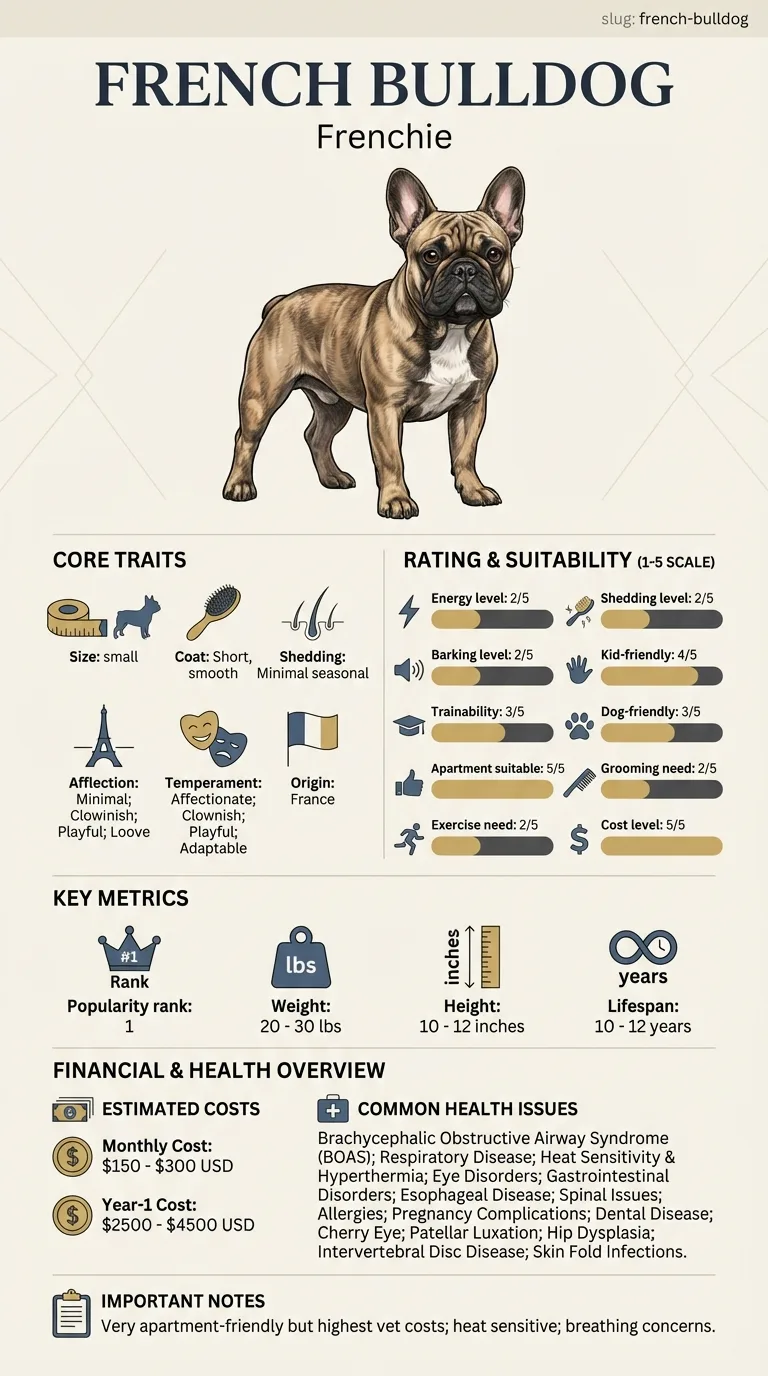
BOAS-related breathing difficulty is this breed's single most consequential health risk, sometimes requiring corrective airway surgery. Spinal issues, including IVDD, are the separate structural risk this breed's long back and short legs make more likely than in most breeds.
These figures reflect Indianapolis's below-national-average general pricing, with a note on the real, lower weather-management burden this breed carries in a genuinely temperate climate.
Estimate · source: estimation · confidence: medium · updated 2026-09-05 · not a quote
| Item | Cost range |
|---|---|
One-time setup (initial vet visit, spay/neuter, gear) Covers the first exam, vaccinations, spay/neuter if needed, and basic gear — priced at Indianapolis's below-average rates. | $420 - $715 |
| Item | Cost range |
|---|---|
Food Below the national average for a small breed, consistent with Indianapolis's generally lower price level. | $37 - $60 |
Heartworm and flea/tick prevention A moderate, clearly seasonal window rather than year-round, given Indianapolis's temperate climate. | $10 - $18 |
Each range starts from a national baseline for this breed's size class and is then adjusted for local cost of living and veterinary pricing. The baselines, and the source each one came from, are listed on our sources page (dataset 2026.09). Two inputs, the purchase price and the emergency reserve, have no published national figure we could verify, so we leave them to you rather than invent them.
These are planning estimates, not quotes. Your own numbers will move with the individual dog, your vet and your insurer. Build a budget with your own figures.
For a French Bulldog in Indianapolis, insurance is worth taking seriously given this breed's extensive documented health risks, independent of the region's genuinely favorable climate and general cost of living.
This breed's real BOAS and spinal-disc statistics make insurance a near-necessity here — buy before a diagnosis, not after, since pre-existing conditions won't be covered.
Self-insuring is reasonable only for a household that's already earmarked real, substantial savings for this exact scenario.
Indianapolis's below-average costs and genuinely milder climate both work in this breed's favor, freeing up budget for the health needs that matter regardless of location.
This breed's two defining weather vulnerabilities, real heat intolerance and real cold intolerance, both stem from the same short coat and restricted airway, and most cities this site covers force owners to manage at least one of them seriously. Indianapolis's temperate, moderate climate is a genuine outlier: summers here don't carry the oppressive, sustained humidity that turns heat into a daily emergency risk in the Gulf South, and winters, while real, don't reach the sustained sub-zero stretches that make frostbite a serious concern farther north or at higher elevation. That doesn't mean zero precaution is needed, but it does mean this breed's owners here spend less time and money actively managing weather than almost anywhere else on this site.
Indianapolis's general cost of living runs modestly below the national average, a real, welcome offset against this breed's inherently high national cost tier, and the region's moderate, clearly seasonal parasite-prevention window keeps that recurring cost lower than in a year-round climate.
Most Indianapolis-area owners have yard access as the norm, though this breed's documented low exercise need makes that more of a convenience than a necessity.

A first-time Indianapolis French Bulldog owner, having read extensively about the breed's heat and cold risks before adopting, spent the dog's first full year braced for some kind of weather-related emergency that never quite materialized the way online forums had described. Summer days warm enough to warrant caution were real but infrequent, and winter cold snaps, while genuine, rarely reached the sustained extremes the owner had prepared for. They still kept a close eye on the dog during the handful of genuinely hot or cold days each year, but found the day-to-day reality calmer than expected.
Key takeaway: In Indianapolis specifically, this breed's real weather risks are still worth taking seriously, but the city's genuinely moderate climate means those risks show up far less often than in many other cities this site covers.
About $195–$370, below the national average, consistent with Indianapolis's generally lower cost of living.
Roughly $3,050–$5,500, including the initial vet exam, spay/neuter if needed, and gear on top of ongoing monthly costs.
In real, meaningful ways, yes — the city avoids both the oppressive, sustained humidity that makes heat dangerous in the Gulf South and the extreme sub-zero cold that makes frostbite a serious concern farther north, sparing this breed's owners its two biggest weather-related worries.
Some, yes — normal seasonal caution during the warmest summer stretches and coldest winter snaps still applies, but the sustained, extreme conditions that drive real risk elsewhere on this site are less of a factor here.
Especially worth pricing out given this breed's extensive documented health risks, bought while the dog is young and before anything is on record.
Around $970 covers a typical significant vet visit in this market, reflecting Indianapolis's below-average general pricing.
About $195–$370/month, $3,050–$5,500 for year one — below average, in a genuinely climate-neutral city that spares this breed its two biggest weather risks.
This guide is not medical advice. If your dog shows pain, sudden behavior change, or worsening symptoms, consult a licensed veterinarian.
Some links may be affiliate links. We may earn a commission at no extra cost to you. We only suggest products we believe are helpful for dog owners.
We research and check what we publish, but we do not warrant that any figure, date, price, or statement is accurate, complete, or current, and we accept no liability for any loss, cost, injury, or other harm arising from the use of this site. Use it as one reference among several. You remain responsible for your own decisions and for your dog's care - confirm anything that matters with a licensed veterinarian or another qualified professional before you act on it. Full disclaimer.
One sheet with every line item, the emergency fund and when insurance pays off - unlocks on this page.
You get: 12-month budget sheet
No spam. One-click unsubscribe. See our privacy policy.
Preview page 1 before you decide.
