Costs
Brussels Griffon cost in Kansas City
About $76–$144/month, $1,150–$2,050 for year one — genuinely average, with a real, often-overlooked note on this breed's documented Hip Dysplasia risk despite its small size.

Quick answer
Brussels Griffon cost in Kansas City
About $76–$144/month, $1,150–$2,050 for year one — genuinely average, with a real, often-overlooked note on this breed's documented Hip Dysplasia risk despite its small size.
A Brussels Griffon in Kansas City costs about $76–$144 a month, with the first year around $1,150–$2,050 — a genuinely average price, worth a real, often-overlooked note: this breed's documented Hip Dysplasia risk surprises many owners who assume it's strictly a large-breed problem.
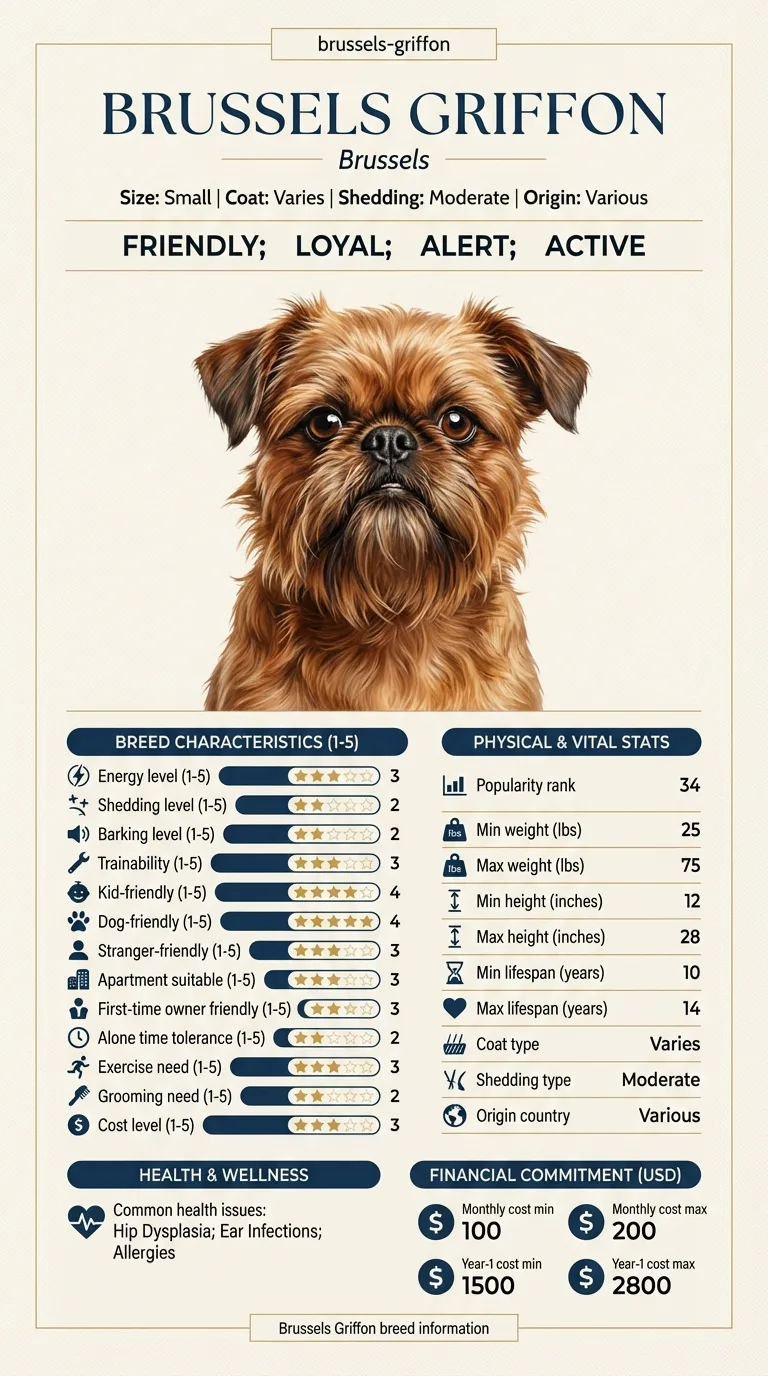
Brachycephalic Airway Syndrome and patellar luxation are the breed's more commonly documented health risks most likely to produce an unplanned bill, alongside this breed's real, documented Eye Injuries risk. This breed's genuine attachment to its people means alone-time tolerance is a real ongoing consideration, requiring attention regardless of city.
These figures reflect Kansas City's genuinely average general pricing, with a real note on the breeder-screening question this breed's documented Hip Dysplasia risk raises.
Estimate · source: estimation · confidence: medium · updated 2026-09-05 · not a quote
| Item | Cost range |
|---|---|
One-time setup (initial vet visit, spay/neuter, gear) Covers the first exam, vaccinations, spay/neuter if needed, and basic gear — priced at Kansas City's near-average rates. | $295 - $500 |
| Item | Cost range |
|---|---|
Food Priced close to the national average for this breed's genuinely small size. | $26 - $42 |
Seasonal flea, tick & heartworm prevention A genuine but bounded cost given Kansas City's moderate, clearly seasonal climate rather than a year-round warm one. | $9 - $17 |
For a Brussels Griffon in Kansas City, insurance is genuinely worth taking seriously given this breed's documented airway, joint and eye-injury risks, independent of the metro's average general cost of living.
Given this breed's real, varied documented health risk profile, insurance purchased while the dog is young is worth pricing out seriously before anything is on record.
Owners who've built a genuinely solid emergency fund and are comfortable managing a procedure or ongoing condition themselves can reasonably self-insure instead.
Kansas City's average costs are a fair baseline, and asking the right breeder questions up front costs nothing but genuinely helps.
Hip Dysplasia carries a real reputation as a large-breed concern, tied to conditions like German Shepherds and Labradors far more often in general awareness than to a dog this small. That reputation is only partly deserved: this breed's documented health-issue list includes Hip Dysplasia directly, a genuine risk worth taking seriously despite the breed's compact size.
Asking a Kansas City-area breeder for OFA hip-screening results on both parents before committing is a real, practical step, the same due diligence worth applying regardless of whether a breed has a large-breed reputation for the condition or not.
Kansas City otherwise runs close to the national average across food, routine vet care and grooming, and the region's moderate, clearly seasonal climate keeps parasite prevention a genuine but bounded cost rather than a year-round one.

A Kansas City Brussels Griffon owner assumed hip problems were something only larger dogs faced, and was genuinely caught off guard when their dog began favoring a hind leg at just two years old, with X-rays confirming mild hip dysplasia. Retroactively learning the parents had never been OFA-screened made the diagnosis sting more, and the family made screening documentation a non-negotiable ask when they later added a second dog.
Key takeaway: In Kansas City specifically, this breed's real documented Hip Dysplasia risk is worth taking seriously despite its small size, starting with the breeder-screening question.
About $76–$144, a genuinely average price, consistent with Kansas City's typical, unremarkable cost of living.
Roughly $1,150–$2,050, including the initial vet exam, spay/neuter if needed, and gear on top of ongoing monthly costs.
Yes — despite Hip Dysplasia's large-breed reputation, this breed's documented health-issue list includes it directly, worth taking seriously regardless of size.
Ask for OFA hip-screening results on both parents before committing, the same due diligence worth applying to any breed with a documented hip-dysplasia risk.
Worth pricing out given the breed's documented airway, joint and eye-injury risks, bought while the dog is young and before anything is on record.
Around $650 covers a typical significant vet visit in this market, reflecting Kansas City's near-average local pricing.
About $76–$144/month, $1,150–$2,050 for year one — genuinely average, with a real, often-overlooked note on this breed's documented Hip Dysplasia risk despite its small size.
This guide is not medical advice. If your dog shows pain, sudden behavior change, or worsening symptoms, consult a licensed veterinarian.
Some links may be affiliate links. We may earn a commission at no extra cost to you. We only suggest products we believe are helpful for dog owners.
One sheet with every line item, the emergency fund and when insurance pays off - unlocks on this page.
You get: 12-month budget sheet
No spam. One-click unsubscribe. See our privacy policy.
Preview page 1 before you decide.