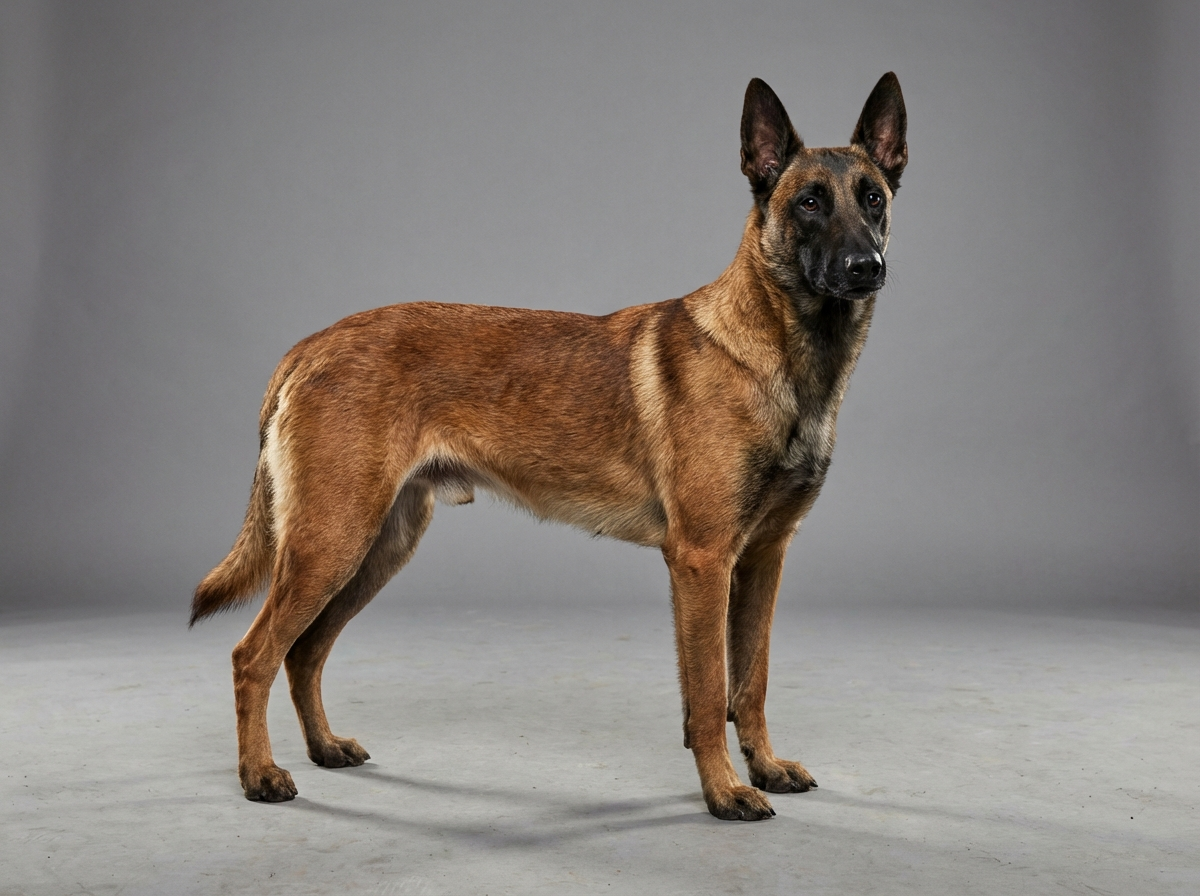
Costs
Belgian Malinois cost in Chicago
About $155–$295/month, $2,300–$4,100 for year one — above average, with a genuinely strong local protection-sport and trainer scene for this demanding breed.

See Belgian Malinois price across all cities →
Quick answer
Belgian Malinois cost in Chicago
About $155–$295/month, $2,300–$4,100 for year one — above average, with a genuinely strong local protection-sport and trainer scene for this demanding breed.
A Belgian Malinois in Chicago costs about $155–$295 a month, with the first year around $2,300–$4,100 — above the national average, reflecting both Chicago's major-metro pricing and this breed's genuinely demanding needs.
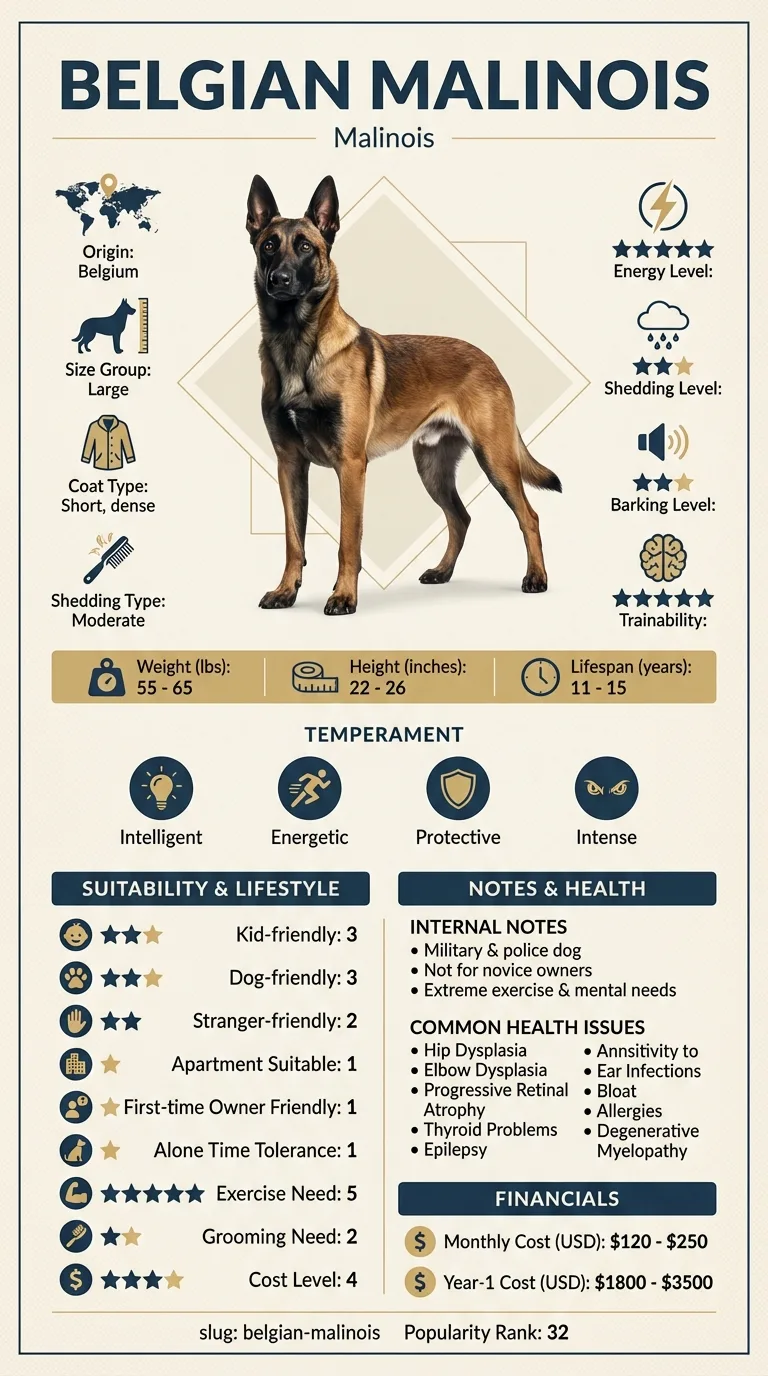
Hip and elbow dysplasia, epilepsy, and a documented sensitivity to anesthesia are the breed's most consequential health risks — the anesthesia sensitivity specifically means any surgical procedure needs a vet aware of and prepared for it in advance. Bloat is a separate, sudden true emergency this breed also carries elevated risk for.
These figures reflect Chicago's above-national-average major-metro pricing combined with this breed's inherently higher cost tier, with professional training costs priced at a premium given the city's strong but competitively priced trainer market.
Estimate · source: estimation · confidence: medium · updated 2026-09-05 · not a quote
| Item | Cost range |
|---|---|
One-time setup (initial vet visit, spay/neuter, gear) Covers the first exam, vaccinations, spay/neuter if needed (with anesthesia-sensitivity precautions), and gear sized for the breed's adult weight. | $460 - $780 |
| Item | Cost range |
|---|---|
Food Above the national average for a large, highly active working breed, consistent with Chicago's major-metro pricing. | $60 - $95 |
Professional training / protection-sport club A genuinely valuable, near-essential cost for this breed given its intensity and working heritage; Chicago's active trainer scene offers real options at varying price points. | $60 - $150 |
Flea & tick prevention Chicago's real winters keep this seasonal rather than year-round. | $12 - $23 |
Each range starts from a national baseline for this breed's size class and is then adjusted for local cost of living and veterinary pricing. The baselines, and the source each one came from, are listed on our sources page (dataset 2026.09). Two inputs, the purchase price and the emergency reserve, have no published national figure we could verify, so we leave them to you rather than invent them.
These are planning estimates, not quotes. Your own numbers will move with the individual dog, your vet and your insurer. Build a budget with your own figures.
For a Belgian Malinois in Chicago, insurance is especially worth taking seriously given the combination of this breed's documented orthopedic, neurological and bloat risks with Chicago's above-average vet pricing.
Given the breadth of this breed's documented risk profile and Chicago's premium pricing, insurance purchased while the dog is young is one of the higher-value purchases an owner here can make.
Owners who've built a genuinely large emergency fund, sized realistically for Chicago-area specialist pricing, and are comfortable managing a serious case's cost themselves can reasonably self-insure instead.
Chicago's baseline costs are largely fixed and above average; the real savings lever for this specific breed is investing early in proper training to avoid far costlier behavioral consequences later.
A Belgian Malinois is a working breed in the fullest sense — the same breed used by military and police K9 units worldwide — and that heritage isn't decorative. This dog needs a genuinely experienced owner, one to two hours or more of serious daily exercise, and structured, professional training starting early to channel its intensity productively rather than destructively. Chicago's size and diversity have supported a real concentration of experienced protection-sport clubs (Schutzhund/IGP, French Ring) and professional working-dog trainers, a genuinely useful local resource for an owner committed to giving this breed the structure it needs.
One health fact specific to this breed deserves real attention regardless of city: a documented sensitivity to anesthesia means any surgical procedure — a routine spay/neuter included — needs a veterinarian who knows to adjust dosing and monitoring protocols accordingly. Confirming a Chicago-area vet's familiarity with this before any procedure, not after, is a genuinely important step that costs nothing but a phone call.
Chicago's general cost of living runs above the national average, consistent with its status as a major metro, and that shows up across food, routine vet care and training-class pricing alike for a breed already priced at the higher end nationally.

A Chicago Belgian Malinois owner, new to working breeds, initially struggled to manage the dog's intensity with general obedience classes alone. A referral to an experienced protection-sport club, with a multi-week waitlist, eventually gave the dog a structured, high-value outlet that regular classes hadn't provided. The dog's destructive behavior at home dropped noticeably within a couple of months of starting the specialized program, despite the initial delay in getting in.
Key takeaway: For a breed this intense, generic training often isn't enough — Chicago's access to genuinely specialized working-dog trainers, even with a wait, is worth pursuing rather than settling for a less-suited local alternative.
About $155–$295, above the national average, reflecting both Chicago's major-metro pricing and this breed's inherently higher cost tier given its size and training needs.
Roughly $2,300–$4,100, including the initial vet exam, spay/neuter if needed, professional training, and gear on top of ongoing monthly costs.
In terms of training resources, genuinely yes — the city's size has supported a real concentration of experienced protection-sport clubs and professional working-dog trainers, valuable for a breed that needs structured, professional guidance from an early age.
Belgian Malinois carry a documented sensitivity to anesthesia, meaning any surgical procedure needs a vet who adjusts dosing and monitoring protocols accordingly — worth confirming with a Chicago-area vet before any procedure, including a routine spay or neuter.
Worth pricing out given the breed's hip/elbow dysplasia risk, epilepsy rate, and bloat risk — Chicago's above-average vet pricing makes any of these more expensive here than in a typical market.
Around $1,000 covers a typical significant vet visit in this market, reflecting both Chicago's above-average major-metro pricing and this breed's generally higher cost tier.
About $155–$295/month, $2,300–$4,100 for year one — above average, with a genuinely strong local protection-sport and trainer scene for this demanding breed.
This guide is not medical advice. If your dog shows pain, sudden behavior change, or worsening symptoms, consult a licensed veterinarian.
Some links may be affiliate links. We may earn a commission at no extra cost to you. We only suggest products we believe are helpful for dog owners.
We research and check what we publish, but we do not warrant that any figure, date, price, or statement is accurate, complete, or current, and we accept no liability for any loss, cost, injury, or other harm arising from the use of this site. Use it as one reference among several. You remain responsible for your own decisions and for your dog's care - confirm anything that matters with a licensed veterinarian or another qualified professional before you act on it. Full disclaimer.
One sheet with every line item, the emergency fund and when insurance pays off - unlocks on this page.
You get: 12-month budget sheet
No spam. One-click unsubscribe. See our privacy policy.
Preview page 1 before you decide.