Costs
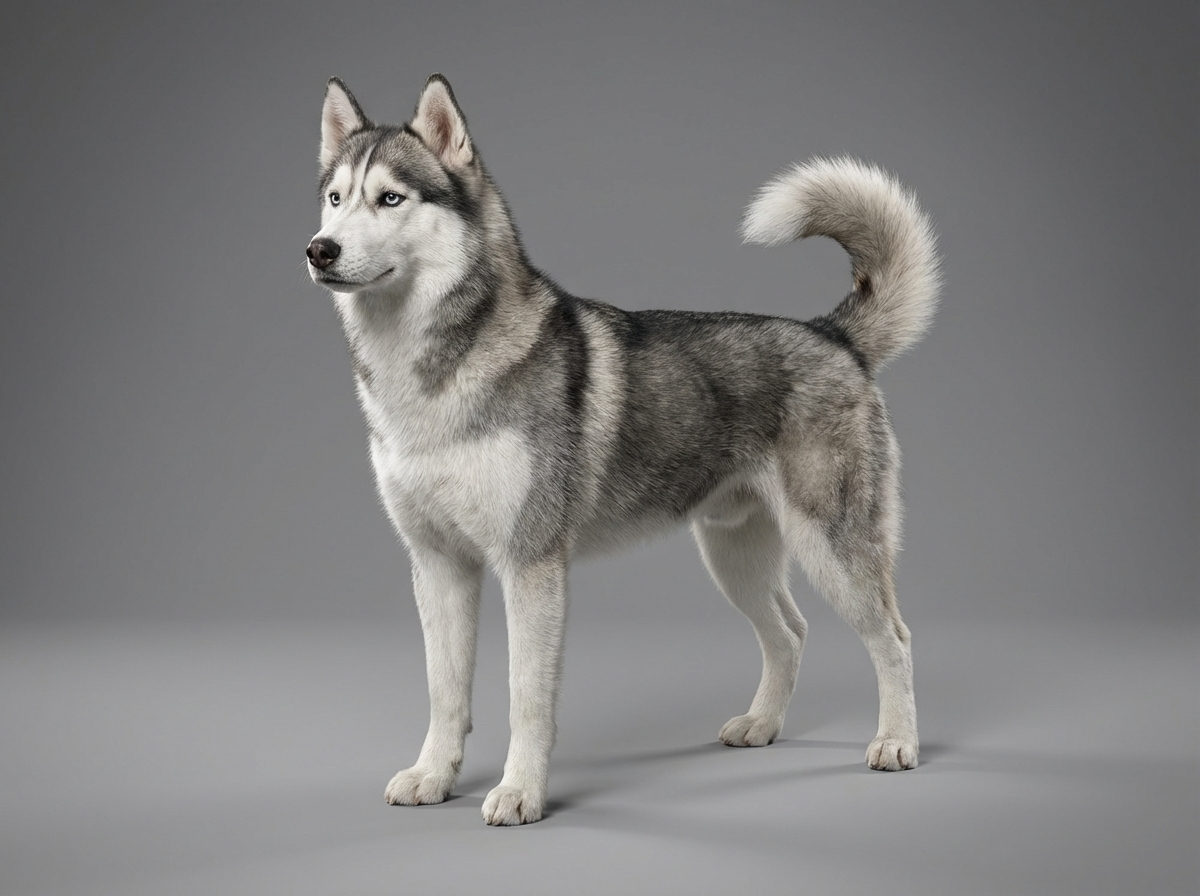
Siberian Husky cost in Burlington
About $130–$260/month, $1,850–$3,400 for year one — near average, in a genuine Nordic-ski climate close to ideal for this breed's original sled-dog purpose.

See Siberian Husky price across all cities →
Quick answer
Siberian Husky cost in Burlington
About $130–$260/month, $1,850–$3,400 for year one — near average, in a genuine Nordic-ski climate close to ideal for this breed's original sled-dog purpose.
A Siberian Husky in Burlington costs about $130–$260 a month, with the first year around $1,850–$3,400 — close to the national average, in a genuine Nordic-ski climate that's about as close as this breed gets to its original working purpose.
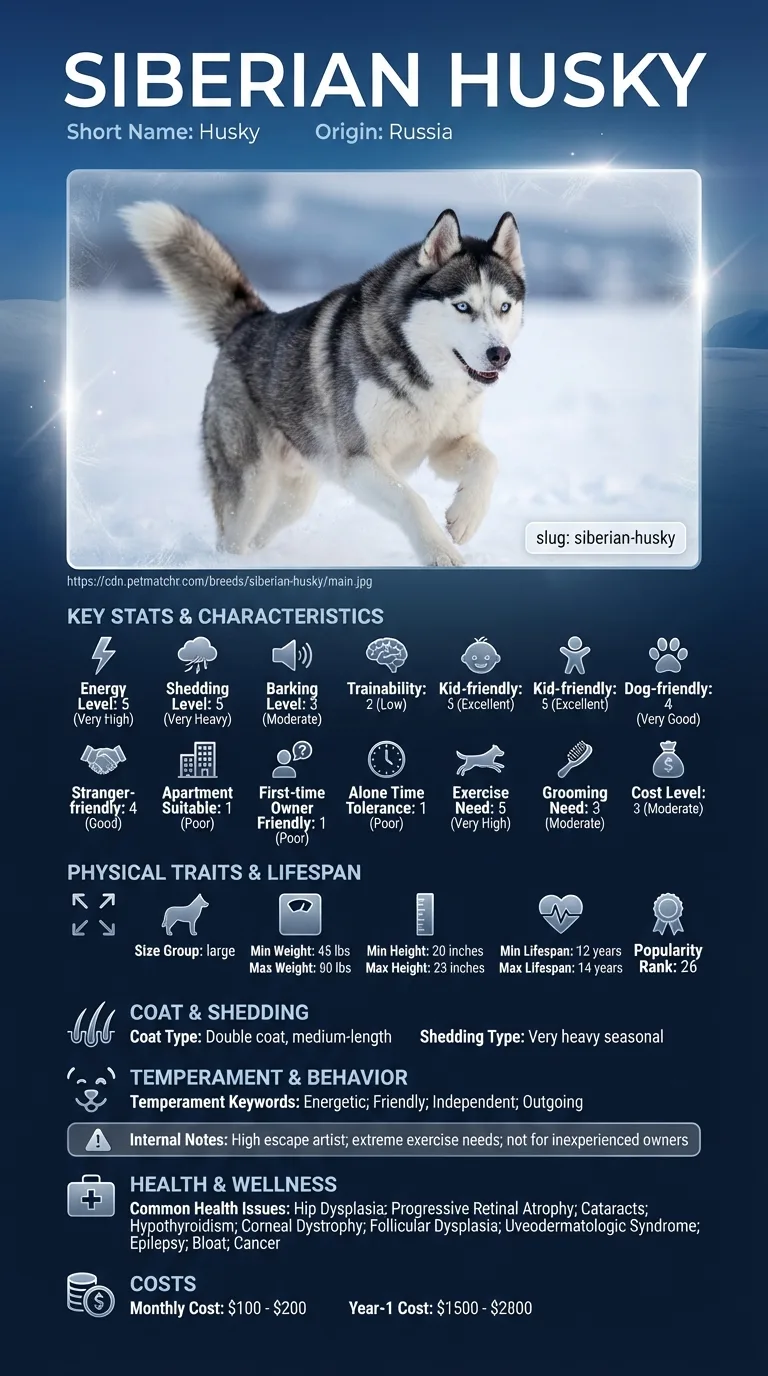
Bloat is a sudden emergency risk given this breed's deep chest — no warning, immediate surgery needed. Hip dysplasia and cancer are the separate, ongoing risks worth budgeting real, recurring vet attention for.
These figures reflect Burlington's near-national-average pricing, with a note on the genuinely limited local oncology and eye-specialist selection and this breed's real fit with Vermont's Nordic winter climate.
Estimate · source: estimation · confidence: low · updated 2026-09-05 · not a quote
| Item | Cost range |
|---|---|
Skijoring or sled-activity gear A genuinely appropriate, worthwhile investment given this breed's real working heritage and Vermont's established Nordic ski culture. | $80 - $200 |
One-time setup (initial vet visit, spay/neuter, gear) Covers the first exam, vaccinations, spay/neuter if needed, and gear sized for this breed's large adult weight. | $345 - $585 |
| Item | Cost range |
|---|---|
Food Close to the national average for a large, active breed, consistent with Burlington's general cost of living. | $52 - $85 |
Flea & tick prevention One of the shorter active seasons this site covers, given Vermont's real, extended winters. | $8 - $16 |
Each range starts from a national baseline for this breed's size class and is then adjusted for local cost of living and veterinary pricing. The baselines, and the source each one came from, are listed on our sources page (dataset 2026.09). Two inputs, the purchase price and the emergency reserve, have no published national figure we could verify, so we leave them to you rather than invent them.
These are planning estimates, not quotes. Your own numbers will move with the individual dog, your vet and your insurer. Build a budget with your own figures.
For a Siberian Husky in Burlington, insurance is less about local pricing and more about covering the cost and logistics of a specialist referral to Boston, given this breed's documented cancer, eye and bloat risk.
Given how commonly this breed faces cancer and eye disease, insurance purchased while the dog is young and healthy is one of the higher-value purchases an owner of this breed can make anywhere.
Owners who've built a genuinely large emergency fund and are comfortable managing a serious case's cost themselves can reasonably self-insure instead.
Burlington already offers this breed a real climate and activity match; the real planning here is around the market's small size and the referral distance to Boston.
This breed's dense double coat and extreme documented exercise needs were shaped by generations of pulling sleds across exactly the kind of cold, snowy terrain Vermont offers for real months out of the year. Burlington's established Nordic skiing culture, including organized skijoring events where a harnessed dog pulls a skier across snow, gives this breed a genuine, appropriate outlet most cities this site covers simply can't match, a real, structured alternative to open-ended backyard zoomies that actually engages the breed's working instincts.
Vermont's small population means Burlington, as the state's largest city, has solid general veterinary care but genuinely fewer clinics to comparison-shop pricing between than a typical metro this site covers, and a case requiring board-certified oncology or ophthalmology care, relevant given this breed's documented cancer and eye disease risk, would likely mean a trip toward Boston.
Burlington's general cost of living runs close to the national average, and Vermont's real winters keep flea-and-tick prevention on one of the shorter seasonal windows this site covers.

A Burlington Husky owner who'd struggled for years to tire out their dog through mild, ordinary walks discovered a local skijoring club almost by accident during a winter farmers market conversation. Their dog's transformation during the first session, pulling with genuine, focused enthusiasm across a snowy trail, was immediate and obvious in a way months of regular walks had never produced. What had felt like an endlessly restless dog turned out to simply be a dog waiting for the right job.
Key takeaway: In Burlington specifically, this breed's real working heritage can find a genuine, structured outlet that a milder or warmer city on this site simply couldn't offer.
About $130–$260, close to the national average, consistent with Burlington's broader cost-of-living profile.
Roughly $1,850–$3,400, including the initial vet exam, spay/neuter if needed, and gear on top of ongoing monthly costs.
In a real, meaningful way, yes — Vermont's genuine winters and established Nordic skiing and skijoring culture give this breed's cold-adapted coat and extreme exercise needs a real, appropriate outlet most cities this site covers can't offer.
General veterinary care is solid, but Vermont's small population means genuinely fewer clinics, and a case requiring board-certified oncology or ophthalmology, relevant given this breed's documented cancer and eye disease risk, would likely mean a trip toward Boston.
Worth pricing out given the breed's documented cancer and bloat risk, bought while the dog is young and before anything is on record.
Around $760 covers a typical local emergency vet visit. If a referral out of the area becomes necessary, plan for a larger fund to cover both the procedure and the travel involved.
About $130–$260/month, $1,850–$3,400 for year one — near average, in a genuine Nordic-ski climate close to ideal for this breed's original sled-dog purpose.
This guide is not medical advice. If your dog shows pain, sudden behavior change, or worsening symptoms, consult a licensed veterinarian.
Some links may be affiliate links. We may earn a commission at no extra cost to you. We only suggest products we believe are helpful for dog owners.
We research and check what we publish, but we do not warrant that any figure, date, price, or statement is accurate, complete, or current, and we accept no liability for any loss, cost, injury, or other harm arising from the use of this site. Use it as one reference among several. You remain responsible for your own decisions and for your dog's care - confirm anything that matters with a licensed veterinarian or another qualified professional before you act on it. Full disclaimer.
One sheet with every line item, the emergency fund and when insurance pays off - unlocks on this page.
You get: 12-month budget sheet
No spam. One-click unsubscribe. See our privacy policy.
Preview page 1 before you decide.