Costs
What is the Siberian Husky first year cost?
Budget $2,300 to $6,500 for year one with a Siberian Husky in Anchorage.

See Siberian Husky price across all cities →
Quick answer
What is the Siberian Husky first year cost?
Budget $2,300 to $6,500 for year one with a Siberian Husky in Anchorage.
Bringing a Siberian Husky into your life can be exciting, but it's essential to understand the costs involved.
Be aware that costs can spike due to emergencies or big-ticket items like veterinary care, quality food, and training.
The total cost of owning a Siberian Husky in Anchorage can range widely based on various factors. Initial expenses like adoption, supplies, and training add up quickly. Monthly costs, including food, grooming, and vet care, are also significant, making budgeting essential for potential owners.
Estimate · source: us average · confidence: medium · updated 2026-09-05 · not a quote
| Item | Cost range |
|---|---|
Adoption or Purchase Fee Costs vary greatly depending on whether you adopt or buy from a breeder. | $300 - $2000 |
Initial Supplies (collar, leash, bed, etc.) Essential for a comfortable start for your Husky. | $150 - $300 |
Training Classes Training is crucial for this independent breed. | $100 - $500 |
| Item | Cost range |
|---|---|
Food High-quality food is important for their health and energy. | $50 - $100 |
Grooming Regular grooming is essential due to their heavy shedding. | $30 - $50 |
Pet Insurance Coverage for health issues can save you money in the long run. | $40 - $100 |
Miscellaneous (toys, treats, etc.) Budget for fun and engagement for your Husky. | $10 - $25 |
Each range starts from a national baseline for this breed's size class and is then adjusted for local cost of living and veterinary pricing. The baselines, and the source each one came from, are listed on our sources page (dataset 2026.09). Two inputs, the purchase price and the emergency reserve, have no published national figure we could verify, so we leave them to you rather than invent them.
These are planning estimates, not quotes. Your own numbers will move with the individual dog, your vet and your insurer. Build a budget with your own figures.
When considering the Siberian Husky cost in Anchorage, pet insurance can play a significant role in managing expenses.
Insurance is a smart choice if your Husky has a higher risk of health problems, like hip dysplasia or eye conditions.
Some owners prefer to set up a savings account for their pet’s health care instead.
Owning a Siberian Husky can come with costs, but there are several ways to save money while ensuring your furry friend stays happy and healthy. Here are some practical tips to help you manage expenses.
One common oversight is small recurring fees. Things like grooming can add up quickly, especially for a Husky with a heavy double coat. Expect to spend around $50 to $100 every few months for grooming services, especially during shedding season. Additionally, basic supplies like collars, leashes, and food bowls can cost around $50 to $100 upfront, but you may find yourself replacing them as your Husky grows or wears them out. It's wise to set aside a few hundred dollars each year for these surprise vet bills, as they can range from $100 to $400 per visit. Finally, lifestyle-driven extras can become significant expenses. If you're an active person, you might want to invest in doggy daycare or training classes to keep your Husky well-socialized and exercised. By being mindful of these hidden costs, you can better prepare for the overall financial commitment of owning a Siberian Husky in Anchorage.
When considering the Siberian Husky cost in Anchorage, several local factors come into play. Rent prices in Anchorage can be higher than the national average, which impacts your overall budget for pet ownership.

Veterinary care is an essential part of owning a Siberian Husky. In Anchorage, vet bills can range from $50 to $150 per visit, depending on the service.

The climate in Anchorage can be quite cold, which is generally favorable for Siberian Huskies. However, during extreme weather, you may need to invest in proper gear for your dog, such as insulated dog houses or warm coats. These unexpected costs should be part of your financial planning.

In Anchorage, there are a variety of dog services available, including training classes and dog parks. However, the competition for quality services can drive prices up. It's important to research and compare options to ensure you're getting the best value for your money.

Jessica, a nurse in Anchorage, was thrilled to welcome a Siberian Husky named Luna into her home. She knew the Siberian Husky cost in Anchorage would be significant. In the first year, she budgeted between $1,500 and $2,800 for everything from puppy training classes to vet visits. She set aside about $200 a month for food and supplies, but a surprise came when Luna needed emergency dental surgery that cost $800, dipping into her savings. Jessica learned the importance of having an emergency fund and now includes unexpected vet costs in her monthly budget. It wasn’t easy, but she found ways to cut costs elsewhere, like making homemade treats and being diligent about grooming to prevent high vet bills.
Key takeaway: Expect the Siberian Husky cost in Anchorage to include regular monthly expenses and prepare for unexpected vet bills by budgeting an emergency fund.
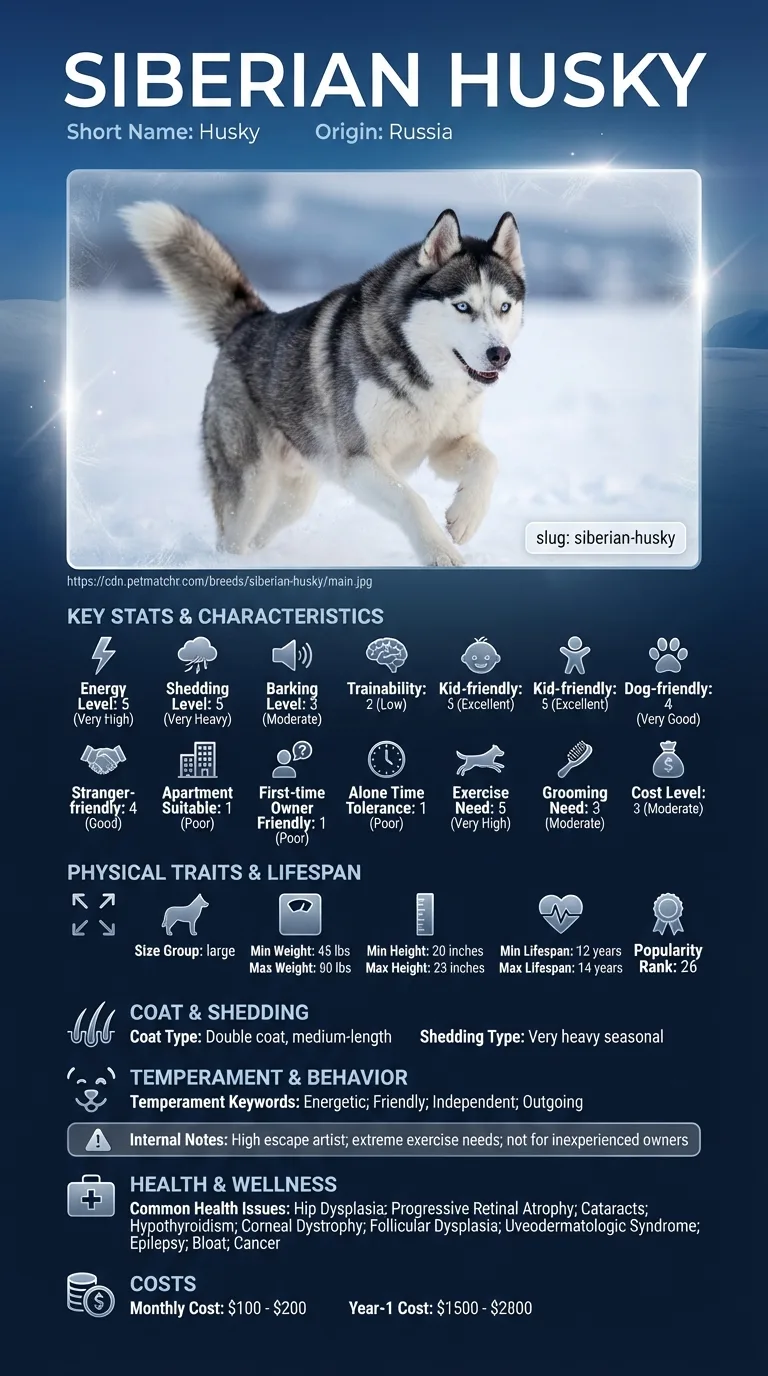
The Siberian Husky can be moderately expensive to own. Initial costs, like adoption fees, are generally between $500 and $1,500, while ongoing expenses can range from $100 to $200 monthly.
In Anchorage, the cost of a Siberian Husky can vary.
Pet insurance for a Siberian Husky typically costs around $30 to $60 per month.
Vet bills for a Siberian Husky in Anchorage can be significant. Routine check-ups can cost around $200 annually, but emergency care could run into the thousands depending on the situation.
This covers food, grooming, and regular vet visits.
This estimate includes initial expenses like vaccinations, spaying/neutering, and supplies.
Common expenses for a Siberian Husky include food, grooming, vet bills, and training. These can accumulate, so budgeting is essential to keep costs manageable.
This includes routine exams, vaccinations, and preventive care.
Considering the potential health issues that Siberian Huskies can face, pet insurance can be a smart investment.
Food costs for a Siberian Husky in Anchorage can range from $50 to $100 per month. Huskies are large dogs with high energy levels, so they need high-quality food. Always consult with your vet for the best dietary recommendations.
This can cover unexpected vet visits, accidents, or sudden illnesses. Being prepared can save you stress and financial strain when you need it most.
Yes, owning a Siberian Husky in Anchorage can come with unique costs. For example, you might need to invest more in grooming during shedding season due to their heavy coat. Additionally, housing restrictions in some areas may affect your ability to find pet-friendly homes.
Budget $2,300 to $6,500 for year one with a Siberian Husky in Anchorage.
Keeping a Siberian Husky in Anchorage costs $130 to $300 a month. Food is the biggest piece at $50 to $100.
Pet insurance for a Siberian Husky in Anchorage runs $40 to $100 a month, moving with the deductible and payout limit you choose.
This guide is not medical advice. If your dog shows pain, sudden behavior change, or worsening symptoms, consult a licensed veterinarian.
Some links may be affiliate links. We may earn a commission at no extra cost to you. We only suggest products we believe are helpful for dog owners.
We research and check what we publish, but we do not warrant that any figure, date, price, or statement is accurate, complete, or current, and we accept no liability for any loss, cost, injury, or other harm arising from the use of this site. Use it as one reference among several. You remain responsible for your own decisions and for your dog's care - confirm anything that matters with a licensed veterinarian or another qualified professional before you act on it. Full disclaimer.
One sheet with every line item, the emergency fund and when insurance pays off - unlocks on this page.
You get: 12-month budget sheet
No spam. One-click unsubscribe. See our privacy policy.
Preview page 1 before you decide.