Costs
Shetland Sheepdog cost in Newark
$94–$177 monthly and $1,298–$2,714 in year one, above average. The local advantage is size: at fifteen to twenty-five pounds this breed clears the twenty-five-pound cap that governs most rental pet policies.

See Shetland Sheepdog price across all cities →
Quick answer
Shetland Sheepdog cost in Newark
$94–$177 monthly and $1,298–$2,714 in year one, above average. The local advantage is size: at fifteen to twenty-five pounds this breed clears the twenty-five-pound cap that governs most rental pet policies.
New Jersey is the most densely populated state in the country, and Newark is where that density is concentrated hardest. The consequence for a dog owner is that most people here rent, and renting with a dog in this market means negotiating with a document rather than with a landlord: a pet addendum, a non-refundable fee, monthly pet rent, and almost always a weight limit. That last item is where this breed does unusually well.
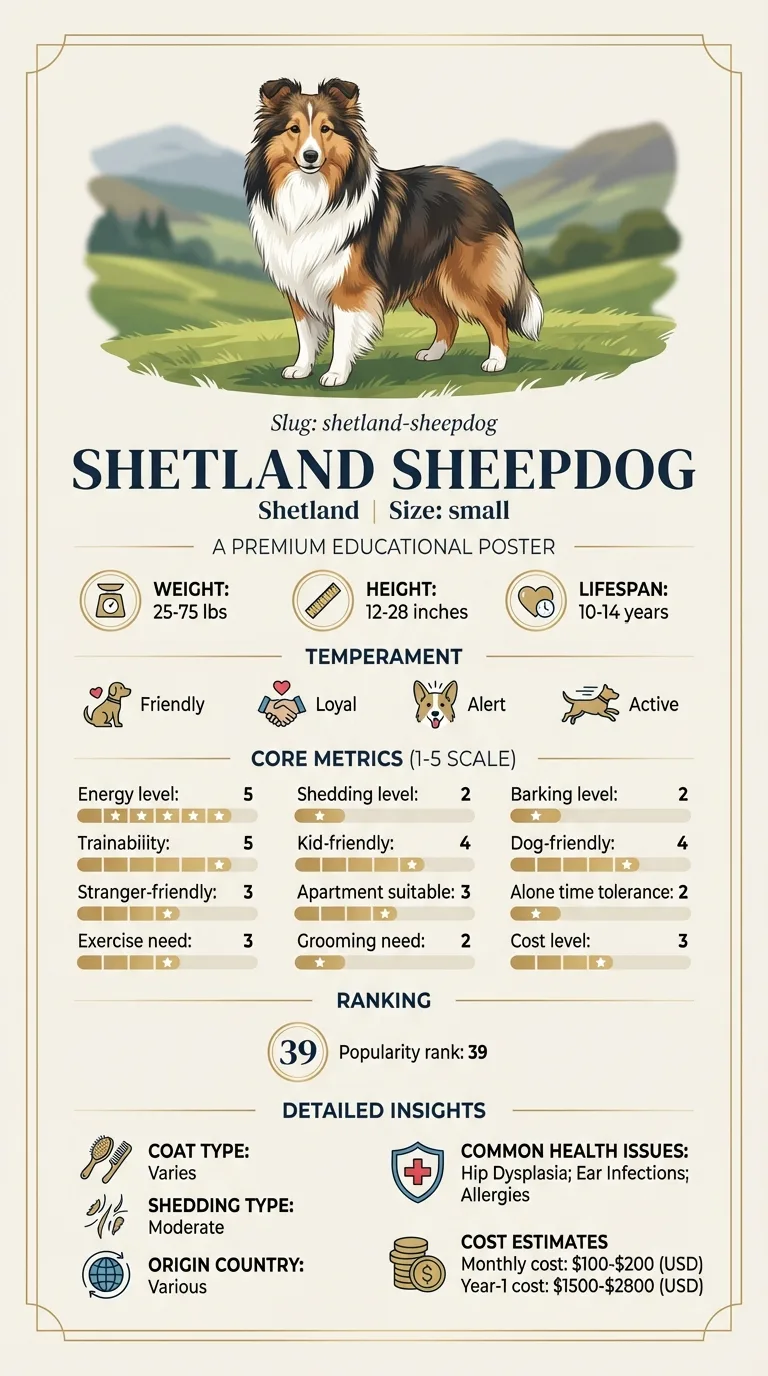
The documented conditions in the breed are Collie Eye Anomaly, MDR1 Drug Sensitivity, Dermatomyositis, Hypothyroidism and Patellar Luxation. MDR1 is an inherited sensitivity to certain routine veterinary drugs including some preventives and anesthetic agents, where a standard dose can be fatal in an affected dog, and the genotype belongs on file before any procedure.
Newark prices sit above national norms under the pull of the New York metro, with pet rent as a fixed monthly addition that most cost estimates leave out entirely.
Estimate · source: estimation · confidence: medium · updated 2026-09-06 · not a quote
| Item | Cost range |
|---|---|
Non-refundable pet fee Due at every new address rather than once, which makes it a recurring cost for anyone who moves. | $200 - $500 |
Initial costs (exam, sterilization, genetic testing, gear) Priced at metro rates; include the MDR1 genotype and a baseline knee assessment. | $430 - $720 |
| Item | Cost range |
|---|---|
Food Portions for a fifteen-to-twenty-five-pound dog at New Jersey grocery pricing, kept deliberately at the lower end of the weight range. | $38 - $64 |
Pet rent A standing charge for the life of the tenancy in most Newark buildings, separate from any deposit. | $25 - $60 |
Dog walking Common in dense housing without private outdoor space, at metro-area rates. | $0 - $220 |
Each range starts from a national baseline for this breed's size class and is then adjusted for local cost of living and veterinary pricing. The baselines, and the source each one came from, are listed on our sources page (dataset 2026.09). Two inputs, the purchase price and the emergency reserve, have no published national figure we could verify, so we leave them to you rather than invent them.
These are planning estimates, not quotes. Your own numbers will move with the individual dog, your vet and your insurer. Build a budget with your own figures.
Nothing about the rental market changes the insurance question, but the elevated local price level does make the same claim larger here than the national average implies.
Enrol while the record is clean. A knee grade recorded on a chart becomes a pre-existing exclusion, which matters in a breed with documented kneecap instability.
A household with a reserve sized to metro pricing and a dog with clean baselines can reasonably self-fund the moderate end of care.
Newark savings come from reading the lease carefully and from keeping the dog on the right side of a number.
Two things follow from sitting just under the common cap. The first is choice: a dog at twenty pounds is eligible for buildings that a dog at thirty is not, and in a tight rental market eligibility translates directly into rent, because you are choosing among more listings rather than among the handful that will take you. The second is a caution: if your dog is at the upper end of the range, weight becomes a lease issue rather than merely a health one, and a management company that weighs pets at move-in is not a hypothetical.
Keeping a Sheltie at a healthy weight is good practice everywhere and load-bearing here. It also happens to protect against Patellar Luxation, documented in this breed, where excess weight directly worsens an unstable kneecap. It is unusual for a financial incentive and a medical one to point in the same direction this cleanly.
The recurring cost is the other half of the picture. Pet rent in this market is a monthly charge that continues for the life of the tenancy, and the non-refundable fee resets at every new address. Over twelve to fourteen years and several moves those numbers are substantial, and they are the reason a Newark dog budget runs above the national average even where veterinary pricing does not. Read the addendum before signing rather than after: some buildings charge per pet, some cap the number, and a few still list breed restrictions that a herding breed is not usually caught by but that are worth checking.
Proximity to the New York metro pulls veterinary and boarding prices up, and Newark sits high on this site's cost table without quite reaching Manhattan levels. Dog walking is a common line item here for the same reason it is across the Hudson: dense housing with limited private outdoor space and a breed rated four out of five for exercise need.
The parasite window runs about eight months with a genuine winter break, worth buying as a single seasonal purchase rather than dose by dose.
The coat needs the usual attention and a specifically urban addition. Shedding is rated four out of five with a heavy seasonal blow, and in a smaller rental unit the volume matters more than it would in a house. It also matters at move-out: pet-related cleaning charges deducted from a deposit are a routine feature of this market, and a coat like this one leaves evidence. Regular raking through the shedding periods is worth doing for the deposit alone.

A couple moving into a building in the Ironbound had their Sheltie weighed at move-in as a matter of routine and came in a pound over the twenty-five-pound cap written into the addendum. The management company was willing to be reasonable but wanted it in writing that the dog would be reassessed in six months. Six months of measured portions and a slightly longer evening walk brought him to twenty-two, where his vet had wanted him anyway. Nobody weighed him again.
Key takeaway: In a market where weight caps decide which buildings you can live in, the dog's condition stops being a purely medical question and becomes a housing one.
About $94 to $177, above the national average, with proximity to the New York metro lifting service pricing and pet rent adding a fixed monthly line.
Roughly $1,298 to $2,714, including the first exam, sterilization, vaccinations and setup gear.
Usually yes. Most caps sit at twenty-five pounds and the breed runs fifteen to twenty-five, so a Sheltie qualifies under the tightest common restriction where a heavier dog would not.
Weight becomes a lease question. Some management companies weigh pets at move-in, so keeping the dog at a healthy weight protects the tenancy as well as the knees.
The weight cap, whether the fee is refundable, the monthly pet rent amount, whether charges are per pet, and any remaining breed restrictions.
About $620 covers a typical significant visit at local pricing, which runs above national norms.
$94–$177 monthly and $1,298–$2,714 in year one, above average. The local advantage is size: at fifteen to twenty-five pounds this breed clears the twenty-five-pound cap that governs most rental pet policies.
It is a fixed monthly charge for the life of the tenancy, plus a non-refundable fee that resets at every new address. Over a twelve-to-fourteen-year life across several moves it is a substantial total.
This guide is not medical advice. If your dog shows pain, sudden behavior change, or worsening symptoms, consult a licensed veterinarian.
Some links may be affiliate links. We may earn a commission at no extra cost to you. We only suggest products we believe are helpful for dog owners.
We research and check what we publish, but we do not warrant that any figure, date, price, or statement is accurate, complete, or current, and we accept no liability for any loss, cost, injury, or other harm arising from the use of this site. Use it as one reference among several. You remain responsible for your own decisions and for your dog's care - confirm anything that matters with a licensed veterinarian or another qualified professional before you act on it. Full disclaimer.
One sheet with every line item, the emergency fund and when insurance pays off - unlocks on this page.
You get: 12-month budget sheet
No spam. One-click unsubscribe. See our privacy policy.
Preview page 1 before you decide.