Behavior
What are quick tips for managing Shih Tzu PRA?
To manage Shih Tzu progressive retinal atrophy, maintain a familiar environment, use consistent commands, and consider a harness for walks.

Quick answer
What are quick tips for managing Shih Tzu PRA?
To manage Shih Tzu progressive retinal atrophy, maintain a familiar environment, use consistent commands, and consider a harness for walks.
Shih Tzu progressive retinal atrophy (PRA) is a serious condition that leads to gradual vision loss in your beloved pet. Understanding this issue is crucial for their well-being.
Many Shih Tzu owners face this challenge, especially those with older dogs. If you're a pet parent who values your dog's independence but notices changes in their behavior, you might be dealing with this condition.
This guide is not medical advice. If your dog shows pain, sudden behavior change, or worsening symptoms, consult a licensed veterinarian.
Some links may be affiliate links. We may earn a commission at no extra cost to you. We only suggest products we believe are helpful for dog owners.
We research and check what we publish, but we do not warrant that any figure, date, price, or statement is accurate, complete, or current, and we accept no liability for any loss, cost, injury, or other harm arising from the use of this site. Use it as one reference among several. You remain responsible for your own decisions and for your dog's care - confirm anything that matters with a licensed veterinarian or another qualified professional before you act on it. Full disclaimer.
Check this first
Recognizing when Shih Tzu progressive retinal atrophy (PRA) is an emergency is crucial for your dog's well-being. If your Shih Tzu suddenly shows signs of severe vision loss, such as bumping into objects or becoming disoriented, it’s time to call your vet immediately. Other red flags include abnormal eye movements, excessive squinting, or signs of pain like whining or pawing at the eyes. These symptoms could indicate that the condition is worsening or that another serious issue is at play.
On the other hand, if your Shih Tzu is showing mild symptoms, such as slight difficulty navigating low-light environments or occasional hesitance while playing, these can often be monitored at home. You can develop a plan to assist your dog in adjusting to vision changes, ensuring their environment is safe and familiar. Regular vet check-ups are also essential to track the progression of the disease and adapt your care plan as needed.
It's important to keep in mind that while PRA itself is not immediately life-threatening, the emotional and physical well-being of your Shih Tzu is at stake. If you notice any sudden changes in behavior or if your dog appears distressed, don't hesitate to seek professional help. Your vet can offer guidance tailored to your dog's specific needs and help you make informed decisions about their care.
If any of these apply, call your vet or an emergency clinic now. The rest of this page is for the cases that are not an emergency.
Shih Tzu progressive retinal atrophy (PRA) is a genetic condition that leads to gradual vision loss. In daily life, this means your Shih Tzu may bump into furniture, struggle to find toys, or have difficulty navigating stairs. This can be especially challenging as the disease progresses since the dog might become more hesitant and insecure in new environments.
PRA is quite common among Shih Tzus, affecting approximately 20% of the breed. Early signs can appear as young as three years old, making it important for owners to monitor their dog's vision and seek veterinary advice as needed.
Shih Tzus are prone to Progressive Retinal Atrophy (PRA) due to their genetic makeup. This inherited condition affects the photoreceptor cells in their eyes, leading to gradual vision loss. It is especially common in this breed, making them more susceptible than many others.
Environmental factors can also play a role, though they are less significant than genetic ones. Poor lighting conditions, lack of stimulation, or not providing enough safe space for exploration can exacerbate the symptoms of PRA in Shih Tzus. A supportive environment can help manage their condition.
Speak to your veterinarian if you notice signs of rapid vision loss or if your dog seems to be in discomfort. They can provide tailored advice and may suggest treatments or interventions to manage the condition.
Avoiding these common mistakes can help manage your Shih Tzu's progressive retinal atrophy (PRA) more effectively.
Start here: Shih Tzu Most Common Genetic Disorders: What to Screen For
See all Shih TZU health problems, which breeds are prone to progressive retinal atrophy pra, or the full Shih TZU breed guide for temperament, exercise needs and ownership costs.
Managing Shih Tzu progressive retinal atrophy (PRA) typically takes several months to see noticeable improvements in your dog's comfort and adaptation. Regular vet visits and consistent care under your vet's plan can help navigate the changes.
Success means your Shih Tzu is comfortable navigating their environment despite vision loss. They will respond positively to training and can still enjoy quality time with you, showing confidence even as they adapt.
When Sarah adopted Bella, her Shih Tzu, she noticed Bella seemed to bump into things more often. After a vet visit, Sarah learned Bella had progressive retinal atrophy (PRA). At first, Sarah felt overwhelmed, unsure how to help Bella adapt. She reached out to a trainer who specialized in vision impairment. They worked on scent training and using sound cues, which helped Bella navigate her home more confidently. Over time, Bella learned to follow sounds, and Sarah created a safe space for her to explore without fear.
Key takeaway: With patience and the right strategies, you can help a dog with PRA adapt to their changing vision. Consistent training and a supportive environment can make a significant difference.
Shih Tzu progressive retinal atrophy (PRA) is a genetic condition that causes gradual vision loss. It affects the retina, leading to decreased eyesight over time. Early detection is crucial for managing the condition.
You can help your Shih Tzu by creating a safe and consistent environment. Use commands and cues to guide them around obstacles. Training them to respond to voice commands can also be beneficial.
Common symptoms include difficulty seeing in low light, bumping into objects, and reluctance to navigate unfamiliar spaces. If you notice these signs, consult your veterinarian for an evaluation.
Currently, there is no cure for PRA. However, with proper care and training, many dogs can adapt and maintain a good quality of life. Regular veterinary visits are important for ongoing management.
Absolutely! With the right support, many Shih Tzus with PRA can thrive. Providing a stable environment and engaging their other senses can enhance their happiness and confidence.
While PRA cannot be stopped, early intervention can help manage its effects. Regular veterinary check-ups and training can assist in adapting to vision loss.
Early signs of Shih Tzu progressive retinal atrophy (PRA) may include difficulty seeing in low light, bumping into objects, or hesitance to navigate new environments. If you notice these behaviors, it's important to consult your vet for a proper diagnosis.
Unfortunately, progressive retinal atrophy (PRA) is a genetic condition and cannot be prevented. However, regular veterinary check-ups can help monitor your dog's eye health and catch any issues early.
While PRA leads to vision loss, many Shih Tzus adapt well to their changing sight. With the right training and environment, you can help them navigate their world more comfortably.
If your Shih Tzu shows symptoms like sudden vision changes, confusion, or difficulty with mobility, it's time to see your vet. Early intervention can provide options to support their vision.
Currently, there is no cure for progressive retinal atrophy (PRA). However, supportive treatments like environmental adjustments and training can help your Shih Tzu live comfortably despite vision loss.
To manage Shih Tzu progressive retinal atrophy, maintain a familiar environment, use consistent commands, and consider a harness for walks.
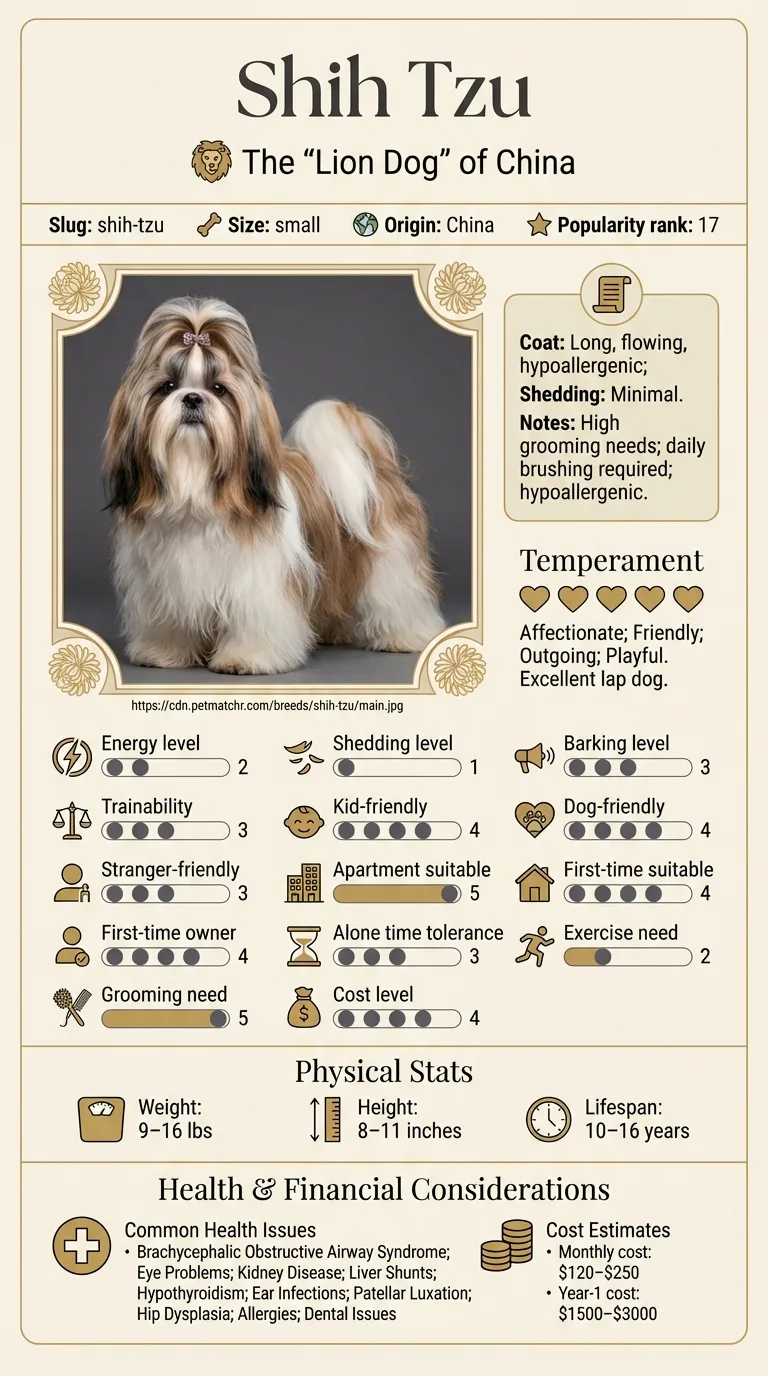
Caring for a Shih Tzu with PRA may increase veterinary expenses, with monthly costs ranging from $120 to $250. Budgeting for regular eye exams is essential.
Yes, progressive retinal atrophy is often hereditary in Shih Tzus. It’s important to know your dog’s family history when considering breeding.
Yes, training can significantly help a Shih Tzu with PRA by teaching them to navigate their environment safely. Consistent voice commands can improve their confidence.
Signs of PRA include difficulty in low light, bumping into objects, and changes in behavior related to vision. Early recognition is key for management.
A one-page prep sheet for this condition: the signs, the questions to ask, what to get priced. Unlocks here.
You get: Vet visit prep sheet
No spam. One-click unsubscribe. See our privacy policy.
Preview page 1 before you decide.