Behavior
What should I do if my Shih Tzu collapses during exercise?
If your Shih Tzu collapses, stop all activity immediately, move them to a cool area, and offer water. Monitor their recovery and consult a vet if they don't improve quickly.

Quick answer
What should I do if my Shih Tzu collapses during exercise?
If your Shih Tzu collapses, stop all activity immediately, move them to a cool area, and offer water. Monitor their recovery and consult a vet if they don't improve quickly.
Shih Tzu exercise-induced collapse (EIC) is a serious issue that can occur during or after physical activity. This condition involves sudden collapse and can be alarming for both the dog and owner.
This problem often affects Shih Tzu owners who enjoy outdoor activities or playtime with their dogs. Those who may not be aware of their pet's specific health risks or exercise limits can find themselves in particularly challenging situations.
This guide is not medical advice. If your dog shows pain, sudden behavior change, or worsening symptoms, consult a licensed veterinarian.
Some links may be affiliate links. We may earn a commission at no extra cost to you. We only suggest products we believe are helpful for dog owners.
We research and check what we publish, but we do not warrant that any figure, date, price, or statement is accurate, complete, or current, and we accept no liability for any loss, cost, injury, or other harm arising from the use of this site. Use it as one reference among several. You remain responsible for your own decisions and for your dog's care - confirm anything that matters with a licensed veterinarian or another qualified professional before you act on it. Full disclaimer.
Check this first
Recognizing when your Shih Tzu’s exercise-induced collapse (EIC) is an emergency is crucial. Some signs require immediate veterinary attention, while others can be monitored at home. If your dog collapses suddenly and remains unresponsive, it's time to call your vet right away.
If any of these apply, call your vet or an emergency clinic now. The rest of this page is for the cases that are not an emergency.
Shih Tzu exercise-induced collapse (EIC) is a serious condition where your Shih Tzu may suddenly collapse during or after physical activity. This can be alarming for owners, as it typically occurs without warning, and the dog may appear weak or unresponsive. Understanding this condition is crucial for ensuring your pet's safety and wellbeing.
EIC is relatively rare in Shih Tzus, but it can occur, especially in those with a history of intense exercise or stress. While not every Shih Tzu will experience this issue, it's important for owners to be aware of the signs and triggers.
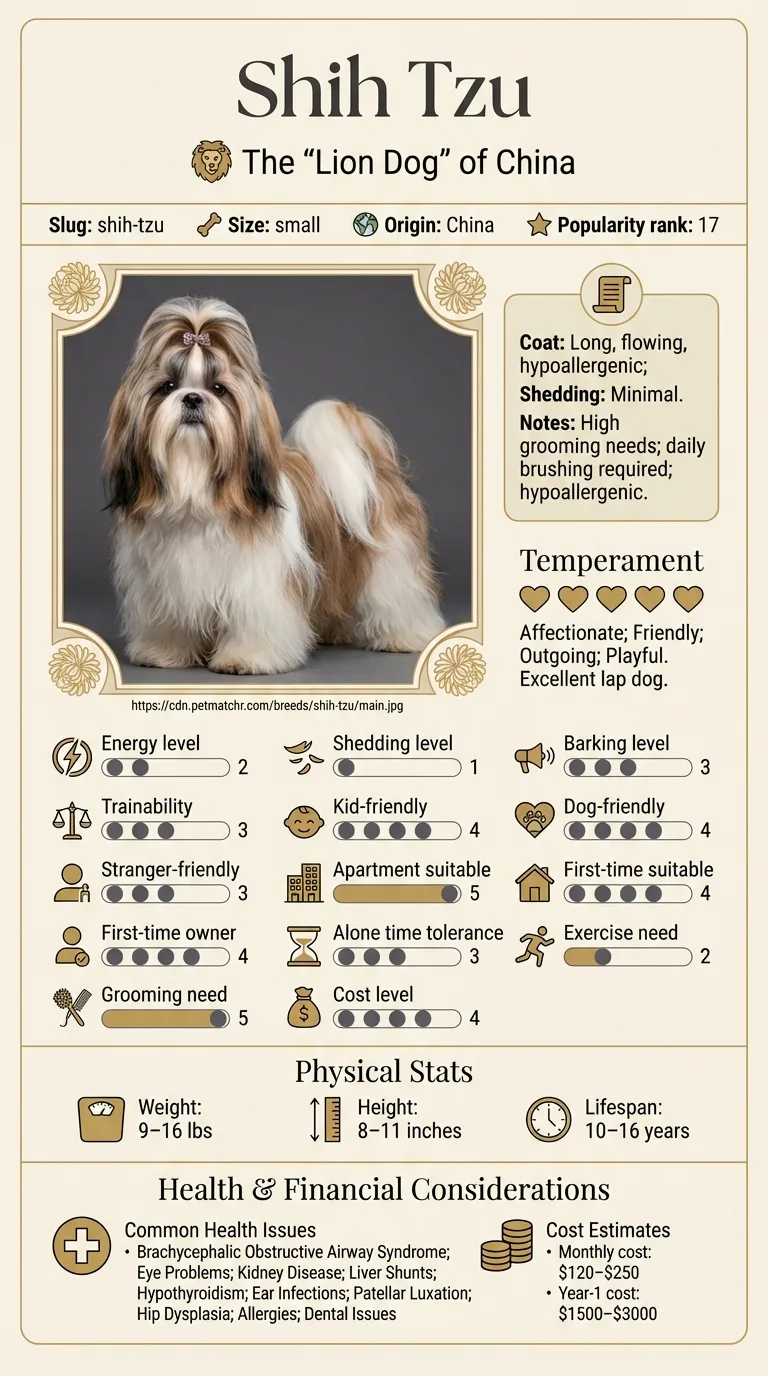
Shih Tzus can be prone to exercise-induced collapse (EIC) due to their unique physical traits. Their small size and brachycephalic (short-nosed) structure can make it harder for them to breathe during intensive activity. This can lead to sudden exhaustion and collapse, especially in hot or humid conditions.
Environmental factors also play a significant role. Overexertion, high temperatures, or stressful situations can trigger EIC. If your Shih Tzu is not conditioned for high levels of exercise or is exposed to extreme weather, they are at a higher risk of experiencing these episodes.
If your Shih Tzu experiences repeated episodes of collapse, it’s essential to consult your veterinarian. They can provide a thorough health check and discuss potential underlying issues or medications that may help manage their condition.
Avoid these common mistakes that can worsen your Shih Tzu's exercise-induced collapse (EIC) and learn safer alternatives.
Start here: Shih Tzu Most Common Genetic Disorders: What to Screen For
See all Shih TZU health problems, which breeds are prone to exercise induced collapse eic, or the full Shih TZU breed guide for temperament, exercise needs and ownership costs.
You might see improvements in your Shih Tzu's behavior within 4 to 6 weeks of consistent care and management. Full mastery can take several months, depending on individual responses.
Success means your Shih Tzu can enjoy moderate exercise without collapsing. You'll notice them being more active and alert during play sessions, and they should recover quickly from any exertion.
Sarah, a busy nurse living in a small apartment, noticed her Shih Tzu, Max, would suddenly collapse after playing fetch. Concerned, she researched and discovered that Max had exercise-induced collapse (EIC). With guidance from a vet, Sarah learned how to adjust Max's playtime to shorter, more frequent sessions. She also incorporated calm periods and monitored his behavior closely. After a few weeks, Max showed significant improvement, enjoying his playtime without collapsing. Now, they both enjoy adventures in the park, but Sarah ensures to keep the sessions light and fun.
Key takeaway: By understanding and managing exercise-induced collapse, you can help your Shih Tzu enjoy a happy, active life.
Shih Tzus may experience exercise-induced collapse (EIC) due to their genetic predisposition and physical traits. This condition can lead to sudden weakness or collapse during strenuous activity. It's essential to monitor your dog's behavior during exercise and consult a vet if you notice concerning signs.
To help prevent EIC in your Shih Tzu, limit their exercise to short, low-intensity sessions. Gradually build their stamina and ensure they take frequent breaks. Always keep your dog cool and hydrated, especially during warm weather.
Symptoms of exercise-induced collapse can include sudden weakness, unsteady movement, or even fainting during or after exercise. If your Shih Tzu displays these signs, it's crucial to stop the activity immediately and consult a veterinarian for guidance.
Yes, exercise-induced collapse is recognized in breeds with certain physical characteristics, including Shih Tzus. Understanding your dog’s unique needs and limits is important for their overall well-being.
Training that focuses on gradual exercise increases can help manage EIC in Shih Tzus. Positive reinforcement techniques can encourage your dog to engage in low-impact activities that are safe for them. Consult a professional trainer for tailored advice.
Yes, older Shih Tzus can experience exercise-induced collapse (EIC). As dogs age, their bodies may not handle exercise as well, leading to a higher risk of collapse during physical activity. It's important to monitor their exercise and consult a vet if you notice any signs of distress.
Warning signs of EIC include sudden weakness, loss of coordination, or collapse during or after exercise. You may also observe excessive panting, drooling, or a lack of energy. If you see these signs, stop the activity immediately and consult your veterinarian.
While you can't completely prevent exercise-induced collapse (EIC), you can train your Shih Tzu to engage in shorter, more controlled exercise sessions. Gradually increasing activity levels and focusing on low-impact exercises can help. Always consult with a vet for specific training advice tailored to your dog.
Weather can significantly affect Shih Tzus with exercise-induced collapse (EIC). Hot or humid conditions may exacerbate their symptoms, leading to a higher risk of collapse. It's best to exercise your Shih Tzu during cooler parts of the day and ensure they stay well-hydrated.
If your Shih Tzu collapses during or after exercise, it's essential to take them to the vet immediately. Additionally, if you notice recurring episodes or other concerning symptoms, such as lethargy or difficulty breathing, don't hesitate to seek professional help. Early intervention can make a significant difference.
If your Shih Tzu collapses, stop all activity immediately, move them to a cool area, and offer water. Monitor their recovery and consult a vet if they don't improve quickly.
Yes, low-impact exercises like short walks or gentle play are safer for Shih Tzus prone to EIC. Avoid high-energy activities that can lead to collapse.
Use positive reinforcement to reward your Shih Tzu for taking breaks during play. Gradually increase their exercise duration while watching for signs of fatigue.
Yes, a balanced diet tailored to your Shih Tzu’s needs can help maintain their energy levels. Consult your vet for dietary recommendations.
A one-page prep sheet for this condition: the signs, the questions to ask, what to get priced. Unlocks here.
You get: Vet visit prep sheet
No spam. One-click unsubscribe. See our privacy policy.
Preview page 1 before you decide.