DogBreedCompass
← Back to breed profile

Understanding Poodle (Miniature) Allergic Reactions

Poodle (Miniature) allergic reactions can be a real challenge for owners. These reactions can lead to discomfort for your dog and concern for you as a pet parent.

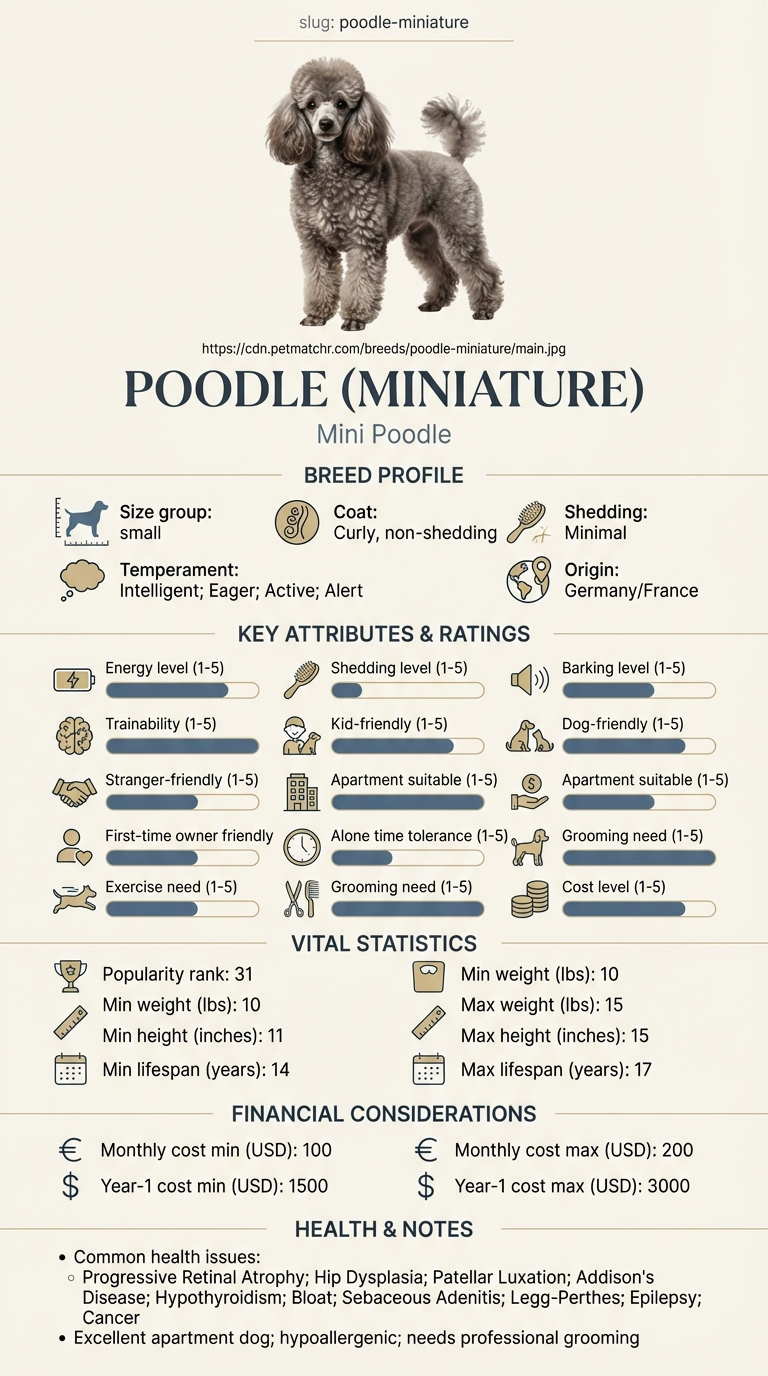
Understanding Poodle (Miniature) Allergic Reactions infographic

This problem typically affects first-time dog owners or busy families who may not recognize the signs of allergies. Owners in urban environments might also notice these reactions more due to environmental allergens.

Important reminder

This guide is not medical advice. If your dog shows pain, sudden behavior change, or worsening symptoms, consult a licensed veterinarian.

Some links may be affiliate links. We may earn a commission at no extra cost to you. We only suggest products we believe are helpful for dog owners.

What this problem looks like

Poodle (Miniature) allergic reactions can be frustrating for both the dog and the owner. These reactions often show up as skin irritations, excessive scratching, or gastrointestinal issues. Common triggers include certain foods, pollen, dust mites, or even specific grooming products. Being small and sensitive, Mini Poodles are more prone to these allergies compared to other breeds.

Common triggers

  • Specific food ingredients like grains or certain proteins
  • Pollen from plants during spring and summer
  • Dust mites and household allergens
  • Grooming products with harsh chemicals or fragrances

Allergic reactions in Poodle (Miniature) are quite common, with studies showing they have a 276% higher risk compared to many other breeds. Many owners report experiencing allergies, especially as their Mini Poodle ages.

Why this happens

Breed factors

Poodles (Miniature) are known for their sensitive skin and immune systems. Their curly, non-shedding coat can trap allergens, making them more susceptible to allergies. Additionally, their genetic background sometimes predisposes them to specific allergic reactions.

Environment factors

Environmental factors play a significant role in allergic reactions for Mini Poodles. Dust, pollen, mold, and even certain cleaning products can trigger symptoms. Changes in diet or exposure to new foods can also lead to allergic responses.

What you can try

At-home strategies

  • Keep your home clean by regularly vacuuming and dusting to reduce allergens.
  • Give your Mini Poodle regular baths using hypoallergenic shampoos to soothe their skin.
  • Monitor their diet and introduce new foods gradually to identify possible allergens.
  • Limit outdoor exposure during high pollen seasons and keep windows closed.
  • Use air purifiers to reduce airborne allergens in your living space.

When to consider a trainer

If your Mini Poodle shows signs of anxiety or behavioral issues related to their allergies, a trainer can help. A professional can guide you in creating a calm environment and teaching coping strategies.

When to talk to your vet

If your Mini Poodle has persistent allergic reactions, or if you notice severe symptoms like swelling or difficulty breathing, consult your vet. They may recommend allergy testing or prescribe medications to manage symptoms.

Realistic expectations

You can expect to see improvement in your Poodle (Miniature) allergic reactions within 4 to 8 weeks of consistent management and training.

Success means fewer allergic reactions, more comfortable living for your dog, and a better understanding of how to prevent triggers and manage symptoms.

Mistakes that make this worse

Avoiding these common mistakes can help manage your Poodle (Miniature) allergic reactions more effectively. Here are some behaviors to watch out for.

  • Ignoring symptoms: If you notice signs like itching or sneezing, don’t dismiss them. Early intervention can prevent more severe reactions. Consult your vet instead.
  • Using over-the-counter medications without guidance: It’s tempting to treat symptoms yourself, but this can worsen the problem if the medication isn’t suitable. Always check with your vet first.
  • Inconsistent cleaning routines: Dust, pollen, and other allergens can build up quickly. Regular cleaning can reduce allergens in your home, helping your Mini Poodle feel better.
  • Neglecting grooming: Regular grooming is essential for a Poodle (Miniature). Skipping this can lead to skin issues and increased exposure to allergens. Schedule regular grooming sessions to keep their coat healthy.
  • Changing diets abruptly: Introducing new foods too quickly can upset your Poodle's stomach and trigger allergic reactions. Gradually transition to new foods to avoid digestive issues.
  • Not keeping a symptom diary: Failing to track when reactions occur can make it hard to identify triggers. Keep notes to help your vet pinpoint allergens and adjust care accordingly.
  • Assuming it's just seasonal allergies: Allergies can come from various sources. If your Poodle (Miniature) has persistent symptoms, consult your vet to explore other potential triggers.

When Poodle (Miniature) Allergic Reactions Are an Emergency

Allergic reactions in your Poodle (Miniature) can range from mild to severe. It's crucial to know when to call your vet immediately versus when to monitor your dog at home.

Red flags indicating an emergency include difficulty breathing, swelling of the face or throat, severe vomiting or diarrhea, and signs of shock, such as weakness or confusion. If your dog is experiencing any of these symptoms, don’t wait—contact your vet right away.

On the other hand, mild allergic reactions might include itching, a small rash, or mild gastrointestinal upset. In these cases, you can watch and wait while keeping your Poodle comfortable. Monitor their symptoms and note any changes. If symptoms persist or worsen, consult your vet for guidance on how to stop Poodle (Miniature) allergic reactions effectively.

Understanding Poodle (Miniature) Allergic Reactions - When Poodle (Miniature) Allergic Reactions Are an Emergency

A Journey to Allergy Relief for Bella the Mini Poodle

When Sarah adopted Bella, her Mini Poodle, she quickly noticed that Bella was scratching and sneezing more than usual. After a vet visit, Sarah learned that Bella had allergies, which could be managed with a few changes. By switching Bella to a hypoallergenic diet and creating a clean home environment, Sarah started to see a difference. Within eight weeks, Bella was much more comfortable, and her allergic reactions were significantly reduced. Sarah also learned to spot triggers, which helped her keep Bella healthy and happy.

Key takeaway: With patience and the right changes, you can effectively manage your Poodle (Miniature)'s allergic reactions and improve their quality of life.

Frequently asked questions

Why does my Poodle (Miniature) have allergic reactions?

Poodle (Miniature) allergic reactions can result from various factors, including environmental allergens like pollen, dust mites, or food ingredients. Some Mini Poodles are more prone to allergies due to genetics. Identifying and eliminating the allergen is crucial for managing their symptoms.

How can I stop Poodle (Miniature) allergic reactions?

To stop Poodle (Miniature) allergic reactions, first consult your vet to diagnose the specific allergens. Treatment may include antihistamines, special diets, or allergy shots. Regular cleaning and avoiding known triggers can also help minimize reactions.

What are the symptoms of allergic reactions in Poodle (Miniature)?

Symptoms of allergic reactions in Poodle (Miniature) can include itching, red skin, watery eyes, and gastrointestinal issues. If you notice excessive scratching or skin irritation, it's essential to consult a veterinarian. Early intervention can prevent more severe health issues.

Are Poodle (Miniature) dogs hypoallergenic?

While Poodle (Miniature) dogs are considered hypoallergenic, they can still experience allergic reactions. Their unique coat helps reduce shedding and dander, which is beneficial for allergy sufferers. However, individual reactions can vary, so it's important to monitor your dog's health.

What should I do if my Poodle (Miniature) is having a severe allergic reaction?

If your Poodle (Miniature) is having a severe allergic reaction, such as difficulty breathing or swelling, seek emergency veterinary care immediately. Quick treatment can be life-saving. Always keep your vet's contact information handy for such situations.

What should I do if my Poodle (Miniature) has a severe allergic reaction?

If your Poodle (Miniature) shows signs of a severe allergic reaction, such as swelling, difficulty breathing, or vomiting, it's crucial to seek immediate veterinary care. This could be life-threatening, and timely intervention is essential.

Can I manage my Poodle (Miniature) allergic reactions with home remedies?

While some mild allergic reactions might be managed with home remedies, it's always best to consult your vet before trying anything. They can recommend safe and effective treatments tailored to your dog's specific needs.

Why does my older Poodle (Miniature) suddenly develop allergic reactions?

Older Poodles (Miniature) may develop allergies over time due to changes in their immune system or exposure to new allergens. If you notice sudden allergic reactions, a vet visit can help identify the cause and appropriate treatment.

Are there specific allergens that commonly affect Poodles (Miniature)?

Yes, Poodles (Miniature) can be sensitive to various allergens, including pollen, dust mites, certain foods, and flea bites. Identifying and avoiding these allergens can help reduce allergic reactions.

How can I tell if my Poodle (Miniature) is having an allergic reaction?

Signs of allergic reactions in Poodles (Miniature) can include itching, redness, swelling, sneezing, or gastrointestinal issues. If you observe these symptoms, it's important to consult your vet for proper diagnosis and treatment.
Quick answers

View more answers
Behavior

What are some quick tips for Poodle (Miniature) allergic reactions?

To manage Poodle (Miniature) allergic reactions, keep their environment clean, use hypoallergenic dog food, and consult your vet for allergy testing. Regular grooming can also help reduce allergens.

Costs

How much does it cost to treat Poodle (Miniature) allergic reactions?

The cost of treating Poodle (Miniature) allergic reactions can range from $100 to $500 per month, depending on the treatment and vet visits. Initial testing may add to the expense.

Training

Can I train my Poodle (Miniature) to avoid allergens?

While you can't train your Poodle (Miniature) to avoid allergens directly, you can teach them commands to keep them away from known triggers. Positive reinforcement can be effective in modifying their behavior.

Related DogBreedCompass guides

  • Why does my Poodle (Miniature) have allergic reactions?Understanding the causes behind Poodle (Miniature) allergic reactions can help you manage them effectively.
  • How to stop Poodle (Miniature) allergic reactionsDiscover training techniques to reduce allergic reactions in your Poodle (Miniature).
  • Poodle (Miniature) behavior problemsLearn about common Poodle (Miniature) behavior problems to ensure your dog stays happy and healthy.
  • Poodle (Miniature) ownership costsCheck out the cost of owning a Poodle (Miniature) to prepare for potential allergic reactions.
  • Poodle (Miniature) separation anxiety guideFind tips on managing separation anxiety which can sometimes accompany allergic reactions.

Related guides