Behavior
How can I prevent bone & growth issues in my Pembroke Welsh Corgi?
Maintain a balanced diet and provide moderate exercise to keep your Corgi's weight in check. Regular vet check-ups are crucial for monitoring growth.

Quick answer
How can I prevent bone & growth issues in my Pembroke Welsh Corgi?
Maintain a balanced diet and provide moderate exercise to keep your Corgi's weight in check. Regular vet check-ups are crucial for monitoring growth.
Pembroke Welsh Corgi bone & growth issues are significant health concerns for this beloved breed. These problems can lead to serious complications if not addressed early.
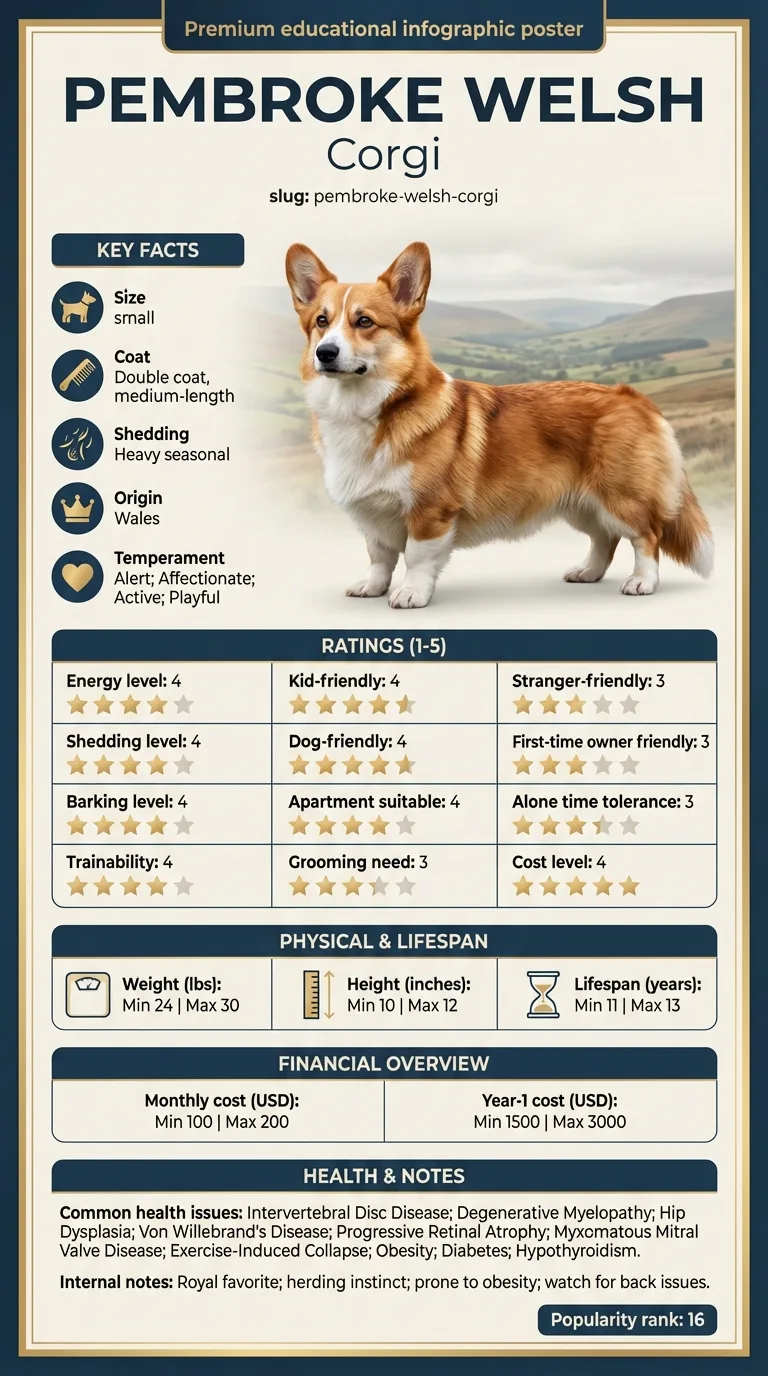
Owners of Pembroke Welsh Corgis, especially first-time dog parents, often find themselves concerned about their pet's bone health. Busy families and individuals may struggle to keep up with the specific needs of their Corgis during their growth stages.
This guide is not medical advice. If your dog shows pain, sudden behavior change, or worsening symptoms, consult a licensed veterinarian.
Some links may be affiliate links. We may earn a commission at no extra cost to you. We only suggest products we believe are helpful for dog owners.
We research and check what we publish, but we do not warrant that any figure, date, price, or statement is accurate, complete, or current, and we accept no liability for any loss, cost, injury, or other harm arising from the use of this site. Use it as one reference among several. You remain responsible for your own decisions and for your dog's care - confirm anything that matters with a licensed veterinarian or another qualified professional before you act on it. Full disclaimer.
Check this first
Recognizing when Pembroke Welsh Corgi bone and growth issues require urgent veterinary care is crucial. If your Corgi shows sudden lameness, swelling in the joints, or severe pain when touched, these are red flags that necessitate immediate veterinary attention. Additionally, if you notice any inability to bear weight on a limb, or if your dog has a noticeable deformity in the legs or spine, contact your vet right away.
On the other hand, if your Corgi is experiencing mild discomfort, such as occasional limping after play, it may not be an emergency. You can monitor these situations by providing rest and observing for improvement. If your dog has a slight reduction in appetite but is still active and playful, keep a close watch but avoid panicking. Keeping a record of these symptoms can help your vet assess the situation better if it persists.
Always err on the side of caution. When in doubt, it's better to consult your vet. They can provide guidance on whether your Corgi's symptoms warrant further investigation or if a simple watch-and-wait approach is appropriate.
If any of these apply, call your vet or an emergency clinic now. The rest of this page is for the cases that are not an emergency.
Pembroke Welsh Corgis can face bone and growth issues, particularly during their early development. These problems may manifest as stiffness, difficulty walking, or even noticeable changes in their gait. Owners often notice these symptoms most during playtime or after exercise, where their natural enthusiasm is dampened by discomfort.
Bone and growth issues are relatively common in Pembroke Welsh Corgis, particularly due to their unique build and energetic lifestyle. While not every Corgi will experience these problems, awareness and early intervention can help manage any potential issues.
Pembroke Welsh Corgis are small dogs with a unique body structure. Their genetics can make them prone to certain bone and growth issues, particularly if they grow too quickly. This breed's history as a herding dog can lead to a tendency to be active, which may exacerbate these problems if not managed properly.
The environment plays a key role in bone and growth issues. Factors such as diet, exercise, and living conditions can significantly affect a Corgi's development. For instance, excessive jumping or rough play on hard surfaces can increase the risk of injury, while an imbalanced diet can lead to obesity, putting extra stress on their bones.
If you notice persistent limping, reluctance to move, or any signs of pain, it's crucial to consult a vet. Early intervention can prevent more serious conditions and help manage any existing bone or growth issues effectively.
Here are some common mistakes owners make that can worsen Pembroke Welsh Corgi bone and growth issues, along with safer alternatives.
Start here: Pembroke Welsh Corgi Most Common Genetic Disorders
See all Pembroke Welsh Corgi health problems, which breeds are prone to bone growth issues, or the full Pembroke Welsh Corgi breed guide for temperament, exercise needs and ownership costs.
You can expect to see improvements in your Pembroke Welsh Corgi's bone and growth issues within 3 to 6 months of dedicated care and veterinary follow-up.
Success means your Corgi will have improved mobility, strength, and a healthier weight, reducing the risk of further health complications.
Emma, a busy nurse living in a small apartment, adopted Max, her Pembroke Welsh Corgi, with hopes of him being her perfect companion. However, she soon noticed that Max was struggling to keep up during walks and seemed to have trouble jumping onto the couch. After consulting a vet, Emma learned that Max had bone growth issues, likely due to his rapid growth rate. With the vet's guidance, Emma adjusted Max's diet, introduced regular, low-impact exercises, and started a training program focused on strengthening his muscles. Over several months, Max gradually became more active and agile, and Emma felt relieved to see him enjoying life again.
Key takeaway: With the right veterinary advice and consistent training, you can manage bone growth issues in Pembroke Welsh Corgis, leading to a happier and healthier pet.
Pembroke Welsh Corgis can develop bone and growth issues due to their genetic predisposition and rapid growth phases. Factors like nutrition, exercise, and weight management play a significant role in their bone health. It's vital to monitor their growth and consult a vet if you notice any abnormalities.
To help your Pembroke Welsh Corgi, ensure they have a balanced diet rich in essential nutrients, particularly calcium and phosphorus. Regular, moderate exercise is also crucial to promote healthy bone development while avoiding excessive strain. Consider working with a vet or a pet nutritionist for tailored advice.
Signs of bone and growth issues may include limping, difficulty in standing or walking, and reluctance to jump or play. If your Corgi seems to be in pain or their growth appears abnormal, it's essential to consult your veterinarian for a thorough evaluation. Early detection can make a significant difference in treatment.
Training for Pembroke Welsh Corgis with bone and growth issues should focus on low-impact activities to avoid joint strain. Incorporating gentle exercises that promote strength and flexibility can be beneficial. Always consult a professional trainer or vet to create a safe training plan.
To prevent bone issues, feed your Pembroke Welsh Corgi high-quality dog food that meets their nutritional needs. Be mindful of portion sizes to prevent obesity, which can strain their joints. Supplements like omega-3 fatty acids may also support joint health, but consult your vet before adding any supplements.
Signs of bone and growth issues in Pembroke Welsh Corgis include limping, difficulty rising, or reluctance to play. You might also notice swelling in the joints or abnormal gait. If you see these signs, it's essential to consult your vet for a thorough evaluation.
Yes, diet plays a crucial role in a Pembroke Welsh Corgi's bone health. A balanced diet with the right amount of calcium and phosphorus is vital for proper growth. Consult your vet for recommendations on the best diet for your Corgi's specific needs.
It's advisable to start monitoring your Pembroke Welsh Corgi for bone issues from a young age, around 6 months. Early signs can be subtle, so regular vet check-ups can help catch any problems before they worsen.
Older Pembroke Welsh Corgis can develop bone-related issues due to wear and tear over the years. Conditions like arthritis or hip dysplasia may emerge as they age, so regular veterinary evaluations are essential to manage their health.
To assist your Pembroke Welsh Corgi with bone and growth issues, ensure they receive proper veterinary care and follow any recommended treatment plans. Regular, moderate exercise and a healthy diet can also support their overall well-being. Consider consulting a specialist for tailored training strategies.
Maintain a balanced diet and provide moderate exercise to keep your Corgi's weight in check. Regular vet check-ups are crucial for monitoring growth.
Treatment costs can range from $500 to $2,000 depending on the severity of the condition and required interventions. Always prepare for unexpected expenses.
Look for dog food that is rich in protein and includes essential vitamins and minerals for bone health. Avoid fillers and low-quality ingredients.
Yes, Pembroke Welsh Corgis are prone to obesity, which can worsen bone and growth issues. Monitor their diet and exercise regularly.
Yes, training focused on low-impact exercises can help strengthen their muscles and support their joints. Consult a professional trainer for guidance.
A one-page prep sheet for this condition: the signs, the questions to ask, what to get priced. Unlocks here.
You get: Vet visit prep sheet
No spam. One-click unsubscribe. See our privacy policy.
Preview page 1 before you decide.