What are some quick tips to manage Brussels Griffon excessive barking?
To manage excessive barking, ensure your Brussels Griffon gets plenty of exercise and mental stimulation. Use training commands like 'quiet' and reward them for calm behavior. Consistency is essential in reinforcing these behaviors.
Brussels Griffon excessive barking can be a real challenge for owners. This behavior can lead to stress for both you and your dog.
Many owners, especially those in apartments or close-knit communities, face difficulties with their Brussels Griffon’s barking habits. First-time dog owners or busy families may find this behavior overwhelming, especially if they don’t know how to address it.
Important reminder
This guide is not medical advice. If your dog shows pain, sudden behavior change, or worsening symptoms, consult a licensed veterinarian.
Some links may be affiliate links. We may earn a commission at no extra cost to you. We only suggest products we believe are helpful for dog owners.
We research and check what we publish, but we do not warrant that any figure, date, price, or statement is accurate, complete, or current, and we accept no liability for any loss, cost, injury, or other harm arising from the use of this site. Use it as one reference among several. You remain responsible for your own decisions and for your dog's care - confirm anything that matters with a licensed veterinarian or another qualified professional before you act on it. Full disclaimer.
What this problem looks like
Brussels Griffon excessive barking can be a daily challenge for owners. These small dogs often bark at unfamiliar sounds, people, or even other pets. While some barking is normal, excessive barking can lead to frustration for both the dog and its owner.
Common triggers
Strangers approaching the home
Loud noises, such as sirens or thunder
Boredom or lack of exercise
Separation from their owner
Other animals in sight
Excessive barking is a fairly common behavior in Brussels Griffons. Many owners report it as one of the primary behavior issues they face. This breed is naturally alert, so barking often becomes a way to express their feelings.
Why this happens
Breed factors
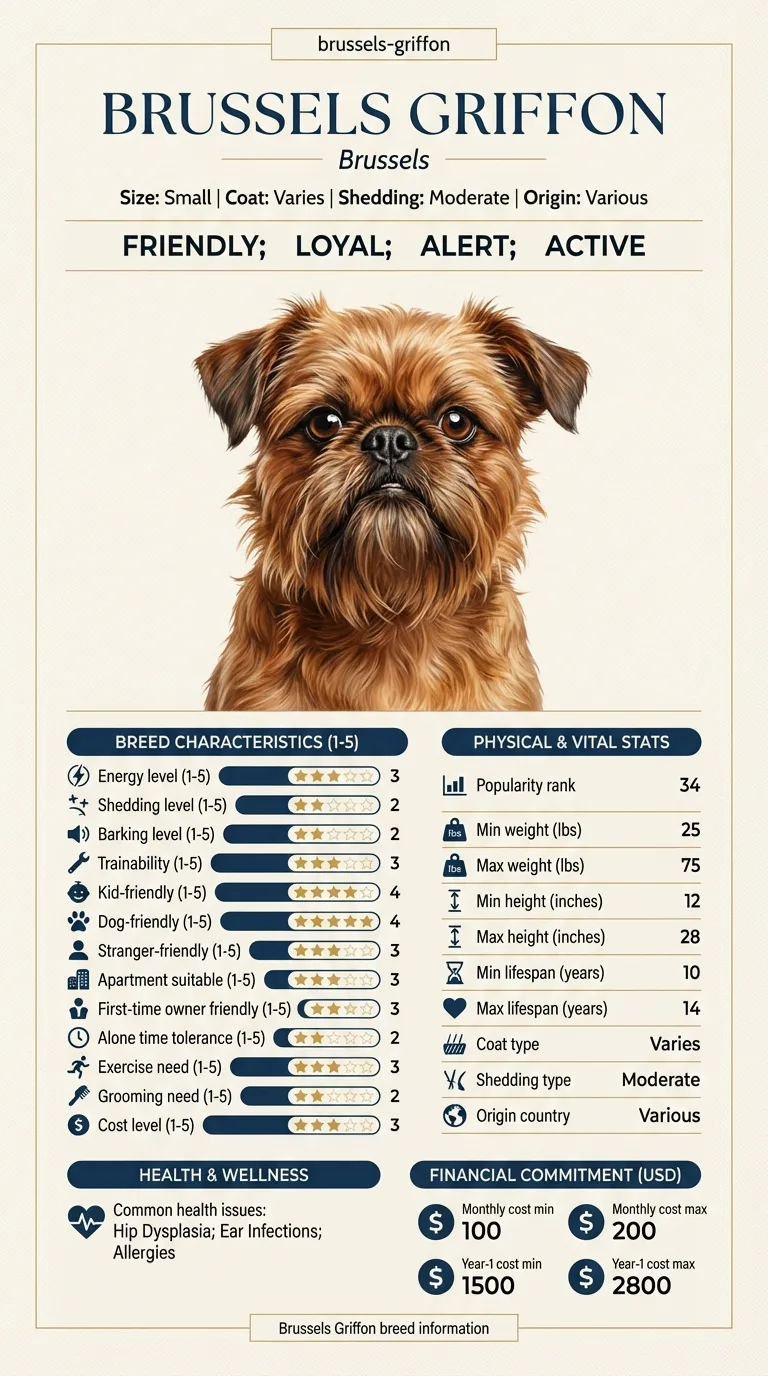
Brussels Griffons are naturally alert and loyal dogs. Their instincts often lead them to bark at unfamiliar sounds or sights. This behavior is part of their protective nature, which can become excessive if not managed properly.
Environment factors
The environment plays a big role in excessive barking. If your Brussels Griffon is left alone for long periods or lacks enough mental and physical stimulation, they may bark out of boredom or anxiety. Additionally, a noisy neighborhood can trigger more barking.
What you can try
At-home strategies
Establish a routine for your Brussels Griffon. Consistent feeding and walking times can reduce anxiety and help them feel secure.
Provide plenty of physical exercise. A daily walk or play session can help burn off excess energy and reduce barking.
Use positive reinforcement training. Reward your dog when they are quiet, and ignore barking to discourage it. Gradually, they’ll learn that being quiet earns them attention.
Create a quiet space. If possible, designate an area in your home where your dog can relax away from distractions. This might help reduce their urge to bark.
Engage their mind with puzzle toys or training games. Keeping your Brussels Griffon mentally stimulated can help lessen excessive barking.
When to consider a trainer
If your Brussels Griffon continues to bark excessively despite your efforts, consider consulting a professional trainer. A trainer can provide tailored strategies and help address any underlying behavioral issues.
When to talk to your vet
If barking is accompanied by signs of distress or if your dog seems anxious or unwell, it's time to talk to your vet. They can rule out any medical issues and provide guidance on managing anxiety.
You can expect to see improvements in your Brussels Griffon's barking behavior within 4 to 8 weeks of consistent training.
Success means your dog will bark less frequently and only in response to appropriate triggers, like a stranger at the door.
Mistakes that make Excessive Barking worse
Avoid these common mistakes that can reinforce your Brussels Griffon's excessive barking. Understanding these pitfalls can help you create a more peaceful home.
Ignoring the barking: When you ignore your Brussels Griffon during barking episodes, they may think this behavior is acceptable. Instead, redirect their attention with a toy or command to encourage quieter behavior.
Using punishment: Yelling or using shock collars can increase anxiety and fear, worsening the barking problem. Positive reinforcement methods, like treats and praise for quiet behavior, are much more effective.
Overreacting to barks: If you immediately rush to your dog's side when they bark, you may inadvertently reward the behavior. Wait until they stop barking before giving them attention, so they learn that calmness gets your focus.
Lack of exercise: A tired dog is less likely to bark excessively. Ensure your Brussels Griffon gets enough physical activity to burn off excess energy, which can help reduce barking.
Inconsistent training: Mixed signals can confuse your dog. Be consistent with commands and rewards to help them understand what behavior is expected and what isn't.
Not addressing triggers: If your dog's barking is triggered by specific sounds or sights, such as passing cars or other dogs, work on desensitizing them to these triggers gradually. Controlled exposure can help reduce their reaction over time.
Failing to socialize: Dogs that lack socialization can develop anxiety, leading to excessive barking. Regularly exposing your Brussels Griffon to different environments and experiences will help them feel more comfortable and reduce barking.
When Brussels Griffon Excessive Barking is an Emergency
Excessive barking in your Brussels Griffon can range from a minor annoyance to a serious concern. It's important to recognize when this behavior is a red flag that requires immediate attention. If your dog is barking uncontrollably for extended periods, especially if it’s accompanied by signs of distress, it's time to call your vet.
Look for symptoms like extreme agitation, pacing, or inability to settle down. If your dog is barking while showing signs of injury or illness, such as limping or vomiting, seek help right away. Additionally, if the barking seems to be triggered by a sudden change in environment or routine, it may indicate anxiety or a medical condition that needs professional evaluation.
On the other hand, mild excessive barking can often be monitored. If your Brussels Griffon barks at visitors or passing cars but appears calm otherwise, you can develop a training plan. Assess the triggers that cause your dog to bark and consider implementing training techniques or distractions. Create a consistent environment and be patient; it might take time for your dog to adjust. Keeping a journal of barking instances can help you track patterns and identify the best solutions. Regularly observing your dog's behavior will guide you on whether to intervene or continue monitoring their barking habits.
Brussels Griffon - When Brussels Griffon Excessive Barking is an Emergency
Training Bella: A Journey to Peace
When Sarah adopted Bella, her Brussels Griffon, she quickly realized that Bella had a tendency to bark excessively at every little sound. Living in a small apartment in New York City made this a challenge. After researching how to stop Brussels Griffon excessive barking, Sarah enrolled Bella in a local training class. With guidance from the trainer, she learned to reinforce quiet behavior and redirect Bella’s attention during noisy distractions. After several weeks of practice, Sarah noticed that Bella was barking much less often, responding better to commands, and enjoying a calmer home environment.
Key takeaway: With patience and consistent training, you can effectively manage your Brussels Griffon’s excessive barking.
Frequently asked questions
Why does my Brussels Griffon have excessive barking?
Brussels Griffons often bark excessively due to boredom, anxiety, or a lack of socialization. They may also bark to protect their territory or because they're alert to new sounds. Understanding the root cause can help you address the behavior effectively.
How can I stop my Brussels Griffon from excessive barking?
To stop Brussels Griffon excessive barking, start by identifying triggers. Use positive reinforcement to reward quiet behavior and consider distractions like toys or treat puzzles. Consistent training and patience are key to long-term success.
What training methods work best for Brussels Griffon excessive barking?
Positive reinforcement techniques, such as treats and praise for quiet behavior, work well for Brussels Griffons. You can also introduce commands like 'quiet' to help them understand when it's time to stop barking. Regular practice and consistency are crucial.
Is excessive barking a sign of separation anxiety in Brussels Griffons?
Yes, excessive barking can indicate separation anxiety in Brussels Griffons. These dogs thrive on companionship and may bark when left alone. If this is the case, consider seeking guidance from a trainer or behaviorist to address the issue.
How does socialization help with Brussels Griffon excessive barking?
Socialization helps Brussels Griffons become more comfortable around new people and situations. Exposing them to different environments and experiences can reduce anxiety and decrease their need to bark excessively. Start socializing them early for the best results.
What are some effective training techniques for Brussels Griffon excessive barking?
To train your Brussels Griffon to stop excessive barking, use positive reinforcement techniques. Reward them for being quiet or redirect their attention with toys or commands when they start barking. Consistency is key, so practice regularly.
Is excessive barking in older Brussels Griffons a sign of health issues?
Yes, excessive barking in older Brussels Griffons can sometimes indicate health problems like cognitive dysfunction or pain. If your older dog suddenly starts barking more than usual, it's wise to consult your vet to rule out any health concerns.
How can I manage my Brussels Griffon's barking when I'm not home?
To manage barking when you're away, consider using puzzle toys or interactive feeders to keep your Brussels Griffon engaged. You can also look into crate training or a pet camera to monitor their behavior and ensure they're comfortable while you’re gone.
Are there specific environments that worsen Brussels Griffon excessive barking?
Yes, environments with lots of noise or unfamiliar people can trigger excessive barking in Brussels Griffons. If you live in a busy area, providing a quiet space or soundproofing may help reduce their barking and make them feel more secure.
What are some quick tips to manage Brussels Griffon excessive barking?
To manage excessive barking, ensure your Brussels Griffon gets plenty of exercise and mental stimulation. Use training commands like 'quiet' and reward them for calm behavior. Consistency is essential in reinforcing these behaviors.
Training
Will my Brussels Griffon stop barking with training?
Yes, with consistent training and positive reinforcement, many Brussels Griffons can learn to reduce excessive barking. Focus on addressing triggers and rewarding quiet behavior for the best results.
Living
Can boredom cause excessive barking in Brussels Griffons?
Absolutely! Boredom can lead to excessive barking in Brussels Griffons. Providing interactive toys, regular exercise, and engaging activities can help keep them entertained.
Related DogBreedCompass guides
how to stop Brussels Griffon excessive barking – Learn effective techniques to manage your Brussels Griffon's barking.