DogBreedCompass
← Back to breed profile

Bloodhound von Willebrand's Disease (vWD1)

Bloodhound von Willebrand's Disease (vWD1) is a genetic bleeding disorder that affects your pet's ability to clot blood properly. This condition can lead to serious health complications if not managed correctly.

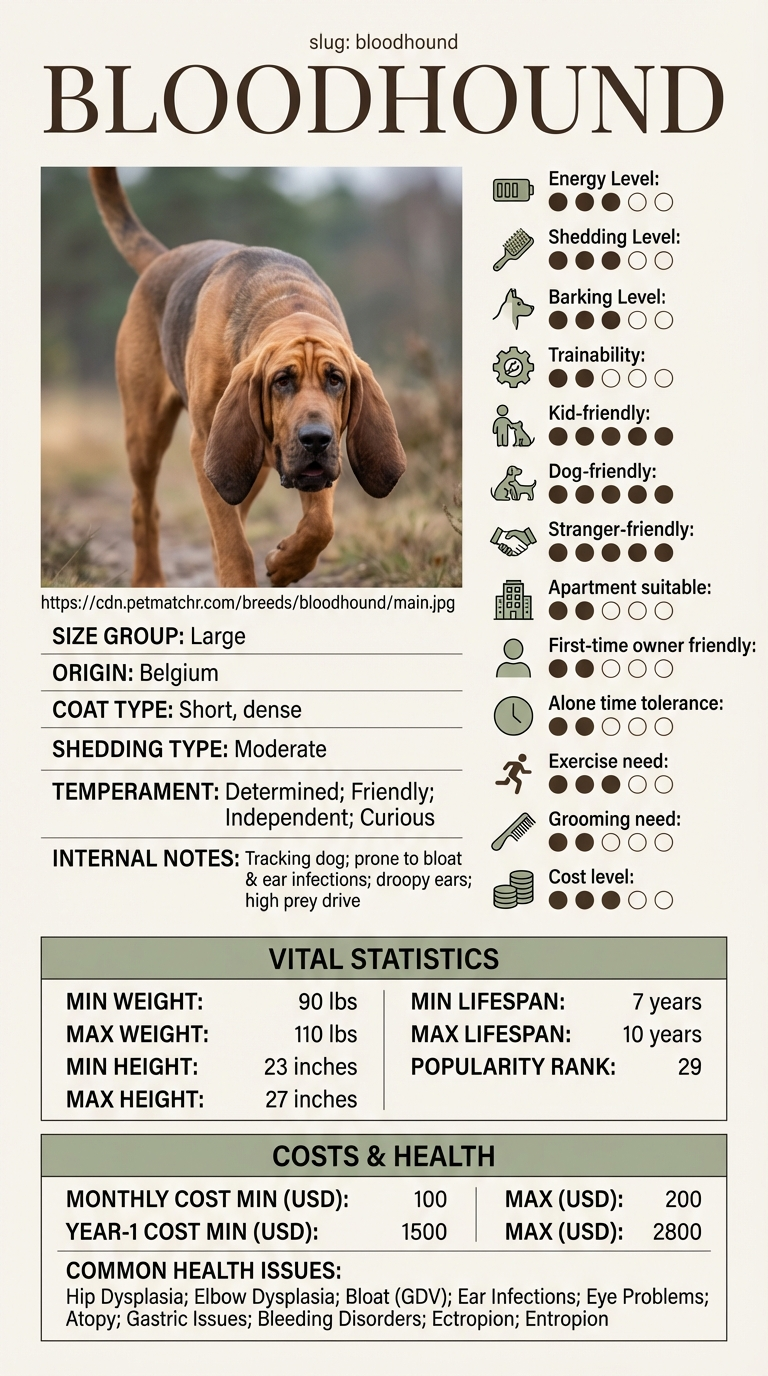
Bloodhound von Willebrand's Disease (vWD1) infographic

Typically, owners of Bloodhounds or those considering the breed may struggle with this issue. New pet parents, especially first-time owners, can feel overwhelmed by the implications of managing a dog with vWD1 and ensuring they receive proper care.

Important reminder

This guide is not medical advice. If your dog shows pain, sudden behavior change, or worsening symptoms, consult a licensed veterinarian.

Some links may be affiliate links. We may earn a commission at no extra cost to you. We only suggest products we believe are helpful for dog owners.

What this problem looks like

Bloodhound von Willebrand's disease (vWD1) is a genetic bleeding disorder that affects your dog's ability to clot blood properly. Daily life with a Bloodhound suffering from vWD1 can be concerning. You may notice your dog bleeding more easily, whether from minor cuts or bruising. This can lead to anxiety for both you and your pet, especially during playtime or outdoor activities.

Common triggers

  • Minor injuries or cuts
  • Surgery or dental work
  • Strenuous exercise or play
  • Stressful situations

Von Willebrand's disease (vWD1) is relatively common among Bloodhounds, particularly due to their genetic predisposition. Estimates suggest that around 30% of Bloodhounds may carry the gene for this condition, making it an important health consideration for owners.

Why this happens

Breed factors

Bloodhounds, like many breeds, can inherit von Willebrand's Disease (vWD1), a genetic bleeding disorder. This condition affects their ability to clot blood properly due to a deficiency in a specific protein. If your Bloodhound has a family history of this disease, they may be more prone to it.

Environment factors

In addition to genetic factors, environmental elements can exacerbate symptoms. Stressful situations or injuries can trigger bleeding episodes. Keeping your Bloodhound calm and minimizing trauma is essential to managing their condition.

What you can try

At-home strategies

  • Monitor your Bloodhound closely for unusual bleeding or bruising. If you notice any signs, take notes to share with your vet.
  • Create a calm and safe environment. Use calming aids like music or pheromone diffusers to reduce stress.
  • Make sure your Bloodhound is not exposed to hazards that could lead to injury, such as rough play or sharp objects.

When to consider a trainer

If your Bloodhound shows anxiety or stress-related behaviors, it may be helpful to consult a professional dog trainer. A trainer can provide strategies to help your dog feel more secure and reduce triggers for bleeding episodes.

When to talk to your vet

If your Bloodhound exhibits signs of excessive bleeding, such as prolonged nosebleeds or blood in urine, contact your vet immediately. They can offer specific treatments and further guidance on managing vWD1 effectively.

Realistic expectations

It often takes several months to manage Bloodhound von Willebrand's disease (vWD1) effectively. This includes regular vet visits, medication adjustments, and training to prevent bleeding incidents.

Success means that your Bloodhound experiences fewer bleeding episodes, and you feel confident in managing their condition. Regular vet check-ups and a tailored care plan will be key.

Mistakes that make this worse

Avoiding these common mistakes can help manage your Bloodhound's von Willebrand's disease effectively.

  • Ignoring Symptoms: Not recognizing signs of bleeding or unusual bruising can delay treatment. Regularly monitor your Bloodhound for these signs.
  • Inconsistent Training: Inconsistent commands can confuse your Bloodhound, making it harder for them to learn how to manage their condition. Stick to a consistent training routine.
  • Overexerting Your Dog: Allowing your Bloodhound to engage in overly vigorous exercise can put them at risk. Opt for moderate activities instead.
  • Neglecting Vet Visits: Missing regular check-ups can lead to worsening health. Schedule routine vet visits to monitor your dog's condition.
  • Skipping Medication: Forgetting or refusing to give prescribed medication can exacerbate the disease. Set reminders to ensure timely administration.
  • Ignoring Dietary Needs: A poor diet can affect your Bloodhound's overall health. Consult your vet for a diet that supports their condition.

When Bloodhound von Willebrand's Disease (vWD1) is an Emergency

Bloodhound von Willebrand's disease (vWD1) can be serious, and knowing when to seek immediate help is crucial. Emergency signs include excessive bleeding from cuts, gums, or during surgery. Additionally, if your Bloodhound experiences unexplained bruising, swelling, or prolonged bleeding after minor injuries, it's time to call your vet right away.

On the other hand, mild cases can be monitored at home. If your Bloodhound shows no severe symptoms but has a history of bleeding issues, keep an eye on them. You can watch for any unusual behavior, such as lethargy or unusual panting, and create a plan with your vet to manage their condition. Regular check-ups are essential to monitor their health and adjust care as needed.

Bloodhound von Willebrand's Disease (vWD1) - When Bloodhound von Willebrand's Disease (vWD1) is an Emergency

Managing vWD1 with a Loving Touch

When Sarah adopted Max, her Bloodhound, she quickly learned he had von Willebrand's disease (vWD1). At first, she was overwhelmed by the constant worry about his health. With guidance from her vet, Sarah established a routine that included special diets and careful monitoring. Over time, she became adept at recognizing signs of potential bleeding and adjusted his activity level accordingly. Max is now a happy, well-managed dog, proving that with dedication, you can navigate challenging health issues.

Key takeaway: With the right support and a proactive approach, you can help your Bloodhound with vWD1 live a fulfilling and active life.
Frequently asked questions

What is Bloodhound von Willebrand's disease (vWD1)?

Bloodhound von Willebrand's disease (vWD1) is a genetic bleeding disorder that affects the blood's ability to clot. This condition is common in Bloodhounds and can lead to excessive bleeding from injuries or during surgery.

Why does my Bloodhound have von Willebrand's disease (vWD1)?

Your Bloodhound may inherit von Willebrand's disease (vWD1) from its parents. This condition is genetic, meaning it can be passed down through generations, particularly in breeds like the Bloodhound.

How can I manage my Bloodhound's vWD1 symptoms?

To manage Bloodhound von Willebrand's disease (vWD1), regular veterinary check-ups are essential. Your vet may recommend avoiding certain activities that could lead to injuries and keeping your dog calm during stressful situations.

Can Bloodhound von Willebrand's disease (vWD1) be treated?

While there is no cure for Bloodhound von Willebrand's disease (vWD1), treatment options can help manage the symptoms. Your vet may suggest medications or blood transfusions in severe cases to help with clotting.

What steps can I take to prevent bleeding episodes in my Bloodhound?

To prevent bleeding episodes, keep your Bloodhound away from rough play or high-risk activities. Additionally, ensure that your dog is monitored closely during grooming or vet visits to avoid unnecessary trauma.

How does vWD1 affect my Bloodhound's life expectancy?

Bloodhound von Willebrand's disease (vWD1) does not significantly reduce life expectancy. However, managing the condition is crucial to ensure a healthy and active life for your dog.

What should I ask my vet about Bloodhound von Willebrand's disease (vWD1)?

When visiting your vet, inquire about testing for von Willebrand's disease (vWD1) and the best management practices. Discuss any concerns regarding your Bloodhound's health and lifestyle adjustments needed.

What are the symptoms of von Willebrand's Disease (vWD1) in Bloodhounds?

Symptoms of von Willebrand's Disease in Bloodhounds may include excessive bleeding from minor wounds, nosebleeds, or prolonged bleeding after surgery. You might also notice unexplained bruising or blood in the urine. If you see these signs, consult your vet immediately.

Can von Willebrand's Disease (vWD1) be managed in older Bloodhounds?

Yes, Bloodhounds with von Willebrand's Disease can be managed as they age. Regular vet check-ups, a tailored diet, and avoiding high-risk activities can help. However, ongoing monitoring is essential to ensure their health is maintained.

Why does my Bloodhound have von Willebrand's Disease (vWD1)?

Von Willebrand's Disease is a genetic condition, meaning it is inherited from the parents. If your Bloodhound has vWD1, it could be due to breeding practices that do not screen for this disorder. Responsible breeders should test for genetic conditions.

How can I help my Bloodhound with von Willebrand's Disease (vWD1) during training?

When training a Bloodhound with vWD1, use positive reinforcement techniques and avoid overly strenuous activities. Focus on low-impact training that doesn't put stress on their body. Always consult your vet for tailored training advice.

What precautions should I take if my Bloodhound has von Willebrand's Disease (vWD1)?

If your Bloodhound has vWD1, take precautions such as avoiding rough play, not letting them participate in high-impact sports, and keeping a first aid kit handy. Always inform your vet of your dog's condition during visits or emergencies.

Quick answers

View more answers
Behavior

What are quick tips for managing Bloodhound von Willebrand's disease (vWD1)?

Regular veterinary check-ups and avoiding high-risk activities are essential for managing Bloodhound von Willebrand's disease (vWD1). Keeping your dog calm and stress-free can also help prevent bleeding episodes.

Health

Can Bloodhound von Willebrand's disease (vWD1) be inherited?

Yes, Bloodhound von Willebrand's disease (vWD1) is a genetic condition that can be passed from parent to offspring. Responsible breeding practices can help reduce its occurrence in future generations.

Health

Are there specific symptoms I should watch for in my Bloodhound?

Watch for excessive bleeding from cuts, prolonged bleeding after surgery, or unusual bruising. If you notice any of these symptoms, contact your vet immediately.

Costs

How much does Bloodhound von Willebrand's disease (vWD1) management cost?

Managing Bloodhound von Willebrand's disease (vWD1) can vary in cost, typically ranging from $100 to $200 monthly, depending on vet visits and any necessary treatments.

Training

What training tips help with a Bloodhound's behavior related to vWD1?

Training your Bloodhound to be calm and gentle can help prevent accidents. Use positive reinforcement techniques to encourage good behavior and reduce stress.

Related DogBreedCompass guides

  • Bloodhound separation anxiety guideLearn more about managing anxiety in Bloodhounds to keep them calm and happy.
  • Bloodhound behavior problemsExplore other behavior problems common in Bloodhounds and solutions for them.
  • Bloodhound cost breakdownUnderstand the potential costs of owning a Bloodhound, including health issues like vWD1.
  • Bloodhound von willebrand's disease (vwd1) trainingDiscover training techniques specifically designed for Bloodhounds to help with vWD1 management.
  • Bloodhound common health issuesRead about related health issues that Bloodhounds may face and how to prevent them.

Related guides