Health
What should I do if my Bloodhound shows signs of vision loss?
If your Bloodhound shows signs of vision loss, take them to a vet for an eye examination to determine the cause.
Bloodhound progressive retinal atrophy (PRA-RCD3) leads to vision loss, impacting your dog's daily life.
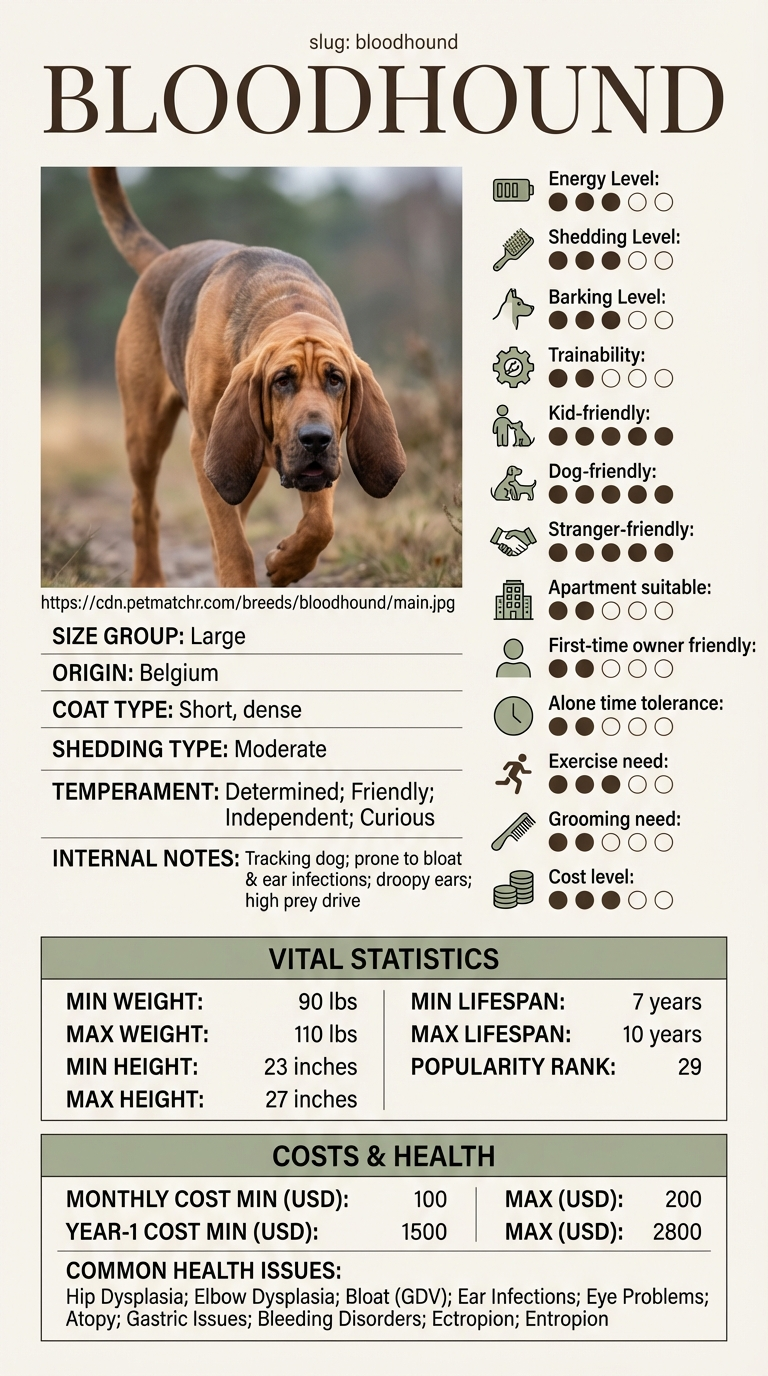
This issue typically affects Bloodhound owners who notice their pets struggling to see well, especially in low-light conditions. It’s particularly concerning for those with older dogs or those who have a family history of eye problems.
This guide is not medical advice. If your dog shows pain, sudden behavior change, or worsening symptoms, consult a licensed veterinarian.
Some links may be affiliate links. We may earn a commission at no extra cost to you. We only suggest products we believe are helpful for dog owners.
Bloodhound progressive retinal atrophy (pra-rcd3) is a genetic condition that leads to gradual vision loss. Owners may notice their dog struggling to see in dim light or having difficulty navigating familiar spaces. As the condition progresses, it can be heartbreaking to witness the impact on your dog's quality of life.
This condition is relatively common among Bloodhounds, with many diagnosed cases reported by owners. If you notice signs of vision issues, it's essential to consult with your veterinarian for an accurate diagnosis and management plan.
Bloodhounds are prone to Progressive Retinal Atrophy (PRA-rcd3) due to genetic factors. This inherited condition leads to gradual degeneration of the retina, resulting in vision loss. Breeds like Bloodhounds can be more susceptible to this condition, making it critical for owners to be aware of genetic predispositions.
Environmental factors can also contribute to the progression of PRA-rcd3. Bright lights, lack of mental stimulation, and insufficient exercise can exacerbate the effects of vision loss. Ensuring a safe and engaging environment can help minimize stress and support overall well-being for your Bloodhound.
If your Bloodhound is struggling to adjust to their vision loss or exhibiting anxiety, consider seeking help from a professional dog trainer. A trainer experienced with special needs dogs can provide tailored strategies and support.
Consult your vet if you notice any significant changes in your Bloodhound's behavior or if their condition seems to worsen. Regular check-ups can help monitor the progression of PRA-rcd3 and address any related health issues.
Managing Bloodhound progressive retinal atrophy (pra-rcd3) can take several months. Expect to see gradual changes in your dog's behavior and comfort level as you adapt to their needs.
Success means your Bloodhound will adjust to their vision loss, navigating their environment with confidence, and enjoying a good quality of life with support and care.
Understanding common mistakes can help you better manage Bloodhound progressive retinal atrophy (PRA-rcd3). Here are some behaviors to avoid.
Recognizing when Bloodhound progressive retinal atrophy (PRA-rcd3) is an emergency is crucial. If you notice your dog suddenly losing vision, struggling to navigate familiar areas, or bumping into objects, these are red flags that demand immediate veterinary attention. Other warning signs include abnormal eye movements, excessive squinting, or apparent pain in the eyes.
In contrast, if your Bloodhound shows mild signs of vision changes, such as difficulty seeing in low light or a slight hesitation when moving around, it may not be an emergency. In these cases, you can monitor their behavior while keeping your vet informed. Regular check-ups can help track the progression of the condition and ensure your furry friend stays comfortable.
Always trust your instincts as a pet owner. If you're uncertain about the severity of your dog's condition, it's better to err on the side of caution and contact your vet. Early intervention can make a significant difference in managing Bloodhound progressive retinal atrophy (PRA-rcd3).
Sarah, a dedicated Bloodhound owner, noticed her dog Bella struggling to navigate familiar spaces. After a vet diagnosis of progressive retinal atrophy (pra-rcd3), Sarah felt overwhelmed. With guidance, she started using scent trails and tactile cues to help Bella find her way. Gradually, Bella learned to rely more on her other senses, and their bond deepened as they adapted together. Sarah also joined a support group for owners facing similar challenges, which provided her with valuable tips and emotional support.
Key takeaway: Adapting to Bloodhound progressive retinal atrophy (pra-rcd3) is a journey that requires creativity and patience. Embrace the process and seek support from others.
Bloodhound progressive retinal atrophy (pra-rcd3) is a genetic condition that causes gradual vision loss. This condition is inherited and often affects the dog's ability to see in low light. Regular veterinary check-ups can help monitor your dog's eye health.
Managing Bloodhound progressive retinal atrophy (pra-rcd3) involves creating a safe environment and using visual cues to help your dog navigate. Avoid moving furniture and use consistent commands to guide them. Training can help them adapt to their vision loss.
Signs of Bloodhound progressive retinal atrophy (pra-rcd3) include difficulty seeing in dim light, bumping into objects, and changes in behavior such as hesitance to explore. If you notice these signs, consult a vet for an eye exam.
Currently, there is no cure for Bloodhound progressive retinal atrophy (pra-rcd3) as it is a genetic condition. However, early detection and management strategies can help improve your dog's quality of life.
Training for a Bloodhound with progressive retinal atrophy (pra-rcd3) should focus on verbal commands and scent work. Positive reinforcement methods can help build confidence and encourage exploration in a safe manner.
Early signs of Bloodhound progressive retinal atrophy (pra-rcd3) include difficulty seeing in low light, bumping into objects, and hesitance in unfamiliar environments. As the condition progresses, your dog may show increased anxiety or confusion.
Currently, there is no cure for Bloodhound progressive retinal atrophy (pra-rcd3). However, supportive care, like using bright lighting at home and keeping a consistent environment, can help your dog adapt to vision loss.
Yes, Bloodhound progressive retinal atrophy (pra-rcd3) is a hereditary condition. If you're considering adopting a Bloodhound, ask the breeder about health screenings for this and other genetic issues.
Helping your Bloodhound cope with vision loss involves creating a safe and familiar environment. Use verbal cues and consistent commands to guide them, and consider training to enhance their other senses.
If you notice any changes in your Bloodhound's vision or behavior, it’s important to consult your vet. Regular check-ups can help monitor eye health and catch issues early.
If your Bloodhound shows signs of vision loss, take them to a vet for an eye examination to determine the cause.
Help your Bloodhound adjust by keeping their environment consistent and using verbal cues to guide them.
While some supplements may support eye health, it's important to consult your vet before trying anything new.
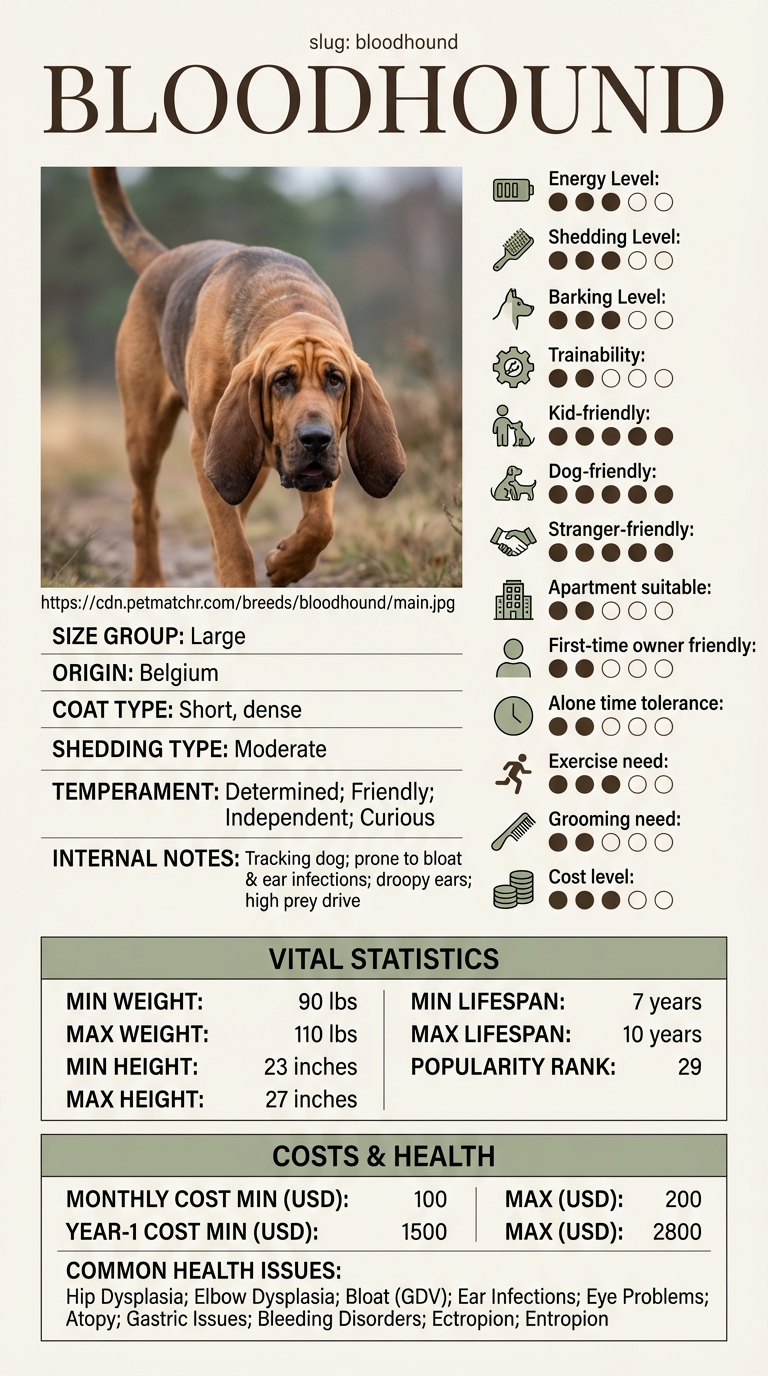
You might incur costs for regular vet visits and potential treatments, which can range from $100 to $200 monthly.