Health
What are quick tips for Bichon Frise genetic health concerns?
Keep routine veterinary visits, record new symptoms, maintain a consistent care routine, and ask for veterinary guidance before starting treatments or changing exercise.

Quick answer
What are quick tips for Bichon Frise genetic health concerns?
Keep routine veterinary visits, record new symptoms, maintain a consistent care routine, and ask for veterinary guidance before starting treatments or changing exercise.
A thoughtful health plan for your Bichon Frise starts with observation, routine veterinary care, and clear records—not assumptions about what any one dog will develop.
This is especially relevant to prospective owners, families with a newly adopted Bichon Frise, and owners who have noticed a new mobility, skin, ear, or behavior change and want to know what to discuss with a veterinarian.
This guide is not medical advice. If your dog shows pain, sudden behavior change, or worsening symptoms, consult a licensed veterinarian.
Some links may be affiliate links. We may earn a commission at no extra cost to you. We only suggest products we believe are helpful for dog owners.
We research and check what we publish, but we do not warrant that any figure, date, price, or statement is accurate, complete, or current, and we accept no liability for any loss, cost, injury, or other harm arising from the use of this site. Use it as one reference among several. You remain responsible for your own decisions and for your dog's care - confirm anything that matters with a licensed veterinarian or another qualified professional before you act on it. Full disclaimer.
Genetic health questions can be unsettling because a breed-level concern can sound like a prediction. It is not. For a Bichon Frise, the most useful approach is to learn the dog's individual history, watch for changes in comfort or function, and work with a veterinarian when concerns arise.
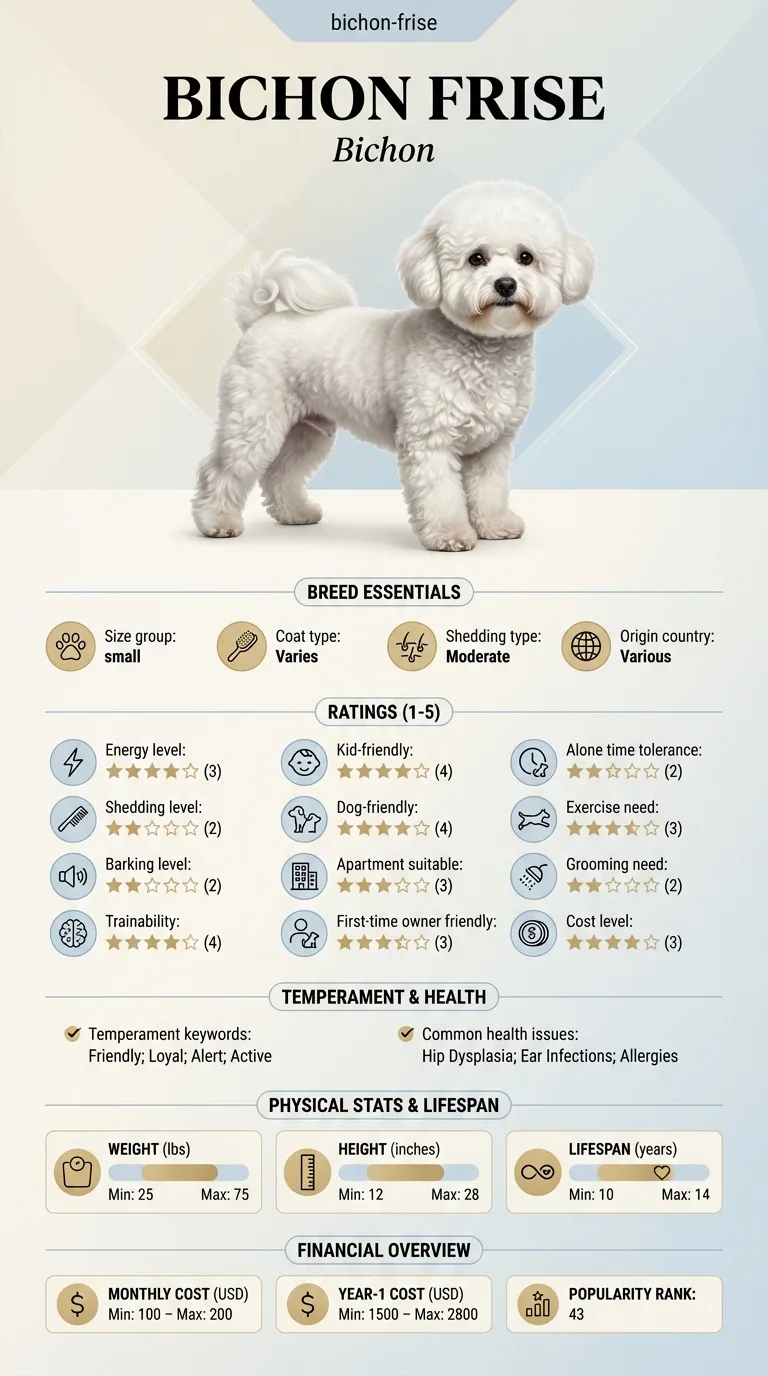
This page does not make a prevalence claim. The supplied breed record identifies hip dysplasia, ear infections, and allergies as health issues to discuss, but it does not provide rates or confirm which conditions are inherited in an individual Bichon Frise.
Inherited factors can influence health risk in purebred dogs, but breed information alone cannot explain a symptom in one Bichon Frise. A veterinarian may consider family history, age, examination findings, and other factors before discussing whether genetics could be relevant.
Daily environment can affect comfort and symptoms regardless of genetic background. Activity level, body condition, grooming products, parasites, diet changes, and exposure to irritants are examples of details worth sharing with your veterinarian.
Talk to a veterinarian about persistent, recurrent, painful, or worsening signs, and ask what history or records would be helpful. Urgent signs such as trouble breathing, collapse, severe pain, sudden weakness, or repeated vomiting need prompt veterinary attention.
The goal is not to predict a disorder from a breed name. It is to notice meaningful changes, avoid guesswork, and give your veterinarian useful information.
See all Bichon Frise health problems, which breeds are prone to most common genetic disorders, or the full Bichon Frise breed guide for temperament, exercise needs and ownership costs.
The right timeline depends on the cause of a symptom and the veterinary plan. Some questions can be addressed at a routine appointment, while others may require monitoring or follow-up.
Success means your Bichon Frise is assessed promptly when needed, has a care plan tailored to their individual findings, and stays as comfortable and active as possible.
Arrange a veterinary visit if your Bichon Frise has persistent itching, recurring ear discomfort, a new limp, reluctance to move, pain, changes in appetite, or a change in normal behavior. These signs are not specific to a genetic disorder, but they are worth assessing so your dog can receive appropriate care.
Seek urgent veterinary help for severe pain, trouble breathing, collapse, repeated vomiting, sudden weakness, or a rapid worsening of symptoms. If you are unsure how serious a change is, calling your veterinary clinic for guidance is a sensible next step.

A Bichon Frise owner notices that their dog occasionally avoids a familiar jump and has been shaking one ear more often. Instead of assuming a genetic disorder, the owner records when the changes occur, takes a short video, and schedules a veterinary visit. The notes help the veterinarian assess the concerns and recommend appropriate next steps for that dog. The owner continues to monitor changes and follows the care plan rather than relying on a general online checklist.
Key takeaway: Clear observations and timely veterinary guidance are more useful than trying to diagnose a Bichon Frise from a breed-level health list.
A health concern cannot be confirmed as genetic from symptoms alone. Genetics may contribute to risk in some dogs, while environment, injury, infection, age, diet, and other factors may also matter. A veterinarian can assess your individual dog and advise whether further evaluation is appropriate.
You cannot safely prevent or treat a suspected genetic disorder with a one-size-fits-all home plan. Focus on routine veterinary care, a balanced diet chosen with veterinary guidance, healthy activity, weight management, and prompt attention to new symptoms.
The available breed record lists hip dysplasia, ear infections, and allergies as health issues to be aware of. That list does not establish that any of these signs in your dog are genetic. Bring up any mobility, ear, skin, or comfort changes so your veterinarian can evaluate them in context.
Training does not treat a medical condition. Gentle, reward-based handling training can make examinations, grooming, and veterinary visits less stressful, which may help you and your veterinarian care for your dog. Ask your veterinarian before changing exercise for a dog with pain or mobility concerns.
Book an appointment for persistent, recurrent, or worsening symptoms, or when your dog's daily comfort or normal activity changes. Seek urgent care for severe or sudden symptoms such as collapse, trouble breathing, severe pain, or repeated vomiting.
Yes. Dates, photos or short videos, changes in food or routine, and notes about what improves or worsens a sign can help your veterinarian identify patterns and decide on next steps.
Keep routine veterinary visits, record new symptoms, maintain a consistent care routine, and ask for veterinary guidance before starting treatments or changing exercise.
No. A breed-level health concern does not predict an individual dog's future. Your veterinarian can help you make decisions based on your dog's history, examination, and signs.
Bring a timeline of signs, notes about recent changes, and photos or videos when relevant. Also tell the clinic about any foods, supplements, or medicines your dog receives.
Avoid forcing activity through pain or a new limp. Contact your veterinarian for advice on safe activity while the cause is being assessed.
A one-page prep sheet for this condition: the signs, the questions to ask, what to get priced. Unlocks here.
You get: Vet visit prep sheet
No spam. One-click unsubscribe. See our privacy policy.
Preview page 1 before you decide.