Behavior
What are quick tips for managing Belgian Malinois epilepsy?
Keep a seizure log, follow your vet's medication plan, and maintain a calm environment for your dog.

Quick answer
What are quick tips for managing Belgian Malinois epilepsy?
Keep a seizure log, follow your vet's medication plan, and maintain a calm environment for your dog.
Belgian Malinois epilepsy can be a serious concern for dog owners. It leads to unpredictable seizures that can affect your dog's quality of life.
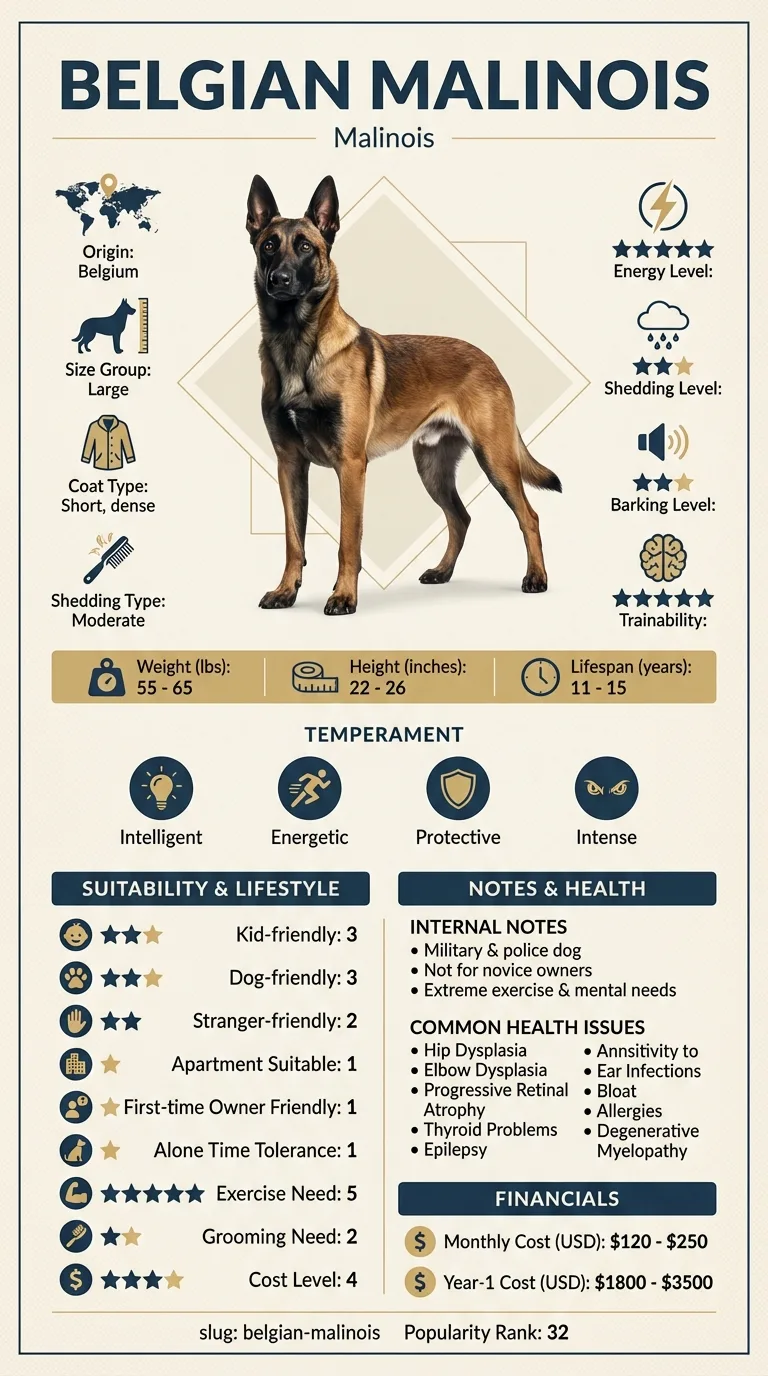
Typical owners struggling with this issue include those who are passionate about their Belgian Malinois but may not have experience with managing health problems. They often feel overwhelmed, especially when their active and intelligent dog suddenly faces such a serious condition.
This guide is not medical advice. If your dog shows pain, sudden behavior change, or worsening symptoms, consult a licensed veterinarian.
Some links may be affiliate links. We may earn a commission at no extra cost to you. We only suggest products we believe are helpful for dog owners.
We research and check what we publish, but we do not warrant that any figure, date, price, or statement is accurate, complete, or current, and we accept no liability for any loss, cost, injury, or other harm arising from the use of this site. Use it as one reference among several. You remain responsible for your own decisions and for your dog's care - confirm anything that matters with a licensed veterinarian or another qualified professional before you act on it. Full disclaimer.
Check this first
Recognizing when your Belgian Malinois is experiencing an emergency due to epilepsy is crucial. If your dog has a seizure lasting longer than five minutes, or if they have multiple seizures in a short period, call your vet immediately. Other red flags include difficulty breathing, disorientation, or signs of severe distress after a seizure. These could indicate a serious underlying issue that needs urgent attention.
In contrast, if your Malinois has a brief seizure that lasts a minute or two and seems stable afterward, it may be safe to monitor them at home. Keep a log of the seizures to discuss with your vet during your next visit. Make sure you provide a calm environment and observe your dog for any unusual behavior post-seizure. If they appear to recover fully and return to normal activity, you can wait to contact your vet unless new symptoms arise.
Always trust your instincts as a pet owner. If you notice anything that feels off, don't hesitate to reach out to your veterinarian. It's better to err on the side of caution, especially when it comes to your dog's health.
If any of these apply, call your vet or an emergency clinic now. The rest of this page is for the cases that are not an emergency.
Belgian Malinois epilepsy can manifest as sudden seizures, which may be alarming for both the dog and the owner. These seizures can vary in intensity and duration, causing the dog to lose control during an episode. This condition is not uncommon in the breed, and it can significantly impact their daily life and well-being.
Epilepsy is a recognized health issue among Belgian Malinois, affecting a notable percentage of the breed. While exact statistics can vary, many owners report dealing with this condition at some point during their dog's life.
Belgian Malinois epilepsy can be influenced by genetic factors. Certain lines of this breed may have a higher predisposition to epilepsy, which can be inherited. Knowing your dog's lineage can provide insight into potential health issues.
Environmental factors also play a role. Stress, exposure to toxins, and even head injuries can trigger seizures in some dogs. It's essential to create a stable and safe environment to reduce these risks.
Contact your veterinarian if your dog experiences multiple seizures within a short period or if they have a seizure lasting more than five minutes. Your vet may recommend further diagnostics or medication to manage the condition.
Avoid these common mistakes that can worsen Belgian Malinois epilepsy.
Start here: Belgian Malinois Most Common Genetic Disorders: Screening
See all Belgian Malinois health problems, which breeds are prone to epilepsy, or the full Belgian Malinois breed guide for temperament, exercise needs and ownership costs.
Managing Belgian Malinois epilepsy typically takes several months of adjustments. Owners should expect to see gradual improvements over time as they work with a veterinarian to find the right treatment plan.
Success means having fewer seizures and improving your dog's overall quality of life. Your Malinois should be more stable and able to engage in daily activities with reduced anxiety and discomfort.
Sarah, a busy nurse in Chicago, adopted Max, a Belgian Malinois, who soon began having seizures. At first, Sarah was overwhelmed and confused. After consulting with her vet, she learned that managing epilepsy required a strict schedule of medication and monitoring. With patience and dedication, Sarah kept a detailed log of Max's seizures, adjusted his medication as needed, and created a calm environment at home. Over six months, Max's seizures decreased significantly, allowing him to play and enjoy life more.
Key takeaway: Consistent care and communication with your vet are essential for managing Belgian Malinois epilepsy. With the right approach, you can improve your dog's life and your own peace of mind.
Epilepsy in your Belgian Malinois can be caused by genetics, brain injuries, or certain infections. Some dogs may have idiopathic epilepsy, where the exact cause is unknown. It's important to consult your vet for a thorough evaluation.
Managing Belgian Malinois epilepsy typically involves medication prescribed by your veterinarian. Regular vet check-ups are essential to monitor the effectiveness and adjust dosages as needed. Keeping a seizure log can also help track patterns and triggers.
Signs of a seizure in a Belgian Malinois may include shaking, twitching, or loss of consciousness. They might also exhibit unusual behavior before or after a seizure, such as confusion or anxiety. If you suspect a seizure, it's crucial to keep your dog safe during the episode.
Training alone won't stop epileptic seizures, but it can help with managing behavior during and after episodes. Positive reinforcement training can also create a sense of security for your dog, which may reduce anxiety related to seizures. Consult a professional trainer familiar with medical issues for tailored guidance.
Yes, creating a stress-free environment is important for a Belgian Malinois with epilepsy. Ensure they have a consistent routine, plenty of exercise, and a calm space to rest. Avoiding triggers like loud noises or bright lights can also help minimize seizure frequency.
If your Belgian Malinois has a seizure lasting more than five minutes or experiences multiple seizures in a row, seek immediate veterinary care. Other signs that require emergency attention include difficulty breathing or not regaining consciousness after a seizure.
Common triggers for Belgian Malinois epilepsy can include stress, sudden changes in environment, and certain dietary factors. It's important to monitor your dog's behavior and surroundings to identify potential triggers. Keeping a detailed journal of seizures can help you and your vet find patterns.
During a seizure, stay calm and ensure your dog is in a safe space to prevent injury. Avoid putting your hands near their mouth, as they may bite unintentionally. After the seizure, comfort your dog and keep them in a quiet, familiar place until they recover.
If your Belgian Malinois experiences multiple seizures in a single day, it's crucial to contact your veterinarian immediately. This could indicate a serious condition requiring urgent medical attention. They may need adjustments to their treatment plan or further testing.
Yes, epilepsy can be hereditary in some Belgian Malinois. If you have a family history of seizures in this breed, it's important to discuss this with your breeder before getting a puppy. Responsible breeding practices may help reduce the risk of epilepsy.
Diet can play a role in managing Belgian Malinois epilepsy. Some owners find that a high-quality, balanced diet helps reduce seizure frequency. It's best to consult with your vet about any dietary changes or supplements that may be beneficial for your dog's condition.
Keep a seizure log, follow your vet's medication plan, and maintain a calm environment for your dog.
Stay calm, clear the area of hazards, and time the seizure to inform your vet later.
Consult your vet for dietary recommendations, as certain diets may help manage epilepsy symptoms.
Yes, regular exercise is important, but avoid strenuous activities right after a seizure.
Regular check-ups are essential, typically every 6 to 12 months, or as recommended by your vet.
A one-page prep sheet for this condition: the signs, the questions to ask, what to get priced. Unlocks here.
You get: Vet visit prep sheet
No spam. One-click unsubscribe. See our privacy policy.
See a sample page before you decide.
Early access list
The free prep sheet covers the same-day warning signs, a symptom log and the questions to ask. We are considering a fuller kit that adds a cost worksheet for the usual tests and treatments (US price ranges with their sources) and a plain-English guide to ways of covering the bill. It is not built yet; this list tells us whether it is worth building.
One email, no spam, unsubscribe anytime. Information only, not veterinary advice.