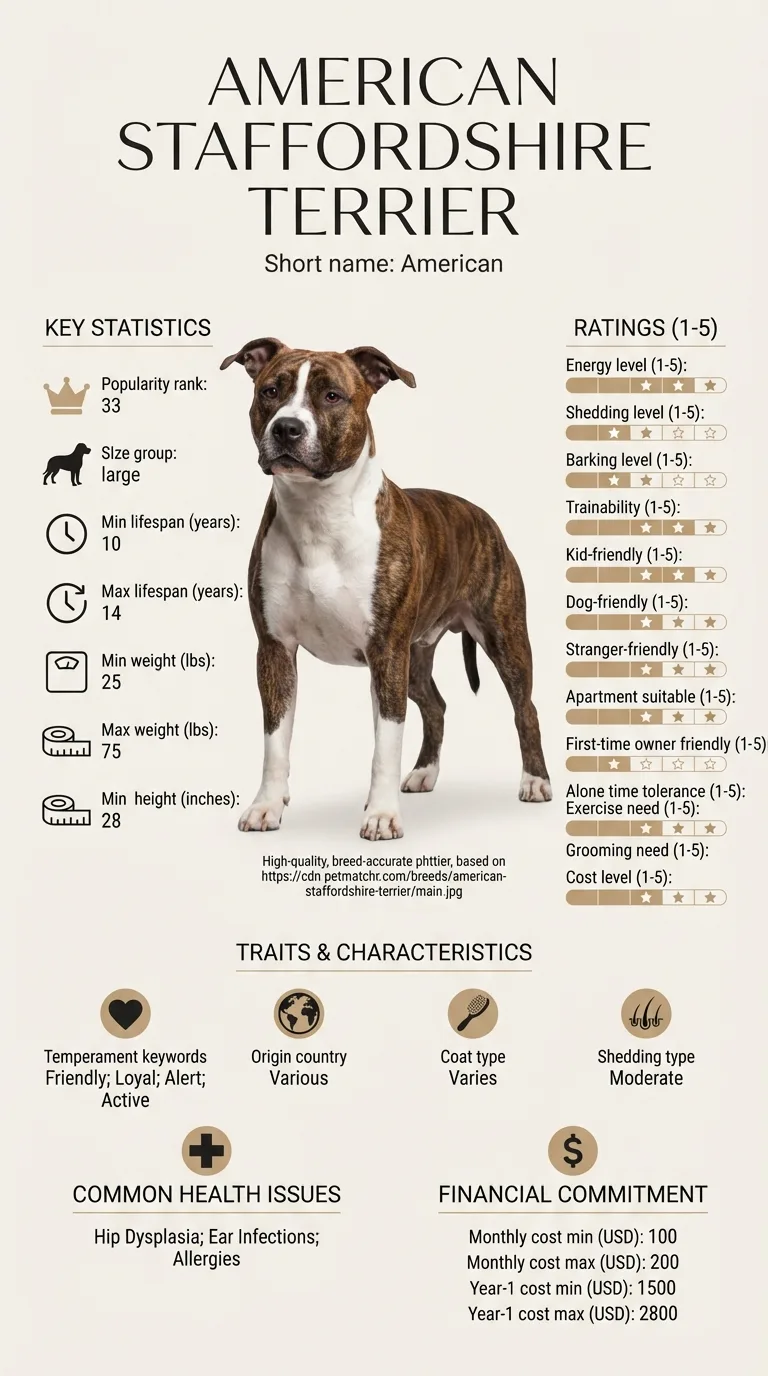
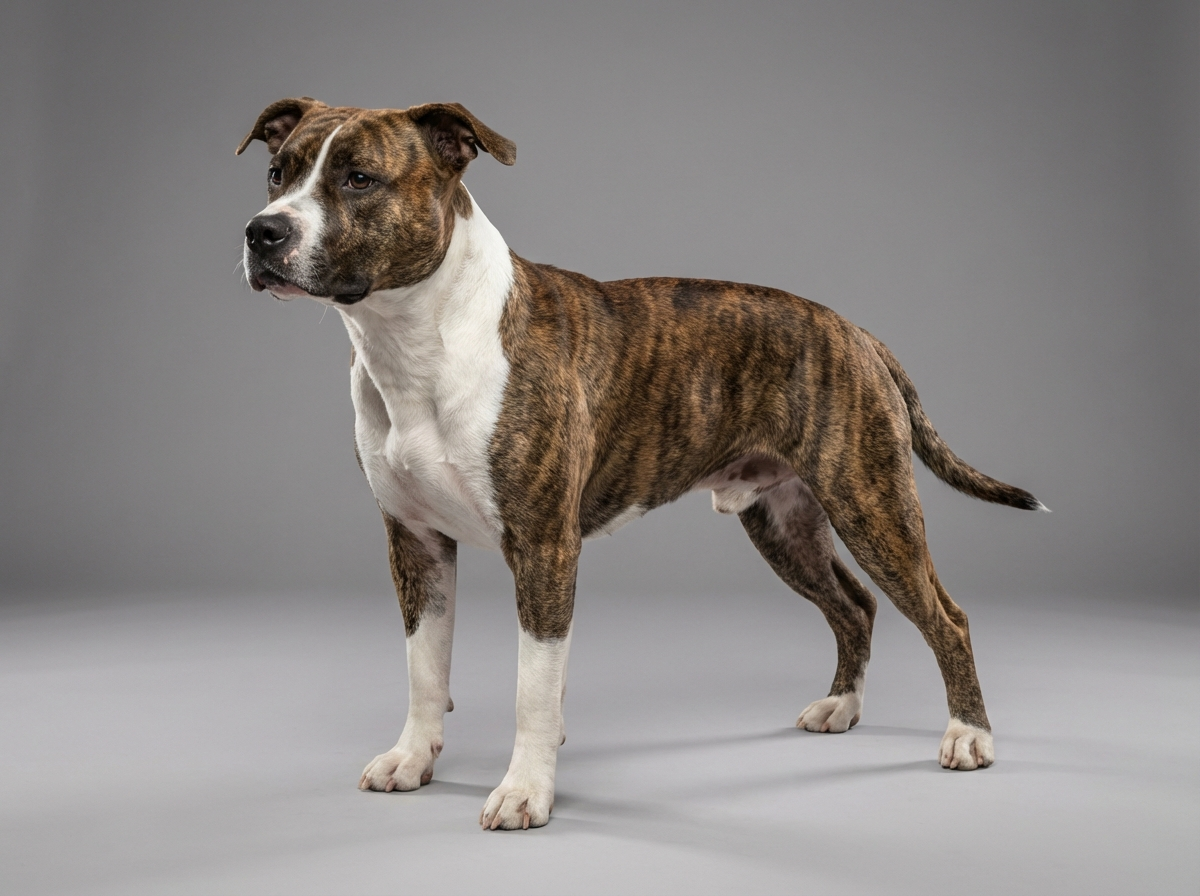
American Staffordshire Terrier allergies can be frustrating for both you and your dog. These allergies often lead to discomfort and health issues that affect their quality of life.
This problem typically affects dog owners who notice their pets scratching excessively or experiencing skin problems. First-time owners and those unfamiliar with breed-specific health concerns often struggle the most.
Important reminder
This guide is not medical advice. If your dog shows pain, sudden behavior change, or worsening symptoms, consult a licensed veterinarian.
Some links may be affiliate links. We may earn a commission at no extra cost to you. We only suggest products we believe are helpful for dog owners.
What this problem looks like
American Staffordshire Terrier allergies can be a daily challenge for owners. Symptoms often include itchy skin, sneezing, and chronic ear infections. These allergies can stem from food, environmental factors, or even fleas, and may require careful management.
Common triggers
Certain foods, like grains or specific proteins
Pollen and dust in the environment
Flea bites or infestations
Allergies are a common issue in American Staffordshire Terriers, impacting many dogs in this breed. If you notice signs of allergies, it's important to consult with a vet for proper diagnosis and treatment.
Why this happens
Breed factors
American Staffordshire Terriers can be prone to allergies due to their genetic makeup. Certain skin conditions and sensitivities to food or environmental factors can stem from their lineage. These breeds often have a higher likelihood of developing allergies compared to others.
Environment factors
Environmental factors play a significant role in triggering allergies. Common allergens include pollen, dust mites, mold, and certain chemicals found in household products. Additionally, food allergies can arise from specific ingredients in their diet, leading to discomfort and health issues.
What you can try
At-home strategies
1. Keep your home clean by regularly vacuuming and dusting to minimize allergens. Use air purifiers to improve air quality.
2. Bathe your dog weekly with a hypoallergenic shampoo to soothe irritated skin and remove allergens.
3. Monitor their diet closely. Consider switching to a limited-ingredient dog food to identify any potential food allergies.
4. After walks, wipe down your dog's paws and coat to remove pollen and dust.
5. Create a designated area for your dog with clean bedding and toys to limit exposure to allergens.
When to consider a trainer
If your American Staffordshire Terrier shows signs of anxiety or behavioral issues due to allergies, consider consulting a trainer. They can help address any stress-related behaviors that may arise from discomfort.
When to talk to your vet
If your dog's allergies persist despite home remedies, or if you notice severe symptoms such as excessive itching, swelling, or difficulty breathing, it's crucial to consult a vet. They can recommend specific treatments or allergy testing to better understand your dog's needs.
Realistic expectations
You can expect to see improvements in your American Staffordshire Terrier's allergies within 4 to 8 weeks of implementing a consistent management plan.
Success means fewer allergy flare-ups, less scratching, and an overall happier and healthier dog. You'll also notice a reduction in any skin infections or ear issues.
Mistakes that make this worse
Avoiding these common mistakes can help manage your American Staffordshire Terrier's allergies effectively.
Ignoring Symptoms: Many owners overlook signs of allergies, thinking they will go away. Early detection can prevent more serious health issues. Keep an eye out for itching, redness, or gastrointestinal problems.
Self-Diagnosing: Trying to determine the cause of your dog's allergies without a vet's help can lead to mismanagement. Consult your veterinarian for proper testing and diagnosis.
Inconsistent Treatment: Skipping prescribed medications or treatments can worsen allergies. Stick to your vet's recommendations for the best results.
Changing Diets Too Frequently: Constantly switching your dog's food can cause digestive upset and make it harder to identify food allergies. Work with your vet to establish a consistent diet that suits your dog's needs.
Overusing Cleaning Products: Harsh chemicals in cleaning products can exacerbate allergies. Opt for pet-safe, hypoallergenic alternatives to keep your home clean without irritating your dog.
Neglecting Regular Grooming: Failing to groom your American Staffordshire Terrier regularly can lead to skin issues and trapped allergens. Schedule regular baths and brushing to keep their coat healthy.
Ignoring Environmental Factors: Not considering environmental allergens can delay progress. Identify and minimize exposure to potential allergens like pollen, dust mites, or mold.
When American Staffordshire Terrier Allergies Are an Emergency
Allergies in your American Staffordshire Terrier can range from mild to severe. It's essential to know when to monitor the situation and when to act immediately. If your dog shows signs of severe itching, swelling of the face, or difficulty breathing, these are red flags. In these cases, you should call your vet right away.
Mild symptoms, such as occasional sneezing or light scratching, can often be managed at home. Keep an eye on your dog’s behavior, and consider tracking their reactions to specific foods or environmental factors. Creating a plan to mitigate mild allergies may include changing their diet or reducing exposure to allergens. However, if symptoms worsen or persist, consult your vet for further evaluation.
Here are specific signs that indicate an emergency:
- **Severe swelling**: If your dog's face or throat is swelling, it may indicate an allergic reaction.
- **Difficulty breathing**: Labored breathing or wheezing is a sign that immediate help is needed.
- **Persistent vomiting or diarrhea**: If your dog is unable to keep food down, it could be a sign of a serious allergic reaction.
On the other hand, watchful waiting is appropriate for:
- **Mild itchiness or redness**: This can often be treated at home with anti-itch creams or baths.
- **Occasional sneezing**: Monitor it, but it may not require immediate attention unless it escalates.
- **Minor skin irritations**: If they don’t seem to be bothering your dog too much, keep watching and consult your vet if it worsens.
Knowing these differences can help you take the right action quickly and keep your American Staffordshire Terrier healthy.

Managing American Staffordshire Terrier Allergies - When American Staffordshire Terrier Allergies Are an Emergency
Sam's Journey with Bella's Allergies
Sam, a busy first-time dog owner, noticed that his American Staffordshire Terrier, Bella, was constantly scratching and had red patches on her skin. After a vet visit revealed allergies, Sam felt overwhelmed but determined to help Bella. He started by adjusting her diet to a hypoallergenic dog food and incorporating regular baths with medicated shampoo. With patience and consistency, Bella’s skin improved significantly, and her energy returned. Sam learned to recognize the common allergens in their home and created a cleaner environment for her.
Key takeaway: Managing American Staffordshire Terrier allergies requires commitment, but with the right approach, you can greatly improve your dog's quality of life.
Frequently asked questions
Why does my American Staffordshire Terrier have allergies?
American Staffordshire Terrier allergies can be caused by environmental factors like pollen, dust mites, or certain foods. If your dog is scratching excessively or has skin irritations, it might indicate an allergic reaction. Consulting with a vet can help identify the specific allergens affecting your dog.
How can I stop my American Staffordshire Terrier from having allergies?
To manage American Staffordshire Terrier allergies, start by identifying and avoiding known allergens. Regular grooming can help reduce allergens in their environment. In some cases, your veterinarian may recommend antihistamines or allergy tests to develop a tailored treatment plan.
What are common symptoms of allergies in American Staffordshire Terriers?
Symptoms of allergies in American Staffordshire Terriers include persistent itching, redness, ear infections, and gastrointestinal issues. You may also notice excessive licking or chewing on their paws. Keeping a diary of these symptoms can help your vet diagnose the problem.
Are there specific foods that can trigger allergies in American Staffordshire Terriers?
Yes, common food allergens for American Staffordshire Terriers include beef, chicken, dairy, and wheat. A vet can guide you in conducting an elimination diet to identify and avoid these triggers. Always consult with a professional before making any dietary changes.
Can American Staffordshire Terrier allergies be treated?
Yes, American Staffordshire Terrier allergies can often be managed with treatments such as medication, special diets, and environmental changes. Regular vet visits are essential to monitor your dog's condition and adjust treatment as needed. Early intervention can lead to better outcomes.
How often should I take my American Staffordshire Terrier to the vet for allergy concerns?
If your American Staffordshire Terrier shows signs of allergies, schedule a vet visit as soon as possible. After diagnosis, regular check-ups every 6 to 12 months can help manage their condition effectively. Keeping a close eye on their symptoms can prevent more serious issues.
What are the common signs of allergies in American Staffordshire Terriers?
Common signs of allergies include excessive itching, redness of the skin, and ear infections. You might also notice sneezing, watery eyes, or digestive issues. If you see these symptoms, it's important to consult with your vet.
Can American Staffordshire Terriers develop allergies later in life?
Yes, American Staffordshire Terriers can develop allergies at any age. Even if they were previously healthy, environmental changes or new foods can trigger allergic reactions. Regular check-ups can help catch these changes early.
What should I do if my American Staffordshire Terrier has severe allergic reactions?
If your dog experiences severe symptoms like swelling, vomiting, or difficulty breathing, seek emergency veterinary care immediately. These reactions can be life-threatening and require prompt treatment.
How can I manage my American Staffordshire Terrier's allergies at home?
To manage allergies at home, keep your dog's environment clean and free of allergens. Consider hypoallergenic foods and avoid known irritants. Regular baths with vet-recommended shampoos can also help soothe their skin.
Are there specific foods that could trigger allergies in American Staffordshire Terriers?
Yes, certain foods like beef, chicken, dairy, and grains can trigger allergies in American Staffordshire Terriers. It's best to work with your vet to identify any food sensitivities and create a suitable diet plan.
What are quick tips for managing American Staffordshire Terrier allergies?
To manage American Staffordshire Terrier allergies, keep your home clean and allergen-free. Regular baths can soothe skin irritations. Consider a hypoallergenic diet if food allergies are suspected.
Health
How can I help my American Staffordshire Terrier with skin irritations?
Apply soothing ointments recommended by your vet and avoid irritants like harsh soaps. Take care to maintain a clean environment to reduce allergens.
Health
Can I give my American Staffordshire Terrier over-the-counter allergy medication?
Some antihistamines may be safe for American Staffordshire Terriers, but always consult your vet before giving any medication. They can recommend the right dosage and type.
Health
What should I do if my American Staffordshire Terrier has a severe allergic reaction?
If your American Staffordshire Terrier shows signs of a severe allergic reaction, such as difficulty breathing or swelling, seek emergency veterinary care immediately. Time is critical in these situations.
Related DogBreedCompass guides
American Staffordshire Terrier allergies training – Learn more about training techniques to alleviate allergies in your American Staffordshire Terrier.