DogBreedCompass

German Dog Names Built for a Working-Dog Naming Tradition

German dog names come out of a working tradition — short, hard-consonant, built to be heard across a field and never mistaken for a command — and this list treats that as a design choice worth explaining, not just a list of names.

Anyone who wants a name with real carrying power, whether or not the dog will ever work a field, and anyone who wants to know which German names on this page carry a sourced meaning and which are traditional first names annotated on sound alone.

A soft-edged name can vanish into wind, traffic noise, or a crowded park exactly when you need it most, while a short, hard-consonant name tends to survive those conditions. That's a practical reason to look at this naming tradition on purpose rather than by accident, and it's worth knowing which of these picks carry a sourced meaning and which were chosen for their sound alone.

German Dog Names Built for a Working-Dog Naming Tradition

German Dog Names: The Short Answer

German dog names lean short, hard-consonant, and built to be heard at a distance — that's a real working-dog naming convention, not just an aesthetic preference, and it's the throughline across the list below. A large share of the entries are ordinary German words with a dictionary-sourced meaning, like Blitz for lightning or Bär for bear; others are traditional German first names or dog-specific names with no vocabulary translation attached, and those are labeled as sound-based rather than given a guessed meaning. Nothing on this page leans on militaristic imagery or historical figures, past or present — the tradition being described is a training convention about audibility, not an aesthetic borrowed from anywhere else.

How This List Was Built

Two separate things are happening on this page and it matters that you can tell them apart. First, a set of ordinary German words — animals, weather, food — where a dictionary source backs the meaning as plainly as any entry would: Wolke is stated as the German word for cloud, Nacht as the German word for night, because that's what the source actually says. Second, a set of traditional German first names and dog-specific names, some of them centuries old, that don't carry a sourced vocabulary meaning at all; Fritz and Waldi are names, not words with a dictionary entry, and they're left that way instead of an etymology being invented to fill the gap. The working-dog framing throughout is presented as a naming convention with a practical rationale — audibility at distance — not as a proven scientific claim about how dogs hear consonants differently from vowels, because that evidence is thin.

Working-Dog Traditional Names

These are the names most associated with German working-dog culture: short, front-loaded, and built to cut through outdoor noise rather than to sound decorative.
  • Blitz — one hard syllable, about as fast to say as it is to shout.
  • Fritz — a classic short German name, blunt and easy to call at any volume.
  • Klaus — plain and traditional, with a hard consonant ending that carries.
  • Falk — a short, clipped name, easy to bark out in one breath.
  • Kaiser — the German word for emperor; two syllables with a firm, formal cadence.
  • Hanno — a short, historic-sounding German name with a clean, hard stop.
  • Waldi — one of the most traditional dog-specific names in Germany, still used today.
  • Rolf — blunt and traditional, a classic working-dog choice.
  • Rex — the Latin word for king; one blunt syllable, one of the most common short dog names in German-speaking countries.
  • Hasso — a traditional German dog name, short and easy to call sharply.
  • Arco — short and sound-first, a long-standing working-dog choice.
  • Bodo — a plain, old-fashioned German first name, blunt to call.
  • Cäsar — three syllables with a formal, rounded sound, still easy to call sharply.
  • Anton — a sturdy, traditional German first name.
  • Kuno — short, hard-edged, and traditional.
  • Gustl — a South German nickname form, blunt and easy to shout.
  • Sepp — a Bavarian short form, about as short as a call name gets.
  • Wastl — another Bavarian short form, distinctive and easy to say.
  • Xaver — a traditional South German name with a hard ending.
  • Manfred — longer than most here, but still hard-stressed all the way through.

Everyday German Words

This is the most reliably sourced group on the page — plain, blunt, ordinary German vocabulary where a dictionary backs the meaning stated for almost every entry.
  • Bär — the German word for bear; a single heavy syllable, common as a real pet name for a solidly built dog.
  • Wolke — the German word for cloud; two syllables, soft in the middle.
  • Nacht — the German word for night; one hard syllable, blunt and short.
  • Sturm — the German word for storm; one heavy syllable, suited to a high-energy dog.
  • Dachs — the German word for badger; a single clipped syllable, distinct and sharp.
  • Fuchs — the German word for fox; short and quick, a hard ending that stops clean.
  • Hase — the German word for hare; two syllables, softer-sounding than most of this group.
  • Stern — the German word for star; one syllable with a hard ending.
  • Mond — the German word for moon; blunt and short, a single clipped sound.
  • Sonne — the German word for sun; an easy two-syllable name with an open ending.
  • Schnee — the German word for snow; a single crisp syllable.
  • Regen — the German word for rain; plain and even across both syllables.
  • Baum — the German word for tree; blunt and grounded, one heavy syllable.
  • Fluss — the German word for river; short and direct, ends on a hard consonant.
  • Berg — the German word for mountain; a single hard syllable with real weight.
  • Wind — the German word for wind; about as short and functional as a name gets.
  • Donner — the German word for thunder; a bigger, rounder two-syllable sound.
  • Eis — the German word for ice; a single clipped syllable.
  • Stahl — the German word for steel; hard-edged in sound, one heavy syllable.
  • Fels — the German word for rock; blunt and short, a single hard stop.

German Food and Drink Names

Food words soften the working-dog register a little without losing the clean, hard-consonant sound this list is built around, and most carry a sourced meaning too.
  • Brezel — the German word for a pretzel; a warm, familiar two-syllable sound and a genuinely common pet name.
  • Apfel — the German word for apple; two plain syllables, easy to recognize and repeat.
  • Kirsche — the German word for cherry; a slightly longer, softer-sounding two-syllable name.
  • Honig — the German word for honey; warm-sounding despite the hard middle consonant.
  • Pfeffer — the German word for pepper; sharp and quick in the mouth.
  • Senf — the German word for mustard; blunt and short, a single hard stop.
  • Zucker — the German word for sugar; an easy two-syllable name with a soft landing.
  • Malz — the German word for malt; one clipped syllable.
  • Hopfen — the German word for hops; distinctive and a little unusual as a name.
  • Mandel — the German word for almond; an even, two-syllable sound.
  • Nuss — the German word for nut; about as short as a name in this group gets.
  • Birne — the German word for pear; soft-sounding for this group, two easy syllables.
  • Pflaume — the German word for plum; longer than most entries here but still evenly stressed.
  • Gerste — the German word for barley; plain and workmanlike, two even syllables.
  • Rübe — the German word for a beet or turnip; short and blunt.
  • Kürbis — the German word for pumpkin; a rounder, warmer-sounding two-syllable name.
  • Zimt — the German word for cinnamon; a single hard syllable.
  • Karamell — the German word for caramel; the longest name in this group, still evenly stressed.

German Place Names

German rivers, ranges, and regions carry names that were shaped for centuries of daily use, which tends to make them short and easy to say out loud.
  • Rhein — the Rhine, one of Europe's major rivers, short and easy to shout.
  • Elbe — a major river through eastern Germany, blunt and quick.
  • Spree — the river that runs through Berlin, a single clean syllable.
  • Isar — the river through Munich, an even two-syllable name.
  • Rügen — Germany's largest island, distinctive and a little unusual.
  • Harz — a low mountain range, a single hard syllable.
  • Allgäu — an alpine region in southern Germany, longer but still evenly stressed.
  • Schwarzwald — a forested region in the southwest, a longer, distinctive regional name.
  • Bodensee — the lake on Germany's southern border, a longer name with a soft ending.
  • Taunus — a low mountain range near Frankfurt, plain and easy to say.
  • Eifel — a hilly volcanic region, short and quick.
  • Sylt — a North Sea island, about as short as a place name gets.
  • Rhön — a low mountain range, a single clipped syllable.
  • Lech — a river through Bavaria and Austria, blunt and short.
  • Inn — a river through Bavaria, a single open syllable.
  • Neckar — a river through southern Germany, an even two-syllable name.
  • Ruhr — the river that gave the Ruhr region its name, short and direct.
  • Odenwald — a low forested range, longer but still easy to say.

Soft German Names

Not every German name is built for a field — this group leans gentler, mostly traditional first names rather than vocabulary words, so they're annotated on sound throughout.
  • Gretel — a classic German storybook name, warm and familiar.
  • Heidi — a traditional given name with a soft, open sound.
  • Liesel — a gentle diminutive form, easy to say.
  • Ilse — short and soft, a traditional given name.
  • Elke — plain and even, a common German first name.
  • Anders — a smooth two-syllable name, easy to say gently.
  • Mila — soft and short, an easy name to call gently.
  • Lotte — a traditional diminutive, warm-sounding.
  • Frieda — an old-fashioned German first name with a gentle rhythm.
  • Trudi — short and traditional, a diminutive form.
  • Senta — an unusual, soft-sounding traditional name.
  • Wanda — an even, two-syllable traditional name.
  • Uta — very short, plain and soft.
  • Reni — a short, friendly diminutive form.
  • Bibi — playful and easy to repeat, a common nickname-style name.
  • Nele — short, soft, and easy to call.

The Working-Dog Naming Tradition

German working-dog culture built its naming habits around one practical constraint: a handler needs a dog to respond in open, noisy conditions without confusing the name for a command. The convention that grew out of that need is fairly consistent — one hard stop, one or two syllables, nothing that rhymes with 'sit' or 'here.' That's a training convention with a stated rationale, not a proven acoustic fact; there isn't solid research showing dogs process a hard German consonant differently from a soft English one, and it's worth being honest about that rather than dressing up a tradition as science. What is genuinely true is that a short, blunt name is harder to lose in wind or traffic than a long, soft one, and that alone is a reasonable argument for the style even outside of any working context.

Names Worth Skipping

A handful of patterns turn up often in German name lists and cause more trouble than they're worth — flagged here as examples, not a ban.
  • Any title or rank word chosen for its authority rather than its sound — it tends to read as a costume, not a name.
  • A name borrowed from a specific historical figure rather than from ordinary vocabulary or a traditional first name.
  • A long compound word that looks striking written down but takes three tries to say out loud.
  • A name that only works if the listener already speaks German — worth checking how it lands with someone who doesn't.
  • Schatz or Liebling — genuine terms of endearment, but better kept as nicknames than used as the name itself.
  • A hard-consonant name chosen purely for edge, with no thought given to how often you'll actually say it warmly.
  • A name that collides with a German word you already use around the house, if you speak any German at home.
  • A place name that's technically German but reads, in English, as a completely different word.

Test Before You Commit

Because the whole case for this naming style rests on audibility, test it under the noisiest conditions you'll realistically use it in, not the quietest.
  • Call it from one end of a yard or park to the other and see whether the ending gets lost.
  • Try it with genuine background noise — traffic, other dogs, a running tap — rather than in silence.
  • Say it back to back with a training cue like 'sit' or 'stay' and listen for any overlap in sound.
  • Have a second person call it once, without coaching, and see if it comes out sharp or muddled.
  • If you want a structured way to compare a working-dog pick against a softer one, the Dog Name Compass quiz at /quiz/dog-name-generator can help sort the options.

Frequently asked questions

Why are German dog names known for being short and blunt?

It traces back to working-dog culture, where handlers needed a name a dog could hear clearly across an open field without mistaking it for a command. That produced a naming convention of one or two syllables with a hard consonant ending, which outlived the working context and is now just a popular naming style, used by plenty of owners with no farm or field involved at all.

Do all German dog names on this page have a sourced meaning?

No, but many do. Ordinary vocabulary like Bär (the German word for bear) or Wolke (the German word for cloud) carries a dictionary-backed meaning stated as a fact about the word. Traditional first names and dog-specific names like Fritz or Waldi don't have that kind of sourced entry, so this page describes their sound instead of guessing at an origin.

Are German dog names actually easier for a dog to hear?

The rationale is plausible — a short, hard-consonant name is objectively harder to lose in wind or traffic noise than a long, soft one — but there's no solid research proving dogs process German consonants differently from any other language's. Treat it as a sensible naming convention with a practical reason behind it, not as established science.

Is Kaiser an appropriate dog name?

Yes — Kaiser is the sourced German word for emperor, an old title used today as a strong, easy-to-call name with no militaristic association intended or implied. It's a common, straightforward pick, similar in weight to Rex, the Latin word for king.

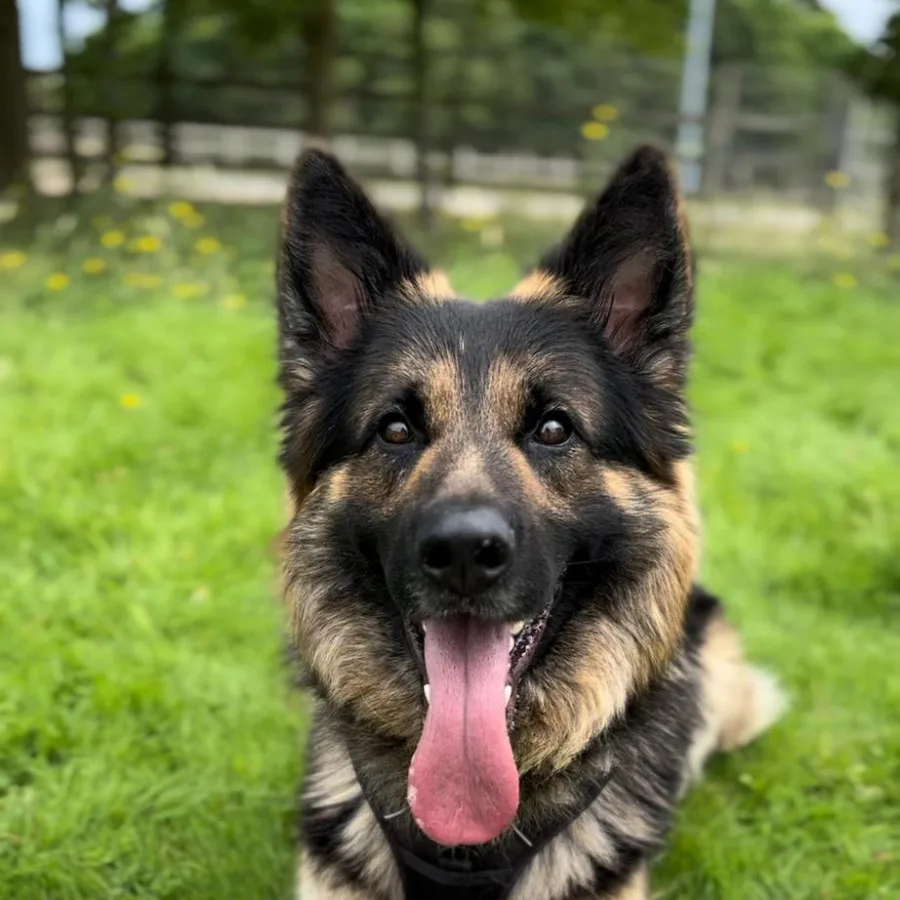
Do German Shepherds need German names?

No. A dog's breed doesn't obligate a particular naming style, and this page doesn't suggest German names fit German Shepherds better than any other breed. The working-dog naming convention described here is about audibility at distance, something useful for any dog, regardless of breed or origin.

What's a good short German name for a dog that needs strong recall?

Look at the working-dog-traditional group here — names like Blitz, Falk, or Rolf are one or two syllables with a hard stop at the end, built for exactly the noisy, distracted conditions where recall usually fails. Test any finalist across real outdoor distance before locking it in.

Quick answers

View more answers
Training

What is a classic German dog name?

Names like Fritz, Klaus, and Waldi come out of a long-standing German working-dog tradition: short, blunt, and built to be heard clearly across an open field.

Behavior

Do German dog names actually carry farther?

The pattern is plausible and worth testing yourself, but it's a naming convention with a practical rationale, not a proven acoustic fact backed by solid research.

Living

Is Blitz a good name for a fast, high-energy dog?

Yes — it's a single hard syllable with a sharp stop, about as quick to say as most owners want a recall word to be.

Related DogBreedCompass guides

Important reminder

This guide is not medical advice. If your dog shows pain, sudden behavior change, or worsening symptoms, consult a licensed veterinarian.

Some links may be affiliate links. We may earn a commission at no extra cost to you. We only suggest products we believe are helpful for dog owners.

Narrow this list down to a few names

Answer a few questions about your dog and the sounds already used at home, and we will shortlist from names like these - then help you compare and test the finalists.

Find names that fit your dog

More guides you might like

Find your match

Not sure which breed is right for you? Take our 2-minute quiz to find out.

Take the quiz