Costs
Mastiff cost in Portland
About $165–$345/month, $2,400–$4,450 for year one — near-average for this breed, with a real local lobster-shell hazard worth guarding against given its digestive sensitivity.

See Mastiff price across all cities →
Quick answer
Mastiff cost in Portland
About $165–$345/month, $2,400–$4,450 for year one — near-average for this breed, with a real local lobster-shell hazard worth guarding against given its digestive sensitivity.
A Mastiff (English Mastiff) in Portland costs about $165–$345 a month, with the first year around $2,400–$4,450 — close to the national average for this breed, worth a real, local safety note given Maine's deeply rooted seafood industry: discarded lobster and crab shells are a genuine gastrointestinal hazard, a risk this breed's already-sensitive digestive tract can least afford.
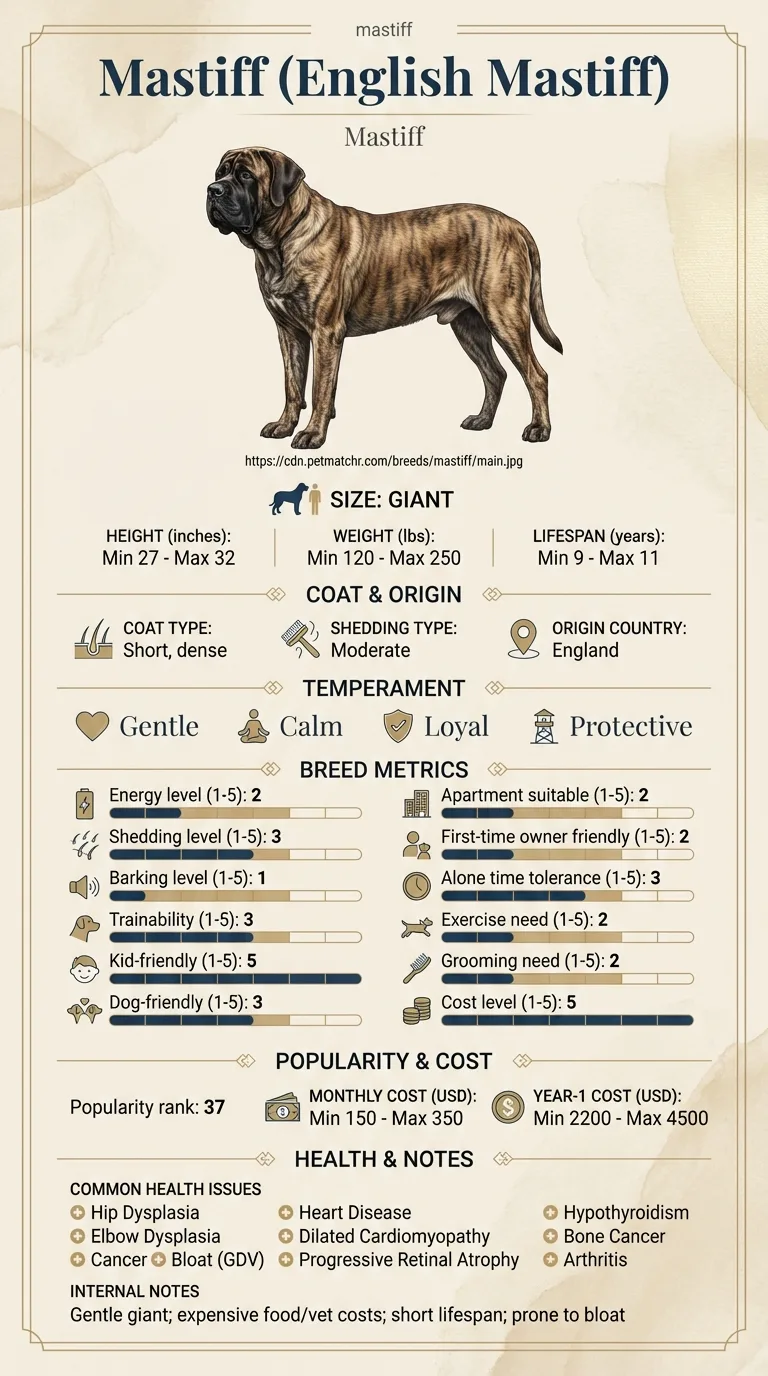
Bloat (GDV) is a genuine, well-documented emergency risk in this breed given its deep chest and giant size — no warning, immediate surgery needed. This breed's documented short lifespan, typically 9 to 11 years, also means health costs tend to arrive earlier and compound faster than in a longer-lived breed.
These figures reflect Portland's genuinely near-average general pricing, with a real note on the local seafood-scrap hazard worth guarding against given this breed's digestive sensitivity.
Estimate · source: estimation · confidence: medium · updated 2026-10-06 · not a quote
| Item | Cost range |
|---|---|
One-time setup (large-breed crate, bed, initial vet visit, spay/neuter, gear) Covers the first exam, vaccinations, spay/neuter if needed, and giant-breed-sized gear — priced at Portland's near-average rates. | $465 - $790 |
| Item | Cost range |
|---|---|
Food Genuinely among the highest food costs of any breed this site tracks, driven by this breed's documented 120-to-250-pound adult weight range; Maine's lack of local sales tax helps slightly. | $86 - $180 |
Each range starts from a national baseline for this breed's size class and is then adjusted for local cost of living and veterinary pricing. The baselines, and the source each one came from, are listed on our sources page (dataset 2026.09). Two inputs, the purchase price and the emergency reserve, have no published national figure we could verify, so we leave them to you rather than invent them.
These are planning estimates, not quotes. Your own numbers will move with the individual dog, your vet and your insurer. Build a budget with your own figures.
For a Mastiff in Portland, insurance is genuinely worth taking seriously given this breed's documented bloat risk, cancer risk and shorter lifespan, a consideration that only sharpens given the real local seafood-scrap hazard discussed above.
This breed's real bloat and cancer statistics, combined with its shorter documented lifespan, make insurance a genuinely high-value purchase — buy while the dog is young, since costs and risk both climb faster here than in a longer-lived breed.
Skipping coverage is a reasonable call for an owner who's already set aside a substantial cash reserve sized specifically for this breed's real, larger-than-average emergency costs.
Portland's near-average costs are a fair baseline, and a little caution around seafood scraps avoids a genuinely preventable emergency.
Maine's real, deeply rooted lobster and seafood industry means shell scraps show up more often in everyday life here than almost anywhere else, whether at a backyard cookout, a trash bin after a seafood dinner, or washed up along the shore. Those shells are genuinely sharp even in small fragments, and swallowing them carries a real, documented risk of gastrointestinal obstruction or, in serious cases, perforation.
That's a risk worth taking seriously for any dog, but especially for this breed, whose deep chest and documented bloat vulnerability already put its digestive system under closer watch than most. Keeping shell scraps genuinely out of reach, at home and at any local seafood gathering, is a simple, real precaution worth building into the routine.
Portland's overall cost of living runs close to the national average, and Maine's real cold winters keep the parasite-prevention season clearly seasonal rather than year-round, alongside a small, genuine savings on sales tax for food and supplies.

A Portland Mastiff owner hosting a backyard lobster bake didn't think twice about a full trash bag of shells sitting out during cleanup, only to find their dog had gotten into it minutes later. An emergency vet visit and a tense few hours of monitoring followed before the vet confirmed nothing had caused a blockage, a real scare that changed how the family handled shell disposal at every gathering afterward.
Key takeaway: In Portland specifically, this breed's real digestive sensitivity makes basic seafood-scrap precautions a genuinely worthwhile habit given how common shells are in local life.
About $165–$345, close to the national average for this breed, consistent with Portland's near-average general cost of living.
Roughly $2,400–$4,450, including the initial vet exam, spay/neuter if needed, and gear on top of ongoing monthly costs.
Genuinely, yes — the sharp fragments carry a real, documented risk of gastrointestinal obstruction or perforation if swallowed, a particular concern given this breed's already-sensitive digestive tract.
Keep shell scraps genuinely out of reach at home and at any cookout or gathering, and dispose of them in a container the dog can't access.
Especially worth pricing out given this breed's documented bloat risk, cancer risk and shorter lifespan, bought while the dog is young and before anything is on record.
Around $1,050 covers a typical significant vet visit in this market, reflecting both Portland's near-average pricing and this breed's genuinely larger dosing and procedure costs.
About $165–$345/month, $2,400–$4,450 for year one — near-average for this breed, with a real local lobster-shell hazard worth guarding against given its digestive sensitivity.
This guide is not medical advice. If your dog shows pain, sudden behavior change, or worsening symptoms, consult a licensed veterinarian.
Some links may be affiliate links. We may earn a commission at no extra cost to you. We only suggest products we believe are helpful for dog owners.
We research and check what we publish, but we do not warrant that any figure, date, price, or statement is accurate, complete, or current, and we accept no liability for any loss, cost, injury, or other harm arising from the use of this site. Use it as one reference among several. You remain responsible for your own decisions and for your dog's care - confirm anything that matters with a licensed veterinarian or another qualified professional before you act on it. Full disclaimer.
One sheet with every line item, the emergency fund and when insurance pays off - unlocks on this page.
You get: 12-month budget sheet
No spam. One-click unsubscribe. See our privacy policy.
See a sample page before you decide.