Costs
Brussels Griffon cost in Newark
About $95–$178/month, $1,425–$2,550 for year one — above average, with a real stair-carrying caution given this breed's documented Patellar Luxation risk and Newark's older walk-up housing stock.

Quick answer
Brussels Griffon cost in Newark
About $95–$178/month, $1,425–$2,550 for year one — above average, with a real stair-carrying caution given this breed's documented Patellar Luxation risk and Newark's older walk-up housing stock.
A Brussels Griffon in Newark costs about $95–$178 a month, with the first year around $1,425–$2,550 — above the national average, worth a real, practical note: this breed's documented Patellar Luxation risk means the multiple flights of stairs common in Newark's older walk-up apartment buildings are worth managing carefully rather than letting the dog handle them unsupervised.
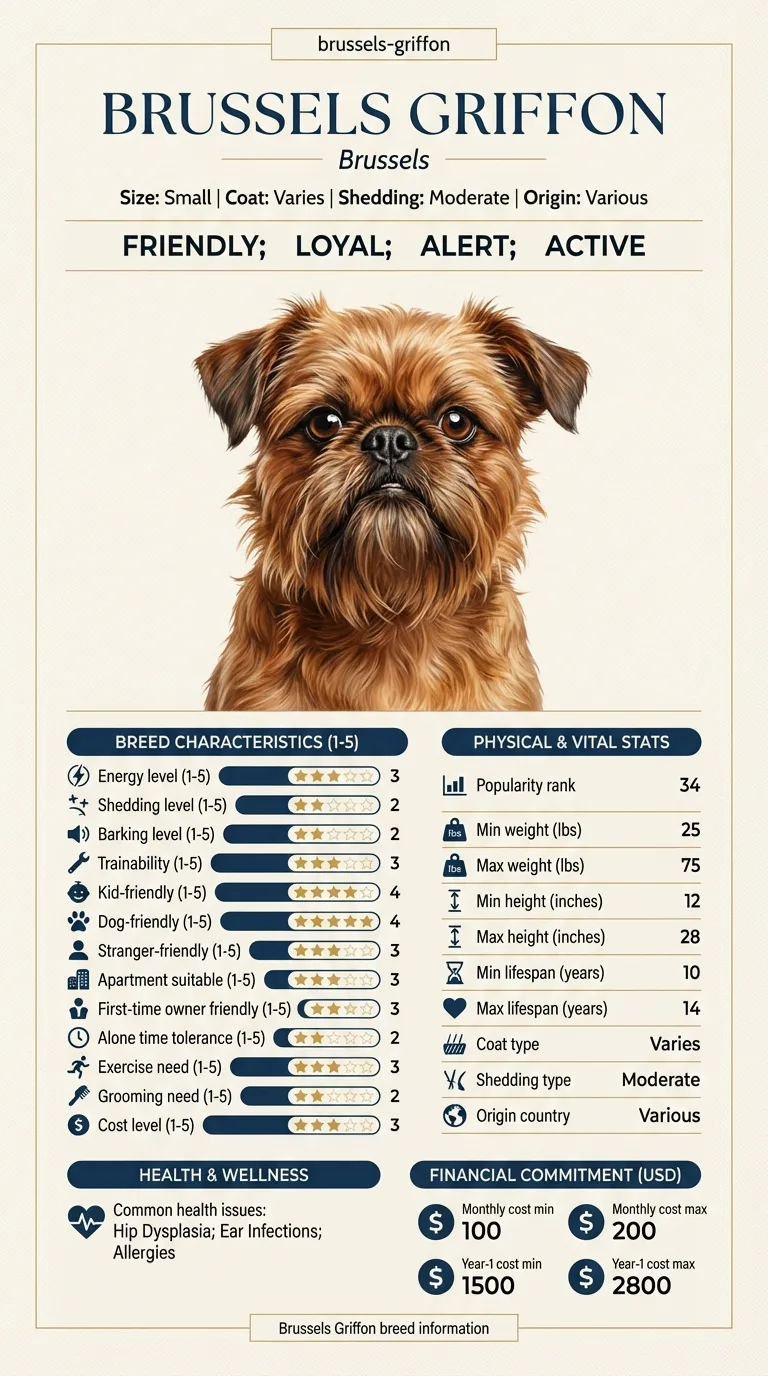
Brachycephalic Airway Syndrome and patellar luxation are the breed's more commonly documented health risks most likely to produce an unplanned bill, alongside this breed's real, documented Syringomyelia risk. This breed's genuine attachment to its people means alone-time tolerance is a real ongoing consideration, requiring attention regardless of city.
These figures reflect Newark's genuinely above-average general pricing, driven by proximity to the New York metro, with a real note on the stair-management this breed's documented Patellar Luxation risk warrants in walk-up housing.
Estimate · source: estimation · confidence: medium · updated 2026-09-05 · not a quote
| Item | Cost range |
|---|---|
One-time setup (initial vet visit, spay/neuter, gear) Covers the first exam, vaccinations, spay/neuter if needed, and basic gear — priced at Newark's above-average rates. | $345 - $580 |
| Item | Cost range |
|---|---|
Food Above the national average for this breed's genuinely small size, reflecting Newark's elevated regional pricing. | $31 - $50 |
Seasonal flea, tick & heartworm prevention A clearly seasonal cost given the Northeast's temperate climate, shorter than a year-round southern season. | $11 - $20 |
For a Brussels Griffon in Newark, insurance is genuinely worth taking seriously given this breed's documented airway, joint and neurological risks, a consideration this region's already-elevated vet pricing only sharpens.
Given this breed's real, varied documented health risk profile and Newark's above-average vet pricing, insurance purchased while the dog is young is worth pricing out seriously before anything is on record.
Owners who've built a genuinely solid emergency fund sized for the region's elevated local pricing and are comfortable managing a procedure themselves can reasonably self-insure instead.
Newark's above-average costs call for real planning, and carrying a small dog up the stairs costs nothing but genuinely protects its joints.
This breed's documented Patellar Luxation risk means a kneecap can genuinely slip out of its normal groove, and repeated stair climbing places real, repetitive stress directly on that joint, distinct from but similarly demanding to furniture-jumping. Newark's genuinely older multi-family housing stock includes many walk-up buildings without elevators, making multiple daily flights of stairs a real, unavoidable part of life for residents on upper floors.
Carrying the dog for longer stair runs, particularly as a puppy while joints are still developing or later in life if any looseness is noticed, is a real, practical step specifically worth taking given this breed's documented joint vulnerability.
Newark otherwise runs above the national average, driven largely by its proximity to the New York metro, with real elevated pricing across food, routine vet care and boarding, and the region's temperate climate keeps parasite prevention a clearly seasonal cost.

A Newark Brussels Griffon owner living on the fourth floor of an elevator-less building let their young dog climb the stairs independently every day for months, until a vet visit for a subtle limp revealed early signs of patellar looseness. Switching to carrying the dog for the full climb, reserving independent stair use for just the last flight, noticeably reduced the symptoms over the following weeks.
Key takeaway: In Newark specifically, this breed's real documented joint risk makes stair management in walk-up housing a genuinely worthwhile habit to build early.
About $95–$178, above the national average, reflecting Newark's proximity to the high-cost New York metro.
Roughly $1,425–$2,550, including the initial vet exam, spay/neuter if needed, and gear on top of ongoing monthly costs.
Its documented Patellar Luxation risk means a kneecap can genuinely slip out of position, and repeated stair climbing places real, repetitive stress on that joint, especially in walk-up buildings without elevators.
For longer stair runs, yes — particularly for a puppy with developing joints or a dog showing any signs of looseness, given this breed's documented joint risk.
Worth pricing out given the breed's documented airway, joint and neurological risks, bought while the dog is young and before anything is on record.
Around $800 covers a typical significant vet visit in this market, reflecting Newark's above-average local pricing.
About $95–$178/month, $1,425–$2,550 for year one — above average, with a real stair-carrying caution given this breed's documented Patellar Luxation risk and Newark's older walk-up housing stock.
This guide is not medical advice. If your dog shows pain, sudden behavior change, or worsening symptoms, consult a licensed veterinarian.
Some links may be affiliate links. We may earn a commission at no extra cost to you. We only suggest products we believe are helpful for dog owners.
One sheet with every line item, the emergency fund and when insurance pays off - unlocks on this page.
You get: 12-month budget sheet
No spam. One-click unsubscribe. See our privacy policy.
Preview page 1 before you decide.