Behavior
What are quick tips for Brussels Griffon hip dysplasia prevalence?
Keep your Brussels Griffon at a healthy weight and provide regular, low-impact exercise. Regular vet check-ups are crucial to monitor their hip health.

Quick answer
What are quick tips for Brussels Griffon hip dysplasia prevalence?
Keep your Brussels Griffon at a healthy weight and provide regular, low-impact exercise. Regular vet check-ups are crucial to monitor their hip health.
Hip dysplasia prevalence is a significant concern for Brussels Griffon owners. This condition can lead to pain and mobility issues for your furry friend.
Many first-time owners or families with young children may struggle with this issue. Those who want to ensure their Brussels Griffon remains healthy and active should pay close attention to this condition.
This guide is not medical advice. If your dog shows pain, sudden behavior change, or worsening symptoms, consult a licensed veterinarian.
Some links may be affiliate links. We may earn a commission at no extra cost to you. We only suggest products we believe are helpful for dog owners.
We research and check what we publish, but we do not warrant that any figure, date, price, or statement is accurate, complete, or current, and we accept no liability for any loss, cost, injury, or other harm arising from the use of this site. Use it as one reference among several. You remain responsible for your own decisions and for your dog's care - confirm anything that matters with a licensed veterinarian or another qualified professional before you act on it. Full disclaimer.
Check this first
Understanding when hip dysplasia in your Brussels Griffon is an emergency can save your dog's life. If you notice any severe symptoms, it's crucial to call your vet immediately. Red flags include sudden inability to walk, excessive whining or yelping when moving, or visible swelling in the hip area. These signs indicate that your dog may be in significant pain or experiencing a serious complication.
In contrast, milder symptoms such as occasional limping, reluctance to jump or climb stairs, or slight stiffness after resting can be monitored. In these cases, you can create a management plan with your vet that may include weight management, physical therapy, or joint supplements. Keeping a close watch on your dog's behavior and comfort level is essential.
Always trust your instincts. If you feel something is off with your Brussels Griffon, don’t hesitate to seek professional advice. Remember that early intervention can prevent more severe issues down the line.
If any of these apply, call your vet or an emergency clinic now. The rest of this page is for the cases that are not an emergency.
Brussels Griffons can be prone to hip dysplasia, a condition where the hip joint doesn't fit into the hip socket properly. This often leads to pain and mobility issues. Daily signs include difficulty climbing stairs, reluctance to jump, or limping after exercise.
Hip dysplasia is a notable concern among Brussels Griffons, with a prevalence rate that varies. While it's not as common as in larger breeds, potential owners should be aware of this health issue when considering adopting.
Brussels Griffons can inherit hip dysplasia from their parents. As a small breed, they are not as commonly affected as larger breeds, but genetics still play a significant role in their risk. If a Brussels Griffon has a family history of hip problems, they are more likely to develop this condition.
The environment a Brussels Griffon lives in can also contribute to hip dysplasia. Excessive weight or improper exercise routines can strain their joints. Additionally, high-impact activities during their growth phase can increase the risk of developing hip dysplasia.
If your Brussels Griffon shows persistent signs of pain, limping, or difficulty in getting up, it's important to consult your vet. They can diagnose hip dysplasia and recommend treatment options, which may include pain management or surgery.
Avoiding these common mistakes can help you manage your Brussels Griffon's hip dysplasia prevalence more effectively.
Start here: Brussels Griffon Most Common Genetic Disorders: Screening
See all Brussels Griffon health problems, which breeds are prone to hip dysplasia prevalence, or the full Brussels Griffon breed guide for temperament, exercise needs and ownership costs.
If you start addressing Brussels Griffon hip dysplasia prevalence early, you might see improvements in 3 to 6 months with consistent care and follow-up with your vet.
Success means reduced symptoms, improved mobility, and your dog being more comfortable during daily activities.
Emma adopted her Brussels Griffon, Milo, and soon noticed he struggled to jump onto the couch. After a vet visit confirmed mild hip dysplasia, Emma felt overwhelmed. With guidance, she adjusted Milo's diet to support joint health and started a gentle exercise routine. After several months of consistent care, Milo was jumping onto the couch again, running around the yard, and enjoying life more fully.
Key takeaway: With early intervention and a dedicated approach, you can help your Brussels Griffon manage hip dysplasia prevalence effectively.
Brussels Griffons can inherit hip dysplasia from their parents. Factors such as obesity, rapid growth, and improper exercise can also contribute to this condition. Regular vet check-ups can help monitor their hip health. This answer relates to Brussels Griffon hip dysplasia prevalence.
Look for signs like limping, difficulty standing up, or reluctance to jump. You might also notice your dog has a decreased interest in playing or walks. If you see these signs, consult your vet for evaluation.
Managing hip dysplasia involves maintaining a healthy weight and providing low-impact exercise. Regular physical therapy and joint supplements can also support their mobility. Always consult your vet for tailored advice.
While you can’t completely prevent hip dysplasia, responsible breeding and maintaining a healthy lifestyle can help. Avoid overfeeding and ensure they get appropriate exercise. Regular check-ups with your vet are essential.
Treatment options include weight management, medication for pain relief, and physical therapy. In severe cases, surgery might be necessary. Discuss all options with your vet to find the best fit for your dog.
Training can help by encouraging controlled movements and preventing injury. Focus on low-impact activities and avoid strenuous exercises that could strain their hips. Incorporate short training sessions to keep them engaged.
Common signs of hip dysplasia include limping, difficulty getting up, reluctance to jump, or changes in exercise habits. If you notice these symptoms, it’s important to consult your vet for a proper diagnosis.
Yes, older Brussels Griffons can develop hip dysplasia, particularly if they were predisposed to it as puppies. Regular vet check-ups can help catch any issues early, ensuring your dog gets the care they need.
You can help your Brussels Griffon by providing a healthy diet, maintaining a healthy weight, and incorporating low-impact exercise. Consult your vet for specific training and care recommendations to minimize discomfort.
If your Brussels Griffon is diagnosed with hip dysplasia, follow your vet's treatment plan, which may include medication, physical therapy, or weight management. Regular check-ups will help monitor their condition and adjust care as needed.
Yes, hip dysplasia can be hereditary in Brussels Griffons. Responsible breeding practices can help reduce the prevalence of this condition in the breed, so consider adopting from a reputable breeder.
Keep your Brussels Griffon at a healthy weight and provide regular, low-impact exercise. Regular vet check-ups are crucial to monitor their hip health.
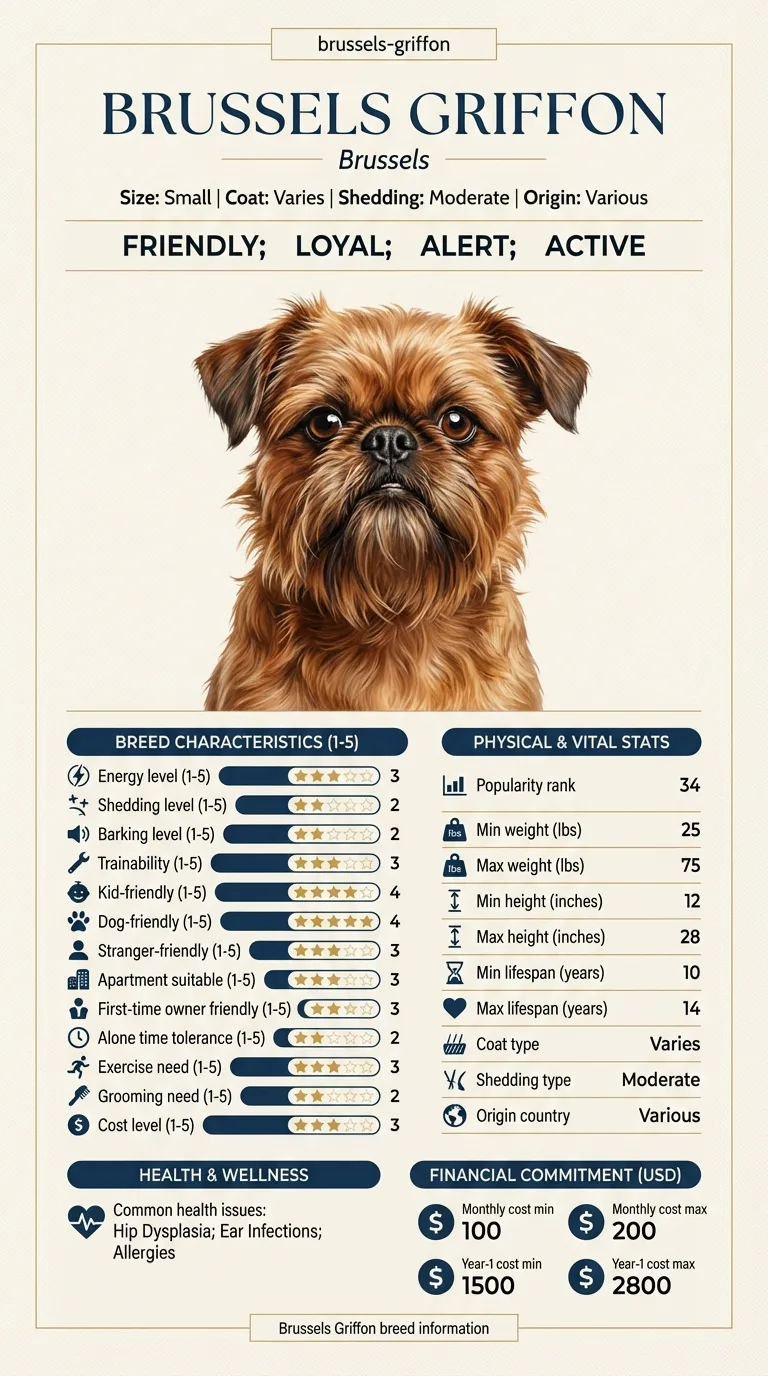
Expect to spend around $100 to $200 monthly on routine care and possible treatments for hip dysplasia. Initial costs for vet visits and medications may be higher.
Consider joint supplements and consult your vet for appropriate exercise routines. Regular physical therapy can also be beneficial.
A one-page prep sheet for this condition: the signs, the questions to ask, what to get priced. Unlocks here.
You get: Vet visit prep sheet
No spam. One-click unsubscribe. See our privacy policy.
Preview page 1 before you decide.