Costs
Brussels Griffon cost in Detroit
About $75–$140/month, $1,150–$2,050 for year one — below average, with a real flooring precaution worth taking given this breed's documented Patellar Luxation risk.

Quick answer
Brussels Griffon cost in Detroit
About $75–$140/month, $1,150–$2,050 for year one — below average, with a real flooring precaution worth taking given this breed's documented Patellar Luxation risk.
A Brussels Griffon in Detroit costs about $75–$140 a month, with the first year around $1,150–$2,050 — below the national average, worth a real, practical note: this breed's documented Patellar Luxation risk means slippery hardwood or tile floors, common in Detroit's older housing stock, are worth addressing with rugs or runners rather than left as-is.
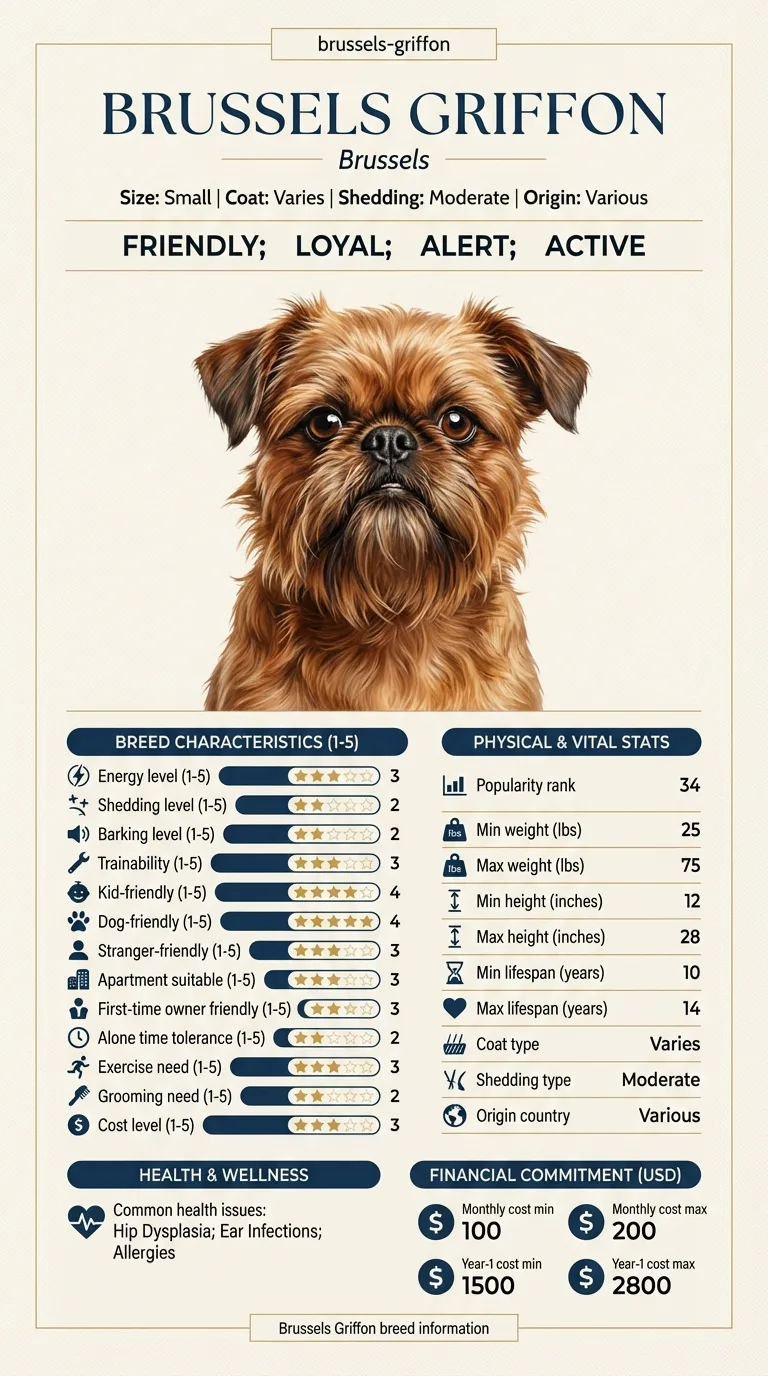
Brachycephalic Airway Syndrome and patellar luxation are the breed's more commonly documented health risks most likely to produce an unplanned bill, alongside this breed's real, documented Syringomyelia risk. This breed's genuine attachment to its people means alone-time tolerance is a real ongoing consideration, requiring attention regardless of city.
These figures reflect Detroit's genuinely below-average general pricing, with a real note on flooring protection given this breed's documented Patellar Luxation risk.
Estimate · source: estimation · confidence: medium · updated 2026-09-05 · not a quote
| Item | Cost range |
|---|---|
Non-slip rugs / runners (joint protection) A real, worthwhile investment given this breed's agile movement on hardwood flooring common in Detroit's older housing, and its documented joint-risk profile. | $45 - $100 |
One-time setup (initial vet visit, spay/neuter, gear) Covers the first exam, vaccinations, spay/neuter if needed, and basic gear — priced at Detroit's below-average rates. | $290 - $490 |
| Item | Cost range |
|---|---|
Food Priced below the national average for this breed's genuinely small size, reflecting Michigan's favorable general pricing. | $26 - $43 |
For a Brussels Griffon in Detroit, insurance is genuinely worth taking seriously given this breed's documented airway, joint and neurological risks, a consideration that only sharpens given the real flooring-related joint strain discussed above.
Given this breed's real, varied documented health risk profile, insurance purchased while the dog is young is worth pricing out seriously before anything is on record.
Owners who've built a genuinely solid emergency fund and are comfortable managing a procedure or ongoing condition themselves can reasonably self-insure instead.
Detroit's below-average costs help, and a little flooring protection goes a long way for this breed's joints.
This breed's documented Patellar Luxation risk means the kneecap can slip out of its normal groove, a real, genuine vulnerability made worse by repeated slipping on hard, slick surfaces. Detroit's real, older housing stock commonly features hardwood or tile flooring throughout, offering far less traction than carpet or grass would for a small dog already carrying this documented risk.
Laying non-slip rugs or runners in hallways and frequently used rooms is a real, practical, inexpensive step that meaningfully reduces slip-related strain, worth doing proactively rather than after a limp or injury prompts it.
Detroit otherwise ranks below the national average across food, routine vet care and grooming, and Michigan's real cold winters keep parasite prevention a seasonal, seven-month cost rather than year-round.

A Detroit Brussels Griffon owner watched their dog slide dramatically across the hardwood living room floor while chasing a toy, catching itself awkwardly before any real injury occurred. The near-miss prompted an immediate trip to buy several non-slip rugs for the main play areas, a simple, affordable fix that visibly changed how confidently the dog moved around the apartment afterward.
Key takeaway: In Detroit specifically, this breed's real documented joint risk makes proactive traction solutions a genuinely worthwhile, low-cost investment.
About $75–$140, below the national average, reflecting Michigan's generally favorable general cost of living.
Roughly $1,150–$2,050, including the initial vet exam, spay/neuter if needed, and gear on top of ongoing monthly costs.
Its documented Patellar Luxation risk means repeated slipping on hard, slick flooring genuinely aggravates the condition, making non-slip rugs a worthwhile precaution in older housing common to Detroit.
Non-slip rugs or runners in hallways and high-traffic rooms are a real, low-cost step worth taking proactively given this breed's documented joint risk.
Worth pricing out given the breed's documented airway, joint and neurological risks, bought while the dog is young and before anything is on record.
Around $650 covers a typical significant vet visit in this market, reflecting Detroit's below-average local pricing.
About $75–$140/month, $1,150–$2,050 for year one — below average, with a real flooring precaution worth taking given this breed's documented Patellar Luxation risk.
This guide is not medical advice. If your dog shows pain, sudden behavior change, or worsening symptoms, consult a licensed veterinarian.
Some links may be affiliate links. We may earn a commission at no extra cost to you. We only suggest products we believe are helpful for dog owners.
One sheet with every line item, the emergency fund and when insurance pays off - unlocks on this page.
You get: 12-month budget sheet
No spam. One-click unsubscribe. See our privacy policy.
Preview page 1 before you decide.