Costs
What is the Border Collie first year cost?
Budget $2,300 to $5,500 for year one with a Border Collie in Charlotte.

See Border Collie price across all cities →
Quick answer
What is the Border Collie first year cost?
Budget $2,300 to $5,500 for year one with a Border Collie in Charlotte.
Considering a Border Collie in Charlotte? It's essential to understand the costs involved.
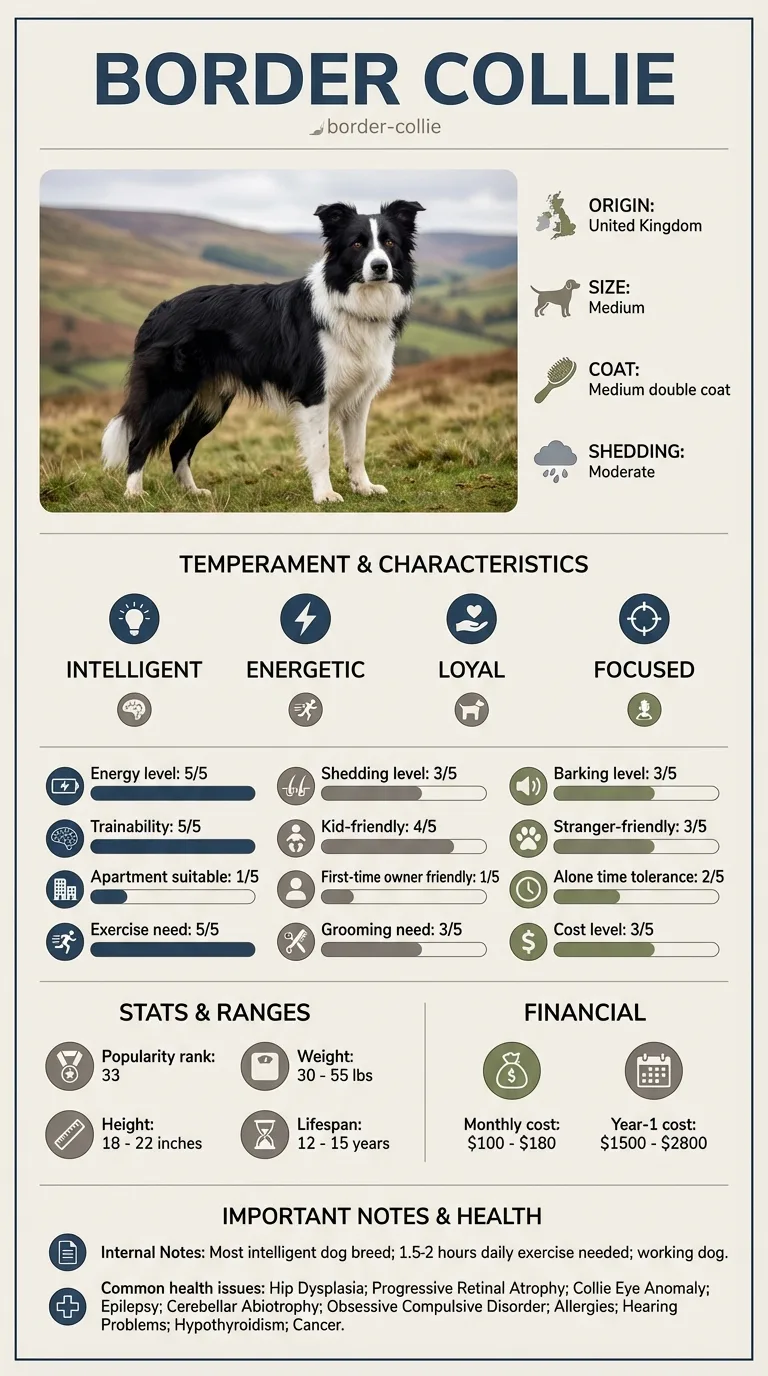
Costs can spike due to emergencies, unexpected vet visits, or big-ticket items like training classes and quality pet insurance.
The total cost of owning a Border Collie in Charlotte typically ranges from $1,500 to $2,800 in the first year. Monthly expenses can fall between $100 and $180. Factors affecting these costs include food, grooming, vet bills, and training, which can vary based on personal choices and dog needs.
Estimate · source: us average · confidence: medium · updated 2026-09-05 · not a quote
| Item | Cost range |
|---|---|
Initial Purchase or Adoption Fee Adoption can be less expensive, while purchasing from a breeder may increase costs. | $300 - $800 |
Training Classes Investing in training is essential for this intelligent breed. | $100 - $300 |
Emergency Vet Fund It's wise to set aside funds for unexpected health issues. | $500 - $1000 |
| Item | Cost range |
|---|---|
Food Expenses Quality dog food is essential; consider this ongoing expense. | $50 - $100 |
Grooming Costs Border Collies require moderate grooming due to their double coat. | $20 - $50 |
Pet Insurance Costs vary widely based on the coverage and provider. | $30 - $80 |
Each range starts from a national baseline for this breed's size class and is then adjusted for local cost of living and veterinary pricing. The baselines, and the source each one came from, are listed on our sources page (dataset 2026.09). Two inputs, the purchase price and the emergency reserve, have no published national figure we could verify, so we leave them to you rather than invent them.
These are planning estimates, not quotes. Your own numbers will move with the individual dog, your vet and your insurer. Build a budget with your own figures.
When considering the Border Collie cost in Charlotte, pet insurance can be a smart investment.
Insurance is particularly useful for Border Collies, as they are prone to conditions like hip dysplasia and progressive retinal atrophy. If you plan to invest in your dog's health and want to reduce out-of-pocket expenses for emergencies or surgeries, it's worth considering.
If you have a tight budget or can cover routine vet visits and emergencies without financial strain, you might skip insurance.
Owning a Border Collie can be costly, but there are plenty of ways to save on expenses in Charlotte.
When considering the Border Collie cost in Charlotte, many owners overlook hidden expenses that can add up quickly. Beyond the initial purchase price and basic care, there are several small but recurring fees that can sneak up on you. For instance, expect to pay around $10 to $50 a month for grooming supplies and services, especially given their medium double coat which requires regular maintenance.
Border Collies can be prone to specific health issues, which means unexpected vet visits can happen. Depending on the situation, these visits can range from $50 for a basic check-up to several hundred dollars for treatments. It’s wise to budget at least $300 to $600 annually for potential vet bills in Charlotte, especially if your dog develops health issues.

Don’t forget about gear replacements. Collies are active dogs that may chew through toys or wear out leashes and collars faster than expected. Budget around $100 to $200 yearly for quality toys, leashes, and other gear.
Also, consider additional lifestyle costs, like doggy daycare or training classes, which can add $200 to $1,000 yearly depending on your dog's needs.

When considering the Border Collie cost in Charlotte, several local factors come into play. Housing is a significant expense here, with average rent prices for dog-friendly apartments ranging from $1,200 to $2,000 per month. This can affect your overall budget, especially if you need extra space for your energetic pup. Veterinary care is another important aspect. Charlotte has a high density of veterinary clinics, which means you’ll have access to quality care for your Border Collie. However, vet bills can vary widely, with routine check-ups costing between $50 and $150. Keep in mind that ongoing health needs, like vaccinations and potential treatments for common issues like hip dysplasia, can add to your monthly costs. However, you may need to invest in cooling solutions during the hotter months for your Border Collie. Overall, expect to spend between $100 and $180 monthly for your Border Collie's needs, factoring in food, grooming, and any unexpected expenses. Planning ahead can help you manage these costs effectively and ensure a happy life for your new companion.

When Sarah, a teacher in Charlotte, decided to adopt a Border Collie named Max, she quickly realized that costs add up. However, when Max developed allergies, Sarah faced unexpected vet bills that pushed her expenses to nearly $2,500. To manage this, she set a monthly budget of $150 for regular costs, while saving an additional $50 monthly for emergencies like Max's allergy treatments. This strategy helped her feel more secure as a new dog owner, allowing her to provide the care Max needed without breaking the bank.
Key takeaway: Budgeting for unexpected vet bills is essential when adopting a Border Collie in Charlotte. Set aside extra funds to cover potential health issues.
The Border Collie cost in Charlotte can vary, but you should expect to pay around $1,500 to $2,800 in the first year. Monthly expenses typically range from $100 to $180. So, while they aren't the cheapest breed, their intelligence and energy make them worth the investment.
This can depend on the coverage level and your location.
Border Collie vet bills in Charlotte can include routine check-ups, vaccinations, and potential treatments for common health issues. Expect to budget around $300 to $600 annually for basic care. This can increase if any health problems arise.
The Border Collie monthly cost in Charlotte typically ranges from $100 to $180. This includes food, grooming, and routine veterinary care. Keep in mind that additional training or emergency expenses can add up.
Unexpected vet visits can be costly, especially for active breeds like Border Collies. Having a financial cushion can help ease the stress during urgent situations.
This includes vaccinations, annual check-ups, and basic care. Keep in mind that unexpected health issues can increase costs significantly.
Having insurance can save you money if your dog faces major health challenges.
The first-year cost of owning a Border Collie in Charlotte can range from $1,500 to $2,800. This includes adoption fees, vaccinations, supplies, and training. It's essential to plan for these expenses to ensure you’re financially ready for a new pup.
Grooming costs for Border Collies aren't too high, averaging around $50 to $100 every 6 to 8 weeks. Their medium double coat requires regular brushing to reduce shedding and keep it healthy. You can save money by learning to groom them at home.
In Charlotte, you'll need to consider costs like pet-friendly housing, dog parks, and training classes. Local dog parks often charge a small fee, and training classes can range from $150 to $300 for a series. These factors can add to your overall pet ownership budget.
Budget $2,300 to $5,500 for year one with a Border Collie in Charlotte.
Keeping a Border Collie in Charlotte costs $100 to $250 a month. Food Expenses is the biggest piece at $50 to $100.
You should budget around $300 to $600 annually for basic vet bills for a Border Collie, which includes routine care and vaccinations.
This guide is not medical advice. If your dog shows pain, sudden behavior change, or worsening symptoms, consult a licensed veterinarian.
Some links may be affiliate links. We may earn a commission at no extra cost to you. We only suggest products we believe are helpful for dog owners.
We research and check what we publish, but we do not warrant that any figure, date, price, or statement is accurate, complete, or current, and we accept no liability for any loss, cost, injury, or other harm arising from the use of this site. Use it as one reference among several. You remain responsible for your own decisions and for your dog's care - confirm anything that matters with a licensed veterinarian or another qualified professional before you act on it. Full disclaimer.
One sheet with every line item, the emergency fund and when insurance pays off - unlocks on this page.
You get: 12-month budget sheet
No spam. One-click unsubscribe. See our privacy policy.
Preview page 1 before you decide.