Living
What are quick tips for Border Collie care?
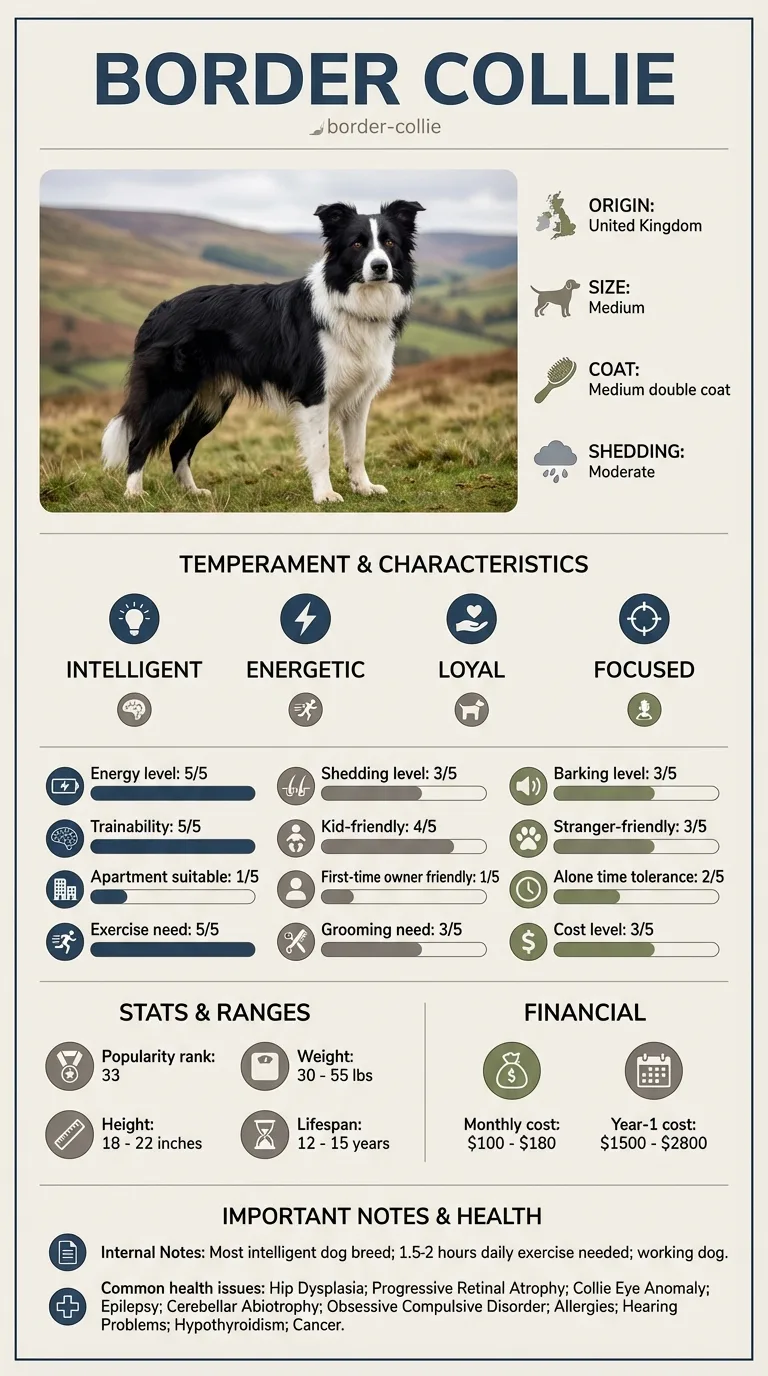
Ensure your Border Collie gets at least 1.5 to 2 hours of exercise daily to meet their high energy needs.

Quick answer
What are quick tips for Border Collie care?
Ensure your Border Collie gets at least 1.5 to 2 hours of exercise daily to meet their high energy needs.
Deciding between a Border Collie purebred and a mixed breed can be challenging. Each option has unique traits and needs that impact ownership.
First-time dog owners, busy families, or those new to the breed often struggle with this decision. They may find themselves confused about which type best fits their lifestyle and expectations.
This guide is not medical advice. If your dog shows pain, sudden behavior change, or worsening symptoms, consult a licensed veterinarian.
Some links may be affiliate links. We may earn a commission at no extra cost to you. We only suggest products we believe are helpful for dog owners.
We research and check what we publish, but we do not warrant that any figure, date, price, or statement is accurate, complete, or current, and we accept no liability for any loss, cost, injury, or other harm arising from the use of this site. Use it as one reference among several. You remain responsible for your own decisions and for your dog's care - confirm anything that matters with a licensed veterinarian or another qualified professional before you act on it. Full disclaimer.
Check this first
Understanding when your Border Collie is facing an emergency versus when it's safe to monitor symptoms is crucial. If your dog shows severe symptoms like difficulty breathing, excessive bleeding, or sudden unresponsiveness, these are red flags. Call your vet immediately if you notice these signs, as they may indicate a serious condition requiring urgent care.
On the other hand, mild symptoms such as slight lethargy, occasional coughing, or minor digestive issues can often be watched and managed at home. In these cases, you can create a monitoring plan, keeping track of any changes in behavior or symptoms while ensuring your dog remains comfortable. If symptoms persist or worsen over a day or two, reach out to your vet for further advice.
It's essential to trust your instincts. If something feels off about your Border Collie's health, don't hesitate to consult your veterinarian. Quick action can be the difference between a minor issue and a life-threatening situation.
If any of these apply, call your vet or an emergency clinic now. The rest of this page is for the cases that are not an emergency.
When considering Border Collie purebred vs. mixed breeds, owners may notice distinct differences in behavior and health. Purebred Border Collies are often more prone to specific health issues, such as hip dysplasia and certain genetic conditions. Mixed breeds, however, may benefit from a broader genetic pool, potentially leading to fewer inherited problems.
Health issues like cancer are notably more common in purebred Border Collies, making them 1.9 times more likely to develop such conditions compared to mixed breeds. This trend is a crucial consideration for prospective dog owners.
Border Collies are highly intelligent and energetic, which can lead to behavioral issues if their needs aren't met. They are known for their strong herding instincts, which might manifest as anxiety or overexcitement, especially in purebreds. Additionally, purebred Border Collies may inherit specific genetic predispositions that can influence their behavior and health.
The environment plays a significant role in how a Border Collie behaves. Limited space, lack of exercise, or insufficient mental stimulation can cause frustration and anxiety. Factors such as changes in the household, noise levels, or the presence of strangers can also trigger stress in these dogs.
If your Border Collie shows signs of distress, such as changes in appetite, lethargy, or unusual aggression, consult your vet. They can rule out any underlying health issues that might be contributing to your dog's behavior problems.
Here are common mistakes owners make that can worsen the issues related to Border Collie purebred vs. mixed breeds. Avoiding these can help improve the situation more effectively.
Start here: Border Collie Most Common Genetic Disorders: Screening
See all Border Collie health problems, which breeds are prone to purebred vs mixed breeds, or the full Border Collie breed guide for temperament, exercise needs and ownership costs.
You can expect to see progress within 4 to 6 months when addressing behavioral issues related to the differences between Border Collie purebreds and mixed breeds.
Success means your dog responds well to training, exhibits reduced anxiety, and shows improved social behavior with other dogs and people.
The Johnson family adopted a Border Collie mix named Max, who was anxious and exhibited some behavioral issues. They struggled initially, comparing him to purebred Border Collies they had owned before. After researching and implementing training strategies focused on Max’s unique needs, they found success by establishing a routine and providing him with plenty of exercise. Six months later, Max was a happier, more well-adjusted dog, able to enjoy playdates with other dogs and family outings.
Key takeaway: Understanding your dog’s breed mix can help tailor training and care to their specific needs, leading to a happier life for both you and your dog.
Border Collie purebreds are known for their specific traits like intelligence and energy levels. Mixed breeds may inherit a mix of characteristics, which can lead to more variability in behavior and health. When choosing, consider your lifestyle and what traits matter most. This answer relates to Border Collie purebred vs. mixed breeds.
Border Collies, especially purebreds, can be prone to health issues like hip dysplasia and certain eye conditions. Regular vet check-ups, a balanced diet, and proper exercise can help maintain their health. Always consult your vet about specific concerns and preventative care.
Border Collies are highly intelligent and energetic, which can lead to unique behavior compared to other breeds. Their working dog background often means they require more mental and physical stimulation. If your dog seems anxious or restless, consider increasing their exercise or training sessions.
Training a Border Collie requires consistency and patience. Use positive reinforcement techniques, and keep training sessions short and engaging. Focus on basic commands and gradually introduce more complex tasks to keep their minds active.
If your Border Collie is anxious, identify triggers and create a calm environment. Gradual desensitization to these triggers can help. Additionally, consider consulting a trainer or behaviorist for tailored strategies.
Purebred Border Collies can exhibit behavior problems if not properly trained or exercised. Their high energy levels mean they need plenty of activities to stay happy. Ensure they have enough physical and mental stimulation to prevent issues.
Choosing between a purebred and a mixed breed Border Collie depends on your priorities. Purebreds may have predictable traits but can be prone to specific health issues. Mixed breeds may offer more diversity in personality and health, but traits can be less predictable.
Border Collie purebreds may be more prone to specific health issues, such as hip dysplasia and certain eye diseases. Mixed breeds often benefit from hybrid vigor, potentially leading to fewer genetic health concerns. However, every dog is unique, so regular vet check-ups are essential.
Training a Border Collie with mixed breed traits may require flexibility in your approach. Understanding the individual dog's temperament and energy level is crucial. Consistent, positive reinforcement methods work best, regardless of whether the dog is purebred or mixed.
Mixed breed Border Collies can be great with kids, but it's important to assess their individual temperament. Some may inherit more tolerant traits from their mixed breed background, making them more adaptable. Always supervise interactions between dogs and young children to ensure safety.
When adopting, consider factors like exercise needs and potential health issues. Purebreds may need more structured activities due to their strong work drive, while mixed breeds may have varied energy levels. Assessing your lifestyle and commitment will help you choose the right fit.
Purebred Border Collies may develop behavioral issues if not properly exercised or mentally stimulated. Mixed breeds might have a wider range of behavior, depending on their lineage. Regardless, providing training and socialization is key to preventing problems in both types.
Ensure your Border Collie gets at least 1.5 to 2 hours of exercise daily to meet their high energy needs.
The average monthly cost for a Border Collie can range from $100 to $180, depending on food, grooming, and vet care.
Be aware that Border Collies can be prone to health issues like hip dysplasia and eye problems, so regular vet visits are important.
Training and providing adequate exercise can help reduce excessive barking in Border Collies. Identify the cause and address it directly.
Positive reinforcement training works best for Border Collies, as they respond well to rewards and praise.
A one-page prep sheet for this condition: the signs, the questions to ask, what to get priced. Unlocks here.
You get: Vet visit prep sheet
No spam. One-click unsubscribe. See our privacy policy.
Preview page 1 before you decide.