Costs
Basset Hound cost in Jacksonville
About $90–$168/month, $1,420–$2,500 for year one — near-average, though the heat can worsen this already low-energy breed's weight-gain tendency.

See Basset Hound price across all cities →
Quick answer
Basset Hound cost in Jacksonville
About $90–$168/month, $1,420–$2,500 for year one — near-average, though the heat can worsen this already low-energy breed's weight-gain tendency.
A Basset Hound in Jacksonville costs about $90–$168 a month, with the first year around $1,420–$2,500 — close to the national average, with one climate-driven behavioral pattern worth planning around for this specific breed.
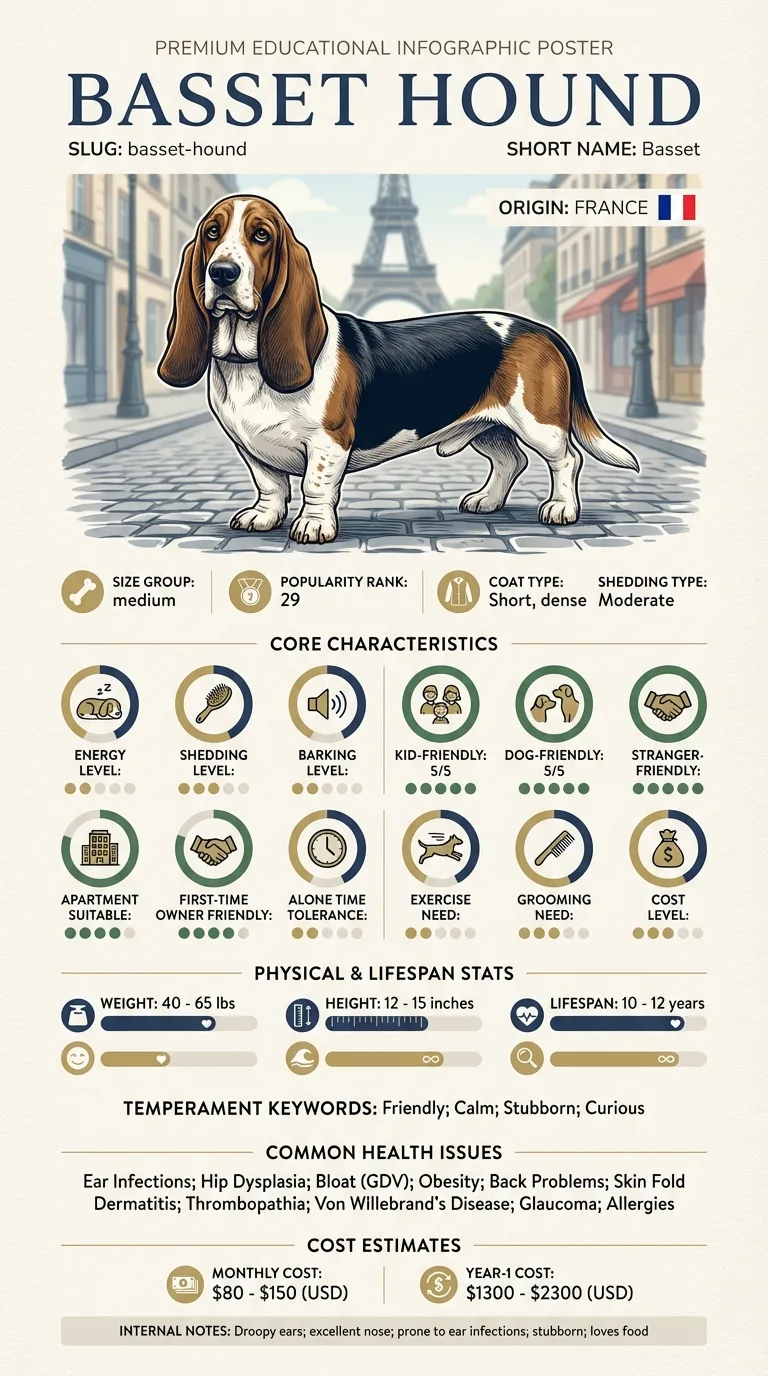
Ear infections, given the breed's long droopy ears, and back problems tied to its unusually long spine relative to its legs, are the health risks most likely to produce an unplanned bill. Bloat (GDV) is a separate, sudden true emergency this breed carries elevated risk for, requiring immediate surgery.
These figures reflect Jacksonville's near-national-average general pricing, with Florida's climate keeping flea, tick and heartworm prevention a true year-round cost — the most consistent cost driver in this city's numbers for any breed.
Estimate · source: estimation · confidence: medium · updated 2026-10-06 · not a quote
| Item | Cost range |
|---|---|
One-time setup (initial vet visit, spay/neuter, gear) Covers the first exam, vaccinations, spay/neuter if needed, and basic gear — priced close to the national average. | $335 - $570 |
| Item | Cost range |
|---|---|
Food A measured, portion-controlled feeding routine matters more for this breed's long-term cost than the specific food brand chosen, especially given the added weight-gain risk from reduced heat-driven exercise. | $39 - $65 |
Ear cleaning supplies A genuinely necessary recurring cost for this breed's long, droopy ears, which trap moisture and debris more than an upright-eared breed's, worsened by Florida's humidity. | $7 - $15 |
Flea, tick & heartworm prevention A true year-round cost given Florida's climate — the single biggest routine cost driver in this city's numbers. | $18 - $32 |
Each range starts from a national baseline for this breed's size class and is then adjusted for local cost of living and veterinary pricing. The baselines, and the source each one came from, are listed on our sources page (dataset 2026.09). Two inputs, the purchase price and the emergency reserve, have no published national figure we could verify, so we leave them to you rather than invent them.
These are planning estimates, not quotes. Your own numbers will move with the individual dog, your vet and your insurer. Build a budget with your own figures.
For a Basset Hound in Jacksonville, insurance mostly comes down to the breed's back-problem and bloat risk, both of which weight gain, a genuine risk in this heat, can indirectly worsen over time.
Given this breed's documented bloat risk, a true emergency requiring immediate surgery, insurance purchased while the dog is young and healthy is worth pricing out seriously rather than relying on an emergency fund alone.
Owners who've set aside a solid emergency fund and are diligent about heat-smart exercise timing and portion control can reasonably self-insure instead.
Jacksonville's routine costs stay near the national average; the real value-add for this specific breed here is protecting its exercise routine from the heat rather than letting it quietly lapse.
Jacksonville's climate keeps temperatures and humidity high for a large share of the year, and while that's mostly a parasite-prevention cost story for most breeds, it carries an extra layer of relevance for a Basset Hound. This breed already has a naturally low exercise drive and a strong food motivation that predisposes it to weight gain, and Florida's heat gives an owner one more genuine reason to skip a walk rather than push through it — a pattern that, repeated often enough, meaningfully compounds the breed's existing obesity risk.
The practical fix isn't more willpower so much as better timing: exercising during the cooler early morning or evening hours, rather than midday heat, keeps walks realistic and sustainable year-round rather than something that quietly stops happening once summer arrives. Since extra weight directly worsens this breed's other major risks — back problems from its long spine and joint strain — consistent, heat-smart exercise is a genuinely cost-relevant habit here, not just a comfort consideration.
Jacksonville's general cost of living tracks close to the national average, and Florida's climate makes flea, tick and heartworm prevention a true year-round cost rather than a seasonal one, the most consistent cost driver across every breed this site covers in this city.

A Jacksonville Basset Hound owner noticed their dog had gained a few pounds by the end of a hot summer, tracing it back to midday walks that had gotten shorter and less frequent as the heat intensified. Shifting the daily walk to early morning, before the worst heat set in, made exercise consistent and comfortable again for both dog and owner, and a follow-up vet visit a few months later showed the weight gain had reversed.
Key takeaway: For this breed, Florida's heat is less a direct health risk than a subtle behavioral trap — the fix is simply timing exercise around the heat rather than letting the heat quietly cancel it.
About $90–$168, close to the national average, with year-round parasite prevention as Florida's most consistent added cost.
Roughly $1,420–$2,500, including the initial vet exam, spay/neuter if needed, and basic gear on top of ongoing monthly costs.
Indirectly, yes — this breed already has a naturally low exercise drive and strong food motivation, and Florida's heat gives an owner one more reason to skip a walk, a pattern that can meaningfully compound the breed's existing weight-gain tendency if it becomes routine.
Early morning or evening, avoiding the hottest midday hours, keeps walks realistic and sustainable through the summer rather than something that quietly stops happening once the heat sets in.
Worth pricing out given the breed's documented back-problem and bloat risk, bought while the dog is young and before anything is on record.
Around $620 covers a typical significant vet visit in this market. Bloat surgery specifically can run well beyond a routine visit, so a plan and insurance are worth considering alongside a cash reserve.
About $90–$168/month, $1,420–$2,500 for year one — near-average, though the heat can worsen this already low-energy breed's weight-gain tendency.
This guide is not medical advice. If your dog shows pain, sudden behavior change, or worsening symptoms, consult a licensed veterinarian.
Some links may be affiliate links. We may earn a commission at no extra cost to you. We only suggest products we believe are helpful for dog owners.
We research and check what we publish, but we do not warrant that any figure, date, price, or statement is accurate, complete, or current, and we accept no liability for any loss, cost, injury, or other harm arising from the use of this site. Use it as one reference among several. You remain responsible for your own decisions and for your dog's care - confirm anything that matters with a licensed veterinarian or another qualified professional before you act on it. Full disclaimer.
One sheet with every line item, the emergency fund and when insurance pays off - unlocks on this page.
You get: 12-month budget sheet
No spam. One-click unsubscribe. See our privacy policy.
See a sample page before you decide.
