Behavior
What are some quick tips for Vizsla separation anxiety?
Start with short absences and gradually increase the time away. Provide interactive toys to keep them busy when you're gone. Consider crate training to give them a safe space.

Quick answer
What are some quick tips for Vizsla separation anxiety?
Start with short absences and gradually increase the time away. Provide interactive toys to keep them busy when you're gone. Consider crate training to give them a safe space.
Vizsla separation anxiety is a common issue that can disrupt your dog's well-being. This behavior leads to distress when left alone, making it vital to address.
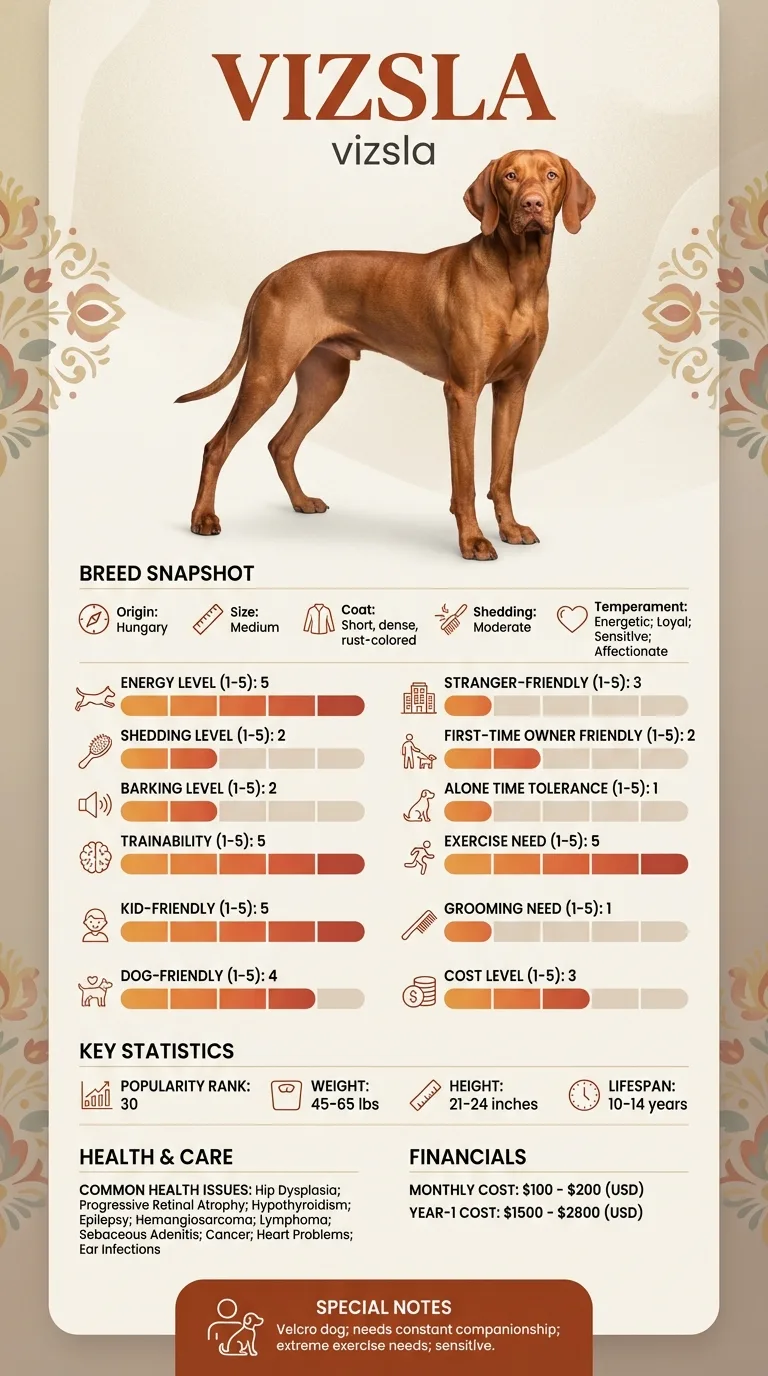
Owners of Vizslas, especially those who work long hours or have unpredictable schedules, often struggle with separation anxiety in their dogs. First-time dog owners may find this particularly challenging, as they may not yet understand the unique needs of this sensitive breed.
This guide is not medical advice. If your dog shows pain, sudden behavior change, or worsening symptoms, consult a licensed veterinarian.
Some links may be affiliate links. We may earn a commission at no extra cost to you. We only suggest products we believe are helpful for dog owners.
We research and check what we publish, but we do not warrant that any figure, date, price, or statement is accurate, complete, or current, and we accept no liability for any loss, cost, injury, or other harm arising from the use of this site. Use it as one reference among several. You remain responsible for your own decisions and for your dog's care - confirm anything that matters with a licensed veterinarian or another qualified professional before you act on it. Full disclaimer.
Vizsla separation anxiety is a common issue among this affectionate breed. These dogs thrive on companionship and can become extremely distressed when left alone. This anxiety often results in destructive behaviors, excessive barking, or even attempts to escape.
Separation anxiety is particularly prevalent in Vizslas due to their strong attachment to their owners. Many Vizsla owners report struggles with this problem, especially in the early months after bringing their dog home.
Vizslas are known as 'Velcro dogs' because they thrive on companionship. Their sensitive and affectionate nature makes them particularly prone to separation anxiety. If they feel their human is gone, it can trigger distress due to their strong bond with family members.
A lack of proper socialization or gradual acclimation to being alone can also contribute to separation anxiety in Vizslas. If they haven’t been exposed to alone time in a positive way, they may struggle when left unattended.
If your Vizsla's separation anxiety does not improve after trying these strategies, it may be time to consult a professional trainer. Look for someone experienced in positive reinforcement techniques, as they can help you develop a tailored training plan.
If your dog shows extreme signs of distress, such as destructive behavior or excessive barking, it’s wise to consult your vet. They can assess your Vizsla's health and discuss potential treatment options, including behavioral support or medication.
Start here: Vizsla Most Common Genetic Disorders: What to Screen For
See all Vizsla health problems, which breeds are prone to separation anxiety, or the full Vizsla breed guide for temperament, exercise needs and ownership costs.
Most owners notice improvements within 4 to 8 weeks of consistent training and behavior modification.
Success means your Vizsla can comfortably stay alone for short periods without excessive barking, destructive behavior, or signs of distress.
Avoid these common mistakes to reduce Vizsla separation anxiety effectively.
Separation anxiety in your Vizsla can be a serious issue. It's essential to recognize the signs that indicate an emergency and when it's safe to monitor the situation. If your Vizsla is showing extreme distress, such as excessive barking, destructive behavior, or attempts to escape, these are red flags. You should call your vet immediately if they display signs of physical harm, such as self-injury from trying to escape, or if they refuse to eat or drink for more than 24 hours.
In contrast, mild cases can be managed with a plan. If your Vizsla shows signs of anxiety but is not harming themselves, you can monitor their behavior. Start by creating a comforting environment with their favorite toys or blankets. Gradually increase the time you leave them alone while providing positive reinforcement when they remain calm. Consider researching Vizsla separation anxiety training techniques as well. It's crucial to know your dog and their patterns, as every situation is unique.
If your dog is experiencing mild anxiety but is still responsive and eating, you can observe them. However, if their condition worsens or if you feel overwhelmed, reaching out to a veterinarian or a dog behaviorist is a wise step. They can provide tailored advice and help you create a comprehensive plan for training and support.

Maria, a busy nurse in San Francisco, adopted a Vizsla named Max. She quickly noticed that every time she left for work, Max would bark loudly and chew on furniture. Concerned about his behavior, she researched how to stop Vizsla separation anxiety. With the help of a dog trainer, she implemented gradual departures and provided Max with engaging toys. After a couple of months, Max learned to stay calm while Maria was away, allowing her to work without worry.
Key takeaway: With patience and the right training techniques, it's possible to help your Vizsla feel more secure when left alone.
Vizslas are known as 'Velcro dogs' due to their strong attachment to their owners. They may develop separation anxiety if left alone for long periods, especially because of their high energy and need for companionship. Factors like changes in routine or environment can also trigger this behavior.
To address Vizsla separation anxiety, start by gradually increasing the time you leave them alone. Provide them with engaging toys or puzzles to distract them. Consider training them to feel comfortable in a designated space while you're away.
Yes, Vizsla separation anxiety is treatable with proper training and support. Consistent training sessions focusing on independence can help them adjust. In some cases, consulting a professional trainer or a vet for behavioral therapy may be beneficial.
Ideally, a Vizsla should not be left alone for more than 4-6 hours, as they thrive on companionship. If you must leave them longer, consider hiring a dog walker or pet sitter. Gradual training can help them tolerate longer alone times.
Older Vizslas may struggle with separation anxiety due to changes in their routine or health issues. Gradually increasing their alone time and providing them with comforting toys can help. Always consult with your vet for tailored advice.
Yes, training can significantly help reduce separation anxiety in Vizslas. Techniques such as crate training, positive reinforcement, and gradual desensitization can make a difference. Consider consulting a professional trainer who specializes in anxiety issues.
There are several products designed to help with Vizsla separation anxiety, including calming collars, anxiety wraps, and puzzle toys. These can provide comfort and distraction when you're away. Always choose items that suit your dog's specific needs.
Start with short absences and gradually increase the time away. Provide interactive toys to keep them busy when you're gone. Consider crate training to give them a safe space.
Create a cozy space with their favorite blanket and toys. Leaving an item with your scent can also provide comfort. Use calming music or white noise to soothe them.
If your Vizsla's anxiety is severe, consulting a professional trainer or a vet can provide targeted strategies. They can recommend training methods or medical options if needed.
Training costs can vary but typically range from $100 to $300 for a series of sessions. Investing in proper training can save you from potential damages and stress.
Behaviour changes often start with pain. The prep sheet for this page covers what to rule out, and what to ask.
You get: Vet visit prep sheet
No spam. One-click unsubscribe. See our privacy policy.
Preview page 1 before you decide.