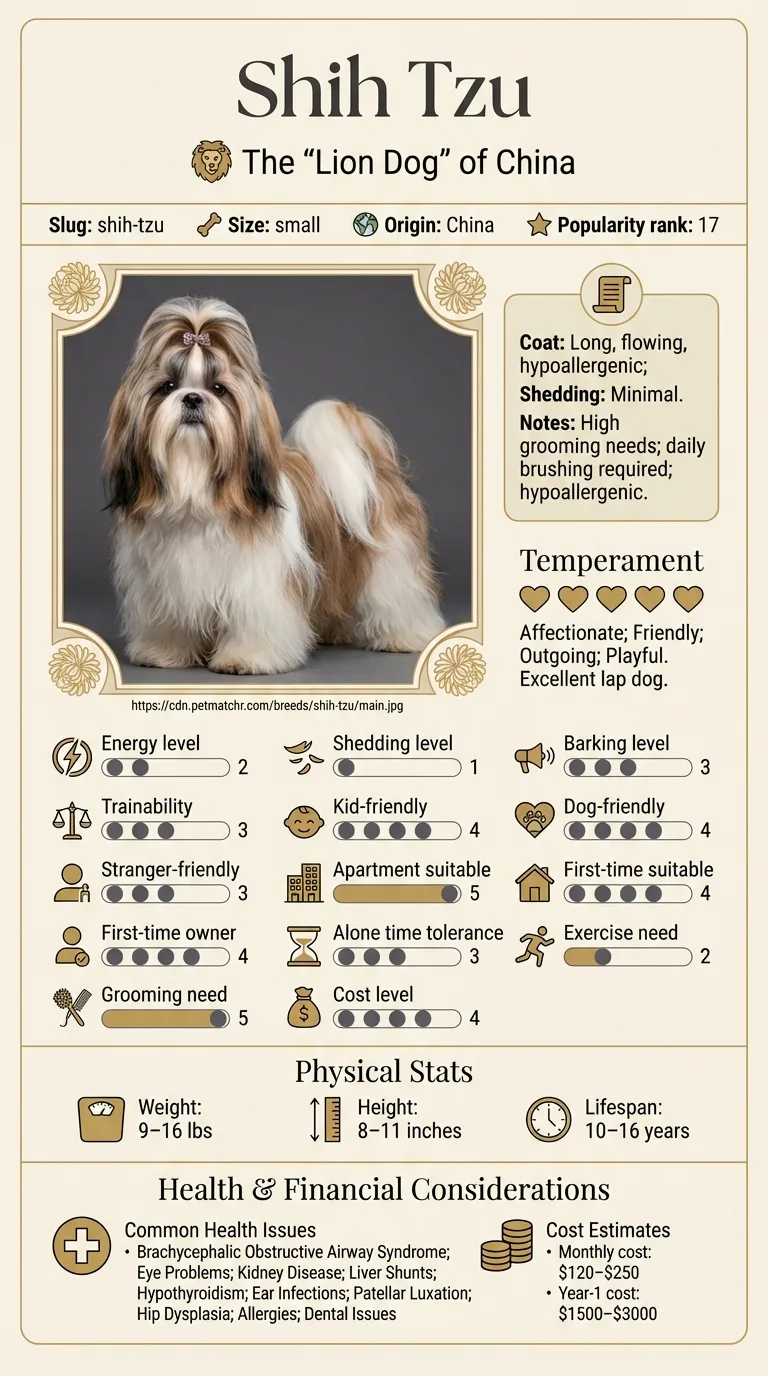
Shih Tzu Separation Anxiety: Understanding and Solutions
Quick answer
What are quick tips for managing Shih Tzu separation anxiety?
Start with short departures and gradually extend the time. Provide engaging toys to keep your Shih Tzu distracted. Consider a pet camera to monitor their behavior while you're away.
Shih Tzu separation anxiety can be a major challenge for owners and their beloved pets. This condition causes distress when your furry friend is left alone.
Owners who work long hours or frequently leave their pets alone may find their Shih Tzus struggling with anxiety. Families with busy schedules or those who travel often might notice signs of distress, such as barking, destructive behavior, or accidents in the house.
Important reminder
This guide is not medical advice. If your dog shows pain, sudden behavior change, or worsening symptoms, consult a licensed veterinarian.
Some links may be affiliate links. We may earn a commission at no extra cost to you. We only suggest products we believe are helpful for dog owners.
We research and check what we publish, but we do not warrant that any figure, date, price, or statement is accurate, complete, or current, and we accept no liability for any loss, cost, injury, or other harm arising from the use of this site. Use it as one reference among several. You remain responsible for your own decisions and for your dog's care - confirm anything that matters with a licensed veterinarian or another qualified professional before you act on it. Full disclaimer.
What this problem looks like
Shih Tzu separation anxiety is a common issue that affects many owners. This breed thrives on companionship and can become distressed when left alone, often resulting in barking, destructive behavior, or accidents in the house. Daily life can be challenging for a Shih Tzu experiencing separation anxiety, as they may cling to their owners or show signs of distress when they sense they will be left alone.
Common triggers
Changes in routine, such as a new job or moving to a new home
Being left alone for longer than usual
Traveling or vacations that disrupt their environment
Not enough early socialization or training
Separation anxiety is quite common among Shih Tzus due to their affectionate nature and desire for close companionship. It's estimated that a significant portion of this breed may experience some level of separation anxiety, especially in the first few years.
Why this happens
Breed factors
Shih Tzus are known for their affectionate and social nature. They thrive on companionship and can become anxious when left alone. Their strong attachment to their owners can lead to distress if they feel abandoned.
Environment factors
Factors like frequent changes in routine, long work hours, or moving to a new home can contribute to separation anxiety. A lack of stimulating environments or insufficient exercise may also increase their anxiety levels.
What you can try
At-home strategies
Start with short departures to help your Shih Tzu get used to being alone. Gradually increase the time you're away to build their confidence.
Create a safe space for your dog with their favorite toys and a cozy bed. This can help them feel secure during your absence.
Establish a consistent routine for feeding and walks. A predictable schedule can reduce anxiety and help your dog relax when you leave.
When to consider a trainer
If your Shih Tzu's separation anxiety doesn't improve with at-home strategies, consider consulting a professional trainer. They can offer tailored training plans and techniques to help your dog feel more secure.
When to talk to your vet
If your dog's anxiety leads to destructive behavior or health issues, it's time to talk to your vet. They can assess if medication or additional interventions are necessary.
With consistent training, you can expect to see improvements in about 4 to 6 weeks. However, full resolution may take several months, depending on your Shih Tzu's individual needs.
Success means your Shih Tzu can be alone for short periods without excessive barking, destructive behavior, or signs of distress. They'll feel more secure and relaxed when you leave.
Mistakes that make Separation Anxiety worse
Many well-meaning owners unintentionally make Shih Tzu separation anxiety worse. Here are some common mistakes to avoid.
Overindulging with affection before leaving.
Returning home too quickly when your Shih Tzu shows distress.
Using punishment when your dog misbehaves.
Failing to provide enough mental stimulation.
Not gradually getting your dog used to being alone.
When Shih Tzu Separation Anxiety Becomes an Emergency
Understanding when Shih Tzu separation anxiety is an emergency is crucial for your dog's well-being. There are red-flag signs that indicate you should call your vet immediately. If your Shih Tzu exhibits extreme destructive behavior, persistent vomiting, or signs of self-harm, these are urgent situations. Other signs include difficulty breathing, loss of consciousness, or any major changes in behavior that happen suddenly.
In less severe cases, you can monitor your dog at home. If your Shih Tzu shows mild anxiety, like barking or whining when you leave, it's usually manageable. Start with gradual departures and comfort items to ease their stress. Consider implementing a training plan, focusing on helping your dog feel more secure when alone. Be patient, as progress can take time.
Keep an eye on their behavior and adjust your approach as needed. If you notice worsening symptoms, or if your dog seems excessively fearful or anxious, consult your vet for advice. Your vet can help determine if medication or additional training is necessary. Remember, early intervention can make a big difference in your Shih Tzu's emotional health.
Shih Tzu Separation Anxiety: Understanding and Solutions - When Shih Tzu Separation Anxiety Becomes an Emergency
Emily and Bella's Journey to Overcoming Separation Anxiety
Emily, a busy nurse in New York, noticed her Shih Tzu, Bella, would whine and scratch at the door whenever she left for work. It broke her heart to see Bella so upset. After researching how to stop Shih Tzu separation anxiety, Emily decided to implement gradual desensitization. She started by leaving Bella alone for just a few minutes and gradually increased the time as Bella became more comfortable. Emily also left interactive toys to keep Bella occupied. After several weeks of consistent training, Bella became much more at ease when Emily left for work.
Key takeaway: With patience and a structured approach, you can help your Shih Tzu feel secure when left alone.
Frequently asked questions
Why does my Shih Tzu have separation anxiety?
Shih Tzus are social dogs that thrive on companionship. They may develop separation anxiety if they are not used to being alone or if there have been changes in their routine. Signs include excessive barking, destructive behavior, or accidents indoors.
How can I stop Shih Tzu separation anxiety?
Start by gradually increasing the time your Shih Tzu spends alone. Use positive reinforcement to reward calm behavior when you leave and return. Consider using puzzle toys or treat-dispensing devices to keep them occupied.
What training methods are effective for Shih Tzu separation anxiety?
Training methods like desensitization and counter-conditioning can help. Practice leaving your Shih Tzu alone for short periods, then gradually increase the duration. Always reward them for staying calm.
Is medication necessary for Shih Tzu separation anxiety?
In severe cases, medication may be an option, but it should be discussed with a veterinarian. Behavioral training should always be the first step before considering medication.
Can crate training help with Shih Tzu separation anxiety?
Yes, crate training can provide a safe space for your Shih Tzu. Make the crate a positive place with toys and treats, and gradually introduce them to spending time inside it while you're home.
Can older Shih Tzus develop separation anxiety?
Yes, older Shih Tzus can develop separation anxiety, especially if their routine changes or if they face health issues. It's important to monitor their behavior and consult with a vet if you notice signs of distress. Changes in their environment can also trigger anxiety.
How can I help my Shih Tzu with separation anxiety when I'm not home?
Start by gradually increasing the time your Shih Tzu spends alone. Create a safe space with their favorite toys and a cozy bed. You can also leave calming music or a TV on to provide comfort while you're away.
When should I consult a vet about my Shih Tzu's separation anxiety?
If your Shih Tzu's anxiety leads to severe destructive behavior, excessive barking, or health problems, it's time to consult a vet. They can help rule out any underlying health issues and suggest behavior modification strategies or medication if necessary.
Are there training programs specifically for Shih Tzu separation anxiety?
Yes, there are training programs designed to address Shih Tzu separation anxiety. Look for courses that focus on gradual desensitization and positive reinforcement. These methods can help your dog feel more secure when left alone.
What are quick tips for managing Shih Tzu separation anxiety?
Start with short departures and gradually extend the time. Provide engaging toys to keep your Shih Tzu distracted. Consider a pet camera to monitor their behavior while you're away.
Living
How long can a Shih Tzu be left alone?
Shih Tzus can typically be left alone for about 4-6 hours, but prolonged absences can lead to anxiety. It's best to gradually train them to handle longer alone times.
Behavior
What signs indicate my Shih Tzu has separation anxiety?
Look for signs like excessive barking, whining, destruction of household items, or accidents in the house when left alone. These behaviors suggest anxiety.