Behavior
What are quick tips for managing Shih Tzu degenerative myelopathy (dm)?
Provide a safe and comfortable living space, schedule regular vet visits, and consider physical therapy. Supportive care can greatly improve your dog's quality of life.

Quick answer
What are quick tips for managing Shih Tzu degenerative myelopathy (dm)?
Provide a safe and comfortable living space, schedule regular vet visits, and consider physical therapy. Supportive care can greatly improve your dog's quality of life.
Shih Tzu degenerative myelopathy (DM) is a progressive spinal cord disease that can seriously affect your furry friend's mobility.
Many Shih Tzu owners face this heartbreaking issue, especially those with aging pets. It can be particularly tough for first-time dog owners who might not recognize the early signs or know how to provide the right care.
This guide is not medical advice. If your dog shows pain, sudden behavior change, or worsening symptoms, consult a licensed veterinarian.
Some links may be affiliate links. We may earn a commission at no extra cost to you. We only suggest products we believe are helpful for dog owners.
We research and check what we publish, but we do not warrant that any figure, date, price, or statement is accurate, complete, or current, and we accept no liability for any loss, cost, injury, or other harm arising from the use of this site. Use it as one reference among several. You remain responsible for your own decisions and for your dog's care - confirm anything that matters with a licensed veterinarian or another qualified professional before you act on it. Full disclaimer.
Check this first
Knowing when Shih Tzu degenerative myelopathy (DM) becomes an emergency is crucial for your dog's health. There are specific signs that indicate you should call your vet immediately. Conversely, some symptoms can be monitored with a plan and don't require urgent action.
Red-Flag Signs (Call Your Vet Now): If your Shih Tzu experiences sudden weakness in the hind legs, difficulty standing, or loss of coordination, these are serious signs of DM progression. Additionally, if they display signs of pain, such as yelping when touched or refusing to move, it’s essential to seek veterinary help right away.
Mild Cases (Monitor and Plan): If your dog shows mild signs like occasional stumbling or decreased activity, this can often be managed with a watchful eye. You can implement a care plan that includes physical therapy or exercise modifications. Make sure to monitor their condition regularly and keep a log of any changes in behavior or mobility, which can be helpful for future vet visits.
If any of these apply, call your vet or an emergency clinic now. The rest of this page is for the cases that are not an emergency.
Shih Tzu degenerative myelopathy (DM) is a progressive spinal cord disease that can significantly affect your dog's mobility. Initially, you might notice your Shih Tzu having difficulty with coordination, stumbling, or dragging their back feet. As the condition progresses, these symptoms can worsen, leading to eventual paralysis and loss of independence.
While not all Shih Tzus will develop degenerative myelopathy, it is a recognized concern within the breed. Studies suggest that a small percentage of Shih Tzus may be affected, particularly as they age. Awareness and early detection can help manage the condition effectively.
Shih Tzus are prone to degenerative myelopathy (DM) due to genetic factors. This progressive spinal cord disease is more common in certain breeds, including the Shih Tzu. Their unique genetic makeup can lead to weakened nerve function as they age.
Environmental factors can also play a role in the onset of DM. Lack of exercise and obesity can exacerbate symptoms. A sedentary lifestyle may contribute to muscle atrophy, making it harder for your Shih Tzu to cope with the effects of this condition.
If you notice symptoms like weakness in the hind legs, incontinence, or changes in behavior, it's essential to consult a veterinarian. They can provide a proper diagnosis and guide you on managing your Shih Tzu's condition.
Avoiding common pitfalls can help manage your Shih Tzu's degenerative myelopathy (DM). Here are some mistakes to watch out for.
Start here: Shih Tzu Most Common Genetic Disorders: What to Screen For
See all Shih TZU health problems, which breeds are prone to degenerative myelopathy dm, or the full Shih TZU breed guide for temperament, exercise needs and ownership costs.
Expect to see gradual changes over several months as you implement care and management strategies. Early intervention can make a significant difference.
Success means your Shih Tzu maintains mobility for as long as possible and adapts well to any necessary lifestyle changes.
Sarah, a busy nurse in New York, noticed her Shih Tzu, Bella, struggling to walk. After a vet visit, she learned Bella had degenerative myelopathy (DM). Faced with the reality of Bella's condition, Sarah researched how to manage DM and implemented a structured routine that included gentle exercises and supportive harnesses. With dedication, Sarah helped Bella adapt, allowing her to enjoy walks and playtime for much longer than expected.
Key takeaway: Early intervention and consistent management can greatly enhance your Shih Tzu's quality of life, even with degenerative myelopathy.
The exact cause of degenerative myelopathy (dm) in Shih Tzus is genetic, often linked to a mutation. Factors like age and overall health can increase susceptibility to this condition. Unfortunately, there is no known way to prevent it, but awareness can help in early diagnosis.
You can manage Shih Tzu degenerative myelopathy (dm) by providing supportive care, such as physical therapy and mobility aids. Regular vet check-ups are essential to monitor progression. Additionally, maintaining a safe environment can help prevent injuries.
Currently, there is no cure for degenerative myelopathy (dm), but treatments focus on improving the quality of life. This may include physical therapy, pain management, and adaptive devices. Consult your vet for personalized recommendations.
While training won't cure degenerative myelopathy (dm), it can help improve communication and reinforce positive behaviors. Focus on gentle, positive reinforcement methods, adapting exercises as your dog's mobility changes. Consistency is key.
Early signs of Shih Tzu degenerative myelopathy (dm) include weakness in the hind legs, difficulty standing up, and a wobbly gait. You might also notice your dog dragging their back feet or having trouble climbing stairs.
Yes, Shih Tzus with degenerative myelopathy (dm) can still enjoy short walks, but it's important to monitor their energy levels. Keeping walks brief and on flat surfaces can help prevent exhaustion and further injury.
Helping an older Shih Tzu with degenerative myelopathy (dm) involves providing support during walks, using ramps for easy access to furniture, and keeping their environment safe. Consult your vet for specific advice tailored to your dog's needs.
Unfortunately, there is no cure for Shih Tzu degenerative myelopathy (dm). However, management strategies like physical therapy and appropriate training can help maintain their quality of life.
Deciding on euthanasia for a Shih Tzu with degenerative myelopathy (dm) is a tough choice. It's important to consult with your vet to discuss your dog's quality of life and any signs of suffering, ensuring you make the best decision for their comfort.
Provide a safe and comfortable living space, schedule regular vet visits, and consider physical therapy. Supportive care can greatly improve your dog's quality of life.
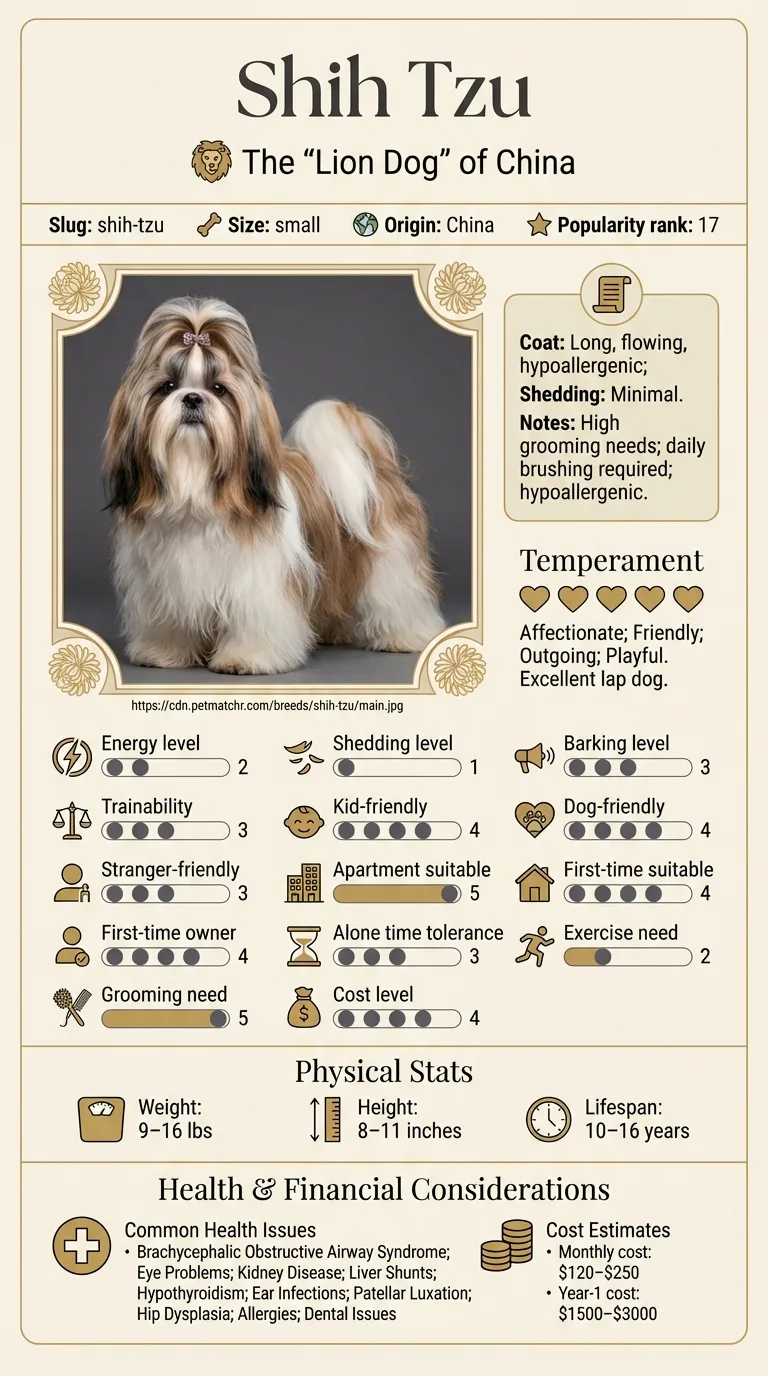
Monthly costs for a Shih Tzu can range from $120 to $250, including vet visits and supplies. Expect to budget more for specialized care as the condition progresses.
Watch for signs of weakness in the hind legs, difficulty walking, and changes in behavior. Early detection is crucial for effective management.
A one-page prep sheet for this condition: the signs, the questions to ask, what to get priced. Unlocks here.
You get: Vet visit prep sheet
No spam. One-click unsubscribe. See our privacy policy.
Preview page 1 before you decide.