Behavior
What are some quick tips to manage Poodle (Miniature) ear infections?
Keep your Poodle's ears clean and dry, use vet-approved ear cleaners, and monitor for signs of infection regularly.

Quick answer
What are some quick tips to manage Poodle (Miniature) ear infections?
Keep your Poodle's ears clean and dry, use vet-approved ear cleaners, and monitor for signs of infection regularly.
Poodle (Miniature) ear infections can be a frustrating issue for many owners. These chronic problems can lead to discomfort for your dog and require prompt attention.
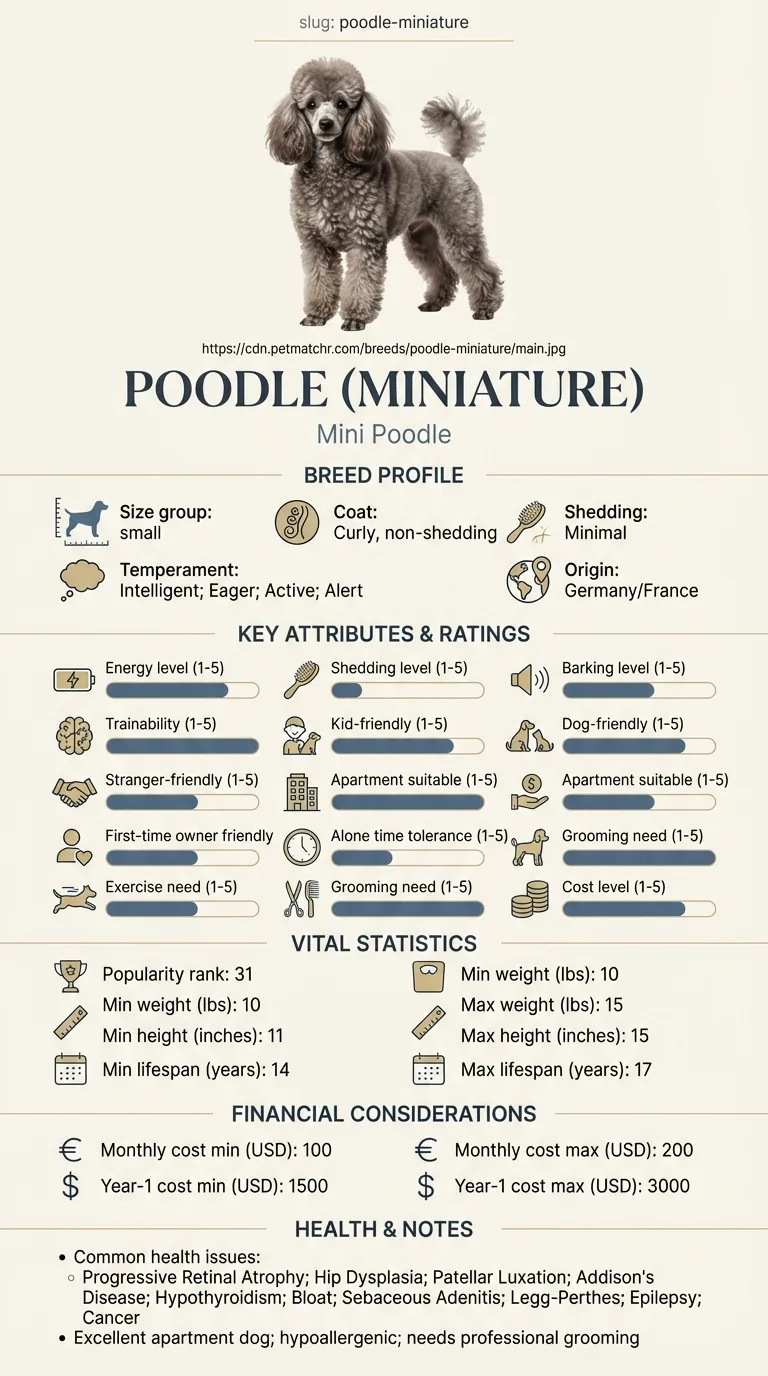
First-time dog owners, busy families, or anyone living in humid climates may find themselves struggling with this particular issue. If you notice your Mini Poodle shaking their head frequently or scratching at their ears, it’s essential to act quickly.
This guide is not medical advice. If your dog shows pain, sudden behavior change, or worsening symptoms, consult a licensed veterinarian.
Some links may be affiliate links. We may earn a commission at no extra cost to you. We only suggest products we believe are helpful for dog owners.
We research and check what we publish, but we do not warrant that any figure, date, price, or statement is accurate, complete, or current, and we accept no liability for any loss, cost, injury, or other harm arising from the use of this site. Use it as one reference among several. You remain responsible for your own decisions and for your dog's care - confirm anything that matters with a licensed veterinarian or another qualified professional before you act on it. Full disclaimer.
Check this first
Recognizing when a Poodle (Miniature) ear infection is an emergency can save your dog's health. If your dog is showing any of these red-flag signs, call your vet immediately. These include severe swelling of the ear, excessive discharge that has a foul odor, or if your dog is in visible pain, such as whining or shaking their head excessively. Additionally, if they are having difficulty balancing or seem disoriented, these symptoms warrant urgent care.
On the other hand, if your Mini Poodle is scratching at their ears or shaking their head occasionally without any signs of distress, it may not be urgent. You can monitor this behavior at home for a short period. Make a note of any discharge or odor, and consider keeping a log of how often they scratch. If these symptoms persist for more than a couple of days or worsen, contact your vet for advice on how to stop Poodle (Miniature) ear infections effectively.
It's important to stay alert to changes in your dog's behavior. Regular cleaning and grooming can help prevent infections and identify issues early. If you notice anything unusual, don't hesitate to reach out to your veterinarian for further guidance.
If any of these apply, call your vet or an emergency clinic now. The rest of this page is for the cases that are not an emergency.
Poodle (Miniature) ear infections can be a frustrating issue for owners. These infections often manifest as your pup frequently scratching their ears, shaking their head, or displaying signs of pain and discomfort. This problem is especially common in Poodles due to their curly, non-shedding coats, which can trap moisture and debris, creating an ideal environment for bacteria and yeast.
Ear infections are relatively common in Poodles (Miniature). Many owners report dealing with this issue at least once during their dog's lifetime. Regular grooming and ear maintenance can significantly reduce the risk.
Poodles (Miniature) have floppy ears that can trap moisture and debris, creating a perfect environment for bacteria and yeast to thrive. Their dense, curly coat can also lead to excess wax buildup, further increasing the risk of ear infections. Additionally, they are prone to certain genetic conditions that may affect ear health.
Environmental factors can also contribute to ear infections. Allergens like pollen, dust, or mold can irritate the ears, leading to inflammation and infection. Exposure to water during baths or swimming without proper drying can cause moisture to linger in the ears, increasing the likelihood of infections.
If your Poodle (Miniature) shows persistent signs of ear infections, such as shaking their head, scratching at their ears, or has a discharge, it's time to consult a vet. They can provide a proper diagnosis and treatment plan, which may include medication or special cleaning solutions.
Here are some common mistakes that can worsen Poodle (Miniature) ear infections, along with safer alternatives to help your dog feel better.
Start here: Miniature Poodle Most Common Genetic Disorders: Screening
See all Poodle Miniature health problems, which breeds are prone to ear infections, or the full Poodle Miniature breed guide for temperament, exercise needs and ownership costs.
It may take 4 to 8 weeks to see significant improvement in your Poodle (Miniature) if you follow a consistent care routine and any treatment prescribed by your vet.
Success means your Mini Poodle experiences fewer ear infections, reduced discomfort, and a healthier ear environment, allowing them to enjoy their daily activities without issues.
Sarah, a busy nurse in San Francisco, adopted Max, her Mini Poodle, only to discover he frequently scratched his ears and shook his head. After a vet visit, she learned that Max had chronic ear infections, likely due to his floppy ears trapping moisture. Determined to help him, Sarah followed a strict cleaning routine recommended by the vet and adjusted Max's diet to include omega-3 fatty acids for skin health. Slowly, his ear infections became less frequent, and Max was much happier.
Key takeaway: With dedication and proper care, you can manage your Poodle (Miniature) ear infections effectively, ensuring a healthier and happier life for your furry friend.
Common signs of ear infections in Poodle (Miniature) include excessive scratching at the ears, shaking their head frequently, and a foul odor coming from the ear. You may also notice redness or swelling around the ear canal. If you see any of these signs, it's important to consult your vet.
To stop Poodle (Miniature) ear infections, keep their ears clean and dry. Use a vet-recommended ear cleaner and clean their ears weekly. If infections persist, consult your vet for more specialized treatment.
Signs of an ear infection include excessive scratching at the ears, shaking of the head, and a foul odor. You may also notice redness or swelling inside the ear canal. If you observe these symptoms, visit your vet promptly.
Yes, a poor diet can contribute to allergies, which may lead to ear infections. Feeding your Poodle (Miniature) high-quality, hypoallergenic food can help reduce the risk of infections caused by dietary sensitivities.
Yes, humid environments can increase the risk of ear infections. If your Mini Poodle is frequently exposed to water, such as swimming or baths, ensure their ears are dried thoroughly afterward to prevent moisture buildup.
You should take your Poodle (Miniature) to the vet if they show persistent signs of ear infection, such as discomfort, discharge, or if home remedies don't improve their condition. Early intervention can prevent more serious health issues.
Chronic ear infections can lead to more severe issues, such as hearing loss or systemic infections. Keeping an eye on your Poodle's ear health is crucial for their overall well-being.
To prevent ear infections, keep your Poodle's ears clean and dry. Regular grooming and routine ear checks can help catch problems early. Also, avoid letting water enter their ears while bathing or swimming.
Yes, older Poodle (Miniature) dogs may be more prone to ear infections due to weakened immune systems and chronic health issues. Regular vet check-ups are especially important for older dogs to catch any signs of infection early.
Yes, allergies can lead to ear infections in Poodle (Miniature) dogs. Environmental allergens or food sensitivities may cause inflammation and irritation in the ears. Consulting a vet for allergy testing and management can help reduce the risk of infections.
Keep your Poodle's ears clean and dry, use vet-approved ear cleaners, and monitor for signs of infection regularly.
Aim to clean your Poodle (Miniature)'s ears once a week to prevent infections, especially if they are prone to them.
Yes, you can prevent ear infections by maintaining proper ear hygiene, avoiding water exposure during baths, and feeding a balanced diet.
Yes, due to their ear structure, Poodle (Miniature) are more susceptible to ear infections, especially if not properly cared for.
If you suspect an ear infection, take your Poodle (Miniature) to the vet for a proper diagnosis and treatment.
A one-page prep sheet for this condition: the signs, the questions to ask, what to get priced. Unlocks here.
You get: Vet visit prep sheet
No spam. One-click unsubscribe. See our privacy policy.
Preview page 1 before you decide.