DogBreedCompass
← Back to breed profile

Labradoodle Gastric Dilatation-Volvulus (GDV/Bloat): What You Need to Know

Labradoodle gastric dilatation-volvulus (GDV/bloat) is a serious condition that can affect your dog's life.

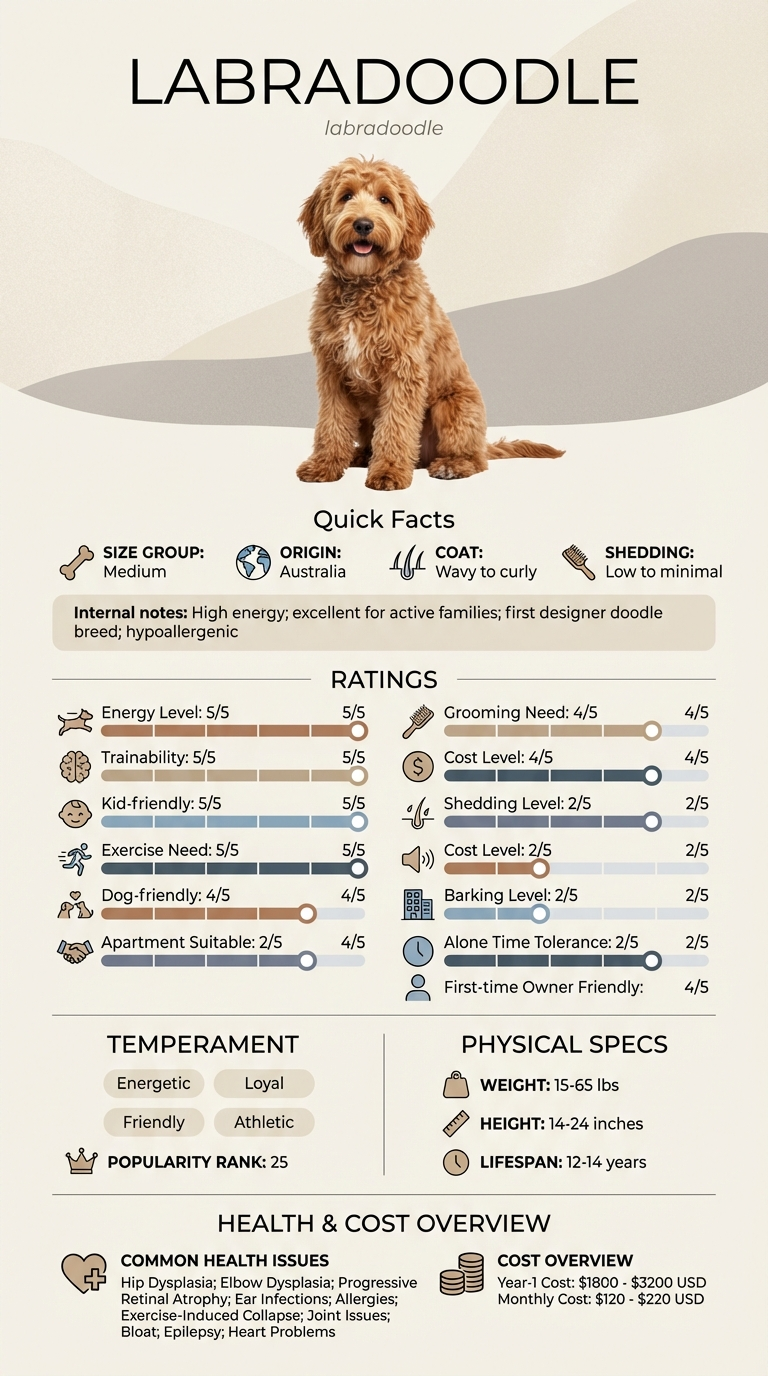
Labradoodle Gastric Dilatation-Volvulus (GDV/Bloat): What You Need to Know infographic

Typically, first-time dog owners, busy families, and those unfamiliar with Labradoodle health concerns may struggle with recognizing the signs of GDV. These owners often face anxiety over their pet's well-being, especially if they notice unusual behaviors or symptoms.

Important reminder

This guide is not medical advice. If your dog shows pain, sudden behavior change, or worsening symptoms, consult a licensed veterinarian.

Some links may be affiliate links. We may earn a commission at no extra cost to you. We only suggest products we believe are helpful for dog owners.

What this problem looks like

Labradoodle gastric dilatation-volvulus (GDV/bloat) is a serious and potentially life-threatening condition where a dog's stomach fills with gas and twists. This can cause severe pain, restlessness, and an inability to vomit. Owners may notice their Labradoodle pacing, drooling excessively, or having a distended abdomen, which can be alarming.

Common triggers

  • Eating too quickly
  • Consuming large meals
  • Intense exercise after eating
  • Stressful situations

GDV is relatively common in larger dog breeds, including Labradoodles, especially if they have a deep chest. Studies suggest that up to 30% of dogs may experience bloat in their lifetime, making awareness and preventive measures essential.

Why this happens

Breed factors

Labradoodles can be prone to gastric dilatation-volvulus (GDV) due to their deep-chested build. This breed is also known for its energetic nature, which may lead to eating quickly or consuming large amounts of water after exercise, increasing the risk of bloat.

Environment factors

The environment plays a significant role in the risk of GDV. Stressful situations, such as moving homes or changes in routine, can contribute to anxiety-induced eating habits. Additionally, feeding habits, like giving large meals at once or feeding from elevated bowls, can also lead to bloat.

What you can try

At-home strategies

  • Feed smaller, more frequent meals instead of one large meal. This helps reduce the amount of air your Labradoodle swallows during eating.
  • Use slow-feed bowls to encourage your dog to eat more slowly. This can help minimize gulping and reduce the risk of bloat.
  • Limit exercise immediately before and after meals. Allow your Labradoodle to rest for at least an hour after eating to help prevent bloat.

When to consider a trainer

If your Labradoodle frequently shows signs of anxiety during mealtime or exhibits problematic eating behavior, consider consulting a dog trainer. They can provide tailored strategies to address these issues and improve your dog's eating habits.

When to talk to your vet

If you notice symptoms such as a distended abdomen, excessive drooling, restlessness, or attempts to vomit without success, contact your vet immediately. GDV is a serious condition that requires prompt medical attention.

Realistic expectations

If a Labradoodle shows signs of gastric dilatation-volvulus (GDV/bloat), immediate veterinary attention is crucial. Once diagnosed, treatment can vary, but most dogs begin to show improvement within 24 to 48 hours of appropriate care.

Success means the dog has stabilized after treatment, shows normal eating and drinking habits, and has returned to its playful self without recurring symptoms. Long-term management may include dietary changes and regular vet check-ups.

Mistakes that make this worse

Understanding the common mistakes that exacerbate Labradoodle gastric dilatation-volvulus (GDV/bloat) can help you make better choices for your dog. Here are some behaviors to avoid:

  • Feeding Large Meals: Serving one big meal instead of smaller, more frequent feedings can increase the risk of bloat. Instead, divide your dog's daily food into two or three smaller meals.
  • Allowing Intense Exercise After Eating: Letting your Labradoodle run or play vigorously right after a meal can trigger GDV. Wait at least an hour post-meal before engaging in high-energy activities.
  • Using Elevated Food Bowls: Some studies suggest raised bowls may contribute to bloat. Try feeding your dog from a ground-level bowl instead to reduce this risk.
  • Ignoring Signs of Distress: If your Labradoodle shows signs of discomfort—like pacing, drooling, or a bloated abdomen—don’t wait to seek help. Contact your vet immediately.
  • Overfeeding: Giving treats or extra food throughout the day can lead to overeating. Stick to recommended portion sizes and limit treats to prevent bloat.
  • Stressful Environments: A chaotic or stressful home can increase anxiety in your dog, which may contribute to digestive issues. Create a calm atmosphere, especially during meal times.

When Labradoodle Gastric Dilatation-Volvulus (GDV/Bloat) is an Emergency

Recognizing when Labradoodle gastric dilatation-volvulus (GDV/bloat) is an emergency can save your dog's life. If your Labradoodle shows signs like a swollen belly, excessive drooling, or attempts to vomit without success, it's time to act fast. These symptoms indicate that your dog is likely in severe distress, and you should call your vet immediately.

Labradoodle Gastric Dilatation-Volvulus (GDV/Bloat): What You Need to Know - When Labradoodle Gastric Dilatation-Volvulus (GDV/Bloat) is an Emergency

When to Watch and Wait

Not every case of bloat is critical. If your Labradoodle has mild symptoms, such as slight discomfort or less severe bloating, you can monitor them for changes. Ensure your pup remains calm, avoid feeding them until the vet advises, and keep an eye on their behavior.

Labradoodle Gastric Dilatation-Volvulus (GDV/Bloat): What You Need to Know - When to Watch and Wait

A Life-Saving Lesson for Sarah and Max

Sarah, a busy nurse in Denver, noticed her Labradoodle, Max, was unusually restless one evening. After a quick call to her vet, she learned that Max might be experiencing bloat. Rushing him to the clinic, they discovered he had GDV. Thanks to prompt treatment, Max recovered well, but Sarah learned the importance of recognizing early signs of distress in dogs. She now monitors his eating habits closely and has adjusted his feeding routine to prevent future incidents.

Key takeaway: Knowing the signs of Labradoodle gastric dilatation-volvulus (GDV/bloat) can save your dog's life. Always seek immediate veterinary care if you suspect something is wrong.
Frequently asked questions

What is Labradoodle gastric dilatation-volvulus (gdv/bloat)?

Labradoodle gastric dilatation-volvulus (gdv/bloat) is a life-threatening condition where the stomach fills with gas and twists. It can lead to severe pain and shock, requiring immediate veterinary attention. Common signs include a distended abdomen, restlessness, and attempts to vomit without success.

Why does my Labradoodle have gastric dilatation-volvulus (gdv/bloat)?

GDV can occur due to a variety of factors, including rapid eating, stress, or genetics. Large or deep-chested breeds like Labradoodles are more susceptible. It's important to monitor their eating habits and environment to help prevent this condition.

How can I prevent my Labradoodle from getting gdv/bloat?

To reduce the risk of gdv/bloat, consider feeding smaller meals multiple times a day instead of one large meal. Avoid vigorous exercise immediately after eating and keep their eating area calm. Regular vet check-ups can also help catch issues early.

What should I do if I suspect my Labradoodle has gdv/bloat?

If you suspect your Labradoodle has gdv/bloat, seek veterinary care immediately. Time is critical, and treatment often involves emergency surgery. Don't wait for symptoms to worsen; act quickly to save your dog.

Are there specific breeds more prone to gdv/bloat?

Yes, breeds like Labradoodles, Great Danes, and Boxers are at a higher risk for gdv/bloat. These breeds often have deep chests, which can contribute to the condition. It's important for owners of these breeds to be aware of the risks.

How can training help my Labradoodle with gdv/bloat prevention?

Training can help establish calm behaviors around meal times. Teaching your Labradoodle to wait for cues before eating can slow down their intake. This can significantly reduce the risk of gdv/bloat.

What are the early signs of Labradoodle gastric dilatation-volvulus (gdv/bloat)?

Early signs of gastric dilatation-volvulus (gdv/bloat) in Labradoodles include restlessness, drooling, and attempts to vomit without success. You might also notice a swollen abdomen. If you see these signs, it's crucial to seek immediate veterinary care.

How can I prevent Labradoodle gastric dilatation-volvulus (gdv/bloat)?

To help prevent gastric dilatation-volvulus (gdv/bloat) in your Labradoodle, feed smaller, more frequent meals instead of one large meal. Avoid vigorous exercise right before and after eating, and consider using a slow feeder to reduce gulping. These steps can significantly lower the risk.

Is gastric dilatation-volvulus (gdv/bloat) more common in older Labradoodles?

Yes, older Labradoodles are at a higher risk for gastric dilatation-volvulus (gdv/bloat). Their digestive systems may be less efficient, which can contribute to the condition. Regular check-ups with a vet are essential for older dogs to monitor their health.

What should I do if my Labradoodle shows signs of gastric dilatation-volvulus (gdv/bloat)?

If your Labradoodle shows signs of gastric dilatation-volvulus (gdv/bloat), take them to the vet immediately. This condition can progress quickly and is life-threatening. Fast action is crucial for the best possible outcome.

Can stress cause gastric dilatation-volvulus (gdv/bloat) in Labradoodles?

Yes, stress can contribute to gastric dilatation-volvulus (gdv/bloat) in Labradoodles. Dogs that experience high anxiety or stressful situations may be more prone to digestive issues. It's essential to manage your dog's stress through proper training and a calm environment.

Quick answers

View more answers
Behavior

What are quick tips for managing Labradoodle gastric dilatation-volvulus (gdv/bloat)?

Feed smaller, more frequent meals and avoid exercise right after eating. Monitor for signs of distress and keep your veterinarian's number handy for emergencies.

Health

What should I do if my dog looks bloated?

If your Labradoodle's abdomen appears distended, contact your vet immediately. Time is crucial in addressing potential bloat.

Behavior

Can anxiety contribute to gdv/bloat in Labradoodles?

Yes, stress and anxiety can increase the risk of gdv/bloat. A calm environment during meals can help reduce these risks.

Costs

What are the costs associated with treating gdv/bloat?

Treatment for gdv/bloat can be expensive, often ranging from $1,500 to $3,000 depending on the severity and required procedures.

Training

Is there a specific training method for preventing gdv/bloat?

Yes, training your Labradoodle to eat slowly through techniques like using puzzle feeders can help prevent bloat.

Related DogBreedCompass guides

  • Learn about Labradoodle gastric dilatation-volvulus (gdv/bloat)Understanding the causes and signs of GDV can help you prevent it in your Labradoodle.
  • Explore Labradoodle gastric dilatation-volvulus (gdv/bloat) trainingTraining your Labradoodle can reduce anxiety, which may help in preventing bloat.
  • Check out Labradoodle health costsBloat is one of the common health issues for Labradoodles; knowing the costs can guide your decisions.
  • Read our Labradoodle separation anxiety guideIf your Labradoodle experiences anxiety, it could increase the risk of health issues like bloat.
  • Discover more about Labradoodle behavior problemsUnderstanding Labradoodle behavior problems can help you identify issues that could lead to bloat.

Related guides