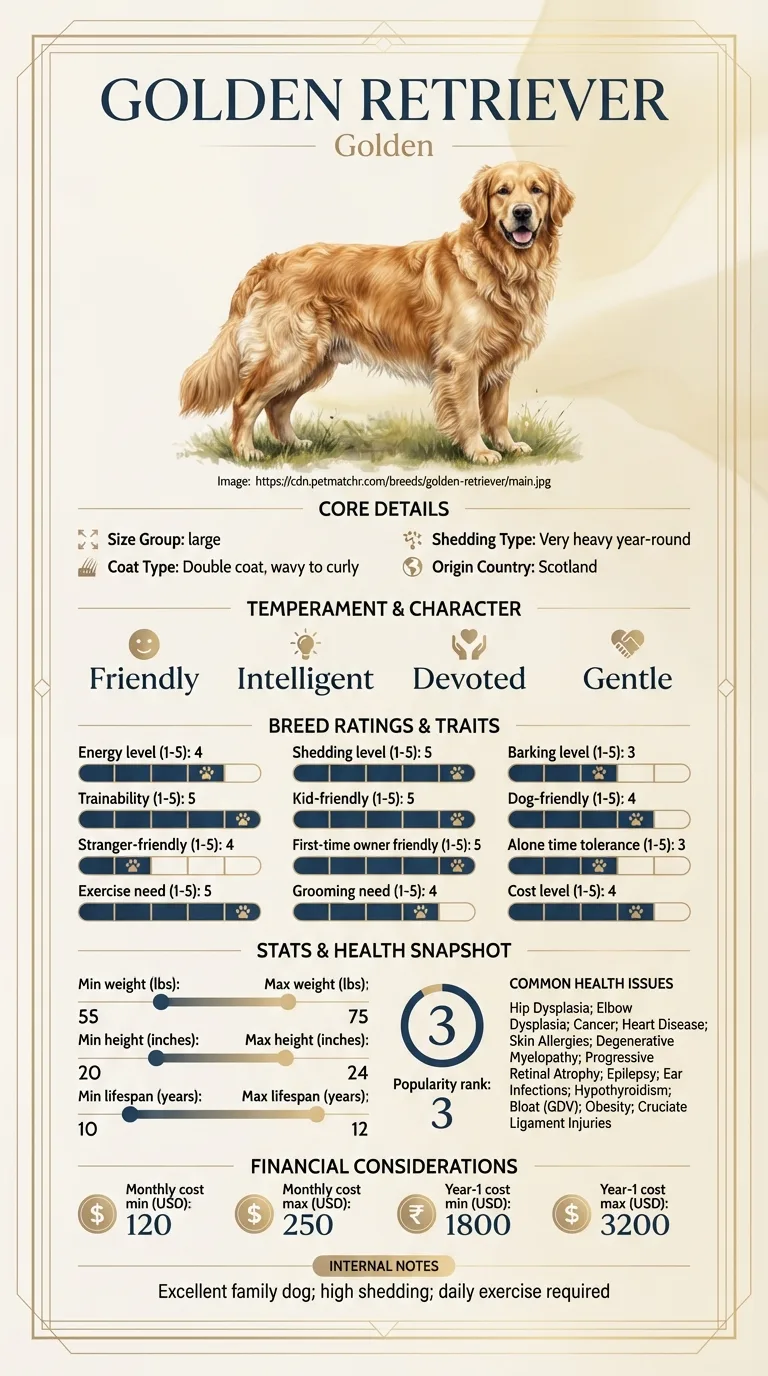
Golden Retriever von Willebrand's Disease: What You Need to Know
Golden Retriever von Willebrand's disease is a bleeding disorder that can impact your dog's health and quality of life.
Owners of Golden Retrievers, particularly those who are active or have young children, may face challenges with this condition. It's especially concerning for families that may not be familiar with canine health issues.
Important reminder
This guide is not medical advice. If your dog shows pain, sudden behavior change, or worsening symptoms, consult a licensed veterinarian.
Some links may be affiliate links. We may earn a commission at no extra cost to you. We only suggest products we believe are helpful for dog owners.
What this problem looks like
Golden Retriever von Willebrand's disease is a common bleeding disorder that affects this friendly breed. It can lead to excessive bleeding from minor cuts or injuries, which can be alarming for owners. Day-to-day, you might notice your Golden being more cautious or having unexplained bruises, especially after physical activities.
Common triggers
Physical injuries, even minor ones
Surgical procedures
High-stress situations that may cause anxiety
This disease is relatively common in Golden Retrievers, with an estimated prevalence of 5-15% in the breed. Many owners may not even realize their dog has it until a bleeding incident occurs.
Why this happens
Breed factors
Golden Retrievers are prone to von Willebrand's disease due to genetic factors. This bleeding disorder is inherited and affects their ability to clot blood properly. If your Golden has a family history of this condition, they are at higher risk.
Environment factors
Environmental factors can contribute to the severity of von Willebrand's disease. Stressful situations, injuries, or surgeries can trigger bleeding episodes. Additionally, exposure to certain toxins or medications may exacerbate the condition.
What you can try
At-home strategies
Monitor your Golden Retriever's activity closely. Avoid overly strenuous exercise that could lead to injuries.
Keep a first aid kit on hand and learn basic pet first aid. This can help you manage minor injuries at home.
Establish a calm environment. Reducing stress can help prevent bleeding episodes. Consider using calming aids like pheromone diffusers.
When to consider a trainer
If your Golden starts showing signs of anxiety or fear, it may be beneficial to consult a trainer. A professional can help with behavior modification techniques that suit your dog’s needs. Look for trainers experienced with dogs that have health conditions.
When to talk to your vet
If you notice excessive bleeding or bruising, contact your vet immediately. They can run tests to confirm von Willebrand's disease and suggest a management plan. Regular check-ups are essential to monitor your dog's health and adjust care as needed.
Realistic expectations
Managing Golden Retriever von Willebrand's disease can take a few weeks to several months. You'll start to notice improvements as you work closely with your vet and adjust care routines.
Success means your dog experiences fewer bleeding episodes, maintains a good quality of life, and responds well to any prescribed treatments or lifestyle changes.
Mistakes that make this worse
Avoiding these common mistakes can help improve your Golden Retriever's condition and overall well-being. Here are some behaviors to steer clear of:
Ignoring symptoms: Failing to notice signs of bleeding or bruising can delay proper treatment. Always monitor your dog's health closely.
Overexerting your dog: High-energy activities can increase the risk of bleeding. Opt for gentle exercise and avoid strenuous activities.
Neglecting vet visits: Skipping regular check-ups can prevent timely diagnosis and management of von Willebrand's disease. Commit to regular veterinary appointments.
Self-diagnosing: Relying on internet advice instead of professional guidance can lead to ineffective treatments. Always consult your vet for tailored advice.
When Golden Retriever von Willebrand's Disease is an Emergency
Recognizing when Golden Retriever von Willebrand's disease becomes an emergency is crucial for your dog's health. Call your vet immediately if your dog shows severe signs of bleeding, such as blood in vomit, urine, or feces. Also, if your dog has excessive bleeding from minor cuts or injuries, this is a red flag that requires prompt attention.
On the other hand, milder symptoms can often be monitored at home. If your dog has occasional nosebleeds or minor bruising, keep a close eye on them. You can track these symptoms and note any changes to discuss with your vet during your next visit.
It’s important to maintain a plan for monitoring, especially if your dog has a known history of von Willebrand's disease.
Always remember that your vet is your best resource when it comes to unusual symptoms. If in doubt, it’s better to err on the side of caution and seek professional guidance. Your Golden’s health and safety should always come first.

Golden Retriever von Willebrand's Disease: What You Need to Know - When Golden Retriever von Willebrand's Disease is an Emergency
A Journey with Bella: Managing Von Willebrand's Disease
Emily loved her Golden Retriever, Bella, but was devastated when her vet diagnosed her with von Willebrand's disease. At first, Emily felt overwhelmed by the information and unsure how to help Bella. After reaching out to a specialized vet, she learned about treatment options and lifestyle adjustments.
With careful monitoring and a consistent routine, Bella's condition improved significantly. Emily found joy in Bella's playful spirit while managing her health needs, which included avoiding certain activities that could lead to injuries.
Key takeaway: Working closely with your vet and being proactive about care can make a big difference in managing your dog's health challenges.
Frequently asked questions
What is Golden Retriever von Willebrand's disease?
Golden Retriever von Willebrand's disease is a bleeding disorder caused by a deficiency in a specific clotting protein. This condition can lead to excessive bleeding from injuries, surgical procedures, or even spontaneous bleeding. It is essential to recognize the signs early to ensure proper management.
Why does my Golden Retriever have von Willebrand's disease?
This disease is inherited and more common in certain breeds, including Golden Retrievers. If your dog has a family history of bleeding disorders, they may be at higher risk. Genetic testing can help determine if your dog carries the gene for this condition.
How can I manage my Golden Retriever's von Willebrand's disease?
Management involves regular veterinary check-ups and possibly avoiding certain activities that could lead to injury. Your vet may recommend a specific diet or medications to help manage bleeding episodes. Always consult your vet for personalized treatment options.
Can von Willebrand's disease be treated?
While there is no cure for von Willebrand's disease, treatment is available to manage symptoms. Depending on severity, options may include desmopressin treatment or blood transfusions during critical situations. Your vet will guide you on the best course of action.
What are the symptoms of von Willebrand's disease in Golden Retrievers?
Symptoms can include frequent nosebleeds, bleeding gums, or excessive bruising. You might also notice prolonged bleeding after a cut or during heat cycles. If you observe these signs, contact your vet for evaluation.
How do I prevent complications from von Willebrand's disease?
Preventing complications includes avoiding situations that could lead to injuries, such as rough play. Regular vet visits are crucial for monitoring your dog's health. Keeping your dog's weight in check can also help minimize strain on their body.
What are the signs of von Willebrand's disease in Golden Retrievers?
Signs of von Willebrand's disease in Golden Retrievers can include excessive bleeding from cuts, nosebleeds, and prolonged bleeding during or after surgery. Some dogs may also show signs of bruising or have difficulty stopping bleeding after injury. If you notice these symptoms, consult your vet promptly.
Can Golden Retrievers with von Willebrand's disease lead normal lives?
Yes, many Golden Retrievers with von Willebrand's disease can lead normal, happy lives with proper care and management. However, you need to take precautions such as avoiding rough play and keeping an eye on their health. Regular vet check-ups are essential.
How is von Willebrand's disease diagnosed in Golden Retrievers?
Von Willebrand's disease is diagnosed through a combination of physical examinations, blood tests, and a review of your dog's medical history. Your vet will look for signs of bleeding disorders and may perform specific tests to check the levels of von Willebrand factor in the blood.
What treatment options are available for Golden Retrievers with von Willebrand's disease?
Treatment for Golden Retrievers with von Willebrand's disease may include medications to help improve blood clotting and managing any bleeding episodes. In severe cases, your vet might recommend surgical interventions or blood transfusions. Always consult your vet for the best treatment plan.
Are certain Golden Retrievers more prone to von Willebrand's disease?
Yes, von Willebrand's disease can be hereditary, meaning some Golden Retrievers may be more prone to it, especially if they have a family history of the condition. Responsible breeders often test for this disease, so it's crucial to research your dog's lineage if you're concerned.
What are quick tips for managing von Willebrand's disease?
Always keep a first aid kit for dogs handy and know how to administer basic care for bleeding. Regular check-ups with your vet will help monitor your dog's condition. Avoid rough play and activities that could lead to injuries.
Health
How often should I take my Golden Retriever to the vet?
It's best to schedule vet visits every six months for regular check-ups. If your dog has von Willebrand's disease, your vet may recommend more frequent visits to monitor their health.
Training
Can I train my Golden Retriever with von Willebrand's disease?
Yes, but focus on gentle training methods that minimize stress and risk of injury. Positive reinforcement techniques will work best for your dog and help build their confidence.
Related DogBreedCompass guides
Golden Retriever behavior problems – Learn more about how to manage your Golden Retriever's health effectively.
Golden Retriever von willebrand's disease training – Discover training tips specifically for Golden Retrievers with health concerns.
Golden Retriever separation anxiety guide – Find out how to help your dog cope with separation anxiety.
Golden Retriever cost breakdown – Understand the costs associated with owning a Golden Retriever.
Golden Retriever health issues – Explore common health issues that affect Golden Retrievers.