Behavior
What are quick tips for Golden Retriever exercise intolerance?
Monitor your dog during exercise and adjust the intensity based on their behavior. Provide frequent breaks and ensure they stay hydrated.

Quick answer
What are quick tips for Golden Retriever exercise intolerance?
Monitor your dog during exercise and adjust the intensity based on their behavior. Provide frequent breaks and ensure they stay hydrated.
Golden Retriever exercise intolerance can be a concerning issue for many owners. This condition makes it difficult for your dog to engage in physical activity without overheating or showing signs of fatigue.
Typically, owners of Golden Retrievers who lead active lifestyles or live in warmer climates may face this problem. New dog parents or those unaware of their dog's limitations can feel overwhelmed when their Golden seems less energetic than expected.
This guide is not medical advice. If your dog shows pain, sudden behavior change, or worsening symptoms, consult a licensed veterinarian.
Some links may be affiliate links. We may earn a commission at no extra cost to you. We only suggest products we believe are helpful for dog owners.
We research and check what we publish, but we do not warrant that any figure, date, price, or statement is accurate, complete, or current, and we accept no liability for any loss, cost, injury, or other harm arising from the use of this site. Use it as one reference among several. You remain responsible for your own decisions and for your dog's care - confirm anything that matters with a licensed veterinarian or another qualified professional before you act on it. Full disclaimer.
Check this first
Recognizing when exercise intolerance in your Golden Retriever becomes an emergency is crucial. Here are red-flag signs that mean you should call your vet immediately. If your dog shows signs of extreme fatigue, difficulty breathing, or persistent coughing after light activity, it's time to seek help.
Also, if they are unable to stand or collapse, these are serious indicators that something is wrong.
On the other hand, there are milder cases of exercise intolerance that can usually be monitored. If your Golden seems a bit sluggish after a normal walk but recovers quickly, or if they pant excessively without showing other symptoms, you can watch and wait. Keeping track of their activity levels and any changes in behavior is essential during this period.
Always ensure they have access to fresh water and a cool place to rest.
In summary, monitor your dog's behavior closely. If you notice any alarming signs, don't hesitate to contact your vet. However, if they simply seem a bit tired, you may not need to stress immediately.
Trust your instincts as a dog owner, and prioritize your pet's health.
If any of these apply, call your vet or an emergency clinic now. The rest of this page is for the cases that are not an emergency.
Golden Retriever exercise intolerance can significantly impact daily life for both the dog and owner. This condition often means that your Golden struggles with physical activity and may tire out quickly, leading to overheating and exhaustion. Common signs include excessive panting, reluctance to participate in play, or even collapsing after moderate exercise.
Exercise intolerance is fairly common in Golden Retrievers, especially as they age or if they face health challenges. Many owners notice these signs, particularly after their dog has been active in warm conditions.
Golden Retrievers are large, energetic dogs with a high exercise need. However, some individual dogs may inherit health issues that affect their stamina, such as hip dysplasia or heart disease. These conditions can lead to exercise intolerance, making it difficult for them to keep up with their activity levels.
Environmental factors can also contribute to exercise intolerance in Golden Retrievers. Overheating, especially during hot weather, can make them lethargic. Additionally, if a dog isn’t accustomed to regular exercise, sudden increases in activity can lead to exhaustion or injury.
If you notice persistent signs of exercise intolerance, such as excessive panting, limping, or reluctance to move, it's time to visit a vet. They can assess for underlying health issues that may be affecting your dog's ability to exercise.
Avoiding these common mistakes can help manage your Golden Retriever's exercise intolerance effectively.
Start here: Golden Retriever Most Common Genetic Disorders: Screening
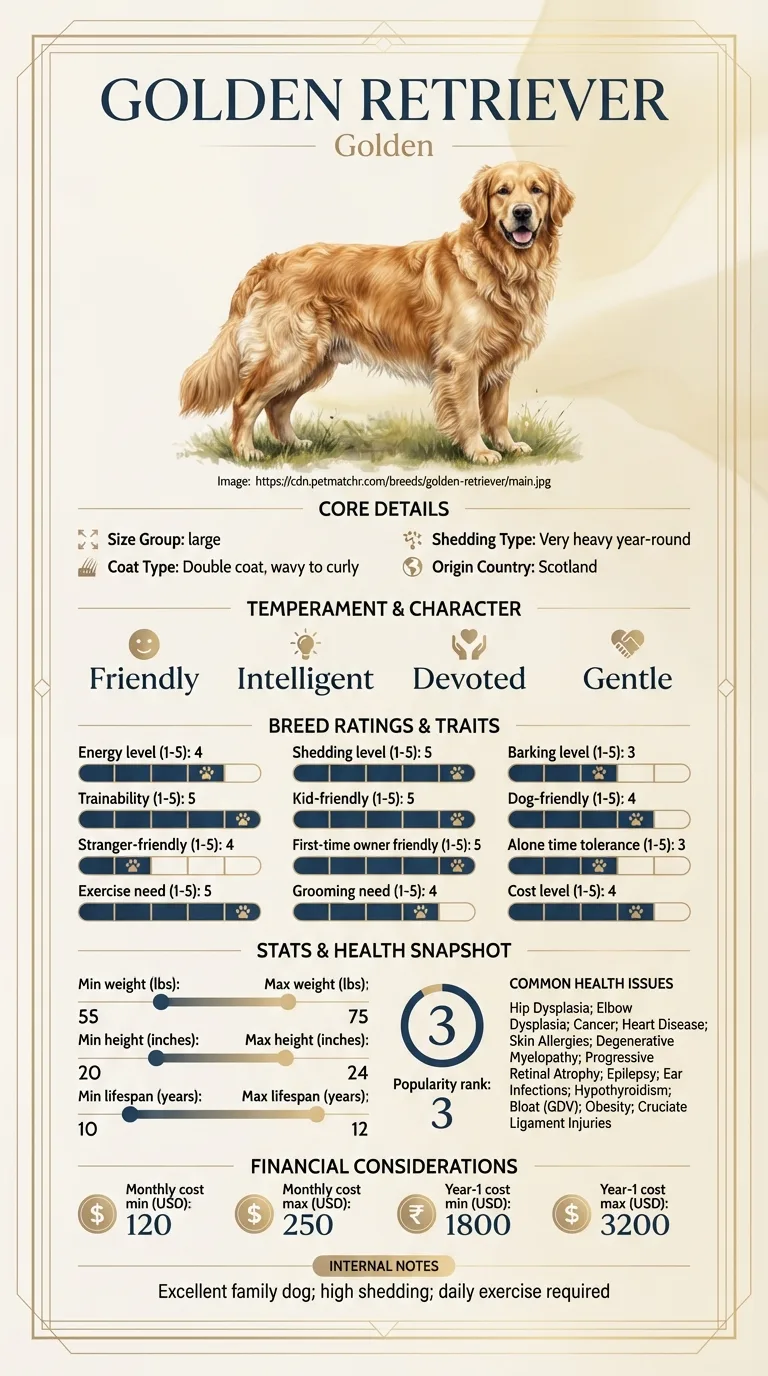
See all Golden Retriever health problems, which breeds are prone to exercise intolerance, or the full Golden Retriever breed guide for temperament, exercise needs and ownership costs.
You can expect to see improvements in your Golden Retriever's exercise tolerance within 4 to 6 weeks of consistent care and management.
Success means your Golden can enjoy moderate exercise without excessive panting or fatigue, allowing for enjoyable walks and playtime without distress.
Emily, a nurse in Chicago, noticed her Golden Retriever, Max, struggled during their daily runs. Instead of keeping up, he would lag behind, panting heavily after just a short distance. Concerned, she consulted her vet, who explained that Max might be experiencing exercise intolerance due to the heat and his high energy levels. Together, they developed a plan to gradually increase his exercise while incorporating plenty of breaks and shade. Over the next few weeks, Emily adjusted their routine, focusing on shorter, cooler morning walks. To her delight, Max began to thrive, showing more stamina and enthusiasm during their outings.
Key takeaway: Understanding and adapting to your dog's exercise needs can lead to a happier, healthier pet.
Golden Retriever exercise intolerance can be caused by several factors, including health issues like obesity, heart problems, or joint pain. It can also result from overheating, especially in hot weather. If your dog shows signs of fatigue, excessive panting, or reluctance to continue exercising, consult your vet for a thorough check-up.
To address Golden Retriever exercise intolerance, start by adjusting their exercise routine. Incorporate shorter, more frequent walks and ensure plenty of water breaks. Gradually increase the intensity of activities while monitoring their response, and always consult with your vet for tailored advice.
Signs of exercise intolerance in Golden Retrievers include excessive panting, lethargy, reluctance to walk, or sudden stopping during play. If they seem to struggle or show discomfort, it's crucial to reassess their exercise needs and consult a vet if necessary.
Yes, training can help improve your Golden Retriever's exercise tolerance. Gradual conditioning through positive reinforcement can build their stamina over time. Focus on short, engaging sessions and always pay attention to their physical limits.
During hot weather, ensure your Golden Retriever has access to shade and fresh water. Limit exercise to cooler parts of the day, and consider engaging in low-impact activities like swimming. Always watch for signs of overheating, such as excessive panting or drooling.
Yes, several health issues may contribute to exercise intolerance in Golden Retrievers, including hip dysplasia, heart disease, and obesity. Regular vet check-ups can help identify and manage these conditions early on.
Yes, older Golden Retrievers may develop exercise intolerance due to age-related health issues like arthritis or heart disease. If you notice a change in your dog's exercise ability, consult your vet to assess their overall health.
To help a Golden Retriever with exercise intolerance, focus on shorter, more frequent walks instead of long sessions. Gradually increase activity levels while monitoring their response, and always provide plenty of water and breaks.
If your Golden Retriever consistently shows signs of exercise intolerance, such as extreme fatigue or difficulty breathing, it's important to see a vet. They can evaluate your dog's health and recommend appropriate treatment.
Monitor your dog during exercise and adjust the intensity based on their behavior. Provide frequent breaks and ensure they stay hydrated.
Aim for at least 1 hour of moderate exercise daily, split into shorter sessions to prevent fatigue.
While some fatigue is normal, excessive tiredness can signal underlying health issues. Consult a vet if you're concerned.
Yes, a balanced diet can help maintain a healthy weight and energy levels, improving exercise tolerance.
A one-page prep sheet for this condition: the signs, the questions to ask, what to get priced. Unlocks here.
You get: Vet visit prep sheet
No spam. One-click unsubscribe. See our privacy policy.
Preview page 1 before you decide.