What this problem looks like
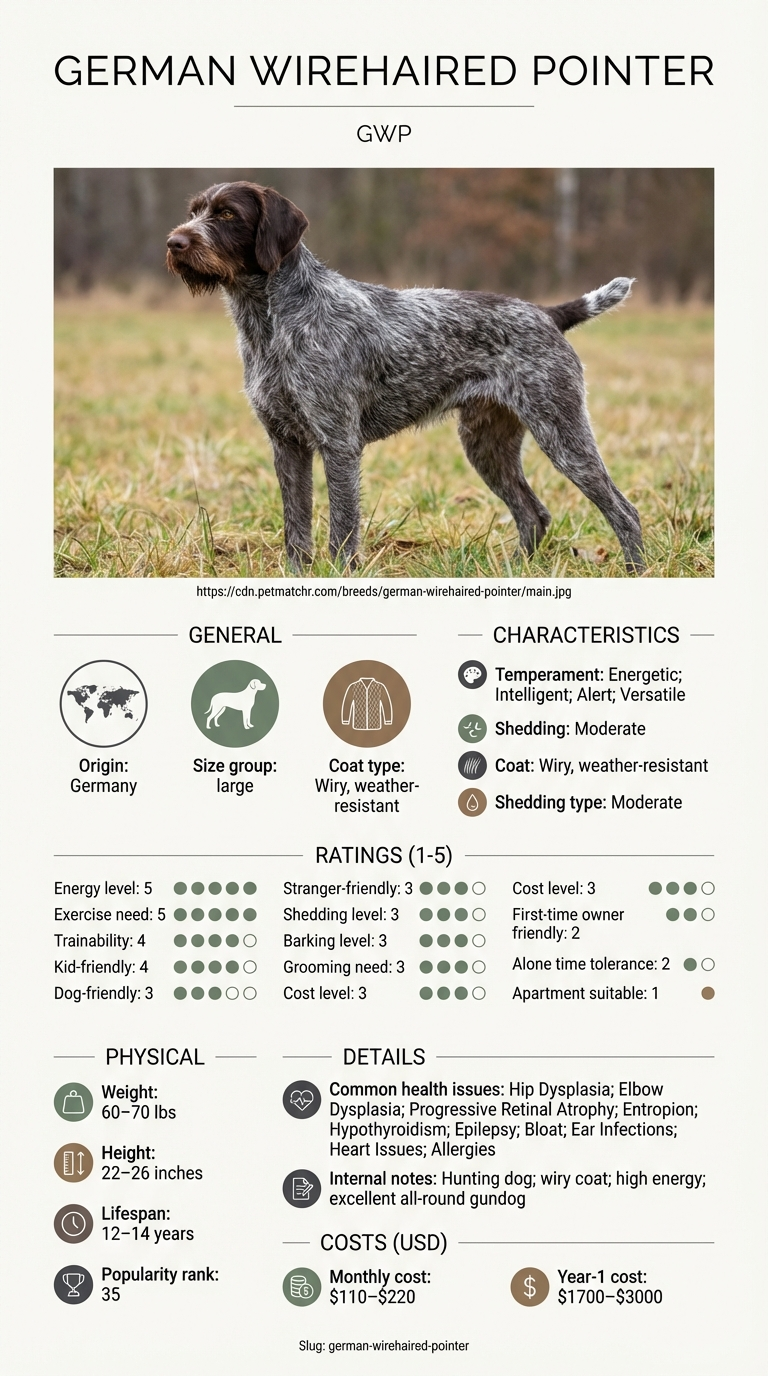
German Wirehaired Pointer luxating patellas, or knee cap dislocation, is a common issue that many owners face. This condition happens when the kneecap slips out of its normal position, causing pain and difficulty in movement. It can be particularly distressing for both the dog and the owner, as it may limit the dog's ability to walk or run comfortably.
Common triggers
- Genetics: Some German Wirehaired Pointers may inherit a tendency for luxating patellas.
- Obesity: Excess weight can put additional strain on the knees, leading to dislocation.
- Injury: Sudden trauma or rough play can cause the kneecap to dislocate.
Luxating patellas are relatively common in larger dog breeds, including the German Wirehaired Pointer. Many owners report this issue, especially in younger dogs or those with a family history of knee problems. It's important to monitor your GWP for any signs of discomfort or limping.
Sarah's Journey with Max
Sarah, a busy nurse living in Chicago, adopted Max, a lively German Wirehaired Pointer. After noticing he frequently limped and occasionally yelped when he jumped, she took him to the vet. Diagnosed with luxating patellas, Sarah learned that consistent training and gentle exercises could help. She followed a training program focused on strengthening Max's legs and avoided high-impact activities. Over the next few months, Sarah noticed a significant change. Max's limping decreased, and he was much more playful. They even enjoyed longer walks together without issues.
Key takeaway: With dedication to training and gradual adjustments to exercise, you can effectively manage luxating patellas in your German Wirehaired Pointer, improving their quality of life.