What are quick tips for German Wirehaired Pointer allergic reactions?
Keep your dog's environment clean to reduce allergens and consult your vet about allergy testing. Regular grooming can also help minimize exposure to outdoor allergens.
German Wirehaired Pointer allergic reactions can be frustrating and concerning for dog owners. Allergies may lead to discomfort and health issues.

Owners of German Wirehaired Pointers often face challenges like frequent scratching, inflamed skin, or upset stomachs. This is especially common for families who enjoy outdoor activities or have multiple pets.
This guide is not medical advice. If your dog shows pain, sudden behavior change, or worsening symptoms, consult a licensed veterinarian.
Some links may be affiliate links. We may earn a commission at no extra cost to you. We only suggest products we believe are helpful for dog owners.
German Wirehaired Pointer allergic reactions can manifest as itching, sneezing, or skin irritations. These reactions often occur when they encounter allergens such as pollen, certain foods, or even household chemicals. Owners may notice their dog scratching excessively or developing red, inflamed areas on their skin, which can be distressing for both the dog and the owner.
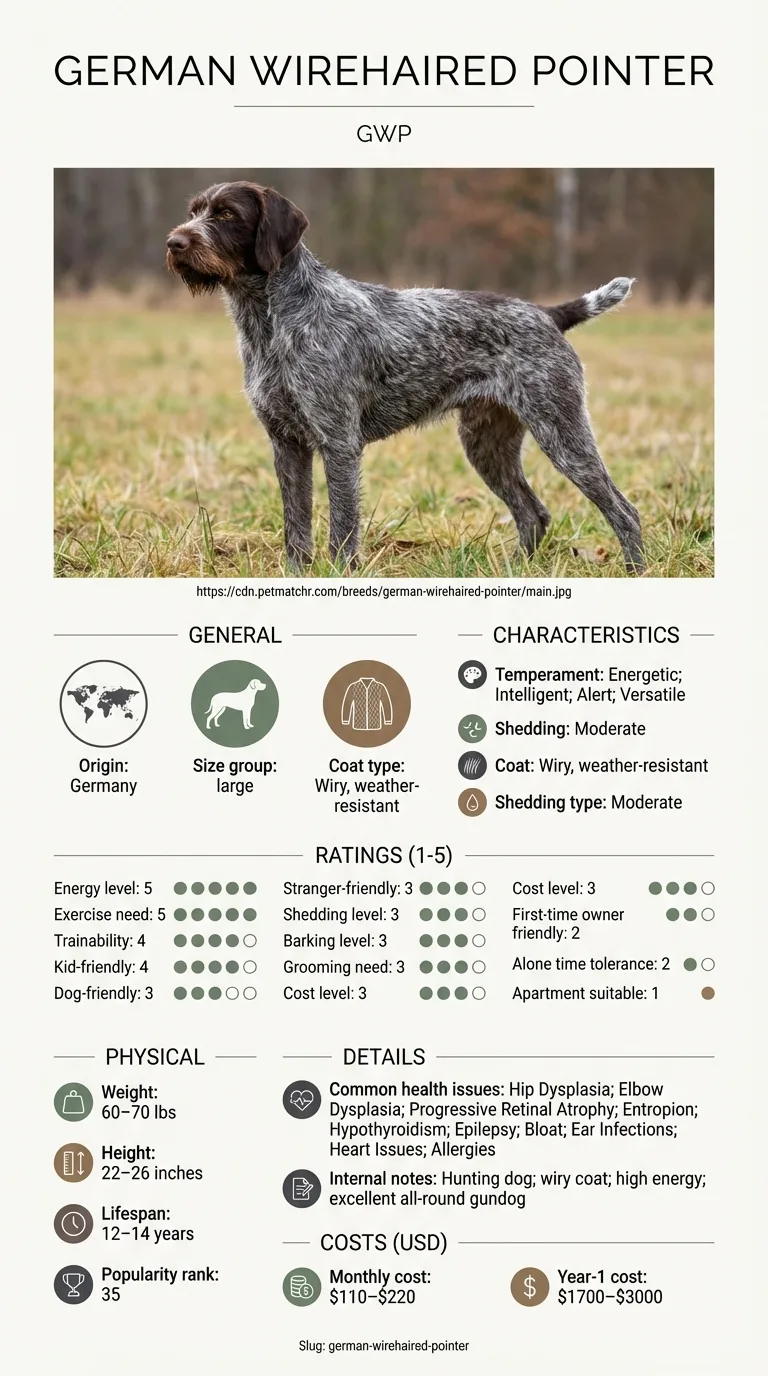
Allergic reactions are fairly common in German Wirehaired Pointers, with studies indicating they may be 276% more likely to develop allergies compared to other breeds. This breed's wiry coat can also trap allergens, making them more susceptible to reactions. Regular grooming can help reduce this risk.
German Wirehaired Pointers can be prone to allergies due to their genetics. Certain breeds, including the GWP, have higher sensitivities to allergens in the environment, including food, pollen, and dust mites.
Environmental factors play a significant role in allergic reactions. Changes in diet, exposure to new plants or chemicals, and poor air quality can trigger symptoms. Stress and lack of proper grooming can also contribute to allergy flare-ups.
If your dog's allergic reactions lead to anxiety or behavioral issues, consulting a trainer may help. They can provide strategies to manage stress and improve your GWP's overall well-being.
If home strategies don't improve your dog's symptoms or if they show severe reactions like swelling or difficulty breathing, contact your vet immediately. They can help diagnose the specific allergies and recommend treatments or medications.
It can take 4 to 12 weeks to see significant improvements in your German Wirehaired Pointer's allergic reactions after making changes to their environment and diet.
Success means your dog has fewer allergic reactions, showing less itching, redness, or discomfort. You'll notice improved overall happiness and health in your dog.
Avoiding common mistakes can help reduce your German Wirehaired Pointer's allergic reactions. Here are some typical pitfalls to steer clear of.
Recognizing when your German Wirehaired Pointer is having an allergic reaction can be crucial. Certain symptoms indicate an emergency that requires immediate veterinary attention. For example, if your dog experiences severe swelling, especially around the face or throat, or has difficulty breathing, you should call your vet immediately. Other red flags include vomiting or diarrhea that persists for more than a few hours or an unexplained collapse. These signs suggest a potentially life-threatening reaction.
In contrast, mild allergic reactions may not require urgent intervention. For instance, if your German Wirehaired Pointer has occasional itching or sneezing after exposure to pollen or certain foods, these symptoms can often be monitored at home. A good plan is to observe your dog’s behavior and keep track of any changes. If the symptoms persist or worsen, then it's time to reach out to your vet for further evaluation and treatment options.
Having a clear plan for both emergencies and mild cases will help you manage your dog's health effectively. It’s important to stay calm and be prepared. If you’re ever unsure, it’s better to err on the side of caution and consult your vet.

When Jenna adopted Max, her German Wirehaired Pointer, she was thrilled. But soon, she noticed he was constantly scratching and had red, irritated skin. After a vet visit, Jenna learned Max had allergies, likely from environmental factors and his food. Determined to help him, she consulted a dog nutritionist and switched Max to a hypoallergenic diet. She also cleaned her home more frequently to reduce dust and pollen. Over the next few months, Max's symptoms started to fade. Jenna was relieved to see him playing happily without constant itching.
Key takeaway: Taking proactive steps and consulting professionals can significantly improve your dog's quality of life when dealing with allergic reactions.
German Wirehaired Pointers can have allergic reactions due to various triggers, including food, pollen, dust mites, or flea bites. Symptoms may include itching, redness, or gastrointestinal issues. Identifying the specific allergen is crucial for effective treatment. This answer relates to German Wirehaired Pointer allergic reactions.
To manage allergic reactions in your German Wirehaired Pointer, start by consulting your vet for allergy testing. Once you identify the allergens, you can eliminate them from your dog's environment or diet. Regular vet check-ups are essential to monitor their condition.
Common signs include excessive scratching, redness on the skin, sneezing, and digestive issues like vomiting or diarrhea. If you notice these symptoms, it's important to seek veterinary guidance promptly. Early intervention can prevent more serious health issues.
Yes, diet changes can significantly help manage allergies. Consider switching to a hypoallergenic dog food or one with limited ingredients. Always consult your vet before making changes to ensure it's the right choice for your dog's specific needs.
While training can't cure allergies, it can help you manage your dog's behavior during allergic episodes. Positive reinforcement for calm behavior and desensitization techniques may reduce stress during allergy flare-ups. Consult a professional trainer for tailored strategies.
German Wirehaired Pointers can be allergic to various substances, including pollen, dust mites, mold, and certain foods. Identifying the specific allergen is key to managing their symptoms effectively.
If your German Wirehaired Pointer shows persistent signs of allergic reactions, such as itching, swelling, or difficulty breathing, it's time to consult your vet. Early intervention can prevent more serious health issues.
Yes, as German Wirehaired Pointers age, their immune systems may change, making them more susceptible to allergies. Regular check-ups with your vet can help monitor their health and adjust treatments as needed.
During allergy season, try to limit outdoor exposure during peak pollen times and keep your home clean to reduce allergens. Consider using air purifiers and consult your vet for potential medications to ease their discomfort.
Training can help manage your German Wirehaired Pointer’s behavior during allergic reactions, such as teaching them to avoid certain areas or items that trigger their allergies. Incorporating positive reinforcement can be very effective in this process.
Keep your dog's environment clean to reduce allergens and consult your vet about allergy testing. Regular grooming can also help minimize exposure to outdoor allergens.
If your dog shows signs of a severe allergic reaction, such as swelling or difficulty breathing, seek emergency veterinary care immediately. Time is critical in these situations.
Prepare for potential costs by budgeting at least $110 to $220 monthly for vet visits and allergy medications. Budgeting for premium dog food can also be beneficial.
Some over-the-counter medications may be safe, but always consult your vet before administering any medication. Some human medications can be harmful to dogs.
Yes, allergies can cause discomfort and irritability, leading to changes in behavior. Keeping your dog comfortable and managing their symptoms can help maintain their normal demeanor.