What are quick tips for managing German Wirehaired Pointer allergies?
Regular vet check-ups, a consistent grooming routine, and a hypoallergenic diet can significantly help manage allergies.
German Wirehaired Pointer allergies can be a frustrating issue for many owners. These allergies often lead to discomfort and health problems for your dog.

This problem typically affects owners who may be unaware of their dog's sensitivities or those who have recently adopted a GWP. Busy families, first-time dog owners, and those living in urban areas may find it particularly challenging to identify and address allergy triggers.
This guide is not medical advice. If your dog shows pain, sudden behavior change, or worsening symptoms, consult a licensed veterinarian.
Some links may be affiliate links. We may earn a commission at no extra cost to you. We only suggest products we believe are helpful for dog owners.
German Wirehaired Pointer allergies can be frustrating for both dogs and their owners. These allergies often manifest as skin irritation, itching, and chronic ear infections, making everyday life uncomfortable for your pet. Common triggers include certain foods, pollen, dust mites, and mold, which can lead to recurring symptoms that require attention.
Allergies are a notable concern for German Wirehaired Pointers, affecting a significant portion of the breed. Many owners report struggling with allergies at some point, making it a common issue to address.
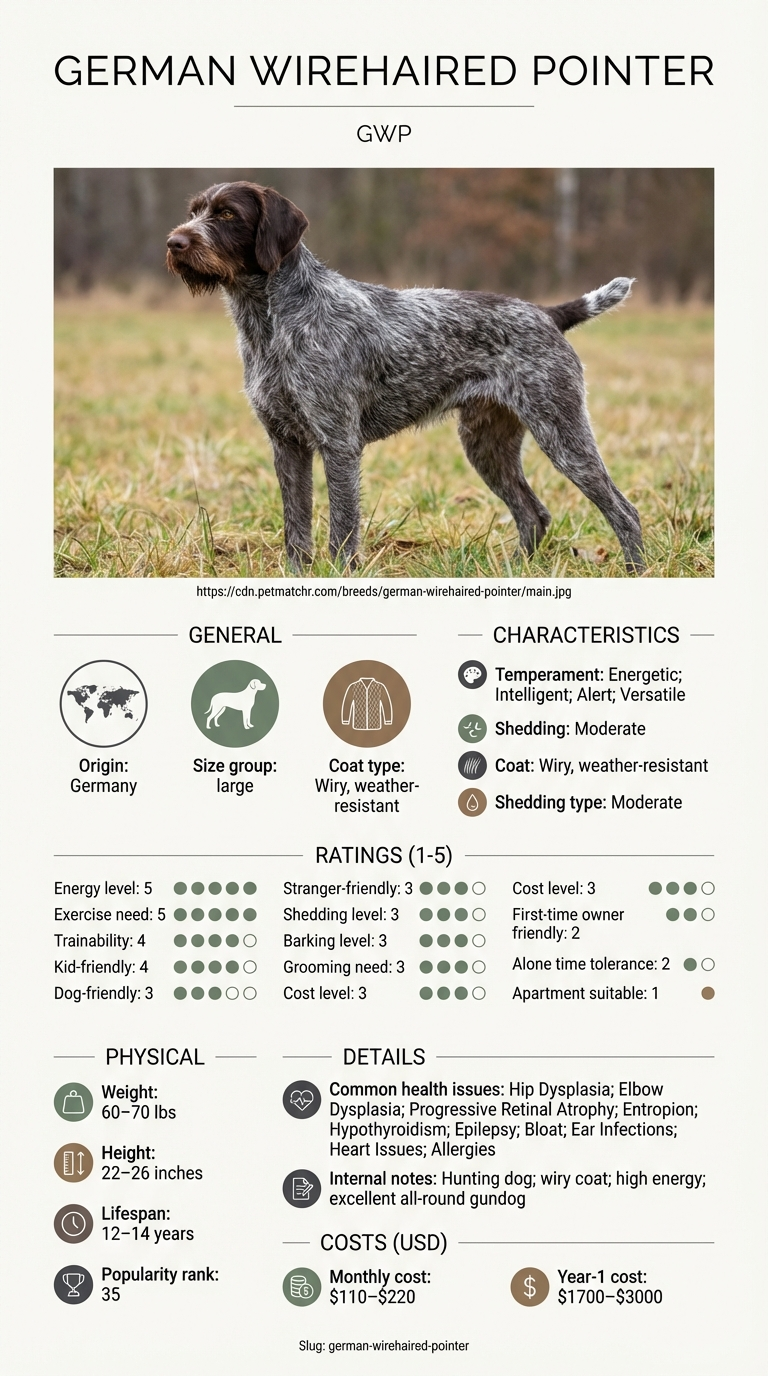
German Wirehaired Pointers can inherit allergies due to their genetic makeup. Certain breeds are more prone to specific allergies, such as food or environmental triggers. Their wiry coat can also trap allergens, making them more susceptible to skin irritations.
Environmental factors play a significant role in triggering allergies. Common culprits include pollen, dust mites, mold, and certain chemicals. If your home has poor air quality or if your GWP spends time outdoors during high pollen seasons, their allergies may worsen.
If your GWP shows signs of anxiety or if their allergies lead to behavioral issues, a trainer can help. Look for trainers experienced with allergy-related behavior problems, as they can offer specialized strategies.
If your dog's allergies lead to persistent symptoms like chronic ear infections or severe skin irritations, consult your vet. They can recommend allergy testing or treatments to relieve your dog's discomfort.
Most owners see improvements in their German Wirehaired Pointer's allergies within 6 to 12 weeks of consistent care and management.
Success means reduced itching, fewer ear infections, and a happier, more comfortable dog overall.
Avoiding these common mistakes can help your German Wirehaired Pointer allergies improve faster.
Recognizing when your German Wirehaired Pointer's allergies are an emergency can make a huge difference in their health. If you notice severe symptoms, it's crucial to act quickly. Signs that require immediate veterinary attention include difficulty breathing, swelling of the face or throat, or excessive vomiting and diarrhea. These red flags can indicate a serious allergic reaction that needs urgent care.
On the other hand, not all allergy symptoms are emergencies. Mild cases, like occasional sneezing, itching, or ear infections, can often be managed at home. Monitor your dog's behavior and consider keeping a log of their symptoms. If they seem uncomfortable or the symptoms persist, a vet visit may still be necessary, but it doesn't need to be immediate.
When in doubt, trust your instincts. It's better to err on the side of caution. If your German Wirehaired Pointer shows signs of distress or if their condition worsens, don't hesitate to call your vet. Keeping your furry friend safe and healthy is always the top priority.

Emily, a busy nurse in Denver, adopted Max, her German Wirehaired Pointer, who constantly scratched and had red, inflamed skin. After a visit to the vet, she learned that Max had food and environmental allergies. Emily switched his diet to a limited-ingredient food and began using hypoallergenic grooming products. Over the next few months, she kept a diary of Max's symptoms, tracking improvements. Slowly, Max's itching reduced, and his coat became healthier. Emily also learned to minimize allergens in her home environment, which helped Max thrive.
Key takeaway: Managing allergies in your German Wirehaired Pointer requires patience, consistent care, and close observation of your dog's reactions to different treatments.
German Wirehaired Pointer allergies can stem from food, pollen, dust, or other environmental factors. Their wiry coat may also trap allergens, leading to skin issues. Identifying the specific allergens through vet testing is crucial to managing these allergies effectively.
To manage German Wirehaired Pointer allergies, start by consulting your vet for a proper diagnosis. They may recommend dietary changes, allergy medications, or even allergy shots. Regular grooming can also help minimize exposure to allergens in their coat.
Symptoms often include itching, red or inflamed skin, sneezing, and ear infections. You might also notice excessive licking or biting at their paws. If your dog shows persistent symptoms, a vet visit is essential for treatment.
Yes, German Wirehaired Pointers can develop food allergies. Common culprits include grains, chicken, and beef. An elimination diet supervised by your vet can help identify specific food allergens.
Yes, hypoallergenic dog shampoos and anti-itch sprays can provide relief. Additionally, allergy-specific diets and supplements may help improve their skin health. Always consult your vet before introducing new products.
Regular grooming is essential for German Wirehaired Pointers, ideally every 4-6 weeks. This helps remove allergens trapped in their coat and reduces skin irritation. Daily brushing can also help control shedding and allergens.
If your German Wirehaired Pointer suffers from seasonal allergies, try to limit outdoor exposure during high pollen days. Regular baths with hypoallergenic shampoo can help remove allergens from their coat. Always consult your vet for appropriate medications or treatments.
Signs of food allergies in your German Wirehaired Pointer may include itching, skin rashes, or gastrointestinal issues like vomiting or diarrhea. An elimination diet, guided by your vet, can help identify the specific food causing the problem.
Yes, German Wirehaired Pointers can be prone to various allergies, including food allergies and environmental allergens like pollen, dust mites, and mold. Regular vet check-ups can help monitor and manage these allergies effectively.
You should take your German Wirehaired Pointer to the vet if they show persistent symptoms such as excessive itching, ear infections, or gastrointestinal distress. Early intervention can prevent more severe health issues.
While stress doesn't directly cause allergies, it can exacerbate existing allergic reactions. If your German Wirehaired Pointer experiences anxiety, it may worsen their allergy symptoms, so managing stress is important.
Regular vet check-ups, a consistent grooming routine, and a hypoallergenic diet can significantly help manage allergies.
Consider keeping a journal of your dog's symptoms and any environmental changes, then discuss these with your vet for targeted testing.
Yes, minimizing outdoor exposure during high pollen seasons and using air purifiers at home can reduce allergen levels.