German Shepherd Hip Dysplasia Prevalence: What You Need to Know
Hip dysplasia is a common concern for German Shepherd owners, impacting their dog's quality of life. (German Shepherd hip dysplasia prevalence)
New owners, families with active lifestyles, and anyone considering a German Shepherd should be aware of this issue. It’s particularly relevant for those who may not be prepared for the potential vet visits and costs associated with this condition.
Important reminder
This guide is not medical advice. If your dog shows pain, sudden behavior change, or worsening symptoms, consult a licensed veterinarian.
Some links may be affiliate links. We may earn a commission at no extra cost to you. We only suggest products we believe are helpful for dog owners.
What this problem looks like
German Shepherd hip dysplasia prevalence is a serious concern for many owners. This condition affects the hip joint, leading to pain and mobility issues. Daily life can become challenging as symptoms may include limping, difficulty rising, or reluctance to exercise.
Common triggers
Genetics, as this condition is often inherited.
Excessive growth rate due to overfeeding or improper nutrition.
Intense physical activity, especially in young dogs still developing.
Hip dysplasia is quite common in German Shepherds, with estimates suggesting that up to 20% of the breed may be affected. This prevalence makes it crucial for potential owners to be aware of the risks and monitor their dog's health closely.
Why this happens
Breed factors
German Shepherds are prone to hip dysplasia due to their large size and rapid growth during puppyhood. This genetic predisposition means that many GSDs may develop this condition, especially if their parents had it. Breeders should screen for hip issues, but unfortunately, not all do.
Environment factors
Factors such as obesity, lack of exercise, and improper diet can worsen hip dysplasia in German Shepherds. Additionally, high-impact activities or excessive jumping during their growth phase can put undue stress on their developing joints. A poor living environment without enough space to move can also contribute to their health issues.
What you can try
At-home strategies
Maintain a healthy weight by monitoring your German Shepherd's diet and avoiding overfeeding.
Provide low-impact exercises like swimming or walking on soft surfaces to strengthen their joints without causing strain.
Incorporate joint supplements into their diet, such as glucosamine and chondroitin, but consult your vet first.
When to consider a trainer
If your German Shepherd shows signs of discomfort while walking or engaging in regular activities, it's wise to consult a professional trainer. They can help modify your dog's exercise routine and provide training to improve mobility and strength safely.
When to talk to your vet
If you notice persistent limping, difficulty standing up, or reluctance to play, it's crucial to speak with your vet. They can perform an evaluation and recommend treatment options, including pain management or surgery if necessary.
Realistic expectations
Addressing German Shepherd hip dysplasia prevalence can take several months to years. Early intervention through proper training and weight management is crucial.
Success means your German Shepherd maintains a healthy weight, shows improved mobility, and experiences fewer discomforts related to hip dysplasia.
Mistakes that make this worse – German Shepherd hip dysplasia prevalence
Avoiding common pitfalls can help improve your German Shepherd's hip dysplasia prevalence. Here are some mistakes to watch out for.
Overexercising your dog: Pushing your German Shepherd too hard can worsen joint issues. Instead, provide balanced exercise tailored to their abilities.
Ignoring weight management: Obesity places extra stress on joints. Monitor their diet and maintain a healthy weight through proper nutrition.
Neglecting regular vet visits: Skipping check-ups can delay early detection of hip dysplasia. Schedule regular vet appointments for assessments.
Using improper training techniques: Harsh training methods can increase anxiety and stress, exacerbating health issues. Opt for positive reinforcement strategies instead.
Lack of socialization: Not exposing your German Shepherd to different environments can lead to anxiety, which can worsen physical problems. Gradually introduce them to new experiences.
Inconsistent routines: Changing your dog's routine frequently can increase stress levels. Stick to a consistent schedule for feeding, exercise, and rest.
Forgetting joint supplements: Not providing joint health supplements can miss an opportunity for support. Consult your vet about appropriate options for hip dysplasia.
When German Shepherd Hip Dysplasia is an Emergency
If your German Shepherd shows any of the following red-flag signs, call your vet immediately:
- Sudden inability to stand or walk
- Severe limping or loss of mobility
- Signs of extreme pain, such as whining or yelping when touched
- Swollen joints or noticeable deformities in the hips
- Difficulty breathing or showing signs of distress
These symptoms can indicate serious complications or rapid progression of hip dysplasia. Delaying treatment could worsen your dog’s condition.
On the other hand, if your dog is experiencing mild symptoms, such as occasional limping after exercise or stiffness in the morning, you can monitor the situation. Here are signs to keep an eye on:
- Mild limping that improves after rest
- Reluctance to jump or run but still moving around
- Slight stiffness or discomfort during playtime
In these cases, it’s important to have a plan. Consult your vet about managing your German Shepherd’s hip dysplasia with lifestyle adjustments, weight management, and exercise modifications. Regular check-ups can help track any changes and guide you on the best course of action.
Being proactive about your German Shepherd's health can make a significant difference. Look for patterns in their behavior and consult your vet if you notice anything unusual. Keeping a close relationship with your vet ensures you'll be ready to tackle any issues that arise.

German Shepherd Hip Dysplasia Prevalence: What You Need to Know - When German Shepherd Hip Dysplasia is an EmergencyGerman Shepherd Hip Dysplasia Prevalence: What You Need to Know - When German Shepherd Hip Dysplasia is an EmergencyGerman Shepherd Hip Dysplasia Prevalence: What You Need to Know - When German Shepherd Hip Dysplasia is an EmergencyGerman Shepherd Hip Dysplasia Prevalence: What You Need to Know - When German Shepherd Hip Dysplasia is an EmergencyGerman Shepherd Hip Dysplasia Prevalence: What You Need to Know - When German Shepherd Hip Dysplasia is an EmergencyGerman Shepherd Hip Dysplasia Prevalence: What You Need to Know - When German Shepherd Hip Dysplasia is an EmergencyGerman Shepherd Hip Dysplasia Prevalence: What You Need to Know - When German Shepherd Hip Dysplasia is an EmergencyGerman Shepherd Hip Dysplasia Prevalence: What You Need to Know - When German Shepherd Hip Dysplasia is an EmergencyGerman Shepherd Hip Dysplasia Prevalence: What You Need to Know - When German Shepherd Hip Dysplasia is an Emergency
Sarah's Journey with Max: Overcoming Hip Dysplasia Challenges
Sarah, a busy nurse, adopted Max, a German Shepherd puppy, unaware of his potential health issues. At his first vet visit, she learned about the high prevalence of hip dysplasia in the breed. Determined to help Max, Sarah enrolled him in a training program focused on low-impact exercises and weight management.
Over the months, she adjusted his diet and included gentle activities like swimming. With consistent effort, Max grew stronger and more agile, and Sarah noticed he was much more comfortable during playtime.
Key takeaway: Early intervention and consistent training can significantly improve quality of life for German Shepherds at risk of hip dysplasia.
Frequently asked questions
Why does my German Shepherd have hip dysplasia prevalence?
German Shepherd hip dysplasia prevalence often stems from genetic factors, particularly in breeding. It can also be influenced by environmental factors such as excessive weight and rapid growth during puppyhood. Regular vet check-ups and proper care can help manage and potentially reduce the risk.
How can I stop German Shepherd hip dysplasia prevalence?
To help reduce German Shepherd hip dysplasia prevalence, choose a reputable breeder who tests for hip health. Regular exercise and maintaining a healthy weight are crucial. Additionally, consult your vet for specific training or dietary recommendations.
What are the signs of hip dysplasia in German Shepherds?
Signs of hip dysplasia in German Shepherds include difficulty standing or walking, reluctance to jump, and noticeable limping. You may also notice your dog avoiding certain activities that require hip movement. Prompt veterinary attention is essential for diagnosis and treatment.
Can training help with German Shepherd hip dysplasia prevalence?
Yes, training can help manage German Shepherd hip dysplasia prevalence by ensuring your dog maintains a healthy weight and develops strong muscles. Low-impact activities such as swimming can be beneficial. Always consult a trainer familiar with hip dysplasia for tailored advice.
What is the treatment for German Shepherd hip dysplasia prevalence?
Treatment for German Shepherd hip dysplasia prevalence may include weight management, physical therapy, medications, or surgery in severe cases. Your vet will recommend the best approach based on your dog's age and severity of the condition. Early intervention often leads to better outcomes.
What are the signs of hip dysplasia in older German Shepherds?
Older German Shepherds with hip dysplasia may show signs of pain, reduced mobility, or reluctance to engage in physical activities. You might also notice them limping or having difficulty standing up after resting. If you see these symptoms, consult your vet for a proper diagnosis.
Can hip dysplasia in German Shepherds be managed without surgery?
Yes, hip dysplasia in German Shepherds can often be managed without surgery through weight management, physical therapy, and pain relief medications. Regular low-impact exercise, like swimming, can also help maintain joint health. Always discuss treatment options with your veterinarian.
At what age should I start screening my German Shepherd for hip dysplasia?
It's recommended to start screening for hip dysplasia in German Shepherds as early as 12 months old. Regular check-ups can help catch any issues early, leading to better management. If you have concerns, consult your vet for specific advice based on your dog's health.
How can I prevent my German Shepherd from developing hip dysplasia?
While genetics play a significant role, you can help reduce the risk of hip dysplasia by maintaining a healthy weight and providing regular exercise. Avoid over-exercising puppies, and ensure they receive proper nutrition. Regular vet visits can also help monitor their joint health.
Is there a specific diet that can help manage hip dysplasia in German Shepherds?
A balanced diet rich in omega-3 fatty acids can support joint health in German Shepherds with hip dysplasia. Look for dog foods that contain glucosamine and chondroitin, which may help reduce inflammation. Always consult your vet for dietary recommendations tailored to your dog's needs.
What are some quick tips for German Shepherd hip dysplasia prevalence?
To address German Shepherd hip dysplasia prevalence, ensure your dog gets regular, low-impact exercise, and monitor their diet to avoid obesity. Regular vet visits are crucial for early detection and management.
Health
Is hip dysplasia common in German Shepherds?
Yes, hip dysplasia is a common issue in German Shepherds due to their size and genetics. Responsible breeding practices can help reduce its prevalence.
Costs
What is the cost of managing hip dysplasia in German Shepherds?
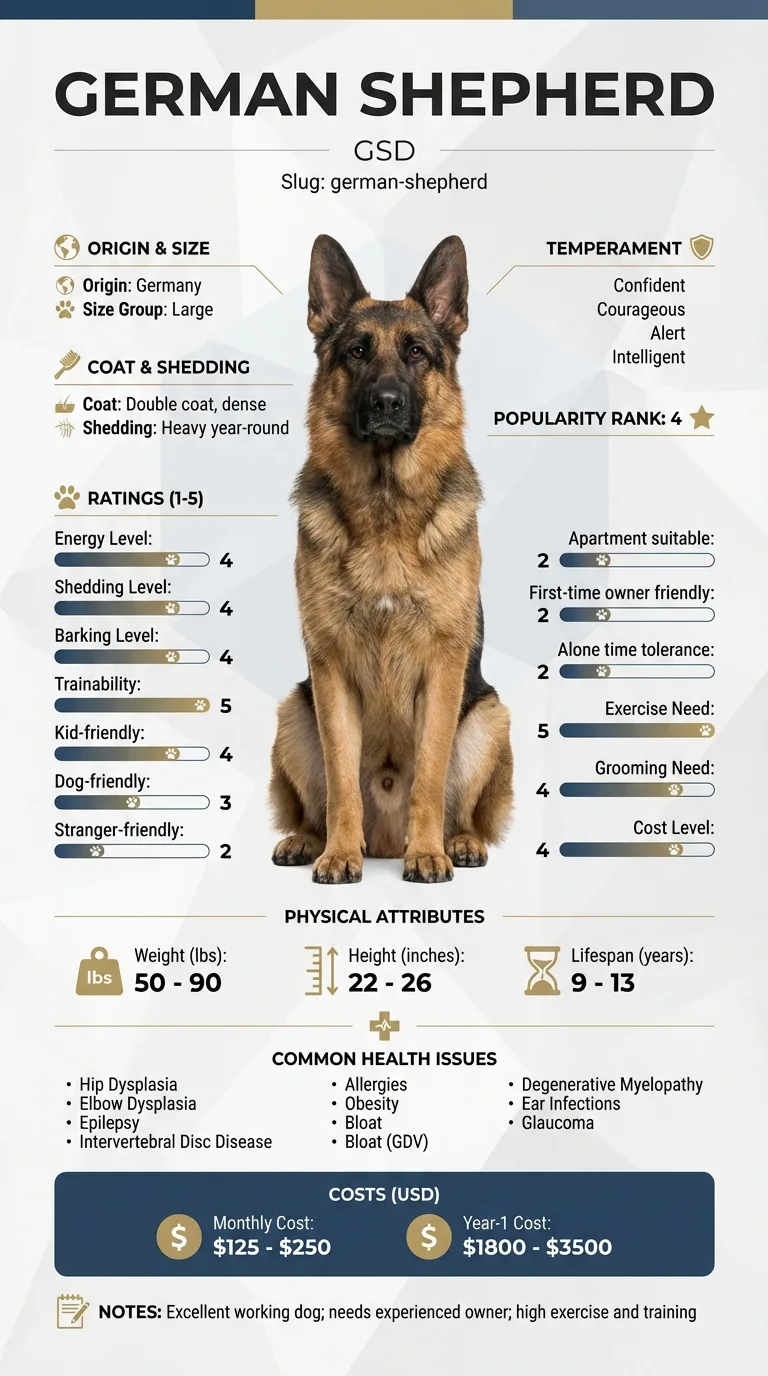
Managing German Shepherd hip dysplasia can range from $1,800 to $3,500 in the first year, including vet visits, treatments, and medications. Costs may vary based on severity and treatment chosen.
Training
How can training help my dog with hip dysplasia?
Training can help manage German Shepherd hip dysplasia by promoting gentle exercise and maintaining a healthy weight. A trained dog is less likely to engage in harmful activities that could worsen their condition.
Related DogBreedCompass guides
Common health issues for German Shepherds – Learn more about the various health issues that can affect German Shepherds, including hip dysplasia.
Training for German Shepherd hip dysplasia – Explore training techniques that can help alleviate hip dysplasia symptoms in German Shepherds.
German Shepherd cost breakdown – Understand the complete cost breakdown of owning a German Shepherd, including potential health costs.
German Shepherd separation anxiety guide – Discover ways to manage anxiety in German Shepherds, especially those facing health challenges like hip dysplasia.
How to stop German Shepherd hip dysplasia prevalence – Find out how to prevent and treat hip dysplasia in your German Shepherd effectively.