Behavior
What are quick tips for managing French Bulldog back/spine issues?
Keep your Frenchie at a healthy weight, avoid high jumps, and consult your vet for appropriate exercises. Regular vet check-ups can also help catch issues early.

Quick answer
What are quick tips for managing French Bulldog back/spine issues?
Keep your Frenchie at a healthy weight, avoid high jumps, and consult your vet for appropriate exercises. Regular vet check-ups can also help catch issues early.
French Bulldog back/spine issues can be a serious concern for owners.
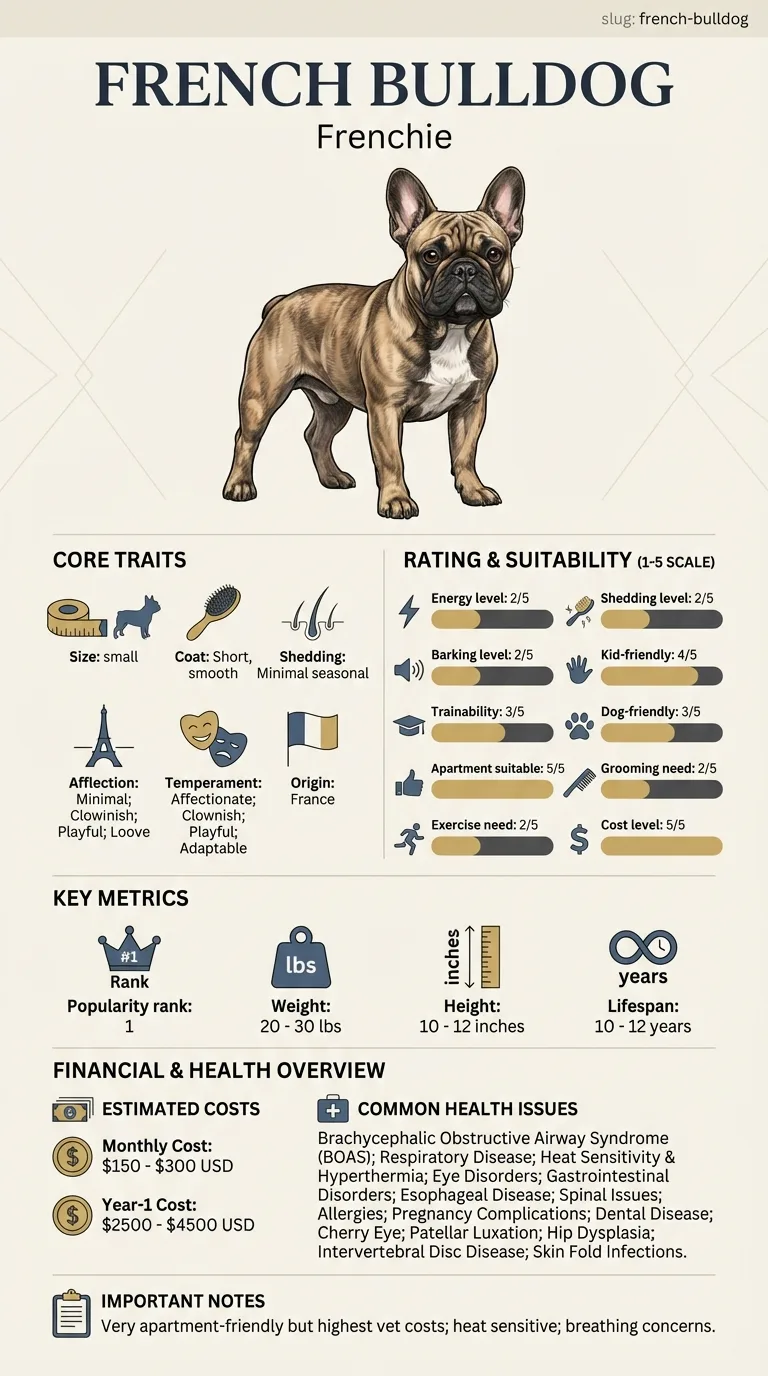
Owners of French Bulldogs, especially first-time pet parents, often face challenges with their dog's back and spine health. Many are unsure how to recognize symptoms or address these issues effectively.
This guide is not medical advice. If your dog shows pain, sudden behavior change, or worsening symptoms, consult a licensed veterinarian.
Some links may be affiliate links. We may earn a commission at no extra cost to you. We only suggest products we believe are helpful for dog owners.
We research and check what we publish, but we do not warrant that any figure, date, price, or statement is accurate, complete, or current, and we accept no liability for any loss, cost, injury, or other harm arising from the use of this site. Use it as one reference among several. You remain responsible for your own decisions and for your dog's care - confirm anything that matters with a licensed veterinarian or another qualified professional before you act on it. Full disclaimer.
Check this first
Understanding when your French Bulldog's back or spine issues require immediate vet attention is crucial. Here are some signs that mean you should call your vet right away. Look for sudden paralysis, severe pain when touched, or an inability to walk. If your Frenchie is whining excessively or showing signs of distress, it’s time to seek help.
On the other hand, certain mild symptoms can often be monitored at home. If your dog seems a bit stiff after play or has minor discomfort that doesn't worsen, you may not need an emergency visit. Keep an eye on their behavior and activity levels. If they are still eating, drinking, and engaging in light play, it may be safe to wait and observe.
In summary, act fast if you notice severe symptoms, but keep calm if the situation seems manageable. Regular check-ups and consultations with your vet can help you navigate these issues. If you're ever in doubt, it's always best to err on the side of caution and consult your vet for advice.
If any of these apply, call your vet or an emergency clinic now. The rest of this page is for the cases that are not an emergency.
French Bulldog back/spine issues, particularly intervertebral disc disease, are common concerns for this breed. These problems can manifest as difficulty walking, reluctance to jump, or signs of pain when touched along the back. Owners may notice their Frenchies seem stiff or struggle to get comfortable, especially after playtime or a long nap.
Back/spine issues are quite prevalent among French Bulldogs, with many experiencing some form of spinal concern during their lifetime. Due to their unique body shape and weight distribution, these issues can occur in nearly 20% of the breed, making it important for owners to be vigilant and proactive.
French Bulldogs are prone to back and spine issues due to their unique body structure. Their compact size, short legs, and heavy build can put extra strain on their spines. Additionally, intervertebral disc disease is common in this breed, which can lead to pain and mobility issues.
Environmental factors can also contribute to back problems. For example, excessive jumping or rough play can exacerbate existing conditions. Additionally, obesity from overfeeding can increase the risk of spinal issues by adding more weight for their spines to support.
If you notice your Frenchie showing signs of pain, struggling to move, or having difficulty with daily activities, it's essential to consult your vet. They can evaluate your dog's condition and suggest appropriate treatments or lifestyle adjustments.
Avoiding these common mistakes can help improve your French Bulldog's back and spine issues. Here are some behaviors to steer clear of, along with safer alternatives.
See all French Bulldog health problems, which breeds are prone to backspine issues, or the full French Bulldog breed guide for temperament, exercise needs and ownership costs.
If you're proactive, you can see improvements in your French Bulldog's back/spine issues within 4 to 6 weeks of consistent care and follow-up with your vet.
Success means your French Bulldog shows reduced discomfort, improved mobility, and a more active lifestyle, allowing them to enjoy daily activities without pain.
Sara, a first-time dog owner in Los Angeles, noticed her French Bulldog, Max, was hesitant to jump on the couch or play for long periods. After a vet visit, she learned Max had early signs of intervertebral disc disease. Determined to help him, Sara followed a tailored training program focused on gentle exercises and strengthening his back muscles. She also made adjustments at home, like using ramps for easier access. Within a few weeks, Max was more active and playful, showing less discomfort during daily activities. Sara felt relieved and proud to see her furry friend happy again.
Key takeaway: With the right approach and consistent care, you can manage French Bulldog back/spine issues and help your dog lead a healthier, more comfortable life.
French Bulldogs are prone to back and spine issues due to their unique body structure. Their compact size and short legs can lead to conditions like intervertebral disc disease. Genetics and obesity can also increase their risk.
To help prevent back and spine issues, maintain your Frenchie's healthy weight through a proper diet and regular exercise. Avoid activities that put excessive strain on their back, like jumping from high places. Consider consulting a vet for tailored advice on their exercise routine.
Signs of back or spine issues include difficulty jumping, reluctance to play, or showing pain when touched along the spine. If your Frenchie seems unusually lethargic or has trouble walking, visit your vet as soon as possible.
Yes, training can play a role in managing back and spine issues. Focus on low-impact exercises and gentle training methods that encourage safe movement. Avoiding rough play can also help keep your Frenchie’s back safe.
Treatment options may include medications for pain relief, physical therapy, or in some cases, surgery. A vet can provide the best course of action based on your Frenchie's specific condition and needs.
French Bulldogs are prone to back and spine issues due to their unique body structure. Their short legs and long spines can lead to conditions like intervertebral disc disease, which can cause pain and mobility problems.
Signs that your French Bulldog may be in pain include reluctance to move, whining when getting up, or changes in their gait. If you notice these behaviors, it's essential to consult your vet for a thorough examination.
Yes, as French Bulldogs age, they are more susceptible to back and spine problems. Regular vet check-ups become increasingly important to catch any issues early and manage their health effectively.
While not all back/spine issues can be prevented, maintaining a healthy weight and avoiding excessive jumping or rough play can help. Proper training for gentle movements can also reduce the risk of injury.
If your French Bulldog shows signs of discomfort, such as difficulty walking or reluctance to play, you should take them to the vet. Early intervention can lead to better outcomes and more effective treatment options.
Keep your Frenchie at a healthy weight, avoid high jumps, and consult your vet for appropriate exercises. Regular vet check-ups can also help catch issues early.
Treating back and spine issues can cost between $1,000 to $5,000 depending on the severity and treatment needed. Regular vet visits can help manage costs effectively.
Yes, back and spine issues are common in French Bulldogs due to their body structure. Staying proactive with health checks can help mitigate risks.
Visit the vet if you notice signs of pain, difficulty moving, or changes in behavior. Early intervention is key to managing spine issues effectively.
A one-page prep sheet for this condition: the signs, the questions to ask, what to get priced. Unlocks here.
You get: Vet visit prep sheet
No spam. One-click unsubscribe. See our privacy policy.
Preview page 1 before you decide.