Health
What should I do if my Doberman Pinscher bleeds?
Apply gentle pressure to the wound and keep your dog calm. If bleeding doesn't stop in a few minutes, contact your vet immediately.

Quick answer
What should I do if my Doberman Pinscher bleeds?
Apply gentle pressure to the wound and keep your dog calm. If bleeding doesn't stop in a few minutes, contact your vet immediately.
Doberman Pinscher von Willebrand's disease is a genetic bleeding disorder that can be serious for your dog. Understanding this condition is crucial for their health and wellbeing.
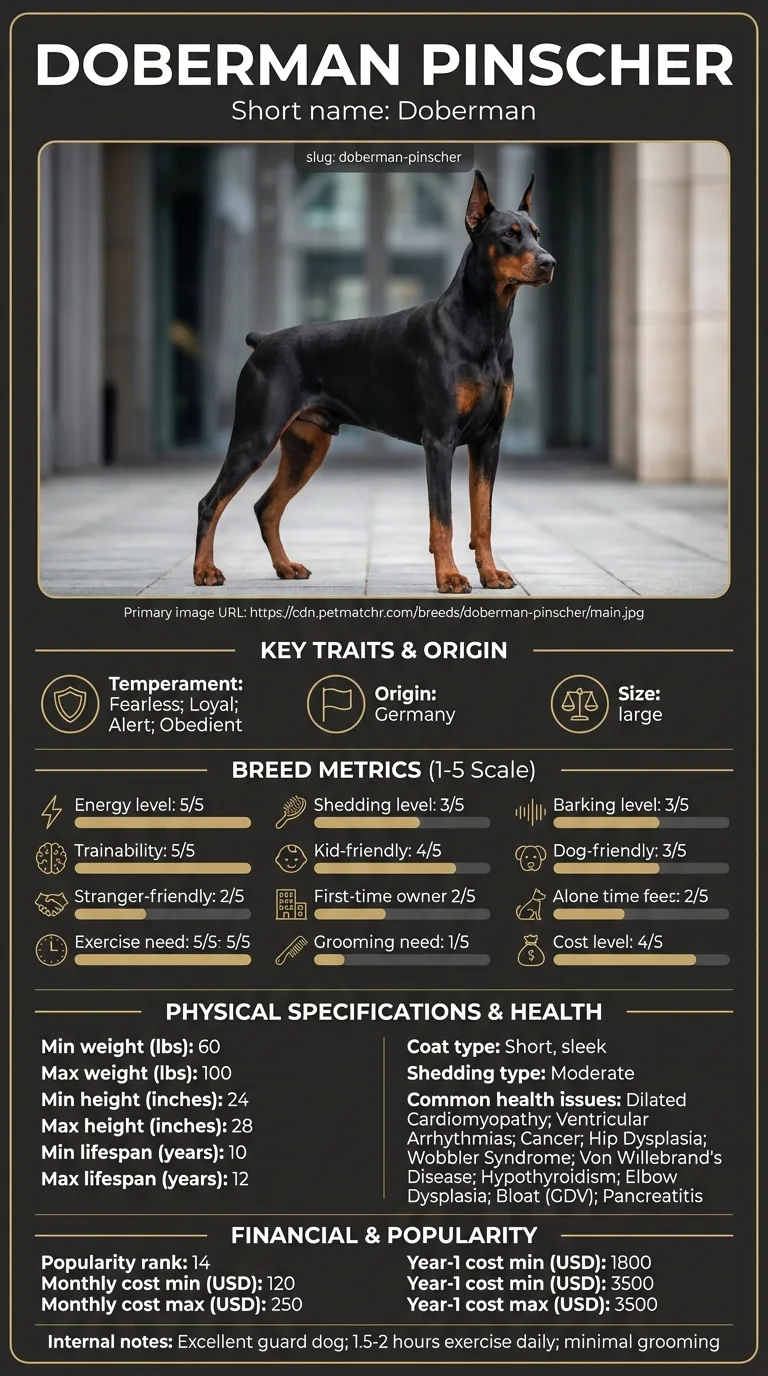
Owners of Doberman Pinschers, especially first-time pet parents, may struggle with the challenges of this disease. If your Doberman has a family history of health issues or if you're noticing unusual bleeding, this information is especially relevant for you.
This guide is not medical advice. If your dog shows pain, sudden behavior change, or worsening symptoms, consult a licensed veterinarian.
Some links may be affiliate links. We may earn a commission at no extra cost to you. We only suggest products we believe are helpful for dog owners.
We research and check what we publish, but we do not warrant that any figure, date, price, or statement is accurate, complete, or current, and we accept no liability for any loss, cost, injury, or other harm arising from the use of this site. Use it as one reference among several. You remain responsible for your own decisions and for your dog's care - confirm anything that matters with a licensed veterinarian or another qualified professional before you act on it. Full disclaimer.
Check this first
Von Willebrand's disease in your Doberman Pinscher can sometimes be a serious concern. It’s important to know when to act quickly and when you might be able to monitor the situation at home. Here are some signs that indicate you should call your vet immediately: persistent bleeding that doesn’t stop, excessive bruising, or signs of shock, such as weakness or difficulty breathing. If your Doberman is experiencing any of these symptoms, don’t wait—get to a vet as soon as possible.
On the other hand, if your dog is showing signs of mild bleeding, like a small cut that seems to be healing well or occasional nosebleeds without other symptoms, you may not need to rush. In these cases, keep an eye on your Doberman and monitor the bleeding. If the bleeding persists or worsens, then reach out to your vet. Having a plan in place for when to watch and wait versus when to rush to the vet can help you feel more prepared and confident in managing your Doberman's health.
If any of these apply, call your vet or an emergency clinic now. The rest of this page is for the cases that are not an emergency.
Doberman Pinscher von Willebrand's disease is a bleeding disorder that affects this breed more than many others. It causes difficulty in blood clotting, leading to excessive bleeding from injuries or surgical sites. Daily life with a Doberman suffering from this condition can involve careful monitoring and managing activities to prevent injuries.
Von Willebrand's disease is relatively common in Doberman Pinschers, with estimates suggesting that about 30% of the breed may be affected to some degree. This makes it a significant health concern for potential owners.
Von Willebrand's disease is a genetic condition that affects the blood's ability to clot. This condition is more common in Doberman Pinschers due to their genetics. If your Doberman has this disease, it may have inherited the trait from its parents.
While genetics play a significant role, environmental factors can also influence the severity of the disease. Stressful situations, like injury or surgery, can exacerbate bleeding episodes. Keeping your dog calm during stressful times can help manage symptoms.
Consult your vet if you notice any changes in your Doberman's bleeding patterns or if they experience frequent bruising. Regular check-ups are essential for managing Von Willebrand's disease. If you have concerns about your dog's health or behavior, don't hesitate to reach out to your vet for advice.
Understanding how to manage your Doberman Pinscher with von Willebrand's disease is crucial. Here are some common mistakes owners make that can aggravate the situation.
Start here: Doberman Pinscher Most Common Genetic Disorders: Screening
See all Doberman Pinscher health problems, which breeds are prone to von willebrands disease, or the full Doberman Pinscher breed guide for temperament, exercise needs and ownership costs.
Managing Von Willebrand's Disease in a Doberman Pinscher typically takes a few months of consistent care and attention. Regular vet visits and monitoring will be essential.
Success means your Doberman is stable, showing minimal symptoms, and can enjoy a normal life with appropriate precautions in place.
When Sarah adopted Bella, her energetic Doberman Pinscher, she quickly learned about Von Willebrand's Disease. After a few scary moments with unexpected bleeding, she consulted her vet. Together, they developed a management plan that included regular check-ups, a special diet, and avoiding high-risk activities. Over time, Sarah became more confident in handling Bella's needs, and Bella thrived, enjoying playtime in the yard without major incidents.
Key takeaway: With proper management and support, owning a Doberman with Von Willebrand's Disease can be a fulfilling experience.
Von Willebrand's disease in Doberman Pinschers is a genetic bleeding disorder. It's caused by a deficiency in a specific clotting protein called von Willebrand factor. If your Doberman shows signs of excessive bleeding or bruising, consult your vet for a proper diagnosis. This answer relates to Doberman Pinscher von willebrand's disease.
Managing von Willebrand's disease involves regular veterinary check-ups and monitoring for bleeding episodes. Avoid situations that may cause injury, and discuss potential treatments with your vet. In some cases, desmopressin can help boost clotting factors.
Yes, you can train your Doberman Pinscher with von Willebrand's disease, but be cautious. Focus on gentle training methods that minimize physical stress. Always consult your vet about safe activities and modify training based on your dog's condition.
Signs include frequent nosebleeds, excessive bleeding from small cuts, or prolonged bleeding after surgery. You may also notice unusual bruising or blood in the urine. If you observe these symptoms, contact your vet immediately.
Von Willebrand's disease itself is not typically fatal, but it can lead to serious complications if not managed. With proper care and monitoring, many dogs live happy lives. Regular vet visits are crucial to keep your Doberman healthy.
Treatment costs for managing von Willebrand's disease can range from $100 to $500 annually, depending on the necessary diagnostic tests and treatments. It’s important to budget for regular veterinary care to monitor your dog's health.
While von Willebrand's disease cannot be cured, treatments are available to manage symptoms. Vets may recommend blood transfusions or medications to help improve clotting. Regular check-ups and monitoring are essential for managing the condition effectively.
Yes, von Willebrand's disease is an inherited condition in Doberman Pinschers. If you are considering getting a Doberman, it's important to ask breeders about health testing for this and other genetic conditions. Responsible breeding can help reduce the risk of passing on this disease.
For Dobermans with von Willebrand's disease, it's essential to tailor exercise to avoid injury. Engage in low-impact activities and avoid rough play or strenuous exercise that could lead to cuts and bleeding. Always consult your vet for a specific exercise plan.
If your Doberman shows signs of bleeding, such as excessive bleeding from a cut or spontaneous bruising, contact your vet immediately. Quick action is crucial in managing von Willebrand's disease, as it can lead to serious health issues if not addressed promptly.
Apply gentle pressure to the wound and keep your dog calm. If bleeding doesn't stop in a few minutes, contact your vet immediately.
While no special diet cures the disease, a balanced diet supports overall health. Consult your vet for personalized recommendations.
Regular check-ups every 6 to 12 months are recommended to monitor your dog's health and manage von Willebrand's disease effectively.
Moderate exercise is beneficial, but avoid overly strenuous activities. Always discuss exercise plans with your vet.
A one-page prep sheet for this condition: the signs, the questions to ask, what to get priced. Unlocks here.
You get: Vet visit prep sheet
No spam. One-click unsubscribe. See our privacy policy.
Preview page 1 before you decide.