Behavior
What are some Dachshund diabetes quick tips?
Maintain a consistent feeding schedule and avoid table scraps to help manage your Dachshund's diabetes.

Quick answer
What are some Dachshund diabetes quick tips?
Maintain a consistent feeding schedule and avoid table scraps to help manage your Dachshund's diabetes.
Dachshund diabetes is a serious condition that can affect your beloved pet's health and happiness. Proper understanding and management are crucial.
Many Dachshund owners face challenges with diabetes management, especially those who may not expect such health issues in their small, energetic companions. Busy families or first-time dog owners may find it particularly hard to navigate dietary changes and regular vet visits.
This guide is not medical advice. If your dog shows pain, sudden behavior change, or worsening symptoms, consult a licensed veterinarian.
Some links may be affiliate links. We may earn a commission at no extra cost to you. We only suggest products we believe are helpful for dog owners.
We research and check what we publish, but we do not warrant that any figure, date, price, or statement is accurate, complete, or current, and we accept no liability for any loss, cost, injury, or other harm arising from the use of this site. Use it as one reference among several. You remain responsible for your own decisions and for your dog's care - confirm anything that matters with a licensed veterinarian or another qualified professional before you act on it. Full disclaimer.
Check this first
Recognizing when Dachshund diabetes is an emergency is crucial for your pet's health. If your dog shows severe symptoms, such as excessive thirst, frequent urination, sudden weight loss, or lethargy, it’s time to call your vet immediately. These symptoms may indicate high blood sugar levels or ketoacidosis, which can be life-threatening if not treated promptly.
On the other hand, if your Dachshund is displaying mild symptoms like slight weight gain, increased appetite, or occasional fatigue, you can monitor their condition at home. Create a plan that includes regular vet check-ups and maintain a balanced diet. Keep an eye on their behavior, and take notes on any changes to discuss with your vet during appointments.
It's essential to act quickly when you notice any concerning signs. Early intervention can prevent severe complications and help manage your Dachshund's diabetes more effectively. Always trust your instincts as a pet owner; if something feels off, it's better to err on the side of caution.
If any of these apply, call your vet or an emergency clinic now. The rest of this page is for the cases that are not an emergency.
Dachshund diabetes is a serious condition that can affect your Doxie, especially as they age. This chronic disease occurs when your dog's body can't properly produce or use insulin, leading to high blood sugar levels. Daily life for a Dachshund with diabetes includes managing their diet, monitoring their blood sugar, and possibly administering insulin shots, which can be stressful for both you and your pet.
Dachshund diabetes is becoming increasingly common, especially in overweight dogs. While not every Dachshund will develop this condition, studies suggest that around 1 in 300 dogs in the U.S. are diagnosed with diabetes. This makes it important for Dachshund owners to be aware of the signs and symptoms.
Dachshunds are prone to obesity, which is a major risk factor for diabetes. Their long bodies and short legs can also lead to a sedentary lifestyle if not properly exercised. Additionally, the breed's genetic predisposition can increase their chances of developing this condition as they age.
Diet plays a crucial role in the development of diabetes in Dachshunds. If they are fed high-sugar or high-carb foods without sufficient exercise, this can lead to insulin resistance. Furthermore, an environment that lacks physical activity can contribute to weight gain, exacerbating the risk of diabetes.
If you notice symptoms such as excessive thirst, frequent urination, or unexplained weight loss, consult your vet immediately. Early intervention is key in managing Dachshund diabetes effectively.
Many owners unknowingly reinforce behaviors that worsen Dachshund diabetes. Here are common mistakes and better alternatives.
Start here: Dachshund Most Common Genetic Disorders: What to Screen For
See all Dachshund health problems, which breeds are prone to diabetes, or the full Dachshund breed guide for temperament, exercise needs and ownership costs.
Managing Dachshund diabetes can take a few weeks to several months to stabilize. Regular vet visits and monitoring are essential during this time.
Success means your Dachshund maintains stable blood sugar levels, shows improved energy, and responds well to dietary changes and medications.
Maggie, a busy nurse in Seattle, noticed her Dachshund, Benny, was drinking more water and losing weight. After a vet visit confirmed he had diabetes, she felt overwhelmed by the diagnosis. With a strict feeding schedule and a new low-carb diet, Maggie learned to give Benny insulin shots twice a day. After a month of consistency, Benny's energy returned, and they could enjoy their daily walks again. Maggie realized the importance of routine and regular vet check-ups in managing Benny's condition.
Key takeaway: Staying consistent with your Dachshund's insulin and diet can lead to significant improvements in their health and happiness.
Dachshund diabetes can occur due to a combination of genetics, obesity, and age. Older Doxies are more prone, especially if they are overweight. Regular vet check-ups can help catch early signs.
To manage or prevent Dachshund diabetes, focus on maintaining a healthy weight and providing a balanced diet. Regular exercise is also crucial to keep their energy levels in check.
Common symptoms include excessive thirst, frequent urination, and increased appetite. If you notice any of these signs, consult your vet for a proper diagnosis and treatment plan.
Treatment typically involves insulin therapy and dietary changes. Your vet will help create a tailored plan to manage your dog's specific needs effectively.
Yes, with proper guidance from your vet, you can manage Dachshund diabetes at home. This includes monitoring blood sugar levels, administering insulin, and maintaining a consistent feeding schedule.
A high-fiber, low-sugar diet is recommended for Dachshunds with diabetes. Consult your vet for specific food recommendations that suit your dog's needs.
Regular vet visits are essential, especially during the initial management phase. Once stable, check-ups every 6 to 12 months are typically sufficient.
Common signs of Dachshund diabetes include increased thirst, frequent urination, weight loss despite a good appetite, and lethargy. If you notice these symptoms, it's important to contact your vet for a proper diagnosis.
Managing diabetes in older Dachshunds typically involves a regulated diet and consistent insulin injections. Regular vet check-ups are crucial to adjust treatment plans and monitor your dog's condition.
While diabetes can have a genetic component, environmental factors also play a significant role. Maintaining a healthy diet and weight can help reduce the risk, especially in breeds like Dachshunds that may be prone to obesity.
Preventing diabetes involves maintaining a healthy weight through proper diet and exercise. Regular vet visits can help catch potential issues early, allowing for timely intervention.
If your Dachshund shows signs of low blood sugar, such as weakness or disorientation, offer them a sugary treat like honey or corn syrup immediately. Contact your vet for further guidance on managing their blood sugar levels.
Maintain a consistent feeding schedule and avoid table scraps to help manage your Dachshund's diabetes.
Aim for at least 30 minutes of moderate exercise daily to keep your diabetic Dachshund healthy.
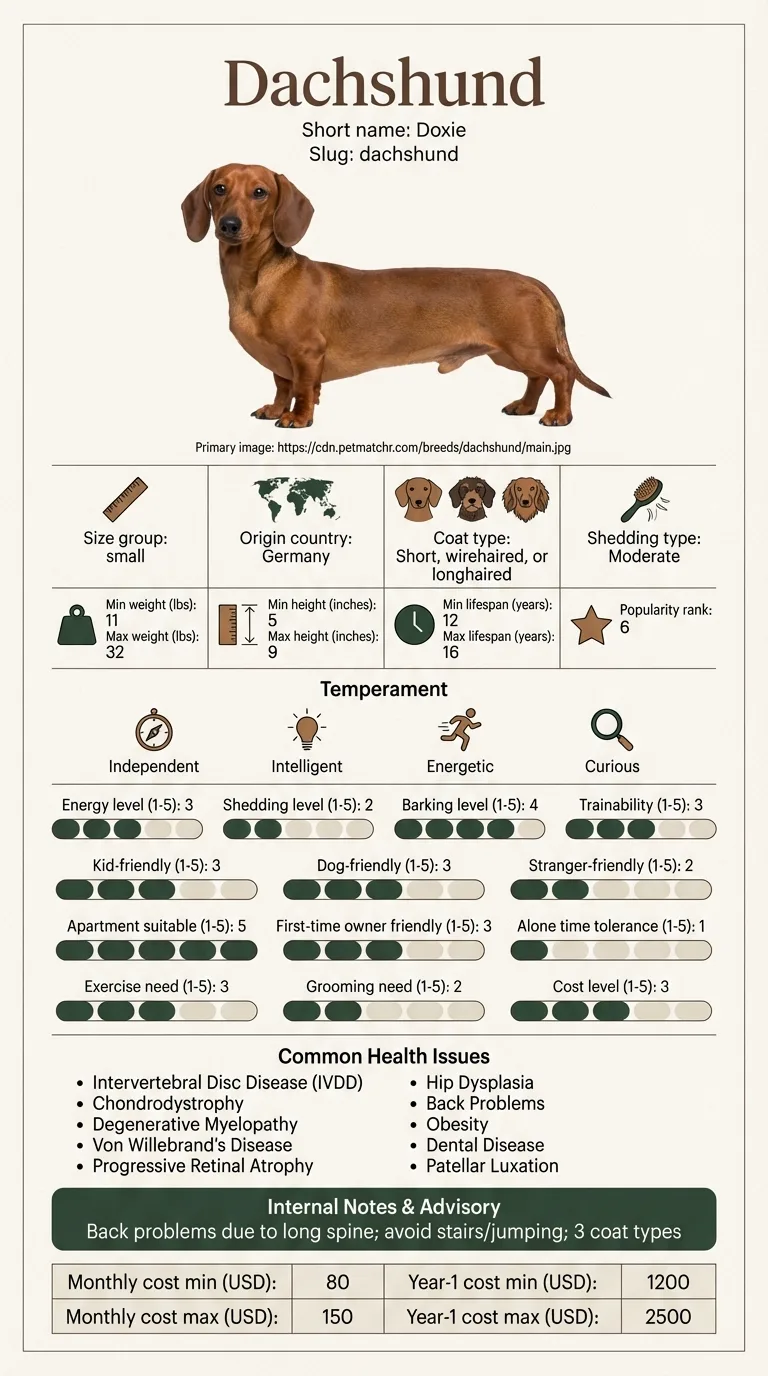
Monthly costs for managing Dachshund diabetes can range from $80 to $150, depending on medications and vet visits.
Yes, a balanced, low-sugar diet is crucial for managing diabetes effectively in Dachshunds.
A one-page prep sheet for this condition: the signs, the questions to ask, what to get priced. Unlocks here.
You get: Vet visit prep sheet
No spam. One-click unsubscribe. See our privacy policy.
See a sample page before you decide.
Early access list
The free prep sheet covers the same-day warning signs, a symptom log and the questions to ask. We are considering a fuller kit that adds a cost worksheet for the usual tests and treatments (US price ranges with their sources) and a plain-English guide to ways of covering the bill. It is not built yet; this list tells us whether it is worth building.
One email, no spam, unsubscribe anytime. Information only, not veterinary advice.