Health
What are Dachshund autoimmune diseases quick tips?
Monitor your Dachshund for skin issues and consult your vet immediately if symptoms appear. A balanced diet and regular check-ups are key.

Quick answer
What are Dachshund autoimmune diseases quick tips?
Monitor your Dachshund for skin issues and consult your vet immediately if symptoms appear. A balanced diet and regular check-ups are key.
Dachshund autoimmune diseases can lead to serious health issues, including skin conditions that cause sores and hair loss. Understanding these diseases is crucial for your Doxie's well-being.
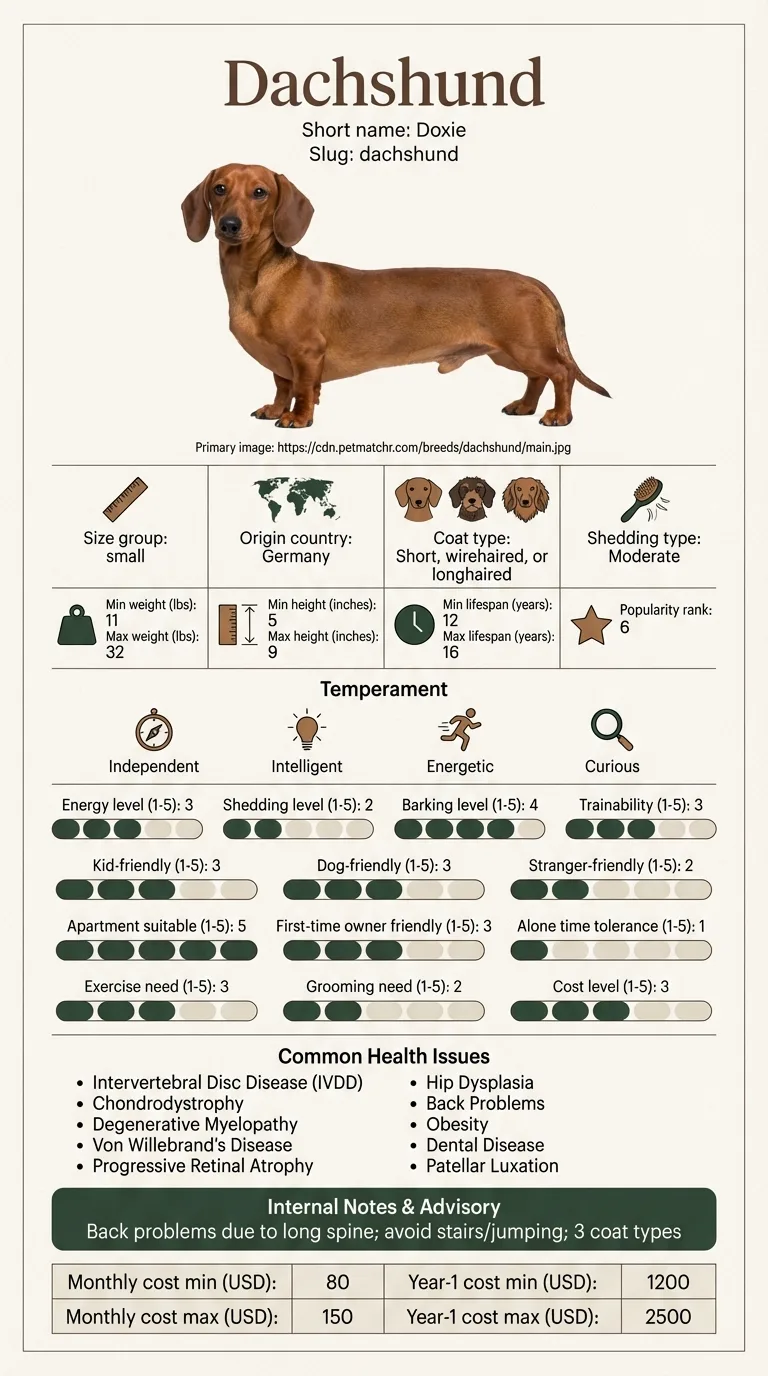
Owners of Dachshunds may find themselves grappling with these issues, especially if their dog shows signs of skin irritations or unusual behavior. First-time Doxie owners or those who have previously owned different breeds might be particularly overwhelmed by the complexities of managing these diseases.
This guide is not medical advice. If your dog shows pain, sudden behavior change, or worsening symptoms, consult a licensed veterinarian.
Some links may be affiliate links. We may earn a commission at no extra cost to you. We only suggest products we believe are helpful for dog owners.
We research and check what we publish, but we do not warrant that any figure, date, price, or statement is accurate, complete, or current, and we accept no liability for any loss, cost, injury, or other harm arising from the use of this site. Use it as one reference among several. You remain responsible for your own decisions and for your dog's care - confirm anything that matters with a licensed veterinarian or another qualified professional before you act on it. Full disclaimer.
Check this first
Dachshund autoimmune diseases can range from mild to severe. It's crucial to recognize when you need to act quickly. Red flags include severe skin lesions, excessive bleeding, or sudden changes in behavior like lethargy or loss of appetite. If your Doxie shows any of these signs, contact your vet immediately.
On the other hand, if your Dachshund is experiencing mild symptoms like occasional itching or minor skin irritation, you can monitor the situation at home. Keep an eye on their behavior and diet. Document any changes and schedule a vet visit if symptoms persist or worsen over time.
Remember, proactive care can prevent many issues from escalating. Keeping track of your dog's health is key to managing potential autoimmune diseases effectively.
If any of these apply, call your vet or an emergency clinic now. The rest of this page is for the cases that are not an emergency.
Dachshund autoimmune diseases can manifest in various ways, primarily through skin conditions that lead to sores and hair loss. These diseases occur when the immune system mistakenly attacks healthy cells, causing inflammation and discomfort for your pup. Daily life for a Dachshund suffering from autoimmune issues may involve frequent scratching, discomfort, and changes in behavior as they cope with these health challenges.
Autoimmune diseases in Dachshunds are relatively common, especially as they age. While not every Dachshund will face these issues, many owners report dealing with at least one autoimmune-related condition throughout their dog's life. Being aware of the signs and seeking timely veterinary care can help manage these diseases effectively.
Dachshunds are genetically predisposed to certain autoimmune diseases due to their unique anatomy and immune system response. Their long spine can lead to various health complications, potentially affecting their immune system. Additionally, their independent and curious nature can sometimes lead to stress-related conditions that exacerbate autoimmune issues.
Environmental factors can also contribute to autoimmune diseases in Dachshunds. Stress from changes in routine or environment can weaken their immune system. Poor diet, exposure to allergens, or lack of regular veterinary care can further increase their risk of developing these health problems.
If your Dachshund develops persistent skin issues, hair loss, or any other unusual symptoms, it’s crucial to consult your veterinarian. They can provide a proper diagnosis and treatment plan for autoimmune diseases, ensuring your dog receives the best care possible.
It’s easy to unintentionally make autoimmune issues worse for your Dachshund. Here are some common mistakes to avoid, along with safer alternatives.
Start here: Dachshund Most Common Genetic Disorders: What to Screen For
See all Dachshund health problems, which breeds are prone to autoimmune diseases, or the full Dachshund breed guide for temperament, exercise needs and ownership costs.
Managing Dachshund autoimmune diseases can take several weeks to months. Early diagnosis and consistent care are key.
Success means seeing reduced symptoms, improved energy levels, and a happier, more active dog. Regular vet check-ups and a tailored care plan will help monitor progress.
Sarah, a busy nurse in Chicago, adopted Daisy, a spunky Dachshund. Shortly after bringing her home, Daisy developed skin sores and hair loss, leaving Sarah worried and confused. After consulting a vet, they diagnosed her with an autoimmune disease. Sarah learned to manage Daisy's condition through a special diet, medication, and regular vet visits. Over time, Daisy's symptoms improved significantly, and she returned to her playful self, bringing joy back into Sarah's life.
Key takeaway: With the right support and care, you can help your Dachshund thrive despite autoimmune challenges.
Dachshunds can develop autoimmune diseases due to genetic predispositions, environmental factors, or even infections. If you notice symptoms like skin sores or unusual hair loss, it's crucial to consult a vet for a proper diagnosis and treatment plan.
Managing a Dachshund with autoimmune diseases often involves medication, special diets, and regular vet visits. It's essential to follow your vet's advice closely and make necessary lifestyle adjustments to support your dog's health.
Symptoms can include skin lesions, hair thinning, lethargy, and changes in appetite. If you notice any of these signs, it's important to seek veterinary attention promptly.
Yes, a proper diet can play a significant role in managing autoimmune diseases. Consult your vet for dietary recommendations that support your Dachshund's immune system and overall health.
To help your Dachshund cope, create a calm environment and ensure they receive plenty of love and attention. Regular, gentle exercise can also keep their spirits up during treatment.
Yes, Dachshunds, along with other small breeds, can be more prone to autoimmune diseases. It's important to be aware of their health issues and monitor any changes.
While you can't completely prevent autoimmune diseases, keeping your Dachshund healthy through a balanced diet, regular vet check-ups, and appropriate exercise can help reduce risks.
Signs of autoimmune diseases in Dachshunds can include skin issues like sores, hair loss, and unusual itching. You might also notice lethargy, loss of appetite, or changes in behavior. If you observe any of these symptoms, it's important to consult your vet for a proper diagnosis.
Yes, Dachshunds can develop autoimmune diseases at any stage of life, but older dogs may be more susceptible. Factors like genetics and overall health can play a role. Regular vet check-ups are vital for early detection and management.
Certain triggers for autoimmune diseases in Dachshunds can include environmental factors, stress, and diet. Keeping track of any changes in your dog's routine or environment can help identify potential triggers, which you can then discuss with your vet.
Genetic testing can be beneficial if your Dachshund has a family history of autoimmune diseases or if you're seeing unexplained health issues. Discussing this option with your vet can provide insights into potential risks and help in proactive health management.
Monitor your Dachshund for skin issues and consult your vet immediately if symptoms appear. A balanced diet and regular check-ups are key.
Regular vet visits every 6 to 12 months are recommended to monitor health, especially if your Dachshund has known autoimmune issues.
Treatments often include immunosuppressive medications and dietary adjustments. Always follow your vet's advice for the best results.
Yes, but keep training sessions short and positive to avoid stress. Focus on gentle activities that don't overexert them.
Look for increased lethargy, worsening skin conditions, or changes in appetite. If these occur, contact your vet immediately.
A one-page prep sheet for this condition: the signs, the questions to ask, what to get priced. Unlocks here.
You get: Vet visit prep sheet
No spam. One-click unsubscribe. See our privacy policy.
Preview page 1 before you decide.
Early access list
The free prep sheet covers the same-day warning signs, a symptom log and the questions to ask. We are considering a fuller kit that adds a cost worksheet for the usual tests and treatments (US price ranges with their sources) and a plain-English guide to ways of covering the bill. It is not built yet; this list tells us whether it is worth building.
One email, no spam, unsubscribe anytime. Information only, not veterinary advice.