What are quick tips for managing exercise intolerance in Cavaliers?
Limit exercise to short bursts, provide plenty of water, and avoid hot weather. Regular vet check-ups can also help monitor any health concerns.
Cavalier King Charles Spaniel exercise intolerance can be a real concern for owners. This condition makes it hard for your pup to keep up with physical activity, which can affect their overall well-being.

Owners of Cavalier King Charles Spaniels, particularly those in warmer climates or with active lifestyles, often find themselves navigating this challenge. Busy families or first-time dog owners may feel overwhelmed trying to meet their dog's exercise needs while ensuring they stay safe.
This guide is not medical advice. If your dog shows pain, sudden behavior change, or worsening symptoms, consult a licensed veterinarian.
Some links may be affiliate links. We may earn a commission at no extra cost to you. We only suggest products we believe are helpful for dog owners.
Cavalier King Charles Spaniel exercise intolerance can manifest as reluctance to engage in physical activity, shortness of breath, or excessive panting after minimal exertion. This breed, while sociable and affectionate, may struggle with exercise due to their predisposition to certain health issues. Owners often notice their Cavaliers lagging behind during walks or needing frequent breaks, which can be concerning.
Exercise intolerance is relatively common among Cavalier King Charles Spaniels, especially as they age or if they have existing health conditions. Many owners report seeing signs of this issue in their pets, making it an important consideration for potential owners and current caretakers.
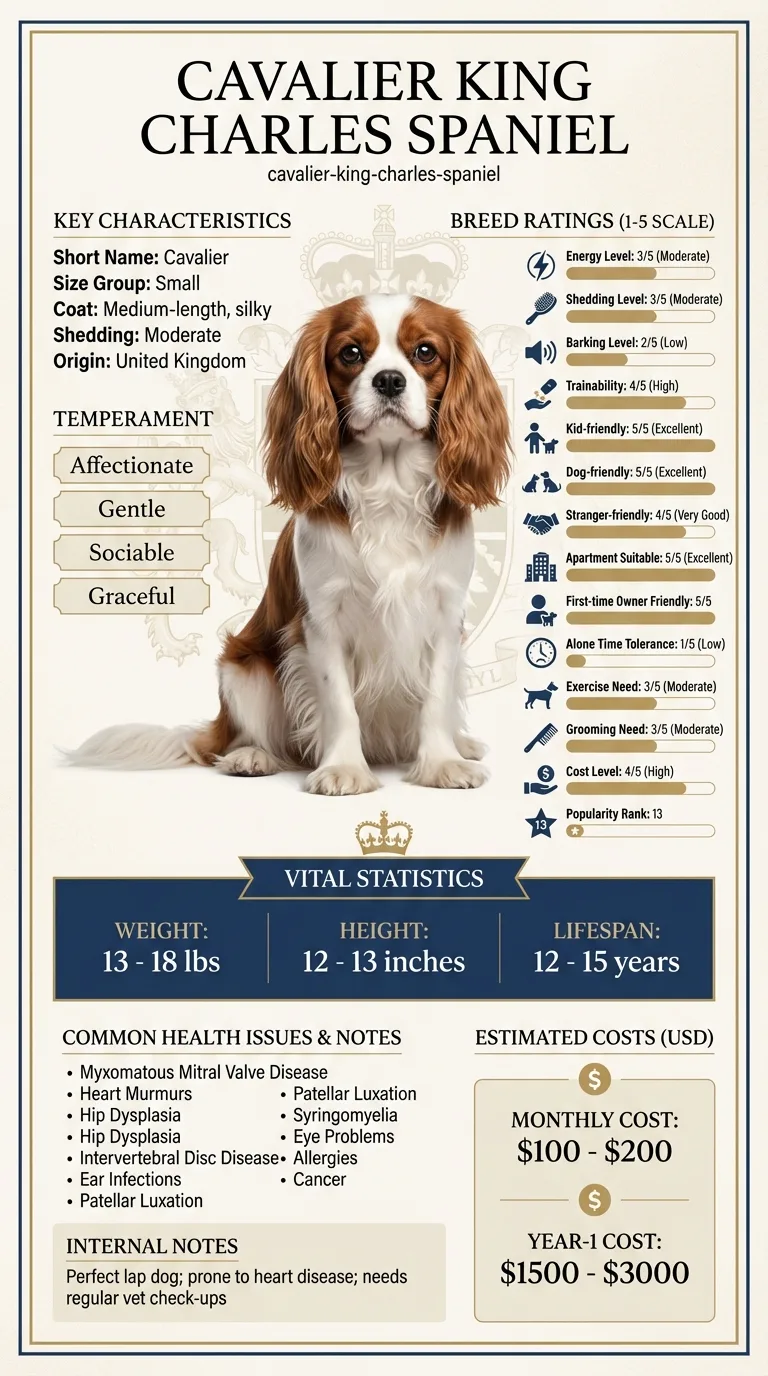
Cavalier King Charles Spaniels are small, affectionate dogs with a moderate exercise need. However, they are prone to specific health issues, such as heart disease and patellar luxation, that can make physical activity challenging. Their small size also means they might tire more easily compared to larger breeds.
Environmental factors like heat and humidity can greatly affect a Cavalier's ability to exercise. Overexertion during walks or playtime can lead to overheating, which is particularly risky for this breed. Additionally, a lack of gradual conditioning can contribute to their exercise intolerance.
If your Cavalier consistently shows signs of exercise intolerance, such as excessive panting or reluctance to move, consider consulting a trainer. A professional can help create a tailored exercise plan that ensures your dog stays fit without risking health.
If you notice severe exercise intolerance, such as coughing or lethargy after light activity, it’s crucial to talk to your vet. They can assess for any underlying health issues and provide guidance on safe exercise routines.
You should see improvements in your Cavalier King Charles Spaniel's exercise tolerance within 4 to 6 weeks of consistent training and management.
Success means your Cavalier can enjoy short walks without excessive panting or fatigue, and you can engage in playtime without worrying about overheating.
Avoid these common mistakes to help your Cavalier King Charles Spaniel manage exercise intolerance better.
Understanding when exercise intolerance in your Cavalier King Charles Spaniel requires immediate attention is crucial. Some signs indicate that you should call your vet right away, while others can be monitored at home with a plan.
Red-flag symptoms include excessive panting, lethargy, or signs of distress after minimal exercise. If your Cavalier collapses, shows difficulty breathing, or has a rapid heart rate, get them to a vet immediately. These signs could indicate serious underlying health issues, such as heart problems or overheating.
On the other hand, if your Cavalier seems less enthusiastic about exercise but is still alert and responsive, you may monitor their activity level at home. Create a plan that includes shorter walks and rest periods. Pay attention to their behavior during playtime—if they tire easily but recover after a break, this could indicate mild exercise intolerance rather than a severe condition. Regular vet check-ups are essential to ensure their heart and overall health are in good shape.

Samantha, a first-time dog owner in San Francisco, noticed her Cavalier King Charles Spaniel, Bella, struggled during walks. Bella would often lag behind, panting heavily after just a few minutes. Concerned, Samantha researched and learned about exercise intolerance. She started training Bella with shorter walks and gradually increased the duration while monitoring her energy levels. Samantha also adjusted Bella's playtime to cooler parts of the day. After several weeks, Bella was able to enjoy longer walks without tiring too quickly.
Key takeaway: With patience and understanding, you can help your Cavalier manage exercise intolerance and enjoy an active life.
Cavalier King Charles Spaniels can experience exercise intolerance due to their small size and certain health issues, like heart problems or joint issues. It's important to monitor their activity levels and consult a vet if you notice excessive fatigue or difficulty in breathing during exercise. This answer relates to Cavalier King Charles Spaniel exercise intolerance.
To help your Cavalier manage exercise intolerance, start with shorter, more frequent walks rather than long sessions. Incorporating rest periods and avoiding hot weather can prevent overheating, which is crucial for their health.
Signs of exercise intolerance include excessive panting, reluctance to walk, or stopping during play. If your dog shows these symptoms, it's best to reduce their activity level and seek veterinary advice.
Gradual training is key. Start with low-intensity activities and slowly increase the duration as your dog becomes more comfortable. Positive reinforcement can encourage them to participate without overexertion.
Yes, diet plays a significant role in your dog's overall health and energy levels. A balanced diet tailored for small breeds can help maintain a healthy weight, which in turn can improve their exercise tolerance.
Always bring water for your Cavalier during walks, and choose cooler times of the day for exercise. Keep an eye on their behavior, and be ready to take breaks if they seem tired or overheated.
Signs of exercise intolerance include excessive panting, lethargy, and reluctance to move. If your Cavalier shows these symptoms during or after exercise, it’s essential to take breaks and monitor their condition closely.
Yes, they can enjoy walks, but it's crucial to keep them short and at a comfortable pace. Consider walking during cooler times of the day to prevent overheating and always watch for signs of fatigue.
If your Cavalier consistently shows signs of exercise intolerance or if symptoms worsen, it's time to consult a vet. They can assess for underlying health issues that may be contributing to the problem.
Yes, older Cavaliers may be more prone to exercise intolerance due to age-related health issues, such as heart problems or joint pain. Adjusting their activity levels and consulting a vet for tailored advice is important.
You can help by creating a balanced exercise routine that includes short, gentle activities. Gradually increase their activity level while keeping an eye on their comfort and adjusting as needed.
Limit exercise to short bursts, provide plenty of water, and avoid hot weather. Regular vet check-ups can also help monitor any health concerns.
Cavalier King Charles Spaniels typically need about 30 minutes of exercise daily, broken into short walks and play sessions.
Heart disease and joint problems are common in Cavaliers and can contribute to exercise intolerance. Regular vet visits can help catch these issues early.
Engage them in low-impact activities like gentle fetch or swimming, ensuring they have plenty of breaks.


![Ultimate Guides: "Complete Guide to Choosing a Dog for [X] | Ultimate Guides: Complete Guide to Choosing a Dog for You thumbnail](/images/breeds/golden-retriever/golden%20retriever1.jpg)