Behavior
What are quick tips for managing Bernedoodle progressive retinal atrophy (pra-rcd3)?
Create a safe environment by minimizing obstacles and using familiar routes. Regular vet visits are key for monitoring eye health.
Bernedoodle progressive retinal atrophy (PRA-RCD3) is a serious condition that leads to vision loss in dogs. This progressive disease can significantly affect your dog's quality of life.
Typically, owners who face this issue are those with older Bernedoodles or dogs with a family history of eye problems. First-time dog owners might feel overwhelmed by the emotional and practical challenges that come with managing a dog's progressive vision loss.
This guide is not medical advice. If your dog shows pain, sudden behavior change, or worsening symptoms, consult a licensed veterinarian.
Some links may be affiliate links. We may earn a commission at no extra cost to you. We only suggest products we believe are helpful for dog owners.
Bernedoodle progressive retinal atrophy (pra-rcd3) is a serious condition that leads to gradual vision loss. Owners may notice their Bernedoodle struggling to navigate familiar environments or bumping into objects. This condition can be distressing for both the dog and the owner, as it affects the dog's quality of life and independence.
Progressive retinal atrophy (pra-rcd3) is relatively common in Bernedoodles, particularly due to their mixed heritage of the Bernese Mountain Dog and Poodle. Many dogs may not show symptoms until they are older, making it important for owners to stay vigilant.
Bernedoodles can inherit genetic predispositions to Progressive Retinal Atrophy (PRA-rcd3) from their parent breeds, the Bernese Mountain Dog and the Poodle. This condition is caused by degenerative changes in the retina, leading to gradual vision loss. If your Bernedoodle has a family history of eye issues, they may be more susceptible.
Environmental factors like poor nutrition or lack of proper eye care may exacerbate the condition. Exposure to harsh sunlight without appropriate eye protection can also contribute to eye problems. It's vital to provide a safe environment to help manage their eye health.
If your Bernedoodle shows signs of anxiety or stress due to vision loss, a professional dog trainer can help with behavior modification techniques. Look for trainers experienced with sight-impaired dogs to provide tailored guidance.
It's crucial to consult your vet if you notice any changes in your dog's vision or behavior. They can perform tests to confirm a diagnosis of PRA-rcd3 and discuss treatment options or management strategies to help your dog live comfortably.
Managing Bernedoodle progressive retinal atrophy (PRA-rcd3) typically takes several months to notice significant changes. Regular vet check-ups and monitoring can help track vision loss over time.
Success means maintaining a good quality of life for your dog, adapting their environment to accommodate their vision challenges, and ensuring they remain active and engaged despite the progression of the condition.
Avoid these common mistakes to help your Bernedoodle with progressive retinal atrophy (PRA-rcd3). By making better choices, you can support your dog's well-being and adjust to their needs.
Bernedoodle progressive retinal atrophy (PRA-RCD3) can be a serious condition that affects your dog's vision. It's important to know when to seek immediate veterinary care versus when to monitor your pet's condition at home. Red-flag signs that indicate an emergency include sudden vision loss, disorientation, or if your dog is bumping into objects frequently. If your Bernedoodle shows these symptoms, call your vet right away.
On the other hand, if your dog exhibits mild signs of PRA-RCD3, such as slight difficulty seeing in low light or a gradual decline in vision, you can monitor them closely. Keep a record of their behavior and any changes you notice. This approach allows you to stay informed while offering your dog a comfortable environment. Regular vet check-ups are crucial to assess your Bernedoodle's vision over time. If you notice any worsening symptoms, don't hesitate to reach out to your vet for advice.
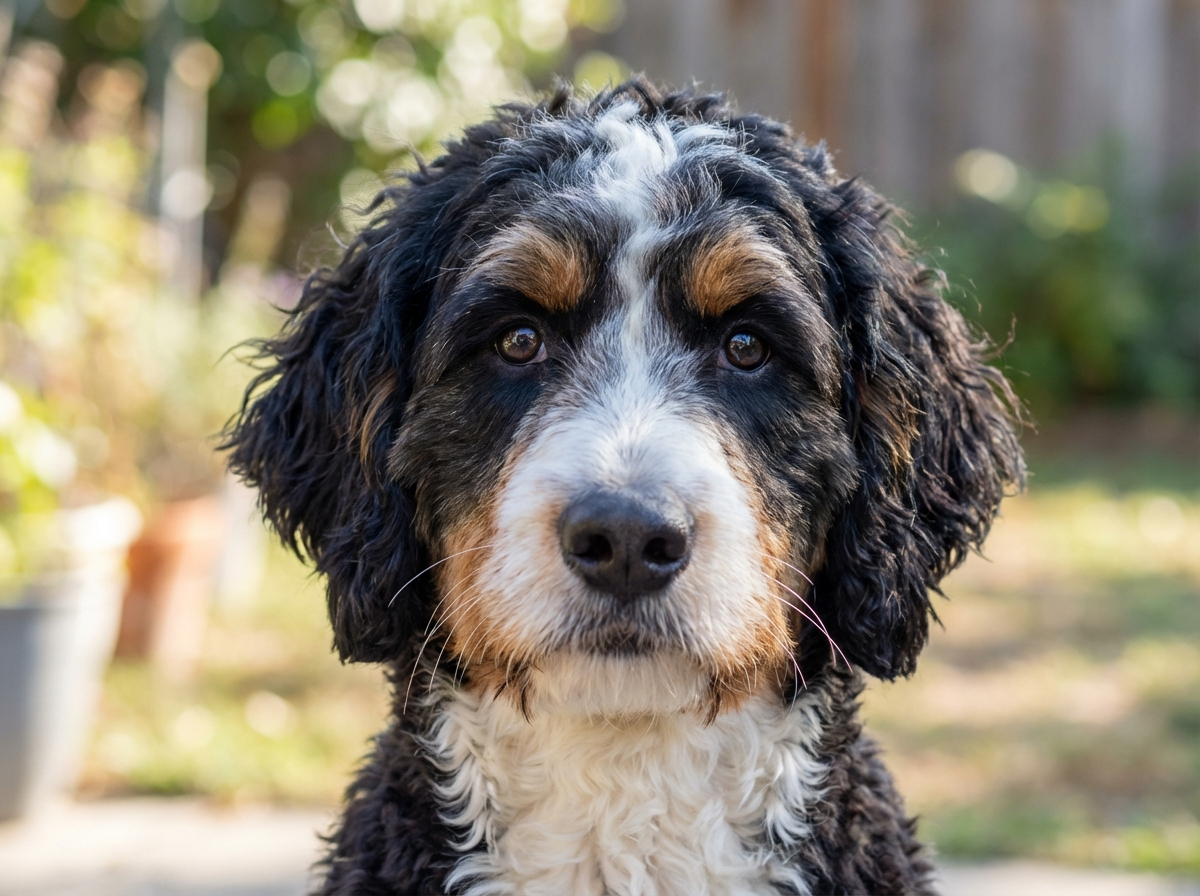
When Sarah adopted Benny, her Bernedoodle, she was thrilled to have a playful companion. However, she soon noticed he was bumping into furniture and seemed disoriented at times. After a vet visit, Sarah learned that Benny had progressive retinal atrophy (PRA-rcd3). While initially devastated, she decided to adapt their home with brighter lights and remove sharp obstacles. Over time, she also started using verbal cues during walks to help Benny navigate. With patience and love, Benny adjusted well, and their bond deepened as they learned to communicate in new ways.
Key takeaway: Adapting your dog's environment and using consistent communication can significantly improve their quality of life when dealing with progressive retinal atrophy.
Bernedoodles can inherit progressive retinal atrophy (PRA-rcd3) from their parent breeds, the Bernese Mountain Dog and Poodle. This condition leads to gradual vision loss and can be influenced by genetic factors. Regular vet check-ups can help monitor your dog's eye health.
Providing a consistent and safe environment is crucial for dogs with PRA-rcd3. Use familiar paths in your home and yard, and consider using GPS or special harnesses for walks. Training techniques that reinforce verbal commands can also help guide your dog.
Look for signs like difficulty navigating in low light, bumping into objects, or reluctance to go outside. You may also notice changes in behavior, like increased anxiety or clinginess. Early detection can lead to better management.
Currently, there is no cure for PRA-rcd3, but treatments can help manage symptoms. Consult your veterinarian for advice on supplements or other supportive care options. Regular veterinary check-ups are essential to monitor your dog's condition.
Training should focus on positive reinforcement and verbal cues. Use consistent commands and reward your dog for following them. Keeping training sessions short and engaging is important to maintain your dog's interest and confidence.
Early signs of Bernedoodle progressive retinal atrophy (PRA-rcd3) can include difficulty seeing in low light, bumping into objects, or hesitance in new environments. You might also notice your dog is less interested in fetching toys or playing games that require good vision. If you see these signs, it's crucial to consult your vet for proper evaluation.
Yes, older Bernedoodles may experience different symptoms or progress at a different pace compared to younger dogs. Aging can also complicate the diagnosis, as other health issues may arise. Regular vet check-ups can help monitor their eye health as they age.
If your Bernedoodle is diagnosed with progressive retinal atrophy (PRA-rcd3), it's essential to follow up with your veterinarian for a management plan. While there is currently no cure, you can work on enriching your dog's environment and training to help them adapt. Consider seeking advice on making your home safer and easier to navigate.
Training a Bernedoodle with progressive retinal atrophy (PRA-rcd3) involves using verbal commands and tactile cues. Consistency is key, as is patience; your dog may need extra time to learn new commands. Building a routine can also help your dog feel more secure as they adapt to their vision loss.
Supporting a Bernedoodle with vision loss from progressive retinal atrophy (PRA-rcd3) involves creating a familiar and safe environment. Use consistent pathways, avoid moving furniture, and consider tactile markers for important areas. Positive reinforcement during training can also boost their confidence as they learn to navigate their surroundings.
Create a safe environment by minimizing obstacles and using familiar routes. Regular vet visits are key for monitoring eye health.
Provide comfort through consistency and companionship. Engage in gentle play and be patient as your dog adapts to visual changes.
Expect to budget for regular vet check-ups and potential treatments, which can add to your monthly dog care costs.