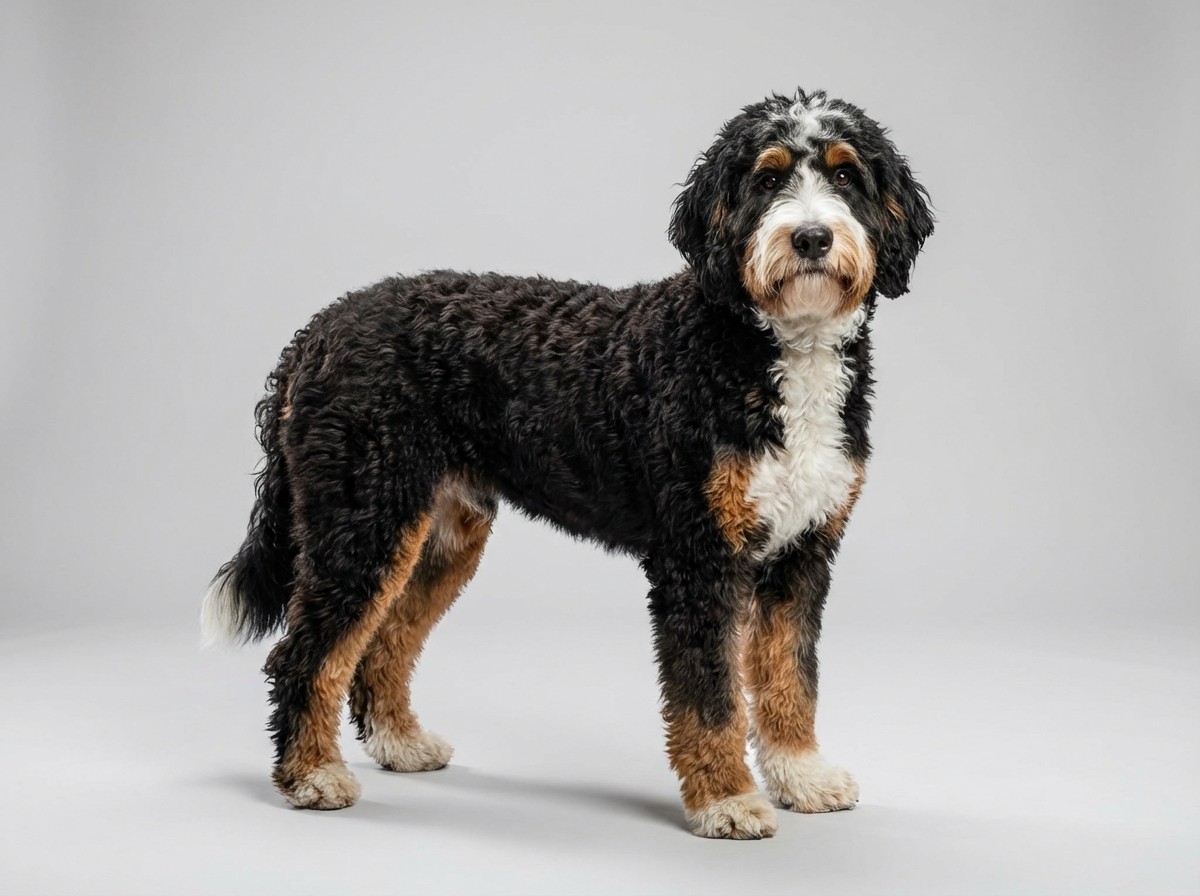
What are quick tips for managing Bernedoodle obesity?
Feed your Bernedoodle measured portions and avoid free-feeding. Engage them in regular exercise and limit high-calorie treats. Regular vet check-ups are also crucial for monitoring their weight.
Bernedoodles can be prone to obesity due to genetic factors. Understanding this predisposition is crucial for their health. (Bernedoodle genetic predisposition to obesity)

New Bernedoodle owners or those with busy lifestyles may find it challenging to keep their pets at a healthy weight. Owners who may not be aware of their dog's genetic risks might struggle the most.
This guide is not medical advice. If your dog shows pain, sudden behavior change, or worsening symptoms, consult a licensed veterinarian.
Some links may be affiliate links. We may earn a commission at no extra cost to you. We only suggest products we believe are helpful for dog owners.
Bernedoodles may have a genetic predisposition to obesity due to a mutation in the POMC gene, which can increase appetite. This can lead to significant weight gain if not managed properly. Day-to-day, this might look like your Bernedoodle always seeming hungry, even after meals, which can be frustrating for owners trying to maintain a healthy weight.
Obesity is a common issue in Bernedoodles, particularly if they are not provided with a balanced diet and regular exercise. Many owners notice their Bernedoodle struggling with weight around middle age, making it essential to be proactive about their health.
Bernedoodles may have a genetic predisposition to obesity due to a mutation in the POMC gene. This gene affects appetite regulation, which can lead to overeating. Additionally, Bernedoodles are a cross between two breeds that can each carry traits that contribute to weight gain if not managed properly.
The environment also plays a significant role in a Bernedoodle's weight. Factors such as a sedentary lifestyle, overfeeding, and lack of exercise can exacerbate genetic tendencies. An unstructured feeding schedule or constant access to food can lead to unhealthy eating habits.
If your Bernedoodle shows signs of stubbornness or refuses to follow commands during exercise routines, it may be helpful to consult a trainer. Professional guidance can help establish a consistent training approach that encourages an active lifestyle.
If your Bernedoodle is gaining weight despite a healthy diet and exercise, it’s time to talk to your vet. They can assess any underlying health issues that may contribute to weight gain and suggest a tailored weight management plan.
It typically takes 3 to 6 months of consistent effort to manage a Bernedoodle's genetic predisposition to obesity effectively.
Success means maintaining a healthy weight through proper diet and regular exercise, as well as preventing obesity-related health issues.
Avoiding common pitfalls can help manage your Bernedoodle's genetic predisposition to obesity. Here are some mistakes to watch out for and safer alternatives.
Understanding when the genetic predisposition to obesity in your Bernedoodle becomes an emergency is crucial. If your dog shows extreme lethargy, refuses to eat, or exhibits signs of pain, these could be red flags. Call your vet immediately if you notice any sudden weight gain, difficulty breathing, or persistent vomiting.
On the other hand, if your Bernedoodle is slightly overweight but still active and eating normally, you can monitor their condition at home. Implement a balanced diet and regular exercise plan while keeping an eye on their weight. It’s important to watch for gradual changes in appetite or energy levels that could indicate health issues.
For your peace of mind, schedule regular vet check-ups to ensure your dog’s weight management plan is effective. This way, you can catch any problems early, before they become emergencies.

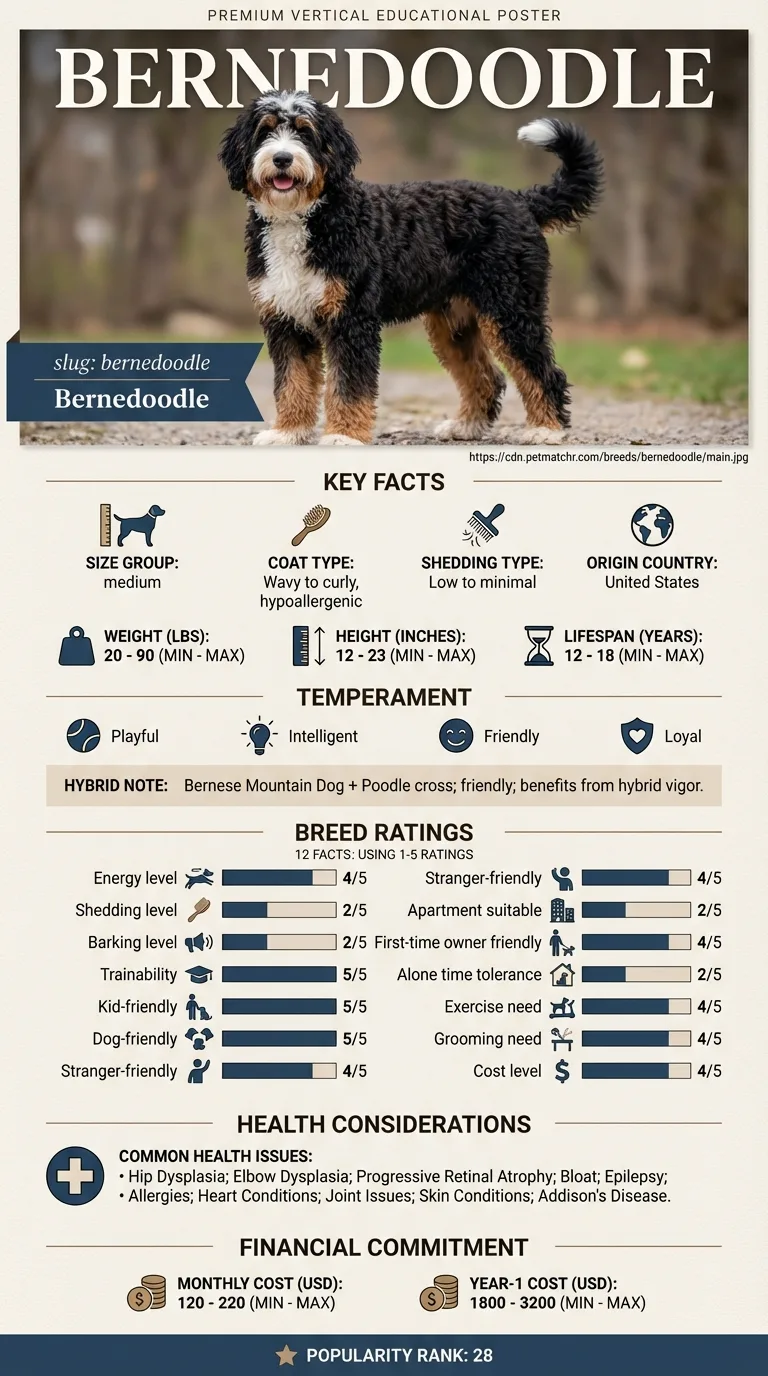
Sarah adopted Max, her Bernedoodle, who was always eager for food. After noticing he was gaining weight quickly, she learned about his genetic predisposition to obesity due to a POMC gene mutation. Sarah consulted her vet and created a balanced diet plan for Max, focusing on portion control and high-quality dog food. She also committed to daily walks and playtime, making exercise fun for Max. Over six months, Max lost the excess weight, and Sarah noticed he had more energy and was happier overall.
Key takeaway: Understanding your dog's genetic health can help you create a tailored care plan, ensuring they stay healthy and active.
Bernedoodles can inherit a genetic predisposition to obesity due to a mutation in the POMC gene. This mutation can increase their appetite and make weight management more challenging. Regular vet check-ups and a balanced diet are essential to monitor their weight. This answer relates to Bernedoodle genetic predisposition to obesity.
To manage your Bernedoodle's weight, focus on a consistent feeding schedule and portion control. Incorporate regular exercise, such as daily walks and playtime, to keep them active. Consulting a vet for a tailored diet plan can also help.
Training your Bernedoodle to follow commands can help manage their predisposition to obesity. Positive reinforcement techniques, such as treats for good behavior, should be balanced with healthy snacks. Incorporating interactive toys can also encourage physical activity.
Aim for at least 30 to 60 minutes of exercise daily for your Bernedoodle. Activities can include walks, fetch, or agility training. Consistency is key, as regular exercise helps manage their weight effectively.
Yes, Bernedoodles at risk of obesity should have a diet rich in protein and low in fillers. Look for high-quality dog food that meets their nutritional needs. Regularly consult your vet to adjust their diet as needed.
You can assess your Bernedoodle's weight by feeling their ribs. If you can't easily feel them, your dog may be overweight. Additionally, a noticeable belly or difficulty in exercise can also indicate weight gain.
If your older Bernedoodle is gaining weight, consult your vet for a tailored diet plan. Older dogs may need fewer calories and more gentle exercise. Regular check-ups will help monitor their health.
Yes, consider foods with lower calories and higher fiber to keep your Bernedoodle feeling full. Look for weight management formulas or consult your vet for food options tailored to your dog's needs.
Aim for at least 30 to 60 minutes of exercise daily for your Bernedoodle. Activities can include walks, playtime, or training sessions. Consistent exercise can help maintain a healthy weight.
Absolutely! Training can reinforce positive behaviors around food and exercise. Incorporating fun activities can also motivate your Bernedoodle to stay active, which is essential in managing their weight.
Feed your Bernedoodle measured portions and avoid free-feeding. Engage them in regular exercise and limit high-calorie treats. Regular vet check-ups are also crucial for monitoring their weight.
Check if you can feel their ribs without excess fat covering. They should have a visible waist when viewed from above. If you're unsure, consult your vet for an accurate assessment.
Activities like walking, swimming, and playing fetch are great for Bernedoodles. They enjoy interactive games that stimulate both their mind and body. Aim for variety to keep them engaged.
Yes, consider enrolling your Bernedoodle in obedience classes that incorporate physical activity. Programs that focus on agility can also help keep them active while learning commands.