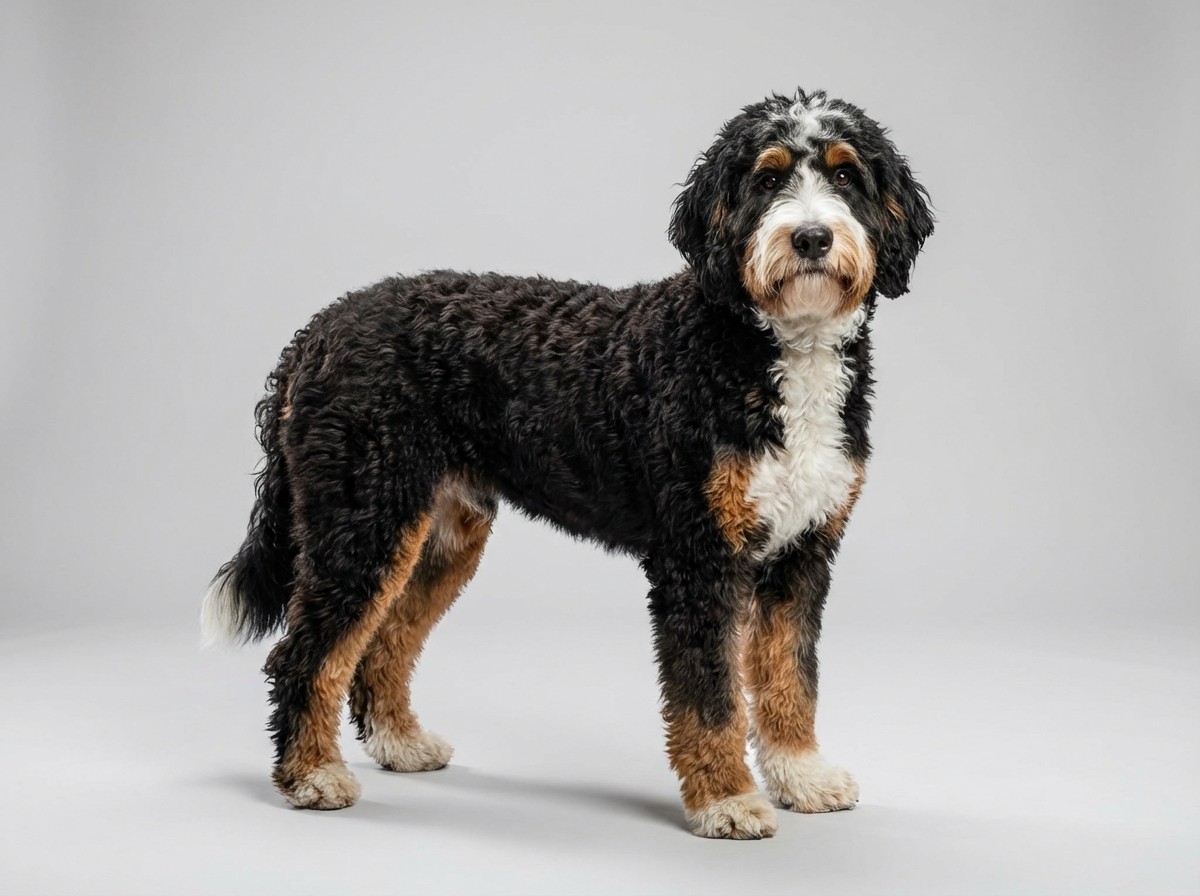
Why does my Bernedoodle have hip dysplasia prevalence?
Hip dysplasia prevalence in Bernedoodles is often due to genetics, as it can be inherited from their parent breeds. Factors like rapid growth during puppyhood and being overweight can also increase the risk. Regular vet check-ups can help catch any signs early.
How can I stop Bernedoodle hip dysplasia prevalence?
To help reduce the risk of hip dysplasia in your Bernedoodle, prioritize responsible breeding practices. Ensure that both parents are health-tested for hip dysplasia. Additionally, maintain a healthy weight and provide controlled exercise to support joint health.
What are the symptoms of hip dysplasia in Bernedoodles?
Common symptoms of hip dysplasia in Bernedoodles include difficulty getting up, limping, or reluctance to play or exercise. You may also notice decreased range of motion or unusual sitting positions. If you observe these signs, consult your vet.
Can training help with Bernedoodle hip dysplasia prevalence?
While training itself won't prevent hip dysplasia, it can help manage your dog's weight and promote healthy habits. Teaching commands can also encourage your dog to avoid jumping or rough play, which can exacerbate joint issues.
What treatments are available for hip dysplasia in Bernedoodles?
Treatment options for hip dysplasia in Bernedoodles include weight management, physical therapy, and anti-inflammatory medications. In severe cases, surgical options like hip replacement may be recommended. Always consult your vet for the best plan.
Is hip dysplasia common in Bernedoodles?
Yes, hip dysplasia prevalence is a known concern in Bernedoodles due to their genetic background. While not all Bernedoodles will develop this issue, it's important to be aware and take preventive measures.
How often should I check my Bernedoodle for signs of hip dysplasia?
Regular check-ups with your vet are essential for monitoring your Bernedoodle's joint health. Ideally, you should have their hips assessed annually, especially as they age or if they show any signs of discomfort.
Can older Bernedoodles develop hip dysplasia?
Yes, older Bernedoodles can develop hip dysplasia even if they appeared healthy in their earlier years. Regular vet check-ups and monitoring their mobility can help catch any signs of hip dysplasia early.
What are the signs that my Bernedoodle might have hip dysplasia?
Signs of hip dysplasia in Bernedoodles can include difficulty getting up, limping, or reluctance to exercise. If you notice any of these behaviors, it's best to consult your vet for an evaluation.
How can training help reduce the risk of hip dysplasia in Bernedoodles?
Training can promote proper movement and exercise habits, which can help maintain joint health. Teaching your Bernedoodle to avoid jumping from heights or excessive running on hard surfaces may reduce their risk of developing hip dysplasia.
Is there a genetic test for hip dysplasia in Bernedoodles?
Yes, genetic testing can help identify dogs that carry the genes associated with hip dysplasia. If you're considering breeding, testing the parents can help reduce the chances of hip dysplasia in their puppies.
What should I do if my Bernedoodle is diagnosed with hip dysplasia?
If your Bernedoodle is diagnosed with hip dysplasia, consult your vet for treatment options. These may include weight management, physical therapy, or, in severe cases, surgery to improve their quality of life.