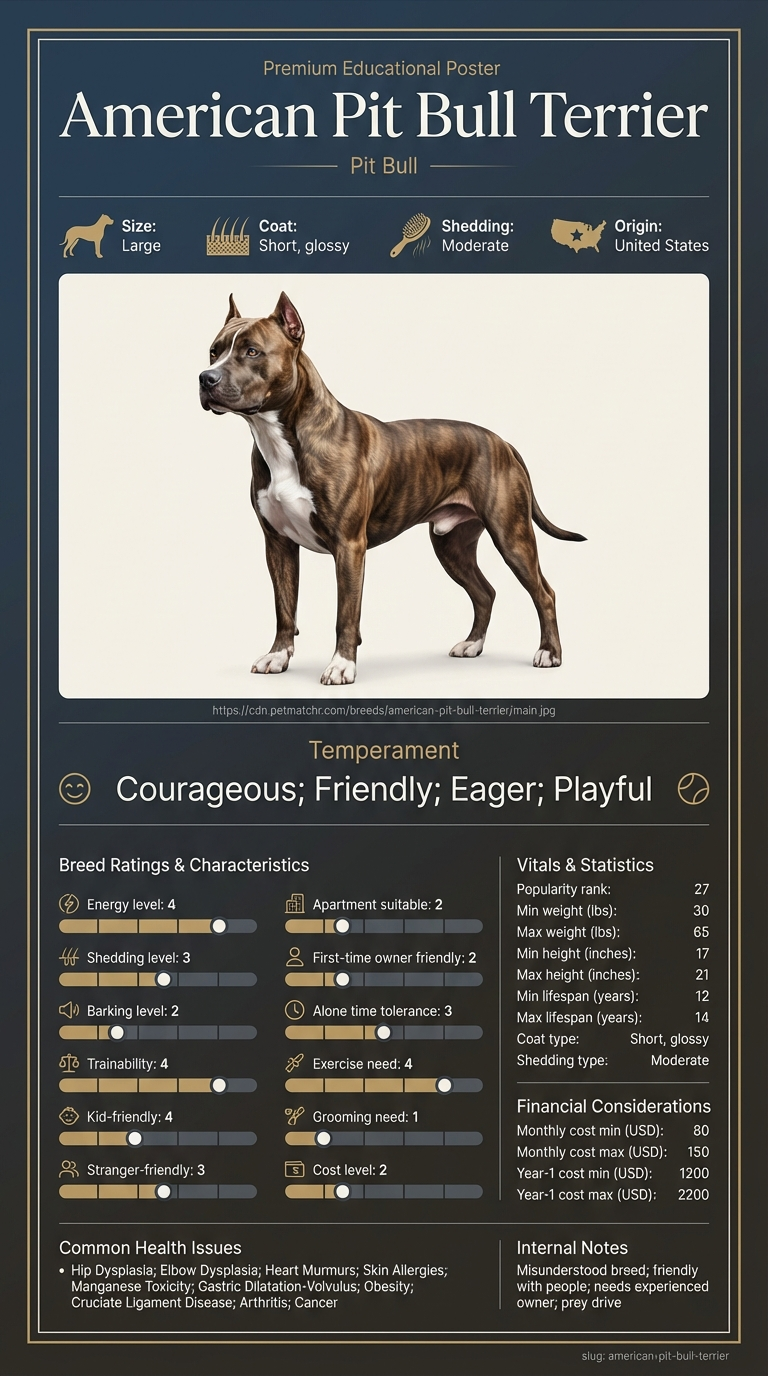
American Pit Bull Terrier Gastric Dilatation-Volvulus (GDV/Bloat)
Gastric dilatation-volvulus (GDV), commonly known as bloat, is a serious condition that can affect your American Pit Bull Terrier. (American Pit Bull Terrier gastric dilatation-volvulus (gdv/bloat))
Typically, owners of American Pit Bull Terriers may worry about GDV, especially those who are first-time dog owners or those unfamiliar with this breed's specific health risks. Busy pet parents might find it challenging to recognize the early signs of bloat, making it essential to stay informed.
Important reminder
This guide is not medical advice. If your dog shows pain, sudden behavior change, or worsening symptoms, consult a licensed veterinarian.
Some links may be affiliate links. We may earn a commission at no extra cost to you. We only suggest products we believe are helpful for dog owners.
What this problem looks like
American Pit Bull Terriers can suffer from gastric dilatation-volvulus (GDV), commonly known as bloat. This serious condition happens when the stomach fills with gas and twists, causing extreme pain and potentially leading to death. Owners may notice their dog experiencing restlessness, attempting to vomit without success, or having a distended abdomen.
Common triggers
Eating large meals quickly
Intense exercise after eating
Stressful situations
GDV is relatively common in large-breed dogs, including American Pit Bull Terriers. While not every Pit Bull will face this issue, it's crucial for owners to be aware of the signs and risk factors.
Why this happens
Breed factors
The American Pit Bull Terrier is a large breed with a deep chest, which can increase the risk of gastric dilatation-volvulus (GDV). Their energetic nature may also lead them to gulp food or water quickly, further contributing to the risk of bloat. Additionally, specific genetic factors can predispose them to this life-threatening condition.
Environment factors
Environmental factors can include rapid eating due to competition with other pets or stress during mealtime. Changes in routine, such as travel or a new home, can also trigger anxiety-related eating behaviors. Additionally, high-intensity exercise right after meals can exacerbate the risk of GDV.
What you can try
At-home strategies
1. Feed smaller, more frequent meals instead of one large meal. This can help reduce the amount of air swallowed during eating.
2. Use a slow feeder bowl to encourage your American Pit Bull Terrier to eat at a slower pace. This can prevent them from gulping their food.
3. Avoid exercising your dog for at least an hour after meals to decrease the risk of bloat.
4. Consider adding a puzzle feeder or interactive toys to make mealtime more engaging and slower-paced.
5. Monitor your dog during mealtime to ensure they are not exhibiting signs of anxiety or competition.
When to consider a trainer
If your American Pit Bull Terrier shows signs of anxiety during meals or if they are consistently eating too quickly despite your efforts, it may be helpful to consult a professional trainer. A trainer can provide tailored strategies to address anxiety and help improve mealtime behavior.
When to talk to your vet
If your dog shows symptoms of GDV, such as bloating, excessive drooling, restlessness, or attempts to vomit without success, seek veterinary assistance immediately. Even if your dog seems fine, regular check-ups can help monitor any underlying health issues that could increase their risk of GDV.
Realistic expectations
Managing gastric dilatation-volvulus (GDV/bloat) in American Pit Bull Terriers typically takes several weeks to establish proper preventative routines. Monitoring their eating habits and making dietary adjustments may take time, but you'll start seeing improvements within a month.
Success means your dog has a regulated eating schedule and shows no signs of distress after meals. You'll feel more confident in managing their diet and recognizing early signs of GDV.
Mistakes that make this worse
Avoiding common mistakes can help manage your American Pit Bull Terrier's gastric dilatation-volvulus (GDV/bloat). Here are key pitfalls to watch out for.
Feeding large meals at once: This can increase the risk of bloat. Instead, feed smaller meals multiple times a day to reduce the pressure on their stomach.
Allowing vigorous exercise right after meals: Engaging in intense activity can lead to bloat. Wait at least an hour after eating before exercising your dog.
Skipping water before meals: Thirst can lead your dog to drink too much water too quickly. Provide controlled amounts of water before meals to prevent this.
Ignoring signs of discomfort: Not recognizing early symptoms like restlessness or a swollen abdomen can lead to emergencies. Stay vigilant for these signs and consult your vet if they appear.
Overlooking breed-specific risks: American Pit Bull Terriers can be prone to GDV. Educate yourself about their unique health needs to take proactive measures.
Neglecting regular vet check-ups: Failing to keep up with vet visits can overlook early signs of stomach issues. Schedule routine check-ups to monitor your dog's health.
Using stress-inducing training methods: Harsh training techniques can heighten anxiety, which may worsen GDV symptoms. Use positive reinforcement methods instead to build confidence.
When American Pit Bull Terrier Gastric Dilatation-Volvulus (GDV/Bloat) is an Emergency
Gastric dilatation-volvulus (GDV), commonly known as bloat, is a serious condition that can escalate quickly. It’s crucial to recognize when this is an emergency versus when it can be monitored. If you notice any of the following red-flag signs, call your vet immediately: severe abdominal swelling, unproductive attempts to vomit, excessive drooling, restlessness, or signs of pain. These symptoms indicate that your dog's condition could be life-threatening and requires urgent medical attention.
In less critical situations, you might observe mild signs such as a slight distention of the abdomen, mild lethargy, or occasional discomfort after eating. If these symptoms are present but not severe, keep a close eye on your dog and monitor their behavior. It's essential to have a plan in place, which includes watching their eating habits, ensuring they are not consuming food too quickly, and keeping stress levels low during mealtime. If symptoms worsen or do not improve, contact your vet.
Remember, quick action can save your dog's life. Always err on the side of caution when it comes to your American Pit Bull Terrier's health.
American Pit Bull Terrier Gastric Dilatation-Volvulus (GDV/Bloat) - When American Pit Bull Terrier Gastric Dilatation-Volvulus (GDV/Bloat) is an Emergency
A Journey with Bella: Tackling GDV
Sarah, a busy nurse in Atlanta, adopted her American Pit Bull Terrier, Bella, who was prone to GDV. After her first episode, which was both frightening and exhausting, Sarah learned that Bella's rapid eating was a major factor. With advice from her vet, she switched to slow-feeding bowls and established a strict feeding schedule. Over the next few weeks, Bella adjusted well to the changes, and Sarah felt more at ease knowing she was taking proactive steps.
Key takeaway: Taking time to adjust your dog's feeding habits can significantly reduce the risk of GDV in American Pit Bull Terriers.
Frequently asked questions
Why does my American Pit Bull Terrier have gastric dilatation-volvulus (gdv/bloat)?
Gastric dilatation-volvulus (gdv/bloat) can occur in American Pit Bull Terriers due to factors like rapid eating, stress, or genetics. Large breeds are more prone to this condition, which involves the stomach filling with gas and twisting. Regular feeding schedules and stress management can help reduce the risk. This answer relates to American Pit Bull Terrier gastric dilatation-volvulus (gdv/bloat).
How can I prevent gastric dilatation-volvulus (gdv/bloat) in my Pit Bull?
To prevent gdv/bloat, feed your American Pit Bull Terrier smaller meals throughout the day instead of one large meal. Avoid vigorous exercise immediately after eating, and consider using slow feeders to discourage rapid eating. Regular vet check-ups are also important.
What are the symptoms of gastric dilatation-volvulus (gdv/bloat) in my American Pit Bull Terrier?
Symptoms of gdv/bloat include a swollen abdomen, restlessness, excessive drooling, and attempts to vomit without success. If you notice these signs, seek immediate veterinary care. Early intervention is crucial for survival.
What is the treatment for gastric dilatation-volvulus (gdv/bloat) in American Pit Bull Terriers?
Treatment for gdv/bloat typically involves emergency surgery to untwist the stomach and relieve pressure. In some cases, a gastropexy may be performed to prevent future occurrences. Always consult your vet immediately if you suspect your dog has bloat.
Can training help my American Pit Bull Terrier with gastric dilatation-volvulus (gdv/bloat)?
While training cannot directly prevent gdv/bloat, it can help reduce stress, which is a contributing factor. Teaching your dog calm behavior around feeding times and using positive reinforcement can create a more relaxed environment during meals.
What should I do if my American Pit Bull Terrier shows signs of gastric dilatation-volvulus (gdv/bloat)?
If your American Pit Bull Terrier shows signs of gdv/bloat, such as a distended abdomen and lethargy, take them to the vet immediately. Time is critical, and prompt treatment can be life-saving. Don't wait to see if symptoms improve.
What are the early signs of gastric dilatation-volvulus (GDV/bloat) in American Pit Bull Terriers?
Early signs of GDV in American Pit Bull Terriers include restlessness, pacing, and unproductive attempts to vomit. You might also notice a swollen abdomen and signs of distress. If you see these symptoms, it's crucial to seek veterinary help immediately.
Can older American Pit Bull Terriers get gastric dilatation-volvulus (GDV/bloat)?
Yes, older American Pit Bull Terriers can be at risk for GDV/bloat. As they age, their digestive systems may become more sensitive. Regular check-ups with your vet can help monitor their health and prevent complications.
Why does my American Pit Bull Terrier have gastric dilatation-volvulus (GDV/bloat) despite a proper diet?
Even with a proper diet, factors like eating too quickly, strenuous exercise after meals, or genetic predisposition can lead to GDV/bloat. It's essential to feed your dog smaller meals and monitor their eating habits to reduce the risk.
What should I do if I suspect my American Pit Bull Terrier has gastric dilatation-volvulus (GDV/bloat)?
If you suspect GDV/bloat, take your dog to the vet immediately. This condition is life-threatening and requires urgent medical attention. Delay can significantly worsen the situation.
Are there any preventative measures for gastric dilatation-volvulus (GDV/bloat) in American Pit Bull Terriers?
Preventative measures include feeding smaller, more frequent meals, avoiding vigorous exercise right after eating, and using slow-feeding bowls. Regular vet check-ups can also help catch any potential issues early on.
What are quick tips for managing American Pit Bull Terrier gastric dilatation-volvulus (gdv/bloat)?
Feed smaller, more frequent meals and use slow feeders to prevent rapid eating. Avoid heavy exercise around meal times, and keep your dog calm. Regular vet visits can also help monitor health.
Health
Is gastric dilatation-volvulus (gdv/bloat) common in American Pit Bull Terriers?
Yes, American Pit Bull Terriers are at risk for gdv/bloat, especially if they eat quickly or are stressed. Awareness and preventive measures are crucial.
Health
How serious is gastric dilatation-volvulus (gdv/bloat)?
Gastric dilatation-volvulus (gdv/bloat) is a life-threatening condition that requires immediate veterinary attention. It can progress rapidly, so recognizing symptoms early is vital.
Related DogBreedCompass guides
American Pit Bull Terrier behavior problems – Learn more about the common behavior problems that American Pit Bull Terriers face.
how to stop American Pit Bull Terrier gastric dilatation-volvulus (gdv/bloat) – Explore effective training methods to help prevent gastric dilatation-volvulus in your Pit Bull.
American Pit Bull Terrier separation anxiety guide – Check out tips for managing separation anxiety specifically in American Pit Bull Terriers.
American Pit Bull Terrier cost breakdown – Understand the costs associated with caring for an American Pit Bull Terrier.