Behavior
What are quick tips for managing Alaskan Malamute degenerative myelopathy (dm)?
Focus on a balanced diet, maintain regular vet visits, and provide supportive mobility aids. Gentle exercises can also help keep your dog active.

Quick answer
What are quick tips for managing Alaskan Malamute degenerative myelopathy (dm)?
Focus on a balanced diet, maintain regular vet visits, and provide supportive mobility aids. Gentle exercises can also help keep your dog active.
Alaskan Malamute degenerative myelopathy (DM) is a serious spinal cord disease that can affect your dog's mobility and quality of life. Understanding this condition is crucial for Malamute owners.
Owners of Alaskan Malamutes, especially those with older dogs or those showing symptoms like wobbliness or difficulty standing, often face heart-wrenching decisions. If your Malamute is struggling with mobility, this information will be vital for you.
This guide is not medical advice. If your dog shows pain, sudden behavior change, or worsening symptoms, consult a licensed veterinarian.
Some links may be affiliate links. We may earn a commission at no extra cost to you. We only suggest products we believe are helpful for dog owners.
We research and check what we publish, but we do not warrant that any figure, date, price, or statement is accurate, complete, or current, and we accept no liability for any loss, cost, injury, or other harm arising from the use of this site. Use it as one reference among several. You remain responsible for your own decisions and for your dog's care - confirm anything that matters with a licensed veterinarian or another qualified professional before you act on it. Full disclaimer.
Check this first
Recognizing when Alaskan Malamute degenerative myelopathy (DM) is an emergency can be crucial for your dog’s health. If your Malamute shows sudden, severe symptoms like inability to walk, loss of coordination, or sudden paralysis, you should contact your veterinarian immediately. These signs can indicate a critical situation that requires urgent care.
Milder symptoms, such as slight weakness in the hind limbs or difficulty getting up, may not need immediate attention. In these cases, monitor your dog's condition closely and develop a plan with your vet. Regular check-ins can help you manage the disease and ensure your dog remains comfortable.
It's important to differentiate between emergencies and mild cases. If your Malamute experiences persistent loss of bowel or bladder control, or if their breathing becomes labored, treat these as emergencies. Quick action can prevent further complications and improve your dog’s quality of life.
If any of these apply, call your vet or an emergency clinic now. The rest of this page is for the cases that are not an emergency.
Alaskan Malamute degenerative myelopathy (DM) is a progressive spinal cord disease that impacts mobility in older dogs. Daily, you might notice your Malamute struggling to walk, having trouble getting up, or showing weakness in their hind legs. This condition can lead to frustration and sadness for both the dog and their owner.
Degenerative myelopathy is relatively common in Alaskan Malamutes, especially in older dogs. While not every Malamute will develop DM, the breed's genetics makes them more susceptible compared to some others. Awareness of this condition is crucial for early detection and management.
Alaskan Malamutes may be genetically predisposed to degenerative myelopathy (DM), a progressive spinal cord disease. This condition is often linked to inherited traits in the breed, making them more susceptible as they age. Certain lines of Malamutes may have a higher risk due to their genetic background.
Environmental factors can also play a role in the onset of DM. Lack of exercise, obesity, and poor nutrition can exacerbate health issues in Malamutes. A sedentary lifestyle can lead to muscle atrophy, which may worsen the effects of degenerative myelopathy.
If you notice any signs of weakness, limping, or loss of coordination, it's essential to consult your vet. They can assess your Malamute's condition and recommend treatments or therapies to help manage symptoms.
Understanding common mistakes can help you manage Alaskan Malamute degenerative myelopathy (DM) more effectively. Here are some pitfalls to avoid.
Start here: Alaskan Malamute Most Common Genetic Disorders: Screening
See all Alaskan Malamute health problems, which breeds are prone to degenerative myelopathy dm, or the full Alaskan Malamute breed guide for temperament, exercise needs and ownership costs.
Managing Alaskan Malamute degenerative myelopathy (DM) typically takes several months to develop a solid routine. Expect noticeable changes in your dog's condition over time, particularly in mobility and comfort.
Success means maintaining your dog's quality of life as long as possible. This includes adapting their environment, ensuring they stay active within their limits, and providing emotional support.
Lisa, a busy nurse from Seattle, noticed her Alaskan Malamute, Max, struggling to walk. After a vet confirmed he had degenerative myelopathy, she felt overwhelmed. Lisa learned about home modifications, like non-slip mats and ramp access, to help Max move around. She also established a gentle exercise routine to keep Max active without causing strain. Over time, she saw Max adjust better to his condition, and their bond grew stronger as they navigated these challenges together.
Key takeaway: With the right strategies and support, you can improve your Malamute's quality of life even when facing degenerative myelopathy.
Alaskan Malamute degenerative myelopathy (dm) is a progressive spinal cord disease that affects coordination and mobility. It often starts with weakness in the hind legs and can lead to paralysis over time. Early detection and management are crucial.
To support your Alaskan Malamute, focus on maintaining a healthy weight and providing low-impact exercise. Physical therapy and mobility aids can also be beneficial. Consult your vet for a tailored care plan.
Symptoms often include stumbling, dragging of the hind legs, and difficulty rising. As the disease progresses, you may notice a loss of coordination. Watch for changes in mobility and consult your vet if you suspect dm.
Diagnosis typically involves a combination of neurological examinations, ruling out other conditions, and sometimes genetic testing. Your vet may perform a thorough physical exam and may suggest imaging studies.
Currently, there is no cure for degenerative myelopathy. Treatment focuses on managing symptoms and maintaining quality of life. Nutritional support and physical therapy can help, but it’s essential to consult your vet for the best approach.
While you can't prevent degenerative myelopathy due to its genetic nature, you can promote overall health through proper nutrition, regular exercise, and routine veterinary care. Staying informed about your dog's health can help catch issues early.
Early signs of Alaskan Malamute degenerative myelopathy (DM) can include difficulty walking, dragging of the back legs, or a noticeable decrease in coordination. If you notice these symptoms, it's essential to consult your vet as soon as possible for a proper diagnosis.
Older Alaskan Malamutes are more prone to degenerative myelopathy (DM) due to age-related factors. The disease can lead to progressive weakness and mobility issues, making it important to monitor their health closely and adapt their exercise routine accordingly.
Currently, there is no cure for degenerative myelopathy (DM) in Alaskan Malamutes. However, certain therapies, like physical therapy and assistive devices, can help manage symptoms and improve their quality of life.
If you suspect your Alaskan Malamute has degenerative myelopathy (DM), schedule a visit with your veterinarian. They can provide diagnostic tests and help develop a management plan tailored to your dog's needs.
Focus on a balanced diet, maintain regular vet visits, and provide supportive mobility aids. Gentle exercises can also help keep your dog active.
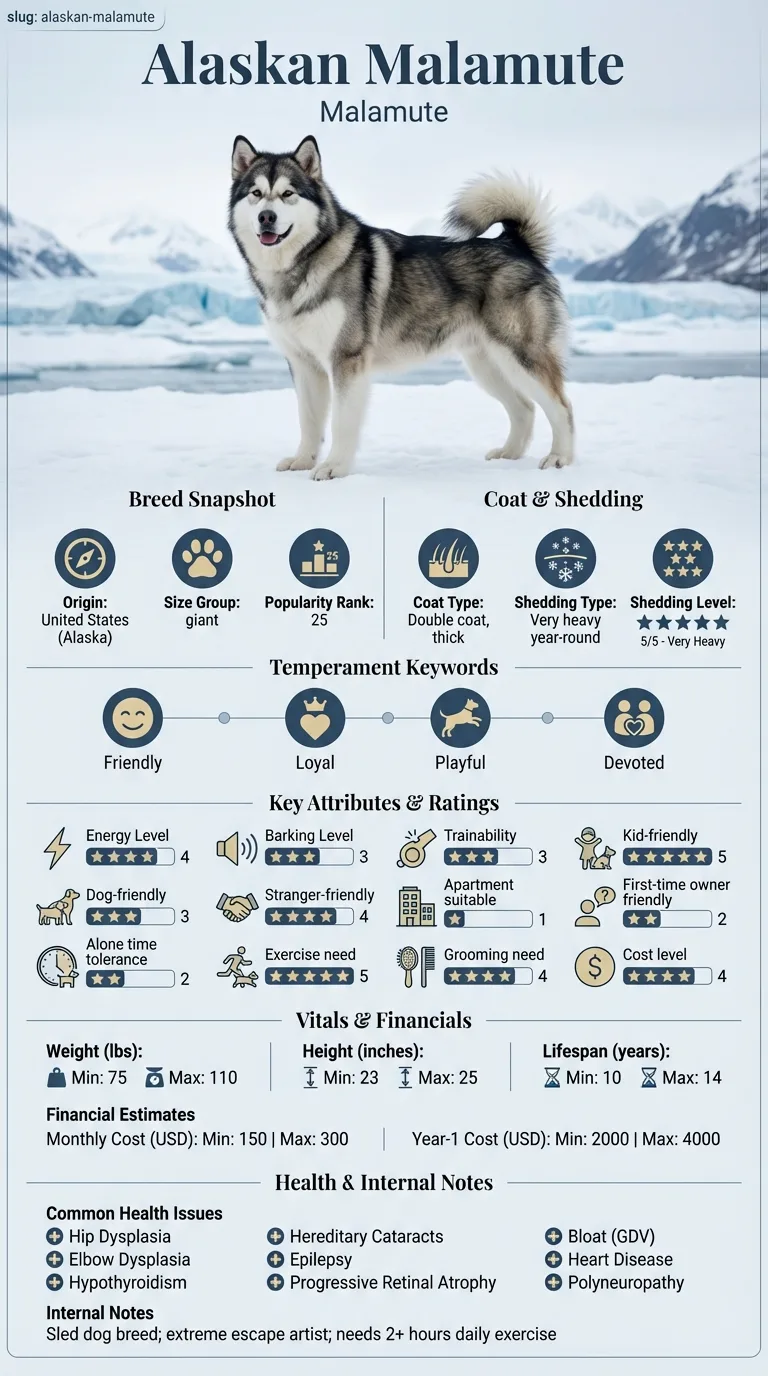
Monthly costs can range from $150 to $300, depending on medical needs and care strategies. Keep in mind that treatment and mobility aids may add to this.
If your Alaskan Malamute struggles to walk, consult your vet immediately. They can assess the situation and provide guidance on managing symptoms.
Yes, focus on positive reinforcement training and adapt activities to suit your dog's abilities. Specialized trainers can help with mobility challenges.
Provide plenty of love, companionship, and gentle exercises. Keeping a routine and engaging them mentally can help maintain their spirits.
A one-page prep sheet for this condition: the signs, the questions to ask, what to get priced. Unlocks here.
You get: Vet visit prep sheet
No spam. One-click unsubscribe. See our privacy policy.
Preview page 1 before you decide.