Behavior
How can I prevent Alaskan Malamute cruciate ligament injuries?
Focus on controlled exercise and gradual intensity increases to reduce injury risk.

Quick answer
How can I prevent Alaskan Malamute cruciate ligament injuries?
Focus on controlled exercise and gradual intensity increases to reduce injury risk.
Alaskan Malamute cruciate ligament injuries are a common issue that can lead to pain and mobility problems. Understanding these injuries is vital for your dog's health.
Owners of Alaskan Malamutes, especially those who enjoy outdoor activities or have high-energy lifestyles, often face this challenge. First-time dog owners may also struggle to recognize the signs and take preventive measures.
This guide is not medical advice. If your dog shows pain, sudden behavior change, or worsening symptoms, consult a licensed veterinarian.
Some links may be affiliate links. We may earn a commission at no extra cost to you. We only suggest products we believe are helpful for dog owners.
We research and check what we publish, but we do not warrant that any figure, date, price, or statement is accurate, complete, or current, and we accept no liability for any loss, cost, injury, or other harm arising from the use of this site. Use it as one reference among several. You remain responsible for your own decisions and for your dog's care - confirm anything that matters with a licensed veterinarian or another qualified professional before you act on it. Full disclaimer.
Check this first
Recognizing when an Alaskan Malamute's cruciate ligament injury is an emergency is crucial for their health. If your dog shows severe signs such as inability to bear weight on the affected leg, significant swelling around the knee, or signs of extreme pain (like whining or reluctance to move), you should call your vet immediately. These symptoms can indicate a serious rupture that requires urgent medical attention.
On the other hand, if your Malamute is limping but still able to put some weight on the leg, or if the swelling is mild, you can monitor the situation. In these cases, rest and limited activity might be recommended. However, it's wise to schedule a vet visit if the limping persists for more than a day or two, as untreated injuries can lead to chronic pain and arthritis later.
Always trust your instincts as a pet owner. If something feels off, it's better to err on the side of caution and consult with your veterinarian.
If any of these apply, call your vet or an emergency clinic now. The rest of this page is for the cases that are not an emergency.
Alaskan Malamute cruciate ligament injuries are a common concern for this giant breed, especially as they age. These injuries typically manifest as limping, difficulty in getting up, or reluctance to engage in physical activities. Daily life for an affected Malamute may involve avoiding stairs or struggling to play, which can be distressing for both the dog and the owner.
Cruciate ligament injuries are relatively common in Alaskan Malamutes, particularly due to their size and activity levels. It's estimated that a significant number of Malamutes may experience these injuries in their lifetime, making awareness and preventive care essential.
Alaskan Malamutes are large and powerful dogs, which can put stress on their knees. Their high energy levels and tendency to be active can lead to injuries, especially if they're not properly exercised or trained. Additionally, certain genetic factors can make them more prone to cruciate ligament injuries.
Environmental factors can contribute to these injuries as well. Slippery surfaces or uneven terrain can increase the risk of slipping or twisting an injured knee. Lack of adequate warm-up exercises before vigorous activities can also lead to sudden injuries.
If your dog experiences persistent limping, swelling, or pain in their knee, it's essential to consult a veterinarian. Early intervention can prevent more serious injuries and ensure your dog receives appropriate treatment.
Avoiding these common mistakes can help your Alaskan Malamute heal and prevent further cruciate ligament injuries.
Start here: Alaskan Malamute Most Common Genetic Disorders: Screening
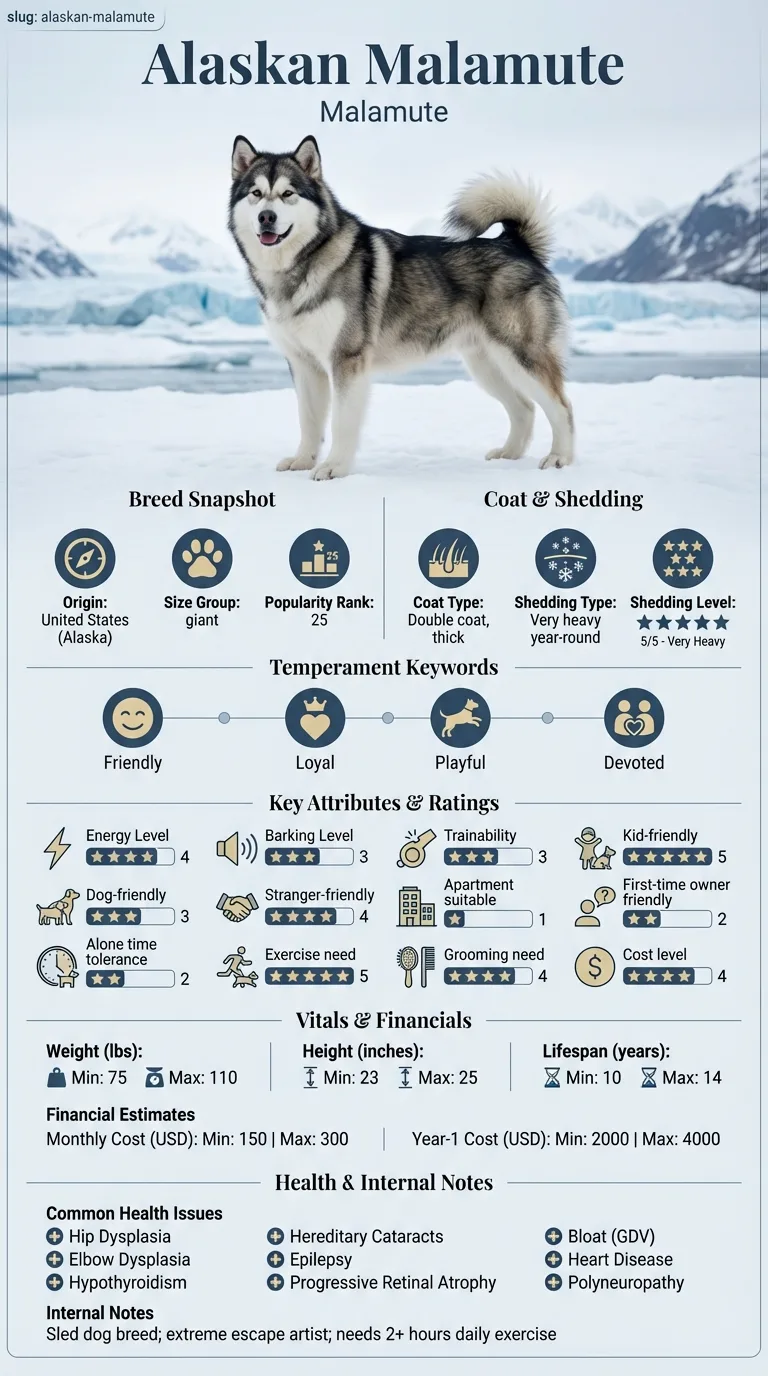
See all Alaskan Malamute health problems, which breeds are prone to cruciate ligament injuries, or the full Alaskan Malamute breed guide for temperament, exercise needs and ownership costs.
Recovery from Alaskan Malamute cruciate ligament injuries typically takes 4 to 6 months, depending on the severity. Consistent rehabilitation and proper care are essential during this time.
Success means your Malamute regains full mobility and strength in the affected leg. You'll also notice improved confidence in movement and reduced pain during activities.
Emily, a busy nurse in Seattle, had her heart set on training her Alaskan Malamute, Max, to enjoy outdoor adventures together. However, after a sudden slip on a wet trail, Max was diagnosed with a cruciate ligament injury. Faced with the reality of a long recovery, Emily felt overwhelmed. She quickly learned that rehabilitation involved regular vet check-ups, physical therapy exercises at home, and adjusting Max's exercise routine. With patience and dedication, Max gradually regained his strength over six months and was back to his playful self, hiking and exploring once again.
Key takeaway: With the right approach, including proper care and rehabilitation, you can successfully navigate your Alaskan Malamute's cruciate ligament injuries and help them return to their active lifestyle.
Alaskan Malamutes are prone to cruciate ligament injuries due to their size and activity level. High-energy activities and sudden movements can put stress on their knees. Maintaining a healthy weight and providing proper training can help reduce the risk. This answer relates to Alaskan Malamute cruciate ligament injuries.
To prevent cruciate ligament injuries, focus on controlled exercise and gradually increase intensity. Avoid high-impact activities like jumping or sudden stops. Regular vet check-ups and keeping your Malamute at a healthy weight are also crucial.
Watch for limping, difficulty jumping or climbing stairs, and swelling around the knee. Your Malamute may also exhibit signs of pain, such as whining or reluctance to play. If you notice these symptoms, consult your vet immediately.
Treatment can vary from rest and physical therapy to surgical options, depending on the severity of the injury. Your vet will recommend the best course of action based on your dog's specific condition. Always follow their guidance for recovery.
Yes, training plays a vital role in injury prevention. Incorporate strength-building exercises and flexibility training into your routine. Gradual conditioning can help your Malamute learn to move safely and effectively.
To prevent injuries, ensure your Malamute gets regular exercise and maintains a healthy weight. Training that focuses on strengthening the legs and avoiding high-impact activities can also help.
Yes, older Alaskan Malamutes are often more susceptible to cruciate ligament injuries due to natural wear and tear. Regular vet check-ups can help monitor joint health as they age.
If your Alaskan Malamute is showing persistent signs of knee pain, such as limping or difficulty climbing stairs, it's important to consult a vet. Early diagnosis can lead to better treatment outcomes.
Recovery time can vary but typically takes 4 to 6 months, depending on the severity of the injury and the treatment approach. Follow your vet's recommendations for physical therapy and rest during this period.
Focus on controlled exercise and gradual intensity increases to reduce injury risk.
Contact your vet if you notice limping or swelling to get a proper diagnosis.
Treatment costs can range from $1,500 to $3,500, depending on the severity and treatment method.
Low-impact activities like swimming or leash walks are good options during recovery.
Maintaining a healthy weight reduces stress on the knees, lowering the risk of injuries.
A one-page prep sheet for this condition: the signs, the questions to ask, what to get priced. Unlocks here.
You get: Vet visit prep sheet
No spam. One-click unsubscribe. See our privacy policy.
Preview page 1 before you decide.