Costs
What is the first year cost of a Schnauzer (Standard)?
The first year with a Schnauzer Standard in Billings totals $2,800 to $7,500.

See Schnauzer Standard price across all cities →
Quick answer
What is the first year cost of a Schnauzer (Standard)?
The first year with a Schnauzer Standard in Billings totals $2,800 to $7,500.
Bringing a Schnauzer (Standard) into your home can be a rewarding experience, but it also comes with costs that you should be prepared for. (Schnauzer (Standard) cost in Billings)
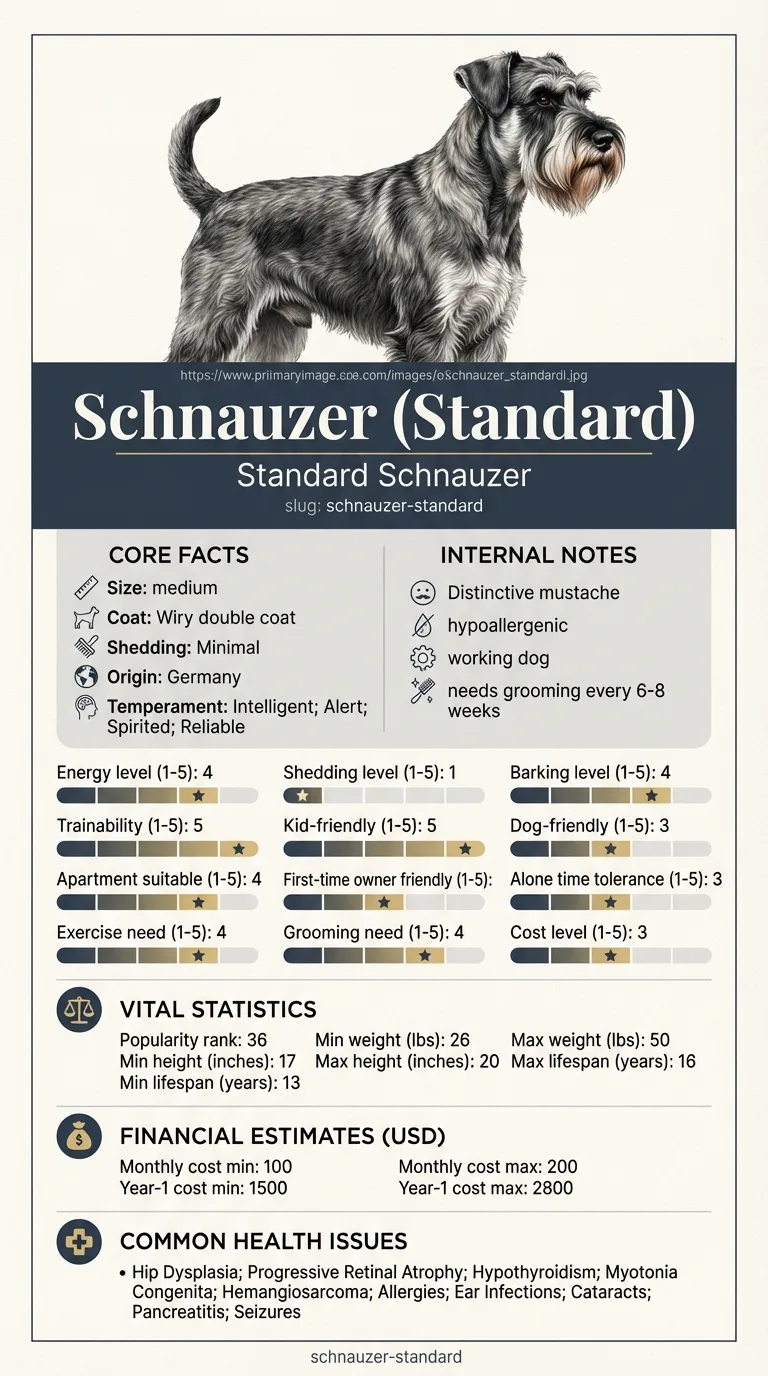
Costs can increase significantly due to emergencies or unexpected health issues, as well as big-ticket items like special food or training classes.
The cost of owning a Schnauzer (Standard) in Billings can vary greatly based on several factors. You’ll need to budget for initial purchases, routine care, and unexpected expenses.
Estimate · source: estimation · confidence: medium · updated 2026-09-05 · not a quote
| Item | Cost range |
|---|---|
Adoption or purchase fee This varies widely depending on whether you adopt from a shelter or buy from a breeder. | $300 - $1500 |
Initial supplies (bed, leash, etc.) Essential items for bringing your Schnauzer home. | $100 - $300 |
Training classes Essential for a well-behaved Schnauzer and can help reduce anxiety. | $100 - $300 |
| Item | Cost range |
|---|---|
Food and treats High-quality food is essential for a healthy Schnauzer. | $50 - $100 |
Grooming Regular grooming is necessary due to their wiry coat. | $50 - $100 |
Pet insurance Helps cover unexpected health issues, which can be costly. | $30 - $70 |
Each range starts from a national baseline for this breed's size class and is then adjusted for local cost of living and veterinary pricing. The baselines, and the source each one came from, are listed on our sources page (dataset 2026.09). Two inputs, the purchase price and the emergency reserve, have no published national figure we could verify, so we leave them to you rather than invent them.
These are planning estimates, not quotes. Your own numbers will move with the individual dog, your vet and your insurer. Build a budget with your own figures.
Pet insurance can be a valuable tool for managing the cost of caring for your Schnauzer (Standard) in Billings.
Consider getting insurance if you want peace of mind and can afford to pay monthly premiums. Additionally, if you're financially vulnerable to unexpected vet costs, having insurance could be a smart choice.
Lastly, if you prefer to set aside savings for emergencies instead, that could also be a viable option.
Being proactive and strategic can ease the financial burden of dog ownership.
When budgeting for a Schnauzer (Standard) in Billings, it's easy to overlook some hidden costs that can sneak up on you. These can include small recurring fees, unexpected vet visits, and lifestyle changes that affect your finances. Here are some common expenses that many owners forget about.
When considering the cost of a Schnauzer (Standard) in Billings, several local factors come into play. The cost of living in Billings is moderate, which affects everything from housing to pet services. Rent and home prices can influence how much you spend on your dog’s care, as larger homes often mean more space for your furry friend but can also come with higher costs.
Veterinary services are generally accessible in Billings, with a good number of clinics available. However, prices may vary based on the specific care your Schnauzer needs. Routine vet visits, vaccinations, and emergency care can add up, especially if your dog experiences common health issues like hip dysplasia or allergies, which are known to affect this breed.
Billings' climate also influences the cost of ownership. The cold winters may necessitate investing in quality dog gear to keep your Schnauzer comfortable during walks. Additionally, local dog parks and pet-friendly areas can enhance your dog's socialization and exercise, which should be factored into your budget.
Overall, understanding these local dynamics is essential to accurately estimating the Schnauzer (Standard) cost in Billings.

She researched the Schnauzer (Standard) cost in Billings and estimated the first year expenses would be between $1,500 and $2,800. Unexpectedly, Sarah faced a surprise cost when Max needed dental work, which added another $500 to her first-year expenses. Despite this, she found that Max's vet bills were manageable, averaging about $100 each month after the initial vaccinations. Sarah also discovered that grooming every six to eight weeks was essential due to Max’s wiry coat, but she learned to do some basic grooming at home, saving money. By tracking her spending and adjusting her budget, Sarah felt prepared for Max’s needs. She even created a checklist for dog care expenses that helped her stay on top of everything.
Key takeaway: Budgeting for a Standard Schnauzer involves planning for regular expenses like food, grooming, and unexpected vet bills. Being proactive and adaptable can help manage costs effectively.
The Schnauzer (Standard) can be considered moderately priced. Monthly expenses typically fall between $100 and $200. This answer relates to Schnauzer (Standard) cost in Billings.
Prices depend on coverage level, age, and health history. It's wise to get quotes from multiple providers for the best deal.
In Billings, the average annual vet bills for a Schnauzer (Standard) can range from $300 to $600. This includes routine check-ups, vaccinations, and preventative care. Be prepared for additional costs if health issues arise.
Expect to budget between $1,500 and $2,800 for the first year of a Schnauzer (Standard). Don't forget to account for training and grooming expenses.
Yes, there can be hidden costs, such as grooming, training classes, and emergencies. Always have a little extra set aside for unexpected vet visits.
This includes food, routine vet check-ups, and supplies. Consider additional costs for grooming and training.
This includes vaccinations, check-ups, and preventative treatments.
Overall, a Schnauzer (Standard) is moderately priced to maintain. While they are not the most expensive breed, you should still budget for regular expenses and any potential emergencies.
Their wiry double coat requires regular grooming to prevent matting and keep them looking sharp. You might also invest in grooming tools if you choose to do it yourself.
Living in Billings may add some unique costs, like dog-friendly parks and training classes. Local pet-friendly amenities can enhance your dog's quality of life but may also come with additional fees. Always consider local costs when budgeting for your Schnauzer (Standard).
The first year with a Schnauzer Standard in Billings totals $2,800 to $7,500.
Month to month, a Schnauzer Standard in Billings costs $130 to $250.
In Billings, insuring a Schnauzer Standard costs $30 to $70 a month once you pick a deductible and payout limit.
This guide is not medical advice. If your dog shows pain, sudden behavior change, or worsening symptoms, consult a licensed veterinarian.
Some links may be affiliate links. We may earn a commission at no extra cost to you. We only suggest products we believe are helpful for dog owners.
We research and check what we publish, but we do not warrant that any figure, date, price, or statement is accurate, complete, or current, and we accept no liability for any loss, cost, injury, or other harm arising from the use of this site. Use it as one reference among several. You remain responsible for your own decisions and for your dog's care - confirm anything that matters with a licensed veterinarian or another qualified professional before you act on it. Full disclaimer.
One sheet with every line item, the emergency fund and when insurance pays off - unlocks on this page.
You get: 12-month budget sheet
No spam. One-click unsubscribe. See our privacy policy.
Preview page 1 before you decide.